Friend and former colleague started pontificating about the climate change hooey over on the Hello Kitty of Blogging. I took issue with some things because he seemed to be relying on the falsehood that the point of disagreement is about the actual “climate change,” as in, dissenters must be dissenting about the notion that change can happen. In fact, the point of disagreement is about the change being some sort of dire sign of end times, or even for that matter, abnormal. The rebuttal is not “No the climate is not changing, no it’s not no it’s not”; it would be more accurate to say the rebuttal is one of “yeah, it changed, like duh.”
So if anything, the people pushing the political proposals connected to climate change, are the ones denying climate change. But I’ve waxed lyrically about that before. In fact, recently.
This brings up another point, perhaps controversial, but not nearly as much as it should be: Climate change is not science, it is pure politics. My former colleague vehemently disagreed with that, but vehemence was all he brought. Last night, as it happened, my imbibing was limited to two glasses of red wine with an excellent spaghetti dinner. Feeling like I had an unfair advantage here. If time permits, I’ll blog more about the dinner later.
But, chose to sign off with this. By this time it was morning, and I’d determined brevity, or lack thereof, had no connection, none whatsoever, with the likelihood that my comments were being read or inspiring thought. It’s an “If I’m gonna be accused I wanna be guilty” thing; ten words would have been too long. So why not go for broke. Because there has to be some more discussion of this. We could even use, to coin a phrase, a national dialogue about it.
…you don’t think the climate change thing is connected to politicians?
It IS politics. It is a political *movement*. Here’s what’s going on, I’ll explain it to you here and then I’ll copy it to my wall.
The democrats figured out, that if you rely on public assistance for anything, you are going to vote democrat until the day you drop dead. (If you live in Chicago, you’ll vote democrat even longer than that.) It’s just a fact. Ever ask a so-called “centrist” who has no obvious reason to vote democrat, why they do it? It’s predictable what you get back: “Back when I lost my job in [year], if it wasn’t for [social program], I/we would have been SCREWED.” And some will tack on this thing about “Our grandparents went years without finding a job before FDR came along with his programs.” But, FDR didn’t want their parents to be able to work, he wanted them dependent.
It’s been eighty years since FDR. The democrats would have to be imbeciles to have not figured out, in all that time, that their continuing survival relies on creating and embiggening classes of poor and/or dependent people. How poor? At this point, it’s a pretty wide range of standard-of-living. It works if you’re living pretty damn high on the hog, but…are relying on programs to go to college, or send your kids to college. Yeah, the “free college” thing, that explains that. It’s an invasion into the layers of social comfort, the higher ones, that in times past would have realized their strength comes from the individual and not from government. They want those people, the “upper middle class,” to feel beholden to democrat policies so they’ll vote for democrat policies even when democrat policies suck. Which is often. So they need this. They don’t want you “educated.” They want you dependent.
And how poor can you be, and still serve their purposes? ALL the way down, baby, ALL the way down! Just a notch short of dead in the street (except in Chicago). If you’re homeless, you’ll vote democrat if they just give you a ride to the polling place in a van. They’ll give you presents. But, that costs time and gas and cigarettes and booze, so they’d prefer you not be homeless. But only a little bit. Ideally, to the democrats, you are not homeless, but so poor that you’re worried sick about becoming homeless any day, sharing a studio apartment with 30 relatives, pooping in buckets, a quick shuttle ride down to the nearest polling place. They don’t want you to make it, or realize your dream of buying a home, they want you dependent.
Those among us who are not yet independently wealthy, have to pay bills and satisfy some unsecured-credit obligations before we can realize the dream of becoming independently wealthy. And so we have expenses. That is the wall. Remember “Mr. Gorbachev, Tear Down This Wall”? Lefty governments always have walls around them; their ideas are “so good, they have to be forced,” as the saying goes. In America, the wall is a wall of expense, debt, and financial dependence. Just like communists, which is what they are — they don’t want anyone scrambling over that wall. So they make things more expensive. Don’t believe me, go and look at their positions on domestic issues. Each and every single one. Ask yourself: Does this make products and services cheaper, or more expensive? I’m sure you’ll find a lot where they make things “affordable,” but that just means they’re forcing taxpayers to buy it for people who don’t want to pay for it. When they have an effect on the cost of something, the effect, consistently, is to raise the cost. They’ve been doing it for a hundred years solid with no let-up. They don’t want you to make it, they want you dependent.
At this point, if you’re a democrat you’re thinking: If ONLY we could find a way to do ONE thing, and make *everything* more expensive. They have a way of doing that: Raising the cost of energy. See, they don’t want you to use the new light bulbs or any other kind of light bulb. They don’t want you lighting your house, or your apartment, they want you dependent.
If “climate change” was science, coupled up with some honest dread about what humans are doing to the planet, there’d be some re-thinking. Raise the cost of energy? There’s at least a good possibility that desperate people are going to leave a bigger “footprint” on the planet, than non-desperate people, so we should think about that. Well of course, they’re not thinking about that and they don’t want anybody else thinking about that. They don’t want you or anybody else thinking about anything, they want you dependent.
We have ways of figuring out if something is “science,” you know. A thing that calls itself “science” should involve experiments. It should offer results that are not only documented, but quantifiable. Repeatable. Predictable.
Climate change is not science. It is politics. The democrats don’t give a fig who does actual “science.” They don’t want you doing “science.” They want you dependent.
After all, it’s pretty darn hard to get democrats elected. When people pay attention to the results of domestic policies, over the longer term, then it becomes even harder to get democrats elected.
They don’t want you paying attention.
They want you dependent.
Thing I Know #330 says, “A man who doesn’t know the difference between a fact and an opinion, is not to be trusted in delivering either one of those.” It’s worth recalling that when we see these things that call themselves “science” that do not do science, as described above. Seems by now we’re at the point where hardly two to three days go by, without someone entirely lacking knowledge of the conceptual concepts, to any depth anyway, angrily lashing out at a skeptic, defending the “science.”
Everybody, it seems, likes to chant away with some homily about how we need more people thinking for themselves. It’s amazing how much anger is aroused if anyone actually does it. Seems to me that the confusion takes place among people who haven’t taken the time to figure out, or to educate themselves, about the difference between a fact and an opinion.
Recalling from President Obama’s State of the Union speech:
I’ve heard some folks try to dodge the evidence by saying they’re not scientists; that we don’t have enough information to act. Well, I’m not a scientist, either. But you know what — I know a lot of really good scientists at NASA, and NOAA, and at our major universities. The best scientists in the world are all telling us that our activities are changing the climate, and if we do not act forcefully, we’ll continue to see rising oceans, longer, hotter heat waves, dangerous droughts and floods, and massive disruptions that can trigger greater migration, conflict, and hunger around the globe. The Pentagon says that climate change poses immediate risks to our national security. We should act like it.
That is a great enunciation of the wrong way to understand science. Ignoring for now the problem that Obama’s definition here for “best scientists,” which according to the structure of His sentence determines absolutely everything, is something like “scientists who tell Me what I want to hear about climate change” — scientific fact is heap-big different from scientific opinion. It might have gone over your head here, and if so you’re not alone because it’s a subtle thing, but the claim President Obama really made here is “I have managed to find some scientists who say human activity can have an effect on rising oceans, etc.”
What a brilliant orator. The honest restatement packs a lot less of a punch, doesn’t it? I can find some scientists who insist we never landed on the moon, if I really try.
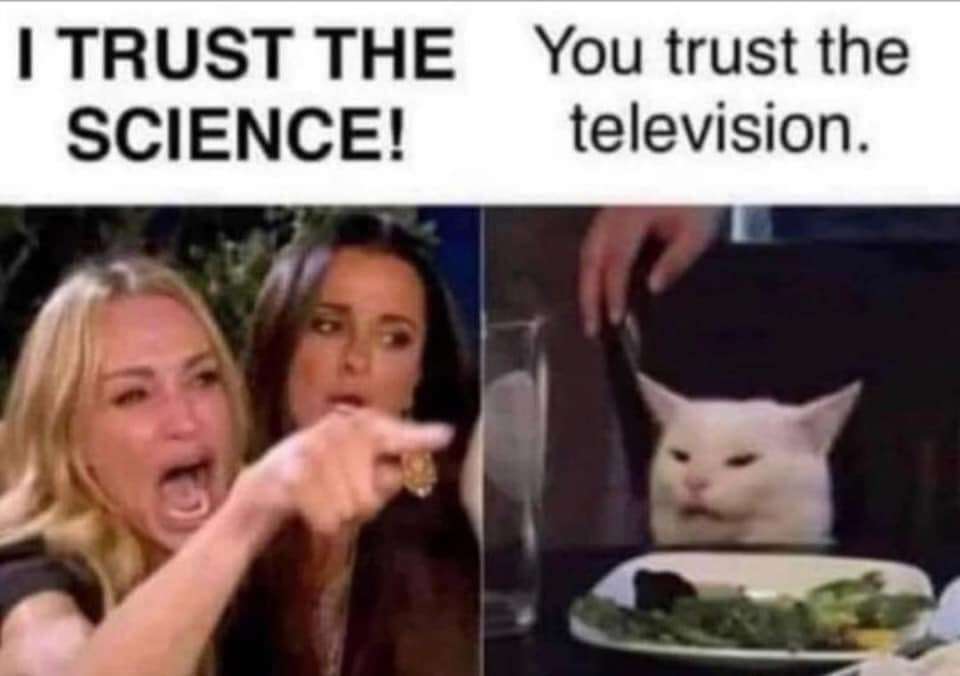
This label of “science” has an appeal to the energized ideologue, similar to the appeal catnip has on a feline. If it’s “science,” questioning it is futile, and that’s exactly what ideologues want — don’t question what we say, it is futility to do so. And indeed, that is exactly the claim they’ve been making. The problem is, that only holds for scientific fact, not scientific opinion. What seems to have escaped their notice is that the scientific pursuits that have aided mankind most greatly, involved scientific opinions that were way-the-fuck-out-there.
In fact, it’s been pretty often that scientific innovation has provided us with this great benefit, as a direct result of testing theories that never even came close to surviving any level of critical inspection. Even software engineers apply that, on a daily basis. Let’s say some fool who doesn’t know what he’s doing, hands me some code. His track record is that his stuff doesn’t work, because he sucks at his job and doesn’t unit-test his stuff, and my intuition is that it isn’t going to work. But my “theory” is that it will. It’s not any sort of professional courtesy, it’s a desire to waste as little time on it as I possibly can, having resigned myself to the fate that I will have to waste some. So I devastate the theory by taking it seriously. The code works, is my default premise; I presume, scientifically, against what I think to be the likely truth. So let’s call it this way, and do an “experiment.” Whoopsie! Well, give me a ring when you fix your shit. Then I go back to what I was doing.
That’s exactly the way science is done. You make a theory. You build an experiment around the theory. The cool thing about software engineering is, you usually can achieve some certainty about the theory being proven, or failing that, you can achieve some certainty about the theory being refuted. Oh look, the database table had integrity, we ran your transaction and nothing else, now it’s lost integrity. That’s a rarity in the rest of science.
“Scientists say [insert fact here]” speaks volumes. It is the final word. Yes, challenging it is futile. “Scientists say [insert opinion here],” on the other hand…that says nothing. That’s what people don’t seem to get lately, one says everything and the other says absolutely nothing. You have to think outside Thing I Know #330 if you want to do the “science says” thing.



 Someone somewhere…is going to isolate some part of this [new video] as perfectly encapsulating How Obama is Diminishing the Presidency…
 Here’s something we’ve been wondering: How do superheroes have babies? Thanks to hours upon hours of analyzing fan-made diagrams on the Internet, we fully understand the ins and outs of superheroes making babies, but the birthing part is a little unclear to us. Mainly because most superheroines have so comically narrow torsos, you could barely fit a foot of intestines in there, to say nothing of forming an entire tiny human.




 In [President Obama’s] speech on Thursday,
  Are you starting to see the picture now? Brian Williams didn’t lie. He honestly vocalized what was in his head, the problem is that what was in his head was whatever made Brian Williams happy, because Brian Williams leans left and that’s what people do when they lean left. President Obama thinks His patently juvenile rebuttal of “Christianity was doing it too” is somehow relevant, for the same reason Brian Williams thinks his chopper was hit by a rocket, for the same reason Obama’s fans think He is a gifted speaker or that the high-horse comment was some sort of brilliant point to be made. And this is why they unfriend you on social media, or at the Thanksgiving dinner table. This is why they do not revise anticipations of things after previous anticipations were thwarted.
 Leftism has always been about revenge. The works of Marx are filled with fantasies of retribution and judgment. Their tone reeks of resentment and paranoia, with blame cast for even the most trivial. “The bourgeoisie,” Marx once declared in a letter to Engels, “will remember my carbuncles until their dying day.” That’s leftism in a nutshell.