
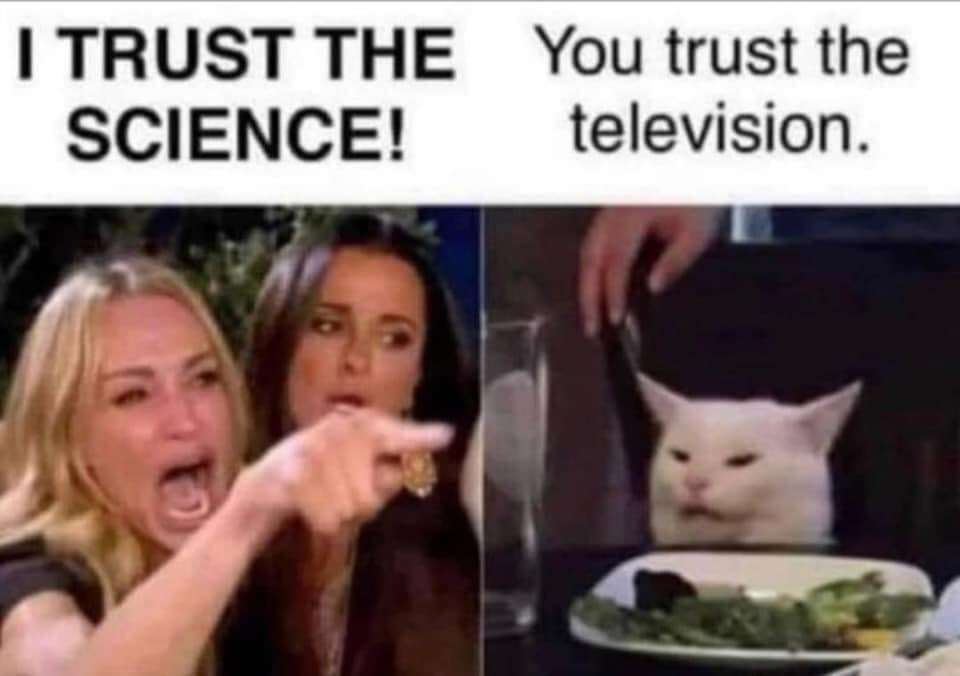


My first reaction to this was, of course, that I like the implications of the headline; upon reading it, I was glad to see the headline was earnest and 51 is, after all, greater than 31. Although still 49 points shy of where it should be.
Fifty-one percent of Americans say that they would rather have a border wall on America’s southern border, compared to 31 percent who say that they want a Green New Deal, according to a poll released by Remington Research Group.
Republicans said that they would prefer a border wall by a 68-point margin, while Independents said that they would prefer a border wall by a two-to-one margin.
Overall, a majority of Americans, or 51 percent, said they oppose a Green New Deal, 51 percent of Democrats support the radical environmental program, while Republicans and Independents overwhelmingly oppose Rep. Alexandria Ocasio-Cortez’s (D-NY) idea outright.
But then I had another thought: This is a rather silly comparison, isn’t it?
It’s kind of apples-and-oranges. The objective of a wall is to elevate the difficulty involved in breaking into our country illegally, whereas the GND’s objectives seem to be a messy hodge-podge of reducing our impact on the environment, and make sure everyone has the same amount of stuff. I read through that goofy draft that wasn’t supposed to have been part of it or whatever, and waded through the other literature about it, and I’m altogether unsure about the linkage between proper stewardship of Mother Earth and her bounteous resources, and income/wealth equality. What is it? Is there, perhaps, some propaganda floating around that if we make sure everyone’s got the same amount of stuff, the environment will improve? I’ve no doubt there is.
But that would be the opposite of what’s true. Socialism is awful for the environment.
The Soviet government’s imperatives for economic growth, combined with communal ownership of virtually all property and resources, caused tremendous environmental damage. According to economist Marshall Goldman, who studied and traveled extensively in the Soviet Union, “The attitude that nature is there to be exploited by man is the very essence of the Soviet production ethic.”
A typical example of the environmental damage caused by the Soviet economic system is the exploitation of the Black Sea. To comply with five-year plans for housing and building construction, gravel, sand, and trees around the beaches were used for decades as construction materials. Because there is no private property, “no value is attached to the gravel along the seashore. Since, in effect, it is free, the contractors haul it away. This practice caused massive beach erosion which reduced the Black Sea coast by 50 percent between 1920 and 1960. Eventually, hotels, hospitals, and of all things, a military sanitarium collapsed into the sea as the shoreline gave way. Frequent landslides–as many as 300 per year–have been reported.
Water pollution is catastrophic. Effluent from a chemical plant killed almost all the fish in the Oka River in 1965, and similar fish kills have occurred in the Volga, Ob, Yenesei, Ural, and Northern Dvina rivers. Most Russian factories discharge their waste without cleaning it at all.
:
According to the Worldwatch Institute, more than 90 percent of the trees in the pine forests in China’s Sichuan province have died because of air pollution. In Chungking, the biggest city in southwest China, a 4, 500-acre forest has been reduced by half. Acid rain has reportedly caused massive crop losses.There also have been reports of waterworks and landfill projects severely hampering fish migration. Fish breeding was so seriously neglected that fish has largely vanished from the national diet. Depletion of government-owned forests has turned them into deserts, and millions of acres of grazing and farm land in the northern Chinese plains were made alkaline and unproductive during the “Great Leap Forward.”
:
There is much evidence to dispute the theory that only private businesses pollute. In the United States, we need look no further than our own government agencies. These public sector institutions, such as the Department of Defense (DOD), are among the worst offenders. DOD now generates more than 400,000 tons of hazardous waste a year — more than is produced by the five largest chemical companies combined. To make matters worse, the Environmental Protection Agency lacks the enforcement power over the public sector that it possesses over the private sector.
So taking better care of the environment does not necessarily fit some grand scheme of taxation and incentives, to reward the under-privileged and punish the successful and make sure income/wealth disparities are reduced. I really don’t know where we ever got that. You know what does, though? Donald Trump’s big, beautiful wall. You can’t have open borders with a welfare state. There’s a rule about that, and if there weren’t such a rule, someone would have to come up with one.
The incompatibility is mathematical in nature. Just as, you can’t rank members of a set without defining what the set is; the same goes for assessing the level of inequality, of anything. In fact, the greater the assessed inequality, the more crucial is the question of set membership. In the most extreme case, perfect inequality — n people in a village, where one guy has lots of dollars and the other n-1 people have zero — the removal of a single person instantly transforms the situation to one of perfect equality.
So borders do matter. Especially if you’re trying to force this sameness these open-borders types tend to want forced. The periphery comes first. It’s got to be that way.
I submit that such thoughts about compatibility, and cause-and-effect, are more important than the poll results. However many people think they want something, the ones who do want it seem to be very, very sure they want it, and are highly enthused about it. But, as usual, the ones most enthused haven’t thought things through all the way.

 “You see the planet earth moving towards what is the Standard American Diet. We’ve seen this massive increase in consumption of meat produced by the industrial animal agriculture industry. The tragic reality is this planet simply can’t sustain billions of people consuming industrially produced animal agriculture because of environmental impact,” he said.
 They could avoid this reputation if they agreed to a sunset option, with option to renew after some term. They almost never do this. They want that ratchet locked in place.

 1. Higher taxes — not to fund anything, just to aggravate and weaken the taxpayer.
 Today being the day of mourning for George H. W. Bush, I’m hearing and seeing lamentations about our bygone era of civility, and wondering what we can do to get it back. “Stop arguing about politics!” seems to be the favored answer. Seems to me we tried that already; generations and generations of kids raised in schools and households where politics, sports and religion were not to be discussed. Because it leads to fighting, doncha know…


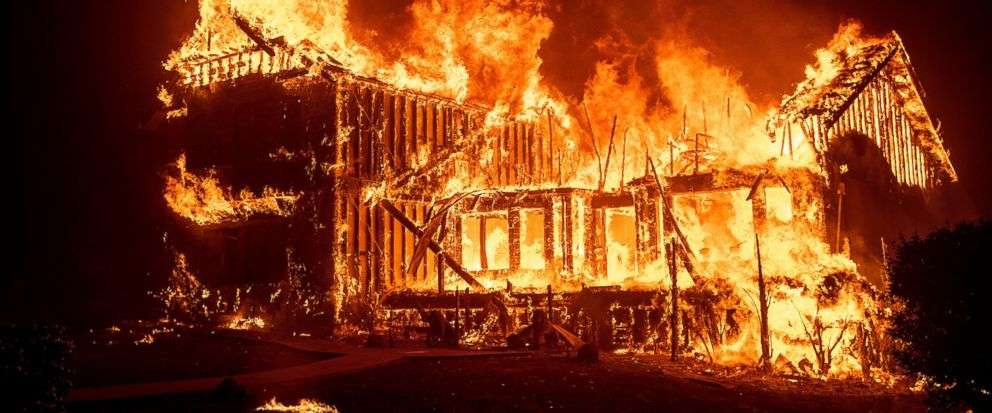 This is a fatal fire. The latest death toll I have is nine, and unfortunately I have a feeling providing linkage to the stat would be useless because that number may change. But our friend is safe, and so is his Mom, and his cat. Thank God. But so much lost. Can you even imagine.