Hillary Clinton said Tuesday that civility in America can only begin again if Democrats win back the House or Senate this fall.
“You cannot be civil with a political party that wants to destroy what you stand for, what you care about,” Clinton said in an interview with CNN’s Christiane Amanpour. “That’s why I believe, if we are fortunate enough to win back the House and or the Senate, that’s when civility can start again. But until then, the only thing that the Republicans seem to recognize and respect is strength.”
I’m late to the party on this one and others have already commented quite a bit. There is one thing, though, that doesn’t seem to get mentioned…
She never qualified this “what you stand for, what you care about” thing. Ever. Right? In context, we could presume, by reading everything literally, she’s talking about an up-or-down vote on the nomination of Merrick Garland. I have some doubts that’s what she means.
This is one of the reasons I frown on ending sentences with dangling prepositions. It ties into my dislike of passive voice. This is a sterling, shining example. The most important facet of the message she’s supposed to be conveying…isn’t even in there. It’s left for us to guess.
By design, one must conclude. If she said what she really thought, people would start to shy away from it.
I have a character flaw. Actually I have many, but perhaps the one that has alienated people most frequently is this one…
From the time I could talk, I have driven people to distraction by treating the unknown as, you know, the unknown. Like a little kid — but why? Why this? Why that? I’m sure for people who don’t welcome it, it’s quite tedious. There hasn’t been any enigma worth leaving as an enigma. This is not to say I’ve managed to figure out everything — far from it — but at the very least I’ve always wanted to make a lasting footnote out of whatever story was incomplete, whatever mystery couldn’t be cracked. Just in case some new information came my way, at a later time, that could answer the question…
Right up until these fucking pink pussy hats.
“I am unhappy with Trump winning the election” has something to do with wearing a knitted facsimile of a woman’s vagina on your head…how? I’m at the point where I don’t give a shit anymore. Past it, rather. Yes it’s got something to do with this hot-mic debacle on the bus with “grab ’em by the pussy,” that part I get. But what’s this supposed to be on your head? Another woman’s vagina? Your own? You’ve got pussy on your mind? You’re offering up your hat for Donald Trump to grab? You want him to grab your head?
The core message seems to be one of: I really wanted that scandal to decide the election so Hillary would win, and since that didn’t happen it makes me unhappy. Okay, so you learned the hard way the country overall isn’t that hung up on this stuff. Now you wish to repeat the message, in the form of knitted head wear, that you’ve learned through experience doesn’t work. And toward that end you want to spend real money, make a big show out of spending the money, encourage others to spend money on this thing you know doesn’t work. I don’t get that part.
It’s like the desire went one way, reality went the other way, and what you wish to advertise is that you elevate your desires above conflicting reality. Well right. That’s part of what makes a liberal a liberal, “feelz above realz.” Well yeah, we knew this about you guys already. For quite awhile. If you could put what’s real above what your feelings were about it, and in so doing acknowledge reality even when you find it uncomfortable, you wouldn’t be liberals. So what else are you trying to say?
social movement focused on raising awareness about women’s issues and advancing human rights by promoting dialogue and innovation through the arts, education and intellectual discourse.
No it doesn’t do that. Not unless you count eyeball-rolls as “dialogue” and wearing a lady-parts reference on your head as “intellectual discourse.” There is slippage here. I know I’m the one reading things too literally, and there’s a “wink wink nudge nudge” going on that I’m supposed to…you know…just get. Like and stuff. Well no, I don’t get it, it eludes me.
I see some other lefty activists, it turns out, don’t like the hats. This comes as a surprise to these people who are much smarter than I am, who can just-get-it. Looks like they didn’t get something: “…that they [the hats] might not include trans women or nonbinary women or maybe women whose (genitals) are not pink.” Alright so maybe this is a fail anyway. But what was it trying to say? The questions above remain open.
Or…maybe not. Unlike the many, many other things I haven’t managed to get in my half century on the planet…and I’m including in that, things like “Why doesn’t Ziggy wear pants?” and “How does the roadrunner disappear into a tunnel the Coyote painted onto the rock?”…with this one my patience is at an end and I don’t care anymore.
The hat wearers themselves, apart from displaying execrable judgment, don’t know. And don’t care.
That’s like George Lucas not knowing or caring why “Han shot first” at Darth Vader at the dinner table in Cloud City, when he didn’t shoot first with Greedo back at Mos Eisley. Or for that matter, Darth Vader sitting down at a dinner table. If he’s ignorant & apathetic and he’s the one putting together this universe, that means there’s no answer. I think we’re at that point with the pink hats. The thing that would make it all make sense, is out of view, but since it’s out of view, I’m ready to seriously entertain the possibility — now a likelihood — that there’s nothing there at all. I can’t prove it. But this time, perhaps for the first time, I’m ready to enshrine that without any further evidence substantiating that it’s so, as an article of belief.
Now that the Kavanaugh-scopy is over, I’d like to take a moment to reflect on one thing: This “job interview” metaphor which I think was first invoked by Lindsey Graham. There are many problems with this; as more than one Los Angeles Times reader has pointed out, “job interviews aren’t supposed to ruin lives.”
I have some experience with job interviews, on both sides of the table. When interviewing, I see my role as a senior technical adviser who, when you get right down to it, is extraordinarily unlikely to contribute anything that will change the outcome one way or the other. When I’m the one being interviewed, of course the food on my table is connected directly to that, so I put a lot more importance on that.
Being a “two century man” in the tech world, I look back on my experiences and divide them that way. There is pre-Y2K in which everything was straightforward; there is post-Y2K in which something seems to have happened and I’m still not entirely sure what it is. I’ll get to that in a bit. Let me first concentrate on the earlier time back when the year began with “nineteen.”
Life was simple. Employers wanted to know if I already had the skills; and if I didn’t have them, what would the experience be like for them as I acquired those skills. Do you know the — let’s call it — Lizard computer programming language? Five years experience with the Lizard language was obviously superior to 2 or 3 years experience. If you had zero years, maybe you knew the Newt language. Lizard is just like Newt, someone might say. He’ll pick it up real quick if he’s as smart as he seems. After assessment of experience in the relevant field, we would proceed to team-compatibility, which was really as precise an estimate as could be formed about whether you were a natural-born horse’s ass. Remember that pudgy guy in Jurassic Park who stole the frozen dinosaur embryos? They wanted to not hire that guy.
Now my full-time jobs have lasted awhile, on average. Against the obvious expectations, this is more of a bug than a feature when it comes time to go looking, because this recruiting-world can change dramatically while I’m disconnected from it. Some people have spent twenty years or more contracting and haven’t been in any one gig for more than a year or so, which must be interesting. I lack their familiarity with the system. And so a few years after the calendar changed, I woke up from my slumber and discovered everything else changed too. This “soft skills” assessment that’s supposed to screen out double-chin guys who’d steal the dinosaur embryos, had exploded like a supernova, incinerating and consuming everything else. Fifteen years onward I’m still figuring out how to process this. The technology has become much more complicated and there are many more horror stories of enterprises hiring the wrong guy — wrong in the skills department — and having to dismiss him. And so the concern is there. But it doesn’t seem to percolate through the system. It’s like Human Resources has thrown a protective barrier around this process and imposed its own system of priorities, excluding all others.
Which isn’t necessarily wrong. You don’t want to hire a horse’s ass.
The most obvious explanation is that shared experience must have necessitated the shift. Maybe there have been a lot of horse’s-asses getting hired. Lots of dinosaur embryos stolen. I would imagine you could absorb a lot more damage hiring a guy with the correct skills but missing the necessary scruples, than the other way around.
But isn’t hiring a candidate who’s missing either one a nearly-guaranteed fail? So in that sense, sympathizing with it as a business decision, I’m still a bit baffled. I think I’m not the only one.
But my point is, throughout it all what we’re doing — the employer and employee alike — is the dance of being an adult. We’re adulting. And this essentially comes down to three words in the form of a question.
Are you serious?
The hard skills, the soft skills, the clothes you’re wearing, the company you keep, your training, your pursuit of the training. It all comes down to showing the other person you’re serious. That’s the big difference between being an adult and being a kid. For me this has become a big issue, as over the years I’ve come to turn it around, out of necessity, figuring out prospective “employers” or the recruiters who represent them aren’t serious. And from talking to others in the tech field, I’ve learned this isn’t unique to me. The emphasis has shifted away from the recruiters assessing our skills; many among them aren’t doing that at all. They assess whether we’re serious, in terms of whether we’d be a good fit for the team, and then we have to assess whether they’re serious about opening up an interview in which we’re really being considered, as opposed to what looks like an interview and isn’t one. Or whether they just want to collect names to put on a list so it looks like they’ve really gone through the field with a fine-tooth comb, when the successful candidate has been chosen already.
With the wisdom of hindsight, I can see things didn’t really change that much between the centuries. Back in my younger days when the central question was “Do You Know Lizard?” they really just wanted to know if I was serious. Do you know it already, or are you going to have to learn on our nickel, was almost a peripheral question, somewhat along the lines of “Is shipping included?” when you buy something over the Internet. Looking at it from the employer’s point of view, back in the days when I wasn’t commanding that much in terms of salary, things would work out alright even if I didn’t know Lizard or Newt or Dragon or Iguana — as long as I was serious. It was exactly like, for them, the way it is for us when the supplier has the item in stock, but has to ship it from China. If we really want the item and we know it’s right for us, we’ll pay the higher amount, and wait. And it will make good business sense to do so.
This is why adults ask each other, in these words or in other words, “Are You Serious?”
It’s not just looking for a job, or even buying & selling stuff. About this time I had to re-enter the dating field, and I discovered once again that things had changed. The sex appeal I never really thought I had in great amounts, in my youth, I must have had because there was something present-and-accounted-for before, that was missing now. But also, in my age group this faded away as a consideration. Women my age were more concerned about compatibility, which was a good thing because that’s where my concerns were as well. But what was that, exactly? Throughout the weeks and months a certain reality slowly began to sink in, that women by & large weren’t personally sure of what they wanted to find. It was as if the vision for most-desirable-male, had descended upon Planet Woman, much like a popular new fashion trend. And women wanted to be seen by other woman pursuing this type of guy, just as they’d want to be seen by other woman wearing a particular brand or style of leather boot. What I was coming to learn was that the “success” of these encounters, and their duration over this very brief window of time, were in inverse proportion to the distance between me — as each of my prospects saw me — and this ideal.
Whether I was an interesting person. How much money I made. How I spent my spare time. What I watched on the teevee (which, at that time, was nothing). What books I read. We think, when we’re available and looking, that women want to know these things so they can pick up clues and form conclusions about what makes us tick, our compatibility with each other, what their lives would be like as they share them with us. My own experiences quickly disabused me of that. From what I saw, it’s more like picking up clues about what other women will think of them when, for some period of time, you’re the one bringing them to the whatever. I found this to be frustrating, of course. It meant even my successes were defeats. The women weren’t thinking that much about what they really wanted. They were thinking way too much about what they’d be telling their girlfriends about their new fella, and whether that made for a good story that would contribute to their social position with those girlfriends.
And I see nowadays, with a new generation, as was the case back then — if a woman is really cornered with the troublesome question of “What do you want in a man?” and forced to come up with an answer — reliable as rain it will come back. “He makes me laugh.” That’s Planet Woman talk for “I don’t have any idea and figuring it out isn’t my priority right now.” That usually means they don’t want a happy life they’re sharing with a man. They put a much higher value on getting approval from other women.
I say now, to the lads who are available and are struggling to fix what’s broken: That’s what’s broken. Fix that first. The women who are doing the selecting, like all other selecting adults, are struggling to properly assess the answer to the question “Are you serious?” And they’re confused because the most common way to resolve that is to figure out if the prospective suitor is not serious. No wonder they’re so frustrated.
How do you fix that, when you don’t get to control how a woman evaluates you? Same way you fix the employment thing. You turn it around. In both areas of life, if you’re having troubles it means you’re not putting enough emphasis on assessment. You’re not spending your share of time in the magistrate’s seat. It means you have to put more thought into whether the other person is serious. Women, jobs…we may be bringing something to the table that opens a lot of doors, or we may not, but either way we’ve only got time for one of each. It’s not my place to do all the jobs or to date all the women. So grown-ups have to make a selection and that starts with figuring out if the other person is serious.
How to figure out someone isn’t serious, is something I should probably leave for a whole separate post. But it might be within scope here, and paying a decent minimal respect to the reader’s time, to burn off just one short paragraph kicking off that topic before returning to the subject at hand. In all these walks of life, we have a great many purported “adults” walking around among us who don’t really have what it takes to be an adult, because they haven’t ever gotten over that one big shock of entering adulthood. The squirming away under the microscope, while someone who’s considering entering into, or maintaining, a relationship with you tries to figure out if you’re serious. Incomplete “adults,” just tall old kids really, want that settled so that the question goes away. They want a lifetime-guaranteed affirmative-adjudication. After some deadline, if the question remains there must be something wrong with the person asking. Think in terms of Barack Obama’s, and His supporters’, seething resentment against anyone daring to question His birth certificate, or that Blasey Ford woman’s supporters and their anger against anyone who wouldn’t uncritically believe her so-called “testimony.” This is a desire for immediate and lasting approval — and a simmering grudge if it isn’t forthcoming. Adults know there is no such thing; they are comfortable with the reality that there are only two answers to are-you-serious, “no” and “pending.” That’s a very different thing from saying some residual distrust will always be there, or that no one has any real confidence in anybody else. Actually it means quite the exact opposite. Adults judge each other, they each find the other person is serious, they renew the business or marital or friendly relationship for the day, and then…they keep assessing and renewing. This is not suspicion. It is affirmation.
How this pertains to Kavanaugh, and likening his confirmation process to a “job interview”:
It’s incorrect, of course, and not for the reasons the LA Times readers say. They’re still right and Sen. Graham is still wrong. The Senate, as a whole, made an ass out of itself because it did not assess Judge Kavanaugh the way adults assess each other, trying to figure out the answer to “Are You Serious?” The democrats, who still have way too much power even though they’re in the minority, sat in judgment of the opposite. They didn’t want five seats on the Supreme Court taken up by people who are serious. They wanted more not-serious people on the bench, and fewer serious people.
This, the knowledge that has come my way tells me — both the personal anecdotes and what I’ve learned through more established and orthodox channels — is what’s wrong with our society all-around at the present time. We are pandering way too much to people who entered into adulthood, and couldn’t cope with the idea that they have to convince someone they’re serious, which of course kids don’t have to do. The trolley came off the tracks when these grown-up kids managed to get power without figuring out how to do that. And now, in dating, in real job interviews, and in politics, they’re usurping the very concept of adulthood, turning it upside-down, by sitting in judgment of who is & isn’t serious…
…and then making a point of picking the people who aren’t.
Why are the smarmy liberal jackasses so quiet? I remember when Cohen agreed to talk and Manafort got convicted, there was donkey-bleating everywhere and you couldn’t get away from it. I’ve got one at home and one at work. They’re actually letting me go about my business now, not saying a word. They act kind of like the guilty dog.
I’m still waiting for something to emerge from this Cohen-talking thing. Maybe that’s it. I was told at the time I wouldn’t have to wait long for something juicy, and I’m still waiting…
The other thing I notice is that it seems something is happening with the women-accusing-men thing. On the Internet, liberals aren’t afraid to share their feelings, and it doesn’t take much time at all to ascertain that feelings are all they have here. The facts are friendly to Kavanaugh and unfriendly to his so-called accuser. But — I believe her! Because! Her testimony! So brave! It’s like stepping into a time machine and emerging in 1991.
These people don’t seem to understand: You can take sexual assault on women seriously, and still take a pass on the flakier allegations of it, even call them out for being flaky. It’s not a package deal. As I often like to say, grown-ups form opinions based on facts, not based on expectations of other people. This is yet another problem with left-wing politics: Low, as in rattlesnakes-belly low, standards for their emblems. Time after time, they choose the wrong ones. Their selected highlighting icons representative of some supposed far-reaching social problem, stink on ice, stink worse than they’d stink if they were picked randomly, as if someone is making an effort to choose the ones that stink the most. Example: Innocent young men and boys of color being shot and killed by overly-aggressive, trigger-happy cops is something that really does happen and is a real problem — I think — but somehow they decided to pick Michael Freakin’ “Gentle Giant” Brown. Who made that call? And Trayvon Martin? Who picked him to represent anything, who decided we should all be watching him?
If I made it my business to go around arguing about this, I’d feel betrayed. “This is a real thing! Why didn’t you pick that guy, over there?”
The woman who testified yesterday made it look like maybe we’re entering into a whole new era here. It will take a lot of time to determine whether this perception is accurate, but it looks like accusations of this nature are nothing more than an expected price men should pay when they are on ascension. They/we have to grease the right palms to pass through the right checkpoints. Wasn’t that the original complaint in feminism, that men were enjoying the fruits of success without bringing women along, a sort of “take your little sister with you when you play outside” thing? But we already had a convention for that, it was called marriage. Not good enough, because a woman’s place is in the office. Oh and now you’re not promoting them as often or as quickly as some paper-pusher in the nation’s capitol, who knows nothing of your business or of what men & women are supposed to do in it, thinks you should. So we have the usual gimmicks that make paper-pushers happy, affirmative action, quotas, set-asides, and lots of showboating about ending institutionalized sexism “once and for all.”
Still not good enough! When a man’s contributions are being appreciated and he’s being promoted, all of the women who share his interests profit; but what about the women who don’t? So unfair! Something must be done for them!
I don’t know what’s a sadder sight: The people among us who think this is how it’s supposed to work, that the fruits of labor are distributed according to ever-evolving social rules & taboos and aren’t legitimately earned; or, the casual-observers who tune into these things like they’re Hallmark Christmas movies, and come away bumptiously boasting “I believe her!” based on her performance, not on the facts. The latter toiling away in complete ignorance about their bedfellow-tethering to the former, failing to catch on to what’s obvious to everyone else, that they’re supporting a movement and not a woman.
A political philosophy based on tradition and social stability, stressing established institutions, and preferring gradual development to abrupt change…the tendency to prefer an existing or traditional situation to change.
A theory in economics emphasizing individual freedom from restraint and usually based on free competition, the self-regulating market, and the gold standard.
A political philosophy based on belief in progress, the essential goodness of the human race, and the autonomy of the individual and standing for the protection of political and civil liberties…a philosophy that considers government as a crucial instrument for amelioration of social inequities.
These don’t work, especially when one seeks to understand the current political situation in the United States, led as it is by a “conservative” who seeks to change things, and is resisted by “liberals” who want to keep things the way they are. These liberals do not believe in the self-regulating market, as America’s First Holy Emperor made all too clear.
What exactly does conservatism seek to conserve? Civilization, the blessings that come from having it, and the definitions that make civilization possible. From what does liberalism seek to liberate us? Those things — starting with the definitions.
A relatively high level of cultural and technological development…the culture characteristic of a particular time or place…refinement of thought, manners, or taste…a situation of urban comfort.
I take issue with these as well. Not because I disagree with what they say, but because they’re weak definitions. They depend on themselves.
Civilization is the banishment of something else; it is an absence of something. That something is brutality.
Savage cruelty, inhuman behavior, insensibility to pity or shame.
Brutality is when we act like animals, civilization is when we act like something better. Brutality is when, I am bigger and stronger than you and you have something I want, it’s mine already. You just don’t know it yet. When I want it I’ll take it. Civilization is a bulwark, of some kind, against that. Civilization has laws, usually criminal and civil. It has hierarchies of authority. It provides for redress of grievances.
I wasn’t there, but civilization must have started with motherhood. That’s because it must have started with someone who was weak, and yet valued by someone who was strong; this must be how physical strength, as the coin of the realm, was displaced by something else — the only way it could happen. The brute is at the top of the local hierarchy of brutes, the strongest one who can take all that he pleases. But the brute has a mother. If he wants to go and do his brutalizing, he has to leave the cave and roam around, and cannot be there all the time. And so there must have been pacts made: You leave mine alone, and I’ll leave yours alone.
Civilization depends on definitions of things. For a definition to work, it must a) impose an objectively-evaluated reproducible result upon complex situations that arise from everyday life, and b) not depend on itself. Reviewing human history, even casually, it is easy to see civilization is not the default state. The human race has managed to erect various civilizations, and after a time these crumble into nothing and become archeological relics. So it takes something to get a civilization going, and once it’s started you can’t just walk away and expect it to keep on truckin’.
Anything that is not the default state, that involves other people and may or may not work — to get it working and keep it working, you have to have three things. You must have these definitions, along with the willingness to make and abide by the definitions once they’re made; you have to have the resources, including time, work and the willingness to do the work; and you have to have the vision.
A thought, concept, or object formed by the imagination.
Many people can participate in a common effort, each contributing their visions, if they agree on a common set of values.
Something intrinsically valuable or desirable: …sought material values instead of human values.
Once you form a vision, you can make a plan. The plan requires the vision; you have to incorporate a workable understanding of what it is you’re trying to do.
A method for achieving an end…a detailed formulation of a program of action.
If the plan involves some threshold of complexity, it can be broken down into objectives.
Something toward which effort is directed…an aim, goal, or end of action.
We argue among ourselves about politics, because we have disagreements about one of those six. The six are in sequence. Disagreements about strategy and tactics are easy to resolve. Disagreements about values and vision are much harder to resolve.
All of these depend on defining things. An organizational hierarchy can work as an effective substitute against definitions of things, with someone at the very pinnacle laboring under, or enjoying, the final word on how to resolve whatever pressing questions arise. But these civilizations are not stable and they don’t last. One may protest that ancient civilizations, such as the Egyptians, persevered exactly this way and for thousands of years. But it only appears that way to the very casual reader. Such “civilizations” were broken up into dynasties, with schisms, internecine squabbles and other conflicts. We tend to think of these as enduring civilizations because new factions were too respectful, or perhaps too lazy, to knock down the monuments and other artifacts of the previous ones. But in the meantime, they obliterated some of the definitions made or observed by those previous ones.
It is fashionable, in this day and age, to observe that conservatives and liberals are all trying to achieve the things outlined above. It isn’t so. “Liberals,” as we use that word today, are definitions-averse. Definitions get in the way of their fun, so they oppose the creation of new definitions where they’re needed, and in fact are in favor of obliterating the definitions we have already. They seek to “liberate” us from the definitions that make civilization work. They want their pyramid-shaped power structure. Each liberal fancies himself either as the despot at the pinnacle of the power-pyramid, or sharing a kinship with that despot.
The old saying is that a conservative is a liberal who got mugged. That’s close to the truth, which is: A conservative is a liberal who was on the wrong side of bureaucratic power, on the wrong side of capriciously made “final” decisions. And the liberal may think himself a conservative who was on the wrong side of law, and/or police brutality. Even in cases where that’s true, the eradication of civilization, in whole or in part, is an overly heavy-handed solution to the problem. It appeals only to those who “think” with their emotions, and are definitions-averse.
The conservative says: I am good, and/but I am irreparably flawed. I can never be perfect but I am on the right path. I am a force for good. The liberal says: We are building a “perfect society” that would put us on the right path, but as individuals we must be on the wrong path. As far as being a force for good, it’s all about having the right opinions. STOP WATCHING FOX NEWS!!
Liberals, therefore, don’t have it within ‘em to grasp the grown-up thoughts that have to be considered, and managed, after one takes into account what’s “true.” They seem to think, after they’ve proven something is true – or much more often, presented an emotionally-compelling argument that it’s likely true, or it might as well be true since our social status will suffer if we’re caught doubting it – the job’s done. This is the child-thinking mistake we should expect people to make when they proceed from the premise that everything in the universe is disconnected from every other thing.
Nine…
How do people learn to discuss contentious issues in a civilized way, when they grow up without ever having been allowed to do so? They don’t!
We have many generations, now, of people who haven’t learned. In our modern age politics are much more contentious, information travels faster, and you can’t get away from the weighty issues. They’re being talked about everywhere. People need to know how to argue a point, substantiate it, prove it, cast doubt on others, refute them, challenge them. They need to know the difference…between a reasoned inference and gut-feel. Too many people need to know these things…and yet they don’t know them. Auntie Petunia didn’t allow them to talk about such things at the dinner table.
…We are more contentious today, I submit, at least in part because of this widespread lack of knowledge about how to argue…this ignorance makes it worse because people feel pressured to refute things they have been taught, or feel, must be obviously untrue…and they don’t know how to do it so they lunge for these hayseed dismissals. “Oh well, opinions are like assholes everyone’s got one and they all stink, ha ha.” “Whatever makes you happy.” “Denial’s not just a river in Egypt.”
The point about things in the universe being connected to other things, resurfaces here and there throughout the manuscript. Many a conservative, or other normal-person, has observed that on the intellectual funny-planet of liberalism “history always began this morning.” Also, that effects do not have causes: He’s rich, I’m poor, that’s just the way it is. To suggest things happen because other related things happened previously, and offer any belief in antecedent action, is regarded as heresy in their little cloister.
Around chapter 2 somewhere I liken it to building a sandcastle on a sun-baked beach where all the sand is bone-dry. It doesn’t work, of course. That’s what the world of liberalism is. Thoughts aren’t consistent or coherent, because they cannot be. Every little thing is completely disconnected from every other little thing.
I see a connection here between the Kavanaugh matter and the climate change scam.
It’s actually a simple, sturdy and solid connection believe it or not…
In both cases, the democrats are not only demanding we accept an unknown & unknowable interpretation of events, eschewing all residual doubt; they are brazenly sitting in judgment of our character based solely on whether or not we so accept.
And in both cases, it is their behavior that has created the problem for our acceptance. Kavanaugh’s accuser has sat for decades on these memories, whatever they are, of what happened, whatever that is. And then Feinstein’s office apparently sat on this report.
Just like the environmental zealots are spewing all sorts of carbon emissions, which we’re not supposed to notice, “raising awareness” on this issue on which awareness has been raised already.
So bottom-lining it: Their sole criterion for our being decent people, in both cases, is our acceptance of their sales pitch, our willingness to behave as if we take it seriously. We’re not good people unless we take it more seriously than they did.
What’s that say about them…
Related: Someone else noticed something…
He’s referring to a remark made by the lady Justice last year…
Supreme Court Justice Ruth Bader Ginsburg did not hold back from talking about gender politics and partisanship Monday night at Roosevelt University in Chicago, but avoided discussing current events after a controversy last year.
“There will be enough women on the Supreme Court when there are nine,” Ginsburg said, according to the Chicago Sun-Times.
She added, “I think there has not been a better time to be a woman in the legal profession because no doors are closed.”
She also decried the partisanship that she believes was evident at recent Supreme Court justice nomination hearings.
“I can only hope that in my lifetime they will stop that nonsense,” Ginsburg said, according to the Sun-Times. “Partisanship in selections of justices is a dangerous thing.”
How else to interpret that? She doesn’t want any ol’ division, rancor and resentment; just the kind she likes. Cross the aisle, bring the parties together, so they can act as one…confirming women to the Supreme Court and not men.
Yes that Google video was an amazing thing to watch. A company-wide group hug, WTF?
I once worked for a company like this, following the sage advice of keeping my political leanings under wraps. It didn’t work out well. That’s probably a good thing. The problem remains that this thing we call “social media” is the 21st century’s version of the telephone and the radio, and it’s dominated by libs.
What to do about it? It’s not just conservatives and Republicans who have an interest in changing the status quo, assuming it can be changed. It’s the whole country. We know this because we’ve put forth a good-faith effort to implement their ideas and it turned out the same way it always does; some people benefited and some people were fleeced, and liberals are right there to stick a microphone into the face of whoever benefited. And, like always, and this is one of the most reprehensible things they do out of everything else, ignore the plight of the ones who were fleeced. Robbing Peter to pay Paul.
Now their sign-carrying Facebook-typing enablers say there are underlying reasons for the pattern and this is the moment for me, and other conservatives, especially those of us who work in tech, to show some requisite humility. They do have a point. I’ve yet to build a billion-dollar empire or launch a car into space. If Sergei or Larry or Jeff or Mark say it would’ve been good if Hillary won, who am I to argue?
But then there is this: If there’s one thing on earth more loathsome than a failure to show the requisite humility when someone else does something better than you, it has to be a lack of gratitude. Watching these liberal tech-giants act out their chosen roles as liberals-first tech-giants-second, I’m put in the position of knowing — for sure, having seen proof first-hand — a lie is being told, which others hearing it have no idea is a lie, and being unable to comment. It’s not a comfortable position by any means. And I’m not a nothing. I do work in tech. My victories don’t stop with MyStuffWorks, I’ve actually made a living out of it. I do pay a mortgage with my brain, and if it all comes to a stop bright and early Monday morning never to be revived again, it’s still three decades. That’s something. I’ve seen many a swaggering cockswain make a good pretend-show of comprehending the implementation details while knowing nothing, and directing resources, ordering others about, and manufacturing a series of disasters before calling a stop to the charade and going back to selling Amway or something. And in the case of the most braggadocious, such implosions follow a lot less time than that. So maybe we’re not looking, here, at a problem with me speaking above my station. Maybe we’re looking at the opposite. Maybe I’ve been quiet too long.
Having opined on many other things in these pages over the last fourteen years, allow me a few paragraphs to indulge that and let’s see where it goes.
Starting with the conclusion. Based on what I’ve seen thus far, it is that reality is reality and it has certain characteristics to it; one must behave certain ways around it. One must swear allegiance to it, forsaking all others, and call out betrayal against it. Think the Bible says something about that, does it not? And people who have built things that actually work, know this to be the case. God agrees, technology agrees.
If you can’t build anything that works thinking like a lib, how come so many of these tech conglomerates are run by and staffed by such emotionally-immature liberals?
Could it be, as the liberals insist, that this is not merely an indicator that you can build working things thinking like a lib…but, maybe it’s necessary? Can it be that this is where I show my willingness to perceive truth? And so I am obliged to do an abrupt but expected about-face, racketball style. Maybe I have to be a liberal to get the plum jobs anyway. And I don’t really know tech if I’m not one. They’re right what they say about conservative cavemen…how ’bout it?
And the answer is — not only no, but I don’t seriously consider it for a fraction of a second. And I’m not looking back at the wreckage in my rear-view mirror, not even sparing it a glance. I can’t; I know better. Watch liberals “work” for just a bit. Watch the libs in the Google video. It’s all about creating the correct emotional climate. It’s true of everything they do. Generate the excitement in this, generate the disappointment in that, give off the correct vibe, make the wave. Real technology does surprising things. Whether the crowd does or does not expect the thing to work, has so little to do with whether or not it really will. To merely grasp the essentials, you have to learn the very first thing about reality which is: There is one. Objects exist, they have certain states to them, and human emotion is entirely disconnected with all of this. The masses are asses. Majority-opinion can maintain that the freezing temperature of water is 50 degrees, or 68, or 12; this has nothing at all to do with what it really is. Public sentiment is right the way a busted clock is right.
Run the tests. That’s how you know.
I can’t claim to know more than these moguls about how to make tech work in business. But my mortgage is paid so I must know something; and I don’t need to know much to comment. I know enough. You have to do two things after you get the darn thing to work right, you must layer and you must market. I’m maintaining the proper respect for all these men and women — interesting, I think, nearly all the heavy hitters are men, but that’s a side-point. They must be experts at the layering and the marketing. And you can read about marketing anywhere, which isn’t my field anyway. Let’s talk about the layering.
It is, to explain it crudely, a vertical arrangement of interfaces. You might think of it as “Now that I used threading to get the nut to attach properly to the bolt, how do I fasten the alternator to the frame of the car?” You get the simple stuff working first, then you work your way upward to build complex stuff out of the simple stuff. This is how you build a powerful application that can do complicated, amazing things, without losing the necessary attribute of maintainability. You do it with layers.
I do have the requisite humility. I think these guys are geniuses at marketing; and, layering. I respect their leviathan thought-controlling goose-stepping conglomerations. I acknowledge the many layers within them. I’ve seen them, up close. They are numerous and strong, as we should expect them to be, like rivets holding together a passenger jet that really flies.
But you can’t build tech thinking like a lib.
I said “thinking like.” There certainly are successful people in technology who are liberals. Some of them — far, far more slender a proportion of the overall workforce, compared to what the layman might think — have achieved, or started with, a respectable command of the implementation concepts. But there is some falsehood going on here, some two-facedness. If they’re still contributing to the growing technology, there has to be a switch being flipped whether they consciously realize it or not. You can’t get that code working thinking like a lib. You can’t figure out why it’s not doing what it should do, thinking like a lib. Can’t figure out which component is faulty, can’t figure out how to validate the inputs so that the gizmo will yield the correct behavior in practice.
Everyone is conservative about what he knows best.
These people, being good at layering, necessarily became agile about it. And they found themselves responsible for building, not just a gizmo that worked, but a proper working environment for their employees. A rapidly expanding, exploding work environment. They could delegate the responsibility, of course, but it’s still a lot of responsibility, arriving after having not been sought, guesting without being invited. Gushing in within an exceptionally narrow piece of time.
The truth is that, while you can’t think like a liberal and do tech, tech allows you to get away with thinking like one. Mmmm, that’s quite good innit? As long as I’m taking a breather from requisite humility, let me go back and admire that. It’s good enough for a tee shirt, bumper sticker or coffee mug.
It’s said that banks lacked oversight in the 2000s such that they took risks without adult supervision. The problem with such a view is that financial institutions like Citigroup had over sixty full-time regulators working at their headquarters, and who had no clue about the troubles brewing. Not only were U.S. banks still heavily regulated in the 2000s, it was frequently the regulators themselves who were encouraging more exposure to mortgages. Others like journalist Charlie Gasparino still claim that repeal of Glass-Steagall (a Depression era law that separated banks from investment banks) sparked banking’s troubles in 2008, but the inconvenient truth for Gasparino is that the financial institutions that had the most difficulty in 2008 (Lehman Brothers, AIG, Fannie, Freddie, Merrill Lynch, and Bear Stearns) were decidedly not the financial hybrids that Glass-Steagall’s repeal allowed. Better yet, the banking activities that got them into trouble to begin with would have in no way been restricted under Glass-Steagall.
:
Economies and markets gain strength from periods of weakness whereby lousy companies are starved of precious resources so that they can be replaced by good ones. Implicit in the view that a failure to bail out Lehman caused a crisis is that economies gain when the businesses rejected by investors are kept afloat. Sorry, but such a belief is completely backwards. It’s the Silicon Valley equivalent of government officials propping up Friendster, eToys and Webvan…
:
That the economy and markets convulsed in response to what was done wasn’t a surprise, nor was it mysterious. Government intervention in the marketplace is always and everywhere harmful. Period.
He’s picking on Wonder Woman, which I happen to like. Darn you!
But he’s right…
I hadn’t noticed this thing about raising-daises. But there is a persistent pattern with a gloomy present giving way to a new rosy future made possible by the victory in the epic battle. It used to be an occasional happenstance that someone would have to make the ultimate sacrifice for that victory to be possible. After Spock in the Mutara Nebula, it began to happen much more often, and after Harry in Armageddon it seemingly has to happen all the time.
Vice Admiral Holdo’s weird sacrifice that defies common sense and reason notwithstanding, there’s a persistent trend in which this sacrifice is to be made by the male. The woman is to go on living. And this goes way back, to the slasher-film era. The Final Girl is a real thing, in fact it isn’t hard to pick her out near the beginning of the film if you put in one of the newer slasher flicks. You can spot her if you try. It’s kind of a fun game. “Okay she’s a slut, she’s not the F.G.” “She’s got a brain, I think she might be the F.G.” “Oh wow, I really thought it would be her…oh well, let’s see who bites it next.”
It’s got something to do with being remembered in that new rosy future. The female lives on ward after the epic battle, to be a part of this future, and likely even central to it. The Bride in Kill Bill lives, with her child — those two against the world. The father, Bill, is like a flame extinguished, to be not only deceased but forgotten. Which is weird, since the girl had a relationship with her father prior to the final events, not with the mother.
The male descends, makes the ultimate sacrifice, backs off, fades into the shadows. The woman triumphs, ascendant, raised on the dais, lives on and is remembered.
Which just goes to show, those who make the most noise about gender being a social construct and men & women being the same, are the ones who believe in it the least. Our movies are marketed to men and women differently. Males and females in the audience are looking for different things, relating to their respective same-gender heroes in different ways. One of my favorite bits of evidence is the “falling asleep” thing. Haven’t you noticed, both Wonder Woman and Moana fall asleep while they’re supposed to be sharing equal responsibility piloting a water vessel, and in both cases the second-stringer male helpmate completes the voyage while they snooze. This suggests female moviegoers are looking for things in female action heroes, that male moviegoers are not looking for in male action heroes…James Bond, after all, likely wouldn’t have snored & drooled while Honey Rider was piloting the boat. Or, if not, there is a bit of marketing research somewhere that says that’s the case.
Not sure what this means. Maybe the chicks are smarter than we are and they know you have to get a decent night’s sleep to save the world properly. Or, maybe they’re down with someone of the opposite sex doing the steering, and we’re not. Or society as a whole has figured out you can be an intrepid, courageous, desirable female when you’re rubbing crusties out of your sleepy eyes asking “where are we?” but intrepid courageous desirable males are not supposed to do the exact same thing.
The three questions liberals can’t ask, and don’t want anyone else asking, are:
1. Is there any room for doubt?
Oh so you decided God doesn’t exist because you don’t like the idea, well that’s cute. And you can “prove” it because God lets bad things happen…but that’s actually just a rationale, supporting nothing beyond a mere suggestion. What’s the foundation for the 100% certainty? Liberals would agree responsible thinkers have doubts, but somehow when it comes to them and their beliefs, it doesn’t work that way anymore and doubts are for slackers.
This mystifies and baffles me. Someone here has something short of a commanding lock on the subject being discussed, his balding tires of intellect spinning and slipping further into the mud of the argument…and I don’t think I’m the guy with the problem. They must understand the concept of excluding a possibility. Wife says I slept with a hooker in Los Angeles last Friday, here’s a receipt for a soda from a 7-11 that night in Denver, with my signature, this would be powerful exculpatory evidence, likely enough to exclude the possibility. If such a receipt is stamped twelve hours earlier, then that’s merely suggestive. The earlier receipt, paired up with a plane ticket to L.A., would be suggestive the other way…these are all different things. You can suggest, you can prove. Two different things. Not the same.
2. What makes it so?
If we are to uncritically accept all these protestations that an anti-capitalist democrat executive’s policies are good for the economy, and a pro-business Republican’s policies are bad for it…how’s that work? They won’t answer this because they can’t. The closest they get is when they express their angst about wealth inequality, which is supposed to be bad for everyone, even the guys who have most of the loot. It doesn’t seem to be within their capacity for self-assessment to realize this is all they’ve done, just express dislike.
Reminds me of computer software salesmen and company executives I used to know who’d drone on and on about how their company makes the very best stuff…but, couldn’t say what makes it so. It’s a simple question. What are your engineers doing that works so well? If it’s a trade secret, then just say that…but that wasn’t it. They just couldn’t say, just wanted to drive the narrative. That’s thinking like a lib.
3. What are we to do about this?
Since, in something approaching honesty, even they wouldn’t able able to assert that football twit is actually doing something to prevent police brutality when he kneels for the flag, or that California is doing something to help the environment by banning straws. They keep flocking back to that comforting cocoon of “but it’s symbolic!” and “it raises awareness!”
Liberals must understand something about cause and effect. They make it look like they get this, sometimes. They say things like “When the government taxes money away it uses that to create jobs”…so they must grasp the concept of a thing happening and thereby making another thing happen. But for the situations they pronounce to be most dire and presenting the most urgent demand for resources to be redirected from somewhere else — they got nothing. Squat. “Raise awareness” and that’s about it.
Truth is, they haven’t got the first clue about how to actually solve a problem. If they did they wouldn’t be liberals.
Was checking some old references and I came across an excellent critique of Scientism. I’m particularly fond of this passage…
Ladyman, Ross, and Spurrett assert that “although scientific progress is far from smooth and linear, it never simply oscillates or goes backwards. Every scientific development influences future science, and it never repeats itself.” Alas, in the thirty or so years I have been watching, I have observed quite a few scientific sub-fields oscillating happily and showing every sign of continuing to do so for the foreseeable future. The history of science provides examples of the eventual discarding of erroneous theories. But we should not be overly confident that such self-correction will inevitably occur, nor that the institutional mechanisms of science will be so robust as to preclude the occurrence of long dark ages in which false theories hold sway.
The fundamental problem raised by the identification of “good science” with “institutional science” is that it assumes the practitioners of science to be inherently exempt, at least in the long term, from the corrupting influences that affect all other human practices and institutions. Ladyman, Ross, and Spurrett explicitly state that most human institutions, including “governments, political parties, churches, firms, NGOs, ethnic associations, families…are hardly epistemically reliable at all.” However, “our grounding assumption is that the specific institutional processes of science have inductively established peculiar epistemic reliability.” This assumption is at best naïve and at worst dangerous. If any human institution is held to be exempt from the petty, self-serving, and corrupting motivations that plague us all, the result will almost inevitably be the creation of a priestly caste demanding adulation and required to answer to no one but itself. [emphasis mine]
Ya wanna really hit ’em where they live here, point out that on this concern Christianity is way ahead of what is commonly called “science.” It’s true. It has, if nothing else, the requisite humility, the acknowledgment that everyone descended from Adam is flawed.
One can bear that in mind, or not, but the beneficial understanding here is the necessity involved in doing so.
Jim Acosta of CNN thought it would be a good thing if the White House Press Secretary would reverberate his entirely unfounded opinion, and got quite peeved when it didn’t happen. He was given some solid reasons why it wasn’t going to happen, in my own opinion, and it seems like those reasons went sailing over his head.
This looks to me like a typical exchange between liberals and their counterparts, normal clear-thinking people. Lib says: Have this opinion! Follow this script! Lib gets told: Not likely, today anyway…here are the reasons why…reason 1, reason 2, reason 3…Lib protests: You’re not following the script!
And then climbs on a soapbox.
Which Acosta did.
In so doing, he demonstrated, or at least gave the appearance of, a total lack of ability, or willingness, to differentiate between opinions and facts. Now I don’t want to make any grandiose proclamations here about whether or not he should hang onto his job. But this is a little bit like a hog farmer not knowing what a fence looks like.
Between 1:28 and 1:58, or so, in Acosta’s rebuttal up there he goes off on a wild tear about falsehoods, lies, etc. told by Ms. Sanders and President Trump; offers no examples; says it’s “unfortunate, the position we’re in right now.” Plainly, this is a reference to the fact that Donald Trump is currently President, and “right now” means the window of time between the unpleasant surprise that was Trump’s Election Day victory, and the glorious moment in the near future when the special-investigation, or some other Next Big Scandal, results in his removal from office. And maybe after that, the removal of Vice President Pence from office. In the post-watergate era, that’s what “hold them accountable” (0:25) means, at least, when we’re talking about Republicans. Am I right?
I really don’t think I’m going out on a limb inferring that. There is a goal here, aptly represented by the desires of Mr. Acosta, that — quite inappropriately — has to do with policy. And it’s not a goal that involves compromise with the current administration, it’s a goal that is at odds with the current administration staying where it is.
a person who feels hatred for, fosters harmful designs against, or engages in antagonistic activities against another; an adversary or opponent.
At least, some of them don’t. Others say something like,
one that is antagonistic to another; especially : one seeking to injure, overthrow, or confound an opponent
I think even on the Acosta Planet, the Press, or at least that part of the Press that the President was referring to in his remarks, qualifies under these definitions. Maybe Jim needs to crack open a dictionary. It’s not the first time in human history a little bit of education would have prevented these raw feelings of resentment and victimhood. How about it, Jim? Maybe the people who disagree with you are the ones who know something, and you’re the one who doesn’t. It’s possible.
But in fairness, I can’t say I place unlimited confidence in these dead-tree definitions. They’re circular, for one thing; you can’t completely understand what they’re saying unless you first establish what “adversary,” “opponent,” and “antagonistic” mean. Also, lots of things that are not persons, can be enemies. You can be an enemy without displaying any hostility, and you can be hostile without being an enemy. A father trying to teach his son something, and the son who needs to learn it, can be exceedingly hostile to each other. But they’re not enemies. You don’t need to cause injury of any kind, or attempt to do so, to be an enemy. An enemy has to do with action, specifically, action that closes off options for someone. “Enemy” is about power.
If the word has any meaning at all, it must be this: A person, group of persons or class of persons, that seeks to diminish your influence over something, as you seek to diminish theirs. I submit that whatever fulfills that definition is an enemy, and whatever does not, isn’t one. The exception would be someone who has your interests in mind as they thwart your immediate actions because they’ve figured out you don’t know what you’re doing. But even there, I would expect over the long term, the goals should be the same. There just may be some conflicting ideas about tactics over the shorter term.
The Press’ relationship with President Trump, and his constituency, clearly is not part of that exception.
“The People” elected Trump, who has several definable mandates. The Press wants to keep those from being achieved. Over and over again we’ve seen, when they find evidence that Donald Trump is a liar, the evidence they’re showing really just proves his critics have a lot of difficulty with metaphors but it doesn’t matter. Even a purported lie, if it shows some currency, some ability to travel and self-maintain, becomes a tool in the arsenal. To curtail the reforms that might be put into effect until the glorious day when Trump can be dislodged.
Am I misstating the motivation here? Or missing something? In what way?
If not, that looks like an enemy to me. We The People want some things done, and the Press is working its little fingers to the bone to keep those things from being done.
Some Democrats have likened workfare to a form of “slavery.” By the way, the hard left made these same kind of over-the-top accusations in the mid-1990s about the Clinton work requirements, predicting “blood in the streets” if the bill passed. There was no blood in the streets.
The latest chapter in this story comes in the form of a new study by the White House Council of Economic Advisers report, which finds that only about 1 in 5 able-bodied recipients of food stamps and Medicaid work full time. This is scandalous, considering that today jobs are plentiful and in most states employers are begging for workers.
“These low employment rates of non-disabled working-age recipients,” the CEA report concludes, “suggest that legislative changes requiring them to work and supporting their transition into the labor force for Food Stamps and Medicaid would have positive effects on work participation and self-sufficiency.”
Liberals have denounced the CEA report by regurgitating the same discredited arguments used in 1996: that millions of Americans will lose their benefits and poverty rates will soar…
Once again, we have to figure out if the people responsible for manufacturing these unconvincing talking-points really believe in them, or are trying to bamboozle others. We keep running into this.
If they believe that this time there will be the weeping, wailing and gnashing of teeth that failed to materialize in 1996, then I suppose you could say they’re being honest but are placing a questionable faith in future events that history has not supported. In other words, they’re being foolish. If they don’t believe it, they may not be foolish but they’re certainly being dishonest. Either way, there’s certainly a hostility against honest work that’s been elevated to the level of policy-maker and power-player on the left side of the political spectrum.
But I suppose this is all just belaboring the obvious. Maybe liberals are having a tough time winning elections because the elections, quite properly, have come to be about this. Pro honest work, or anti honest work?
From the Chapter 2 manuscript…to copy into the folder marked “That’s quite good, isn’t it? Think I’ll keep that”…
Sisyphus, in Greek legend, was an arrogant king who angered the gods on Mount Olympus, and his punishment was to push a boulder up a mountain in the underworld. Whenever he got it to the top, the boulder would roll back down to the bottom again and he had to repeat the process…for all eternity. We might liken this to the ordeal of explaining to a liberal that the other side “gets” his grand idea just fine, hasn’t missed out on any sort of all-important but finer detail…understands it lock stock and barrel…and, correctly interpreting all these meaningful parts and subparts, with a thorough understanding and correct moral compass, finds the whole thing to be wretched. Try it sometime. I think Sisyphus will finish his odious task before you make any headway on yours. They just can’t get this.
You agree with them in lock-step, or else you aren’t in full possession of “the facts.” Or you bought into an urban legend, or you didn’t interpret things correctly. Or, if all that fails, you’re a sexist or a racist or a homophobe. This makes it exceedingly awkward for those of us who have dedicated liberals in our families, or circles of friends, who are plainly misunderstanding something – and we want to save them from making asses out of themselves. Among true friends who trust each other, this should be easy. “Uh, Ralph? They’re giving up on that whole canard about Trump hiring hookers to pee on the bed, thought you should know.” And that should be the end of it. But, no. The boulder. Down it rolls.
It would make me happy if today, just as a mental exercise, my fellow Americans imagined someone from a poor, undeveloped country addressed them directly and asked this:
What’s up with all these Americans acting like they’re oppressed? Or, “speaking out” on behalf of other Americans they feel like were oppressed. Why is it that so many Americans are under the impression so many OTHER Americans are somehow victims…when you guys have so much food? Could you please help me understand?
You know how to answer this question? I don’t.
I hear so much about how I should keep my opinion to myself, because I’m “privileged.” Trouble is, the people who say that are also Americans…and they’re also privileged. We’re ALL privileged, in this country, every single one of us.
“Thankful,” I believe, is the better word…
Applying the best & most vigorous common sense to this question I know how to apply, I first have to acknowledge the obvious. Feelings of resentment, that would naturally come about if someone really was oppressed, have become political weapons here — as they would not, could not, in some other country where large numbers of people were genuinely worried about their next meal. And politics have become very important here, as again, they would not in some other country where people were starving. If you’re hungry and your kids are hungry, it’s like not being able to breathe, nothing else matters.
But, in spirit of fairness, I shouldn’t end my ruminations there. I should spare at least a moment or two to take the complaints seriously. See what happens. Well, why do people feel oppressed in America? What are the complaints?
Overall, I notice a great many of them, perhaps all of them — again, this is something that would not hold in a land full of bloated, empty bellies, contaminated watering holes, barren fields and empty cupboards — have to do with other people. Not other people who are doing some actual, as in direct, oppression. More like other people simply minding their business. Non-events. Americans don’t seem to know much about how to be oppressed…legitimately oppressed…we seem to have forgotten the concept.
He, or that corporation over there, made such-and-such much money and didn’t pay any taxes.
Congress is spending money on the wrong things.
He watered his lawn on a Wednesday when his street address is odd and not even.
This customer just presumed my gender!
Your “Moana” Halloween costume is cultural appropriation.
Two-stroke jet-ski engines are horrible for the environment.
Today is the such-and-such anniversary of whatever, or this is something-something month.
Wonder Woman’s costume shows her legs, and the actress who plays her is out-of-this-world gorgeous.
Not enough blacks on Seinfeld and Friends reruns.
Mansplaining and Manspreading.
Microaggressions.
Heteronormative.
Cisgender.
Patriarchy!
I keep getting told, whenever the current situation beckons normal people to show some good old-fashioned patriotism, like today for example — that it’s important not to let our national pride get the better of us. The Onion very recently poked some fun at this with their satire-study that says only one American out of every 20 shows the “correct amount” of this pride, not too much and not too little. Hilarious. Well okay…as I celebrate the country’s 242nd birthday, I should find some flaws with it so I can keep in mind that it’s not all that and a bag o’ chips.
Very well. You know what I find to be flawed with the US of A? The Number One fly in the soup.
We have an unfortunate tendency to direct very high levels of energy into making people happy who are never going to be happy.
All of our troubles that are solvable, I think, come from that. And perhaps I shouldn’t fret about it so…compared to people starving, it’s a big nothing. Right? In fact, the observation could be legitimately made that it’s a natural consequence of our material affluence that brings so much convenience, and so many life-sustaining staples, to so many. The engine makes the car go, the engine makes some heat that has to be bled off somewhere. Cause, effect, like that. We get what we need, then we get what we want, then we lose our sensible priorities, become silly, and waste our time gratifying those who cannot be gratified. Because we have the time.
But on the other hand…can’t we make this better? Engines of yesteryear gave off a whole lot more heat while producing less power. Technology creates some problems, then it comes up with solutions to those problems. Isn’t there a way to keep everyone fed, and working, and fulfilled, AND you know…sensible, mature and grown-up? Can’t we have it all?
In fact, isn’t it a necessity? Could it not be thought, with just as much plausibility, that we need to re-align our bearings in order to keep what we have? That, in order to continue keeping real oppression out of our lives, we have to re-affirm our understanding of what it is and what it isn’t? It stands to reason, does it not? Can’t keep a wolf on the other side of the door too long if you don’t know what a wolf looks like.
I look around and I don’t see a lot of perceived-oppression that would survive a skeptical, miserly application & re-interpretation of the word. I don’t even see a lot of resentment that is rightfully earned. What I do see there, comes from an understanding that political initiatives have been established, dedicated to an individual’s or group’s destruction, or alienation. Like the old saying goes, it isn’t paranoia if they really are out to get you. No your kids are better off with their mother, you don’t need to see them more than a weekend a month. Follow those Trump supporters around and hound them wherever they go. We don’t like your position on preserving marriage, so it makes us happy when you pay higher taxes (we care nothing about where the money goes). You should expect your career to come to an end if you say or do anything to make this brittle unstable crazy-cat-lady uncomfortable, here we’ll just assign her to the cubicle right next to yours.
And, all across the divide, one reform to the next, to the next, to the next…family law, enrollment practices, contracting/hiring practices, legislative endeavors…the attitude persists: Leave now, you despicable person who is a member of a loathed group, we care nothing about what you think! But leave your wallet behind.
Such things inspire natural resentments. Little is done to cure those, since the “begone with your opinion but leave the billfold behind” message is focused on marginalized classes. “These people can’t ever be sympathetic characters,” we are constantly told. And so the problem gets worse. Because you can’t be racist against a white person, and you can’t be sexist against a male. In fact, far from solving these feelings of entirely legitimate resentment — the question arises, “How resentful should a normal person be, under the circumstance of not being able to see his own children and then being charged exorbitantly for their maintenance?” — when manifestations of resentment surface, this just inspires the next stage of alienation against the loathed classes, and the next layer of protection for the privileged, “historically oppressed” classes. Oh I’m so scared, this big strong man is angry. Oh no, gun-crazy white men. Please protect me. Change the rules again, I require more protection.
From bully to victim in half a second.
These are the remnants of real resentment-inspiration that I see. And yet, even these are not “victims.” They/we are not “oppressed.” In a country where famine has been all-but eliminated, we should be remembering that, first, every single day. And no, that’s not unfair, we don’t need to feel guilty about it. Our thoughts should be directed toward making more of what we have already, that’s good. If we’ve made mistakes along the way, we should be thinking about how to help other countries end poverty as decisively as we have, while they hopefully avoid those mistakes.
And we might start with a realignment of sorts; a recalibration, a reckoning. A checking of our perspective when we bitch about things, or see others doing the bitching. A more thorough, and not so palliative, inspection of these “peaceful protests.” Are they so peaceful? What is it they seek to overturn. Is it really called-for, is it really necessary? How deprived are the people who claim to be deprived? And of what?
Prudence, indeed, will dictate that Governments long established should not be changed for light and transient causes; and accordingly all experience hath shewn that mankind are more disposed to suffer, while evils are sufferable than to right themselves by abolishing the forms to which they are accustomed. But when a long train of abuses and usurpations… [emphasis mine]
A throwaway line? Balderdash. This document was scrubbed clean of such things; when writing and ratifying it, its author & signers couldn’t afford them. The contemporary circumstances would not permit.
As the document makes clear, and goes into some detail to explore, the colonists were at the receiving end of real abuse. But they weren’t victims either. Those who were elected to positions wherein they could do something about it, rejected the notion of victim-hood. In so doing, they were conservative revolutionaries. This is nothing more or less than what dignified grown-ups must do, while living adult life. Everything is not oppression; everything is not a call for righteous revolution; everything is not abuse that must be answered in kind. You can’t die on every hill. Choose your battles.
And don’t throw these “revolutions” to have things brought to you. Revolt over freedom, when necessary. With that secured, the going-out-and-getting-it part is up to you.
It is Schlichter so it’s all good top to bottom…but I eventually found a way to excerpt it, with considerable difficulty.
Never have so many been so angry about so little bad news. With nothing real to complain about, they have to hype every silly little thing to the point where they are screeching “Nazi!” at you while you are trying to gnaw on a Quarter Pounder.
:
Oh, there’s plenty of big talk among Dems and their media Schumer-sniffers about the onrushing blue wave, but where is this wave? Where is it hiding? Where is there any indication that the people who elected Trump are going to say “Yeah, I like the tax cuts and the booming economy and beating ISIS and my kid not having to fight street-to-street in Seoul and the crackdown on illegals and the conservative judges and Trump generally not taking of guff from liberals and their media pets, but I’ve suddenly just realized that Trump can be mean sometimes so I’ll vote for Democrat guy who wants to help Pelosi take my guns, import MS-13 into my neighborhood, and then pester me at the Arby’s.”
Where is someone saying that? Where?
Just look how unhappy the libs are. It’s all outrage, all the time. You can’t be happy if you are constantly agitated. It’s unhealthy. It makes you look like a wacko. Yet they go nuts on social media, they go nuts at awards shows, and they go nuts when conservatives are trying to scarf down some tacos. If you are always going nuts, maybe that’s an indicator that you are nuts.
He’s talking about, well, so much; where to begin. Waters. Matthews. Lemon. Moore. Well…I have to stop short of sadism. Can’t find happiness in other people being unhappy. But it pleases me greatly when unhealthy things look unhealthy, and the level of difficulty involved in pretending they’re healthy, zips upward through the skies like a hobby rocket. I mean yeah, sure, some people will rise to the challenge…but that brings us back to things looking like what they are. I find that refreshing.
I grew up in the era of “We don’t even see color, but we celebrate it anyway,” and “we need more equality and that means discriminating against the right people” and “men and women are the same, although terrible men must step back and let the wonderful women run things for a change.” The timeframe of my mortal existence has bathed me, like everyone else, in this dirty bathwater of “Pretend this all makes sense or else.” And so I get a kick out of it when deranged people actually look deranged. It’s a new thing. We haven’t really been here before, not like this.
The outrage over Justice Kennedy retiring (ad auto plays) and PDJT being “allowed” to nominate his replacement, is particularly fascinating to me. As usual, I can understand the feeling. But someone has made the calculation that it’s time to disseminate this feeling of outrage before any word has gotten out about who this nominated successor is supposed to be. Now, the last I checked, the conservative observation that conservative justices acknowledge 2+2=4, and that up is up and down is down, whereas liberal justices are compelled to find byzantine little detours around such obvious things…the above remark from me about “equality means discriminating,” people who are familiar with the Supreme Court’s decision history will find this example adequate…went unchallenged. It seems right-wing and left-wing court watchers have achieved consensus here about what the disagreement is, with regard with what justices and judges should be doing. Conservative judges acknowledge water is wet, liberal judges come up with surreal hypothetical situations too delude themselves and others into thinking it isn’t so.
And here they are, getting all flustered about the prospect of water being acknowledged, by persons in authority, as wet. One more judicial officer, failing to put in the requisite effort required to be a liberal, to maintain the necessary cognitive dissonance. There’s no specific individual we’re discussing yet, let alone a case. Just the rustic mindset of “If it’s true, for crying out loud just admit it.” The mere suggestive prospect of such a thing, makes their heads go all explodey.
And as Schlichter so artfully points out, it isn’t like they’re elevating their level of esteem in the eyes of the voting public by being this way. It’s just their nature.
Related: Had to snag this one before it drifted out of sight into the here-be-dragons turf…
Now remember. These people don’t know who the replacement Justice is going to be, let alone what cases would be voted upon by that person as opposed to Kennedy. They don’t know he or she would decide anything any differently, ever, or if so, how often.
In short, there is nothing to cheese them off here, at all, other than the ethereal concept of losing at something rather than winning it (or having a 50/50 shot at winning it). It’s pure tribalism on display.
When they get their emotions all revved up and jammed into overdrive like this, it’s easy to think they’re all hung up on the plight of whatever unfortunates are involved in the case. Which looks, to the casual lazy observer, like compassion.
Well, here there is no case. So it isn’t that. It’s just tribalism. Weepy, soap-opera-drama tribalism. No need to argue about it or wonder about it. We know.
An ongoing mantra of the left is that everyone is a victim, with a singular carve-out for white men. A large group of the female population has embraced this chant.
While there may be a number of grievances put forth by this movement, there also comes a theme that is particularly dangerous: the feminist attack on masculinity. This is derived not only from feminists; it comes from the left in general.
There has emerged a war on masculinity. Why? Because masculine men are harder to control under tyrannical socialism. The modern beta male, on the other hand, craves socialism. This is why the left has branded masculinity as toxic: it stands as a roadblock to their endgame.
Leftists blame, of all things, masculinity for the recent spate of sexual harassment scandals. For eons, masculinity has been considered a natural and even required trait of being male, but it is now apparently the reason for deviancy. Who knew?
The glaring problem with this argument is that the men who are typically being accused of such transgressions are anything but masculine. Sexual harassment is bipartisan; both liberal and conservative men in positions of power seem to harass women with aplomb. But where is this referenced masculinity? Harvey Weinstein? Al Franken? Louis CK? I posit that a consistent theme among most accused harassers is a complete lack of masculinity. I would go so far as to suggest that the lack of masculinity is a contributing factor to this problem.
Yes…I remember this as an early part of my wakening. As a young man, I knew some people, some were friends of mine, who were married and demonstrated, let us say, a diversity of levels of commitment to their marriages. I remember this flash of insight I had, that the philanderers were touchy-feely. “I don’t love [blank] (wife) the way I love [blank] (side-bitch).” Okay, I’ve been divorced myself since then, I get it that people get married too young and then grow apart. What I was learning back in those early days was that my upbringing, back in the pop-psych “Everyone needs to get in touch with their feelings” era, was skewed. And as I see more, the correlation becomes clearer.
Going Shakespearean with the lovey-dovey all-of-life-is-a-wedding-party bullshit, is not respectful to women. “A real man isn’t afraid to show his feelings and cry” is nonsense. Oh, there’s a tiny bit of truth in it, sure. Everyone is human and humans cry, I get that, but this tired litany has caused a lot of damage because of its excess simplicity. This little dig about not-afraid-to is just a way to invert reality, make manly things look unmanly and vice versa. You can’t flip reality like a pancake that way. And you know what, when you’re involved in something deeply personal that affects a lot of people — a death within a large family, for example — situations arise in which showing your tears really doesn’t help anyone. Aggrieved people need someone strong. They need it often, a lot more often than they need someone to help them cry. Crying’s like picking your nose. If you need to do it, you’ll find a way to get it done, you don’t need help.
But yeah. Guys who fuck around on their wives, are much more likely to be “in touch with their feelings,” I’ve noticed. The guys who are boring because they’re just thinking all the time, trying to get stuff done, tend not to fuck around because they just don’t have time. And their wives, far from being bored & pushed into living out some perverse shades-of-grey fantasy, have a tendency to stay put too. These aren’t absolutes, and my evidence is anecdotal. But it’s a matter of record that I was inclined to think some things, and circumstances forced me to re-think those…I’m likely not the only one.
Condensed version: People take their marriages about as seriously as they take life. It shouldn’t surprise us.
Masculinity leads a man to seek to better himself in many regards, while collectivism thrives on mediocrity. Collectivism in this country is sought by the lazy who don’t want to work but feel entitled to free handouts of all kinds. Unfortunately, collectivism is also touted by many who are successful, such as middle-class suburbanites who feel guilty for what they have achieved through hard work while others have not been so fortunate. Yet, when suggesting that the redistribution effort begins with their own 401(k)s, seldom will you find volunteers. Collectivism is also cheered on by certain billionaire hypocrites who made their wealth through capitalism yet now tout the wonders of socialist systems. The irony.
:
The left’s war on masculinity should come as no surprise. The cultures in history that have resisted oppressive regimes in the past have celebrated masculinity rather than demeaned it.
There is an often quoted poem that sums up a society’s life cycle: “hard times create strong men, strong men create good times, good times create weak men, weak men create hard times.” The abundance of weak men in our society is ushering in those hard times, and it is celebrated by the left every step of the way.
I just love that poem, which I could find an original attribution. It’s so…true. There is a tendency in our young people not to get it, especially if they identify with these weak men who give us the hard times. They get offended. But it’s surprising how quickly you can rack up the years-on-earth necessary to see this turntable complete a rotation or two, and by then you can’t in good conscience deny it or even question it. It’s just things the way they are. Seems to be about 15 to 20 years per lap, give or take.
Practical thinking, broadly, is divided into two phases. You figure out what’s going on based on the evidence you manage to collect or that finds its way to you; then, you figure out what to do (or avoid doing) about it.
Maturity means you noodle these things out based on the expected outcome. Soon after we’re born, we have what it takes to recognize we need to get those questions answered, and a little while after that we develop the methods for answering them. The obstacle to maturity is that, in childhood, “outcome” is indistinguishable from “gratification of self.”
It is only in the later years that a conflict arises: Should I win more privileges for myself, or my peer group, or elevate the social stature of myself & my peer group; or, should I pursue an agenda (and evaluate the success and failures of previous efforts) based on concern about the eventual outcome? See, a baby bawling for a tit in his mouth doesn’t have to worry about that conflict. In his world it’s all the same.
Prince George was pictured playing alongside Princess Charlotte and The Duchess of Cambridge yesterday, but not everyone was happy about the four-year-old’s choice of toy – a pretend gun.
The Duke of Cambridge was playing in the Maserati Royal Charity Polo Trophy at Beaufort Polo Club in Tetbury, Gloucestershire, on Sunday afternoon.
And, while Prince William took part, Kate and their children – minus Prince Louis – had fun in the sun.
Images from the event captured Prince George playing with a toy gun, knife and handcuffs…
:
…the images have subsequently sparked a debate on Twitter with many calling the decision to let Prince George play with a toy gun “disappointing.”
“Sad to see George playing with a gun when the whole country has a gun/knife crime situation,” one person wrote.
:
Another added: “This isn’t okay anymore… My American side here, biased maybe b/c of everyday #gunviolence in USA but my British side agrees.
“No child in this day and age should look at any gun as a fun toy. This looks far too real.”
Like many who are going to be reading this, I think this is just fine; in fact, I take some level of personal offense against the whole thing, since playing with toy guns was a normal part of childhood back when I was in it. So since I’m on the normal side of this disagreement, let me take a closer look at the abnormal. We have: People who are genuinely concerned about the gun violence problem, and think this objection of theirs might have something to do with stopping it, or slowing it. And then there are cultural-reformers who wish to manhandle the borders of the Overton Window, dictating to the rest of us what we are to perceive as mainstream and what we are to regard as fringe-kooky. They’d like to bulldoze anything gun-related into the gutter…and it isn’t about stopping or slowing violence.
For them, the world’s children are just yards on a battlefield, in the midst of a protracted culture war. The generations-long, cold civil war.
This isn’t even about guns. For a child that age, guns have nothing to do with danger, or violence — much of the fascination has to do with remote control. I can stand over here, and change the state of that object, clear over there. This might be a curious thing for someone to bring up about it, but we should be discussing that aspect of it more often because far from being merely harmless, that’s an important part of a child’s development. Children have a need to become accustomed to achieving direct effect on the world around them; getting comfortable with the idea of engaging action, as a leader, on an individual level, and seeing that action translated into a consequence. Later on they can become acquainted with the concept of irreversible investments, and point-of-commitment. What you do today, you cannot undo tomorrow. From that, comes the understanding of responsibility.
Now some of these gun-grabbing helicopter-moms mean well, but starving kids from having these experiences is not the right way to go. It is a sort of neglect taking place. And it’s being encouraged from several different levels in our evolving, global society, in such a way that it seems to me some of the proponents must be aware. I don’t like to think in terms of “conspiracies,” but there are many conspiracy-ingredients here. There is motivation. Political agendas that, for any aspiration of success, require a ballooning of that sorry segment of the populace suffering from this atrophy. The sad sacks who know how to identify problems, but can’t comprehend how they, as individuals, could make anything better through their direct action, and so must take to the streets to do something called “protest.” About everything.
No, I’m not saying use guns to solve problems currently addressed through peaceful-protests. Did I say that? No. My point is, at this age the brain is all tied up in a frenzy, developing itself. We talk so much about empowering kids, elevating their “sense of self esteem” and so forth. This is where kids learn about thinking-globally-acting-locally, as the saying goes. How to do stuff for themselves. How not to become complaining bitter bitches about every little thing, waiting for some magical Deus ex Machina to come along and make it all better. You know…how not to be that guy that, when you’re planning a hiking or camping trip, you want to leave this squealing little whiner behind, or lie to him about which trailhead or what date. It is the first step to becoming a productive citizen, ready to live a full, rich life.
We place such a premium value these days on outrage. Well, I’m personally “outraged,” to a very limited extent, by the question. Perhaps “bored” is a more accurate term. But I see some danger in it too.
Yes it’s fun watching liberal heads explode in the Trump era, as it seems they’re losing ground on every front, but things always move in cycles and I see one battleground where things are going the wrong way: This talk about “privilege.” It used to be fringe-kooky racist stuff, as in, “white people need to learn their place and check their privilege.” And then it was radical-feminist sexist stuff. “Men have to check their privilege.” It’s quickly becoming mainstream. I’m hearing it from all directions lately. Such is the power of guilt…and, the allure of not-shutting-up. “Oh, I find these arguments completely convincing that I’m white and suburban and don’t know anything about anything and need to shut up…I shall have to prattle away about that endlessly to show how enlightened I am.”
What we should do about it is…acknowledge the truth. This stuff is powerful not just because it works on guilt, and not-shutting-up, but also because there is truth in it. Some people have good upbringings. Some people’s parents know, or knew, the right people to get them started. Those who are privileged should form an appreciation for all this. And it might be healthy to get the inventory started of all these benefits, you might find there are a lot more of them than you realized. Especially if someone else gave up something so you could have them. The falsehood is in the “you” or the “we” or the “their” or the “our.” If you are a SJW sucking in YouTube clips and tweeting up a twitstorm about “[blank] needs to check their privilege”…then you are among the privileged!
Think about people in other countries, or in our country, living in centuries past. Famine, scurvy, shingles, typhoid, black plague, to say nothing of the hours and hours that had to be burned off sowing and reaping crops not from prime land, but whatever land could be had, or found…or taken by force. To say nothing of the rampant illiteracy. Whole families that couldn’t educate their young, had to use the children as free labor in order to survive. Slavery. Not “I’m a corporate slave” or “I’m emotionally wounded by your ‘Trump’ sticker or your ‘It’s okay to be white’ sign,” but real slavery. Chains resting upon persons of ALL colors. Diseases of all sorts, family members sailing off to new continents to escape persecution never to be heard from again, wondering as the air turns crisp each autumn how many friends and relatives won’t make it through the winter. Poor hunting seasons, meager harvests, spoiled water. No toilet paper and no deodorant.
Who has these “You’re privileged and I’m not” bragging rights? Fact is — among those who can read these words, no one has ’em! If you were born, or were able to migrate to, the United States anytime in the last hundred years, you are privileged. Oh, I do not mean to say you don’t have stories. There are wonderful, horrible stories to be told…
As always, if we’re going to argue then let’s do it honestly. We’ve got persons of all sexes, sex preferences, races, colors, creeds, ancestries are foraging around like mad, like meth-addicted pigs rooting for truffles, looking for those non-existent “I’m not as privileged as you” bragging rights. If you’ve got a problem, and I had the same problem once and managed to fix it, we are peers — or, at the very least, there is a groundwork from which we can form a peerage. The accusation of “You’re privileged” is a way to fracture that groundwork, keep such a kinship from being formed. It is a way to preserve division. We have so many loud people in our nation who make money from keeping people divided and keeping resentments raw.
It’s also an excuse for failure. “Your advice is not helpful to me, I know this before I even lift a finger to try it, because our situations are different.” It’s loser-talk, nothing more than that, if some effort to implement is not made. Also, nobody should have to point it out, but one person’s privilege is not another person’s injury. At least it better not be, in a country of 330 million in which everyone’s privileged, because that would be a lot of injury.
I’m not a Liberal, first and foremost, because I’m lazy. This is the meta-reason, that encompasses all the other reasons. It just takes too much damn effort to be a Liberal.
Not noticing stuff is hard. I said somewhere that Third Wave feminism is so easy to disprove, a wymynist should be crippled by cognitive dissonance every time she goes to buy kitty litter. With all that rage against the Patriarchy, and knowing (as she does!) that physical strength is just a social construction, she should easily be able to heft that giant econo-size bag off the bottom shelf. but alas, she’s got to call the stockboy over to do it for her. Pretty much all Liberalism is like that…
On top of that, you have to forget everything you already know…I like a drink as much as the next guy, but there’s not enough booze in the world to make me forget that the USSR used to be there, but now it’s not.
And then there’s the skull-cracking cognitive dissonance…I imagine the Liberal “thought” process runs like that old “Frogger” arcade game — you’ve got to hop from dogma to dogma, dodging the cars of fact and reason that come rushing at you at ever-increasing speed. That shit’s exhausting; much easier to not believe in the first place.
Finally, there’s the smirk. I hate working out, because I’m lazy, and do you know how much effort it takes to smug your face up Jon Stewart-style? I can hold that pose for maybe ten seconds at a stretch. Your more advanced Liberals, like Rachel Maddow, have their faces frozen that way…
I must be lazy too. We didn’t coordinate on this, but over at the Hello Kitty of Blogging I had my own thoughts about respecting the opinions of liberals. And why even that, in spite of my good upbringing — sorry Mom — is above my ideal level-of-effort:
The hitch in the giddyap is this, how do they say it, this “ever increasing level of liberty and equality” that has been going on since the Storming of the Bastille, and has given us cures for diseases, the weekend, federal holidays, and in the future will end starvation, illiteracy, disease, blight, famine, war…I may be exaggerating it slightly because I’m describing it from the outside. Can’t get jiggy with it. But I”m sure I have the structural attachment points correct, I’ve had know-it-all liberals feed it to me many a time.
…It continues to impress me how much the recruitment of political-unawares and centrists to the liberal side, has to do with DEPRESSION and FAILURE. You can’t get a job, or if you can get one you can’t earn enough to raise your own family. The whole deck of cards is stacked against you so you need liberal politicians and their liberal policies! Why, without them, you’ll starve, and your grandparents have to choose between their medicine and pet food…maybe eat the pet food…or the pet…
This is pure cognitive dissonance and it does not, and cannot, inspire respect. It looks like what it is: a constituency of drama-addicts who can’t think the situation through all the way, keep falling back on their feelings, steadfastly electing policymakers who manufacture misery and then use that misery to justify their continued re-election. A true realization of that Star Trek upward-ramp of Hakuna Matada Means No Worries, would derail the gravy train to those liberal politicians and frankly, I would expect a fifth-grader ready for graduation to the sixth grade, to be able to see it.
ADD TO THAT: Ever-increasing liberty, ever-increasing equality. Which is it? You can’t have both. Some people want to get along in life without spending or receiving any money, or very little of it, and that’s their right.
I would expect a seventh-grader ready for graduation to the eighth grade, to be able to see this too.
…[E]verywhere in nature where you’ve got something working, and all parts of that thing require a resource so it’s necessary to distribute something — there will be a tiny part of the thing, that functions as the source. That source will have most of whatever is being distributed. Go ahead, find ten exceptions. Heck, find three. Find one.
We’ve been sold a huge, damaging lie: That leaning over and peaking into your sister’s cereal bowl is acceptable behavior, and also that if you find something in there that you don’t have, this is the difference between everything being hunky-dory, versus an imminent and righteous revolution.
What we’ve been sold, is death. Life doesn’t work that way.
How much energy is wasted on the trajectory, I wonder? One of these new-recruits who’s in the process of building up these heartstring-tugging fantasies about the glorious revolution that will make everything all equal and right and proper, hasn’t got far to go before the very sensible words written above can no longer reach them. People get emotionally attached. Which I find to be surprising. “Some people are willing to do whatever is necessary to build up a good retirement, others don’t want a lot of money, how you going to make them equal?” The premises are not only solid. To anyone who has even a cursory amount of experience getting to know other people, especially people from a range of different backgrounds and walks-of-life, they’re undeniable. And the logic is not extravagant or esoteric, certainly not fragile. You can’t make people equal unless you encroach on their liberty. One thing has to give.
The typical conservative, I’ve noticed, is someone who’s come to realize this. A lot of them are former liberals.
To those who have not converted yet, and may end up taking their dirt nap before they ever see the light, I guess the answer is the “frogger dogma” game mentioned above. They simply hippity-hop. And I suppose this is where that frivolous attachment to reality figures into it, the denial of the metaphysical reality. This stretchy-gumby vibe they give off, that statements are not measurements of things, they’re just statements, some good some bad, but there’s no absolute truth about anything. A late-night comedian says “facts have a liberal bias” and it just sounds good, wins the argument, fer sure! And that’s what a “fact” is, to them. It’s true if it wins an argument.
But none of it actually measures anything, because we each have our “own truth.” Well…entertainment endeavors aside, you can’t do any real work that way.
According to the most easily-reached reference material, it is this…
A straw man is a common form of argument and is an informal fallacy based on giving the impression of refuting an opponent’s argument, while actually refuting an argument that was not presented by that opponent. One who engages in this fallacy is said to be “attacking a straw man.”
The typical straw man argument creates the illusion of having completely refuted or defeated an opponent’s proposition through the covert replacement of it with a different proposition (i.e., “stand up a straw man”) and the subsequent refutation of that false argument (“knock down a straw man”) instead of the opponent’s proposition.
In practice, however — the situations as they exist when the term is actually used — we see the meaning is distributed among three:
1. Your opponent is “attacking a straw man” by stating your position inaccurately so he can make an entirely illegitimate & irrelevant rebuttal, on his part, look like a proper one.
2. Your opponent is calling out a cause-and-effect relationship you cannot, or will not, acknowledge or see. “Straw man! I never said cause a huge explosion, I merely suggested using this cigarette lighter to see if the gas tank is empty.” “Straw man! I didn’t say kill the puppy, I just suggested throwing it off this cliff.”
3. Your opponent has accurately and concisely articulated why your idea is flawed, and you, embarrassed, seek to go back and re-litigate that part of the discussion where you already had your chance to define your idea.
Only the first one of these three coincides with the meaning given in the reference material. And that’s the only legitimate use.
And — ya know what? It isn’t because of some revulsion impulse, as in “Ooh ick, they’re different from me, cooties!” I want to know if liberals were involved in this push-poll, or academic research, or survey, or such-and-such a “fact checking” web site, or “study.” I’m asking the question so I can figure out whether or not to take the findings with a large grain of salt. This is what we all should be doing.
I’m not the only one with the concern, after all. I think if we’re going to be honest about it, we all have doubts in the back of the mind when we hear “a study found.” We’ve just been conditioned over time to nurture some heady fear against asking the obvious question: Did the researchers know what they were going to “find” before they started doing any research?
We’ve also been conditioned not to notice the obvious, that liberals are the people who do exactly that. They “learn” what they want to “know.” You ever try telling them something they don’t? Give that a try, then come back here. I’ll wait.
1. They STILL can’t get over the results of the 2016 election. Still. And by “get over” I don’t mean learning to like, I’m talking about recognizing at all levels of consciousness that their candidate really did lose. This is merely the most splendid and in-your-face example of them thinking their preferences have something to do with figuring out what is & is not real. They can’t separate the one from the other. The necessity to do so simply hasn’t arisen for them within their individual experience, at least not often enough that they’ve had to make a habit out of it like real adults do.
2. They think when quotas and set-asides are maintained in promotions, contracting, enrollment and hiring on the basis of race, national background, sex and sex preference, this means “greater equality.” This is the best tip-off that we’re dealing with something busted at a primitive level. It is a violation against a fundamental rule of thought: A thing is perceived to be the same as the opposite of itself. What can we rely on them to get right, if they get that one wrong?
3. They “diagnose” under-achieving boys in school with “learning disabilities” just for under-achieving in an environment designed for girls, and acting too much like boys.
4. They think Bill and Hillary Clinton have the ideal marriage.
5. C.A.L.W.W.N.T.Y. (Come A Long Way, We’re Not There Yet) is their status report on every struggle for “equality.” Every single one. In perpetuity. Their talking points are built to work on those who don’t get the concept of time.
6. They don’t really care about “what happened,” anywhere, ever. They look at all of life as some kind of snapshot, and don’t respect history at all. Background means nothing to them. They tear down statues.
7. These are the people who get “triggered” when a gentleman opens a door for a lady.
8. They think humans have the ability to control “climate change,” but not survive it. They claim this is what the science says. They’ve got it completely backwards.
9. They think Ted Kennedy was the Conscience of the Senate. Sometimes, in context, they think that honorific title should go to former Klansman Robert Byrd.
10. They think social stigma is a good thing. They’re not willing to hear anything different, because this started with social stigma against “black people are no good” and things like that; therefore, if you suggest social stigma might not be the way to go, in their minds you’re in favor of discriminating against black people. But this has led to a desire to socially stigmatize against any other opinion, social, political, or anything else, they can agree among themselves is undesirable. And over the years it’s become a sort of way of life for them, a one-tool-in-the-bag, a default methodology for presenting their case to the public: “Agree with us or face the (social) consequences.” So when they congregate in their groups, even if every individual in attendance has earned the proper credentials in the relevant field of study; how can we rely on them to come to the correct conclusion, knowing this about them? How can we expect their group dynamic to work as a supplement to their ability to get it right, rather than as a detriment?
11. They believe the raid on Benghazi was caused by “a YouTube video,” then they believe Obama when He says nobody in His administration ever said any such thing.
12. They’re intractably convinced that if there are 19 men and only 1 woman on a software development team, it must be institutionalized sexism.
13. They claim to take it seriously when women are intimidated or bullied by powerful men, but want to make it harder for those women to acquire guns to defend themselves.
14. Another example of a thing being treated as the opposite of itself: “Greater liberty” has something to do with the government imposing a fine on you for not subscribing to what was previously a voluntarily-acquired service.
15. They think we should receive our worldly sage advice from children. This idea envisions children to be the exact opposite of what children are.
16. They can’t seem to envision government ever coming under the control of their opposition, or for that matter anyone who fails to agree with them about everything, lockstep-style.
17. They have some “studies” that “prove” raising the minimum wage gets MORE people hired. Yep, an increase in price is connected to increase in demand (if valid & verifiable, this would effectively end the study of economics).
18. They claim to be in favor of female empowerment, but want trans-genders to be able to compete in demanding athletic sports as women. Their kind made Caitlyn Jenner “Woman of the Year” and got Wonder Woman fired from her “job” as U.N. Ambassador.
19. They’re heap-big concerned about “interference in our elections” but oppose voter I.D. laws.
20. Yet another thing being the opposite of itself: “Sanctions” are supposed to stop bad countries from doing bad things. They thought so when George W. Bush was considering invading Iraq. But in the case of Iran, dismantling Obama’s deal means a return to these “sanctions” against nuclear arms, which this time around means the bad guys are going to get them.
21. They think James Comey is a leader in ethics.
22. The social-justice types insist gender is nothing but a social construct. They want men to be able to piddle in womens’ bathrooms.
23. The secular types believe in something coming from nothing, “First there was nothing, which exploded…”; and then mock those who’ve concluded the something must have come from a something. This is another violation against a fundamental rule of thought. They can’t tell a nothing apart from a something.
24. Whenever there’s a school shooting, their hot ideas have to do with imposing new rules on the gun owners who did not do it.
25. Being definitions-averse, they think Oprah Winfrey and Michelle Obama would make great presidents but can’t even begin to explain why.
26. Their answer to the Paris bombings was to fly in James Taylor and have him sing “You’ve Got a Friend.”
27. They care nothing about measurable achievement. They confer the descriptor “working families” on people who aren’t part of any kind of family, and don’t work. They gave Barack Obama a Peace Prize for not doing anything.
28. They object whenever our nation’s border is treated like an actual border. Compromises on this issue don’t satisfy them. Nothing works for them short of opening the border, because it’s just another estabilshed definition they want to eliminate.
29. Whenever they’re involved in, or invited to opine on, a desperate economic situation that involves shortages; reliable as rain, they’ll go after the “profiteering.” As a consequence of this, their “solutions” will reliably, in fact systematically, make things worse because interference with profits will result in an obstruction against supply. And they don’t get this. They’re too blinded by this hatred against profit.
30. They have all these opinions about guns, like how people will react to them, how easy it is to buy one, which ones should be banned because they’re too dangerous; and yet so often it turns out the most opinionated among them have never owned or operated a gun.
31. If you make and are allowed to keep too much money, they see that as some sort of a problem.
32. In violation of yet another fresh-out-of-the-gate fundamental rule of thought, they fail to distinguish, or insist on intermingling, facts and opinions. They take it as a “fact” when Bernie Sanders says something “should be free!” It’s exactly like the word “fact” is to be used for opinions they happen to like, and if you come up with a fact they don’t like, they’re inclined to brush that off as “your opinion.”
So when you show me a “study” that you think should be the final blow of the battering ram against the gate and send me to the floor genuflecting before your superior “facts,” and it doesn’t happen, it’s not necessarily because I don’t like what the study says. And it doesn’t mean I’m not willing to listen to an opposing viewpoint. Quite to the contrary. I’m waiting for you to provide me with some reassurance of something.
Because of personal things going on, my wife and I have been having to grapple with the definition of nihilism. It occurs to me that society-at-large, whether it realizes it or not, has been having to do the same. All this rancorous debate, the bad kind not the good kind, the discourse that generates lots of heat and very little light — it always seems to involve one side that cares passionately about not caring.
Well, we can test it literally. Get a load of that word-usage graph!
Nihilism is the belief that all values are baseless and that nothing can be known or communicated. It is often associated with extreme pessimism and a radical skepticism that condemns existence. A true nihilist would believe in nothing, have no loyalties, and no purpose other than, perhaps, an impulse to destroy.
Huh. I see a problem on the horizon. All values are baseless, OR we want to destroy things. How is it both? Is it through that word “impulse”? As in, an impulse free of values? Dunno. If I have my hand on a hot stove, I have an impulse to remove it; there is value associated with that, specifically, the value of the skin on my hand. I’m just saying the rejection of all values should involve a rejection of all action and that should include the act of destruction. Unless there’s some kind of ricochet somewhere, some deviation or constraint.
Nihilism is the philosophical viewpoint that suggests the denial or lack of belief towards the reputedly meaningful aspects of life. Most commonly, nihilism is presented in the form of existential nihilism, which argues that life is without objective meaning, purpose, or intrinsic value.[1] Moral nihilists assert that there is no inherent morality, and that accepted moral values are abstractly contrived. Nihilism may also take epistemological, ontological, or metaphysical forms, meaning respectively that, in some aspect, knowledge is not possible, or reality does not actually exist.
Okay so there are three things going on here: It doesn’t matter, it doesn’t (or may not) exist, and I want to wreck it. From talking to them, I see there is this impulse to check each decision-making exercise with another: “Is it worthwhile for me to even bother making a decision?” That one has to be concluded first, and the conclusion is consistently to the negative. In the long run, the “grand scheme of things,” it doesn’t matter. This is merely an extension, an impractical, outlandish one, of what we all do I’m thinking. When I take the effort to do things, like pay my bills, I have in the back of my mind an approximate “payoff date.” For bill-paying that’s somewhere around thirty days forward, at which time I do not want to be looking at a bunch of “Second Notice Please Remit” and “You’ve been hit with a late charge!” and so forth. For tax records, it’s between January 31 and April 15 of the next year. I’m putting this receipt in the special-pouch, because in that date range, my actions today will have the desired effect. These nihilists, it seems, are engaged in an exercise of sliding that all the way to the end…ALL the way…to the end of time itself, that moment when the entire universe, known & unknown, is consumed in final entropy. And this decides their political positions. Abortion? Yeah sure okay, it’s a life, it’s a baby, whatever…in the grand scheme of things it doesn’t matter. North Korea? Iran’s nukes? (Take a long drag, exhale) …whatever, man…
“It doesn’t exist” is existentialism. It seems there is a fastening between that, and this word. “When you were a two month old baby you fell asleep in your crib and started dreaming…you’re still asleep, dreaming all of this, none of it is real..” Who’s to say authoritatively otherwise?
“I want to wreck it” is an animal instinct enjoined to this word on the political level. This is anarchy.
Let us concentrate on the first one. I’m picking up the vibe that the “move the payoff date way down the road, to Ragnarok” is less a mental exercise and more of a brush-off. It is more like: “I want to reject the consideration of consequences but do not want to be blamed for doing so, so I’ll go through the motions of considering consequences way, WAY down here…” That would suggest the encyclopedia-definition requires tweaking. The “condemn[ation of] existence” is a “value,” and this consistent rejection of committed decision-making is a “loyalty.” Because of this contradiction, this word has always given me a lot of trouble. I’ve never had much confidence I have it down cold, and could make informed decisions about whether it’s being applied correctly without checking reference material. And I suppose it’s not really possible for anyone to comprehend it that well, maybe no one does. The definition remains murky because this contradiction is an intrinsic part of the word.
For examples of what I’m talking about, we could take some matters on which I myself am a scope-constrained nihilist. Like this one, I’ve had handed back to me more than a few times over the years, on & off the Internet: “How DARE you presume that only religious people can be moral!” With lots and lots of nose-puffing and foot-stamping and righteous indignation. See, if this rejection of religious and moral principles were a sincere and consistent thing, such an inquiry would answer itself: I just do. It’s all good. Spiders torture flies before they eat them, sadistic little boys fry ants with magnifying glasses, and I presume only religious people are moral. Doesn’t matter in the grand scheme of things.
Such “nihilists” don’t see it that way.
The English language entirely fails me when I seek to express the depths of my apathy, on the matter of prosperous “large corporations” making billions of dollars in a year and then not paying taxes. I can’t find a way to put into words how much I don’t care about this. The supposed nihilists, I notice, care a whole lot. Now how’s that work? If they’re committed nihilists, and I’m not, how is it they care so much about something and I don’t give a fig? Wells Fargo paying zero dollars certainly doesn’t pass the Final Universe Entropy test, AmIRight?
Here are some more things that might stick a rake handle in the bicycle spokes of your favorite nihilist…
1. Let me buy and own a gun with a capacity of 17. Just do it. By the time the sun goes nova, who cares?
2. Let that Christian organization donate a statue of Moses to be erected right in front of City Hall, or the local courthouse. Or Jesus! With a flaming sword. Riding a Triceratops. Suck it up.
3. Let that baker refuse to make a gay-wedding cake.
4. Your supposed “income inequality” ain’t no thang.
5. Get over the 2016 election already!
6. “Raising awareness” about this or that or some other thing: How about don’t. It’s doesn’t matter over the long term anyway.
7. Hostile work environment: Aw just grow a pair, learn to deal. In a thousand years no one will remember anyway.
8. NFL cheerleaders and beauty pageants: Yes, men are slobbering over them. It’s like the wind or the tides, let it be.
9. ANYTHING that “triggers” some snowflake for any reason. Who cares, trigger their guts out, it isn’t important.
10. How about we give up on that whole “end war once & for all” thing. It’s been tried, doesn’t work, in the long run isn’t relevant.
If you know one of these kids, and you probably do…you’ll find a few items on this list that don’t work for them. Maybe all of them don’t work. By which I mean, they’ll be rejected, forcefully — meaning exactly one thing. Proving, not merely suggesting, that the nihilist has values. And he cares about them rather passionately.
I’m sure there are other little “land mines” like this that I’ve missed. But I think the point is made. Nihilism — as we see it commonly, not as the way it’s described in the encyclopedia — is not the rejection of all values. It’s more like an avoidance of responsibility. “I don’t want to go on record having that opinion.” But, it is stencil-selective. They do want to go on record having other opinions.
Can hardly wait to do it! Just like anyone else.
Perhaps we should call them “Prairie Dog Nihilists.” Mulling it over for a day or so, I figured out that descriptive phrase, couldn’t come up with a better one. The more I think about it the more I like it. Prairie dogs, you see, spend most of their time underground, in the tunnel, especially when humans pass by who could observe them. And then, timidly, not wanting to get caught, they’ll emerge to see what’s going on…when they see the humans aren’t gone yet, they’ll duck underground again, with their trademark “eep!” sound. They disappear so quickly that it is extremely difficult to get a glimpse of them, or even to figure out with confidence from whence direction the sound came.
In that way, they are exquisitely annoying.
But at least they’re not known for voting for liberal democrats or supporting their execrable policies, like the human variation.
I have a cause for this problem in mind, and a fix. I think the K-12 education system has failed us. It had deteriorated a lot by the time I entered Kindergarten, and I’ve noticed it’s changed even further since the days I spent in it, not for the better. I think these kids have spent twelve years or more, being punished for taking any kind of position on anything — and rewarded for not doing so. The effect is strong because it has had a direct impact on the A and the F students alike. These are groups that typically don’t intermingle or share any kind of common bond. But they share it here. They’ve all gotten the message, reverberated it within their ranks. So there is the power of the echo chamber in there, and it’s on steroids.
The fix, I think, is simple. I could be wrong. We’ll have to give it a go and see what happens. I propose we merely ask for consistency. Apply this “who cares on the day the sun goes dark?” test across the board. To everything. To the ten items listed above, and anything else. What these kids are missing out on, is everyday learning, and it’s the kind of learning you do in adulthood. This is what makes adults act like adults.
I don’t care about the sun going nova, I won’t be there. I care about my financial situation next month and so I’m going to pay bills. Like that.
The problem is as simple as — I think — they just haven’t been exposed to this. They haven’t learned how to adult.
What this country really needs is a good, honest, open, thoughtful dialogue about equality. Not socialism. Socialism’s easy. We’ve got a few over-educated nutcases who think socialism is a good thing, but people generally get that it isn’t. Equality, on the other hand, has people snookered.
If the lamp works, the “vast majority” of the light in the room will be behind the shade. The greatest part of heat in a car that actually runs, will be in the engine. The densest part of a green union is down in the dirt, in the bulb. Ditto for the leek, the artichoke, the rhubarb, the celery stalk, the bok choy. This is how things that live, live, and it is how things that work, work. Always, there is some tiny portion of the overall thing, that has the job of distributing something, and it has the greatest part of & freest access to whatever it is. The greatest concentration of oxygen-rich blood in your body is in the arteries, nearest to your heart. This doesn’t mean your tiny remote appendages aren’t getting any blood. If you do have that problem, “equality” is not the answer.
If the battery is working, the poles are different. That’s what “voltage” is, it’s a difference. This is a relative measurement. Make them the same, you get a spark show, maybe a fire, then entropy takes effect. After that, the battery is dead.
In fact, everywhere in nature where you’ve got something working, and all parts of that thing require a resource so it’s necessary to distribute something — there will be a tiny part of the thing, that functions as the source. That source will have most of whatever is being distributed. Go ahead, find ten exceptions. Heck, find three. Find one.
We’ve been sold a huge, damaging lie: That leaning over and peaking into your sister’s cereal bowl is acceptable behavior, and also that if you find something in there that you don’t have, this is the difference between everything being hunky-dory, versus an imminent and righteous revolution.
What we’ve been sold, is death. Life doesn’t work that way.
You liberals and your Fredocon lackeys need to get this through your heads. You are not purging this guy. He’s purging you. Just look at James Comey, who has gone from Tower of Integrity to Looming Doofus. The winding trail from the bottom of that famous escalator to right here and now is littered with the twitching bodies of those who thought they could take on The Donald and win.
And it’s a delight to watch you hacks go nuts about it.
:
It’s got to frustrate liberals and their Never Trump buddies to know that they are never deposing our elected chief executive. Nor are they ever putting any of these innocent people in jail, and that means the Deep Staters can’t effectively intimidate them into giving false testimony, sadly something the feds have shown themselves willing to do again and again to convict people they dislike.
This whole campaign to undo the 2016 election is a scam and a fraud and we all know it, but unlike the principled Decorumcons who refuse to see the truth of the putrid corruption within their beloved Beltway, Donald Trump (and those of us who support him) feel absolutely no obligation to go along with the charade that this isn’t a corrupt, slow-walking coup pushed by a disgruntled establishment. Our “system” is not endangered by us calling out the lies, or by the President using his power to prevent and/or correct manifest injustices. The danger is the corruption.
They’ve hurtled past the point where there is the appearance — at least the appearance — that the “coup” has nothing to do with principles at all, and everything to do with keeping the public from finding out about something. At least, that’s how it looks to me. I don’t know if that’s how it looks to the country-at-large. I’m sure it doesn’t look that way to them, and they’re falling prey to False Consensus Effect.
I’m also sure of something else: They’ve lost the battle of the hearts & minds of the “big middle,” those among us who don’t pay attention to politics, or pay attention only casually. They’ve lost possession of the “default ideological positioning.” The rib-rib nudge-nudge we-all-know sense & sensibility, that The Donald has to go and it’s only just a matter of time. This looks like what it is: There is a swamp that doesn’t want to be drained, defending itself with tooth and claw. If it were not Trump arriving to drain it, the oh-so-righteous attacks would be directed at whoever else it would be. That’s always been true in substance. But it looks that way in appearance as well. This is a bigger loss to them than the actual election.
They’ve got the speech all worked up, drafted, finalized, memorized, rehearsed and re-rehearsed: Sorry the representative of whatever it is you’ve got to say, had to be impeached for being a Playboy, or sleaze bag, or slope-forheaded Cro-Magnon retrograde, or insufficiently stable/enlightened. Go find another one! We eagerly look forward to finding out what your message is, once you find a suitable messenger for it! But there’s no opportunity for delivering it because the removal has yet to take place.
From here on, they go full-throttle, further & further past that point of no return…wondering why public sympathy is moving away from them…
So this squish does a surprisingly fair job of looking at the whole not-controversy controversy of “men looking at women.” I call him that because he comes out and says “I admit that I find a beauty pageant to be derogatory toward women,” which is something I find to be just silly. I envision a line here; “Women should be treated with respect” doesn’t cross it, “Women are deserving of the same opportunities as men” doesn’t cross it, but usually anything having to do with “Men shouldn’t look at women” does. I take offense against their offense.
Beautiful women? I’m not supposed to look? Or if I can’t get away from the sight, I’m not supposed to like what I see? That’s just dumb. Any and all variations of this are preordained to be daffy, dumb and unworkable. How are you going to enforce? And beauty pageants? They are what they’re called, nothing more or less. They’re celebrations of female beauty. Who’s against that? Point them out to me. I don’t want those people deciding anything that affects me or anyone else.
But then he says some very well-thought-out, rational things.
Male humans tend to be visual in their sexual interests, not unlike female birds. Yes, I get it that this has led to a host of problems for women trying to live up to photo-shopped ideals, but the vibrancy of the pornography industry suggests that this is not about to change any time soon. Instead of looking for pro-social ways for men to gratify their visual interests, however, the Left seems to say that men should not have these interests at all. The Left seems to say that since all rape starts with sexual interest, all sexual interest must lead to rape. The Left seems to say that if a man enjoys a woman’s looks, that must be all he enjoys about her…
No system of values — psychological, political, or moral — can work by ignoring reality. Human aggression and men’s visual sexual interests are often treated, especially by the Left, as dispensable inconveniences rather than as core elements of the human condition.
You know, the thought occurs to me. This doesn’t have anything to do with sex, or men & women, at all. Not really. It’s about power. Haven’t we been learning that the hard way for years and years now?
“He looked at me/her and made me feel uncomfortable.” The Human Resources and legal wheels grind away, fast or slow, and when it’s over the offending ogler is dutifully punished, and removed. But the insecure-feeling person is still feeling insecure. The work environment is NOT made any more inviting or comfortable for anyone, compared to how it was before. In fact it is considerably less so. Men still appreciate the sight of a good looking woman, and why shouldn’t they? So no human vices were cured. And was it ever a vice?
We’re all here, I’ve said before, because some man did so appreciate.
No, to understand this, we have to understand power. Power is allocated according to two different systems, which we might think of as a “hard” way vs. a “soft” way. The hard way has definitions. Og the Caveman gets most of the meat, because he’s the one who killed the beast. The boss says you gotta go, he owns the company. For every milligram of power or privilege somewhere, there’s a commensurate milligram of responsibility or achievement to go with it.
The “soft” way is the province and invention of the undefiners, those pitiful wretches who live among us who bristle at the formation of new definitions we’ve figured out we need, and busy themselves mostly with efforts to eradicate the definitions we have already. It works on the wavelength of wink-wink nudge-nudge we-all-know. What s/he wants s/he gets, everybody knows!! It’s [insert name here]’s world, the rest of us just live in it. So it’s cult-of-personality power, “magical-person” power. We could call it “Oprah” power?
With this understanding of the schism within the concept of power, we see this is no longer a man-woman issue. Both men and women work with and perceive power according to the “hard” rules explained above, and both men and women work with and perceive power according to the “soft” ones. Our passions are here, not in some battle between the sexes. “Up with men/women, down with women/men” is something for the third-grade playground. Nearly all of us left it behind way back there.
The undefiners, both men & women alike, are laboring to build a world they can never have. “I don’t want you looking at pretty women because I want YOU TO SEE women this way, and I want YOU NOT TO SEE them that way.” This means the object of derision is inextricably intertwined with the goal, and can never be vanquished, can never go away. If the ogling male were ever to go away, there’d be nothing to reform, no righteous struggle to engage. It might feel good to defrock some powerful man of his status, occupation or social position, but it’s only like a cocaine addict and his latest snort. What’s the dog do after catching the car?
So they need us. We don’t need them.
Of course, since they’re constantly making new rules for us to follow and not too much else of anything we could use…we aren’t allowed to discuss this. It’s not really necessary for us to do so. It’s simply true. They have goals that depend on our continued existence…our goals are to get something done, which we could do quite handily without them around.
The single most memorable line in The Fountainhead, by Ayn Rand, addresses this directly. The villain Ellsworth Toohey confronts the hero Howard Roark, with the confirmation that Toohey has been destroying Roark’s prospects and livelihood. He then demands to know, “What do you think of me?”
That’s the situation. Those who seek power this way are never going to have it. Those on the other side, we who rely on power being connected link-for-link and dram-for-dram with associated responsibilities…don’t think of them. We don’t think about the wink-wink nudge-nudge ethos of power-sharing. We can’t afford to, we don’t have time. We have work to do.

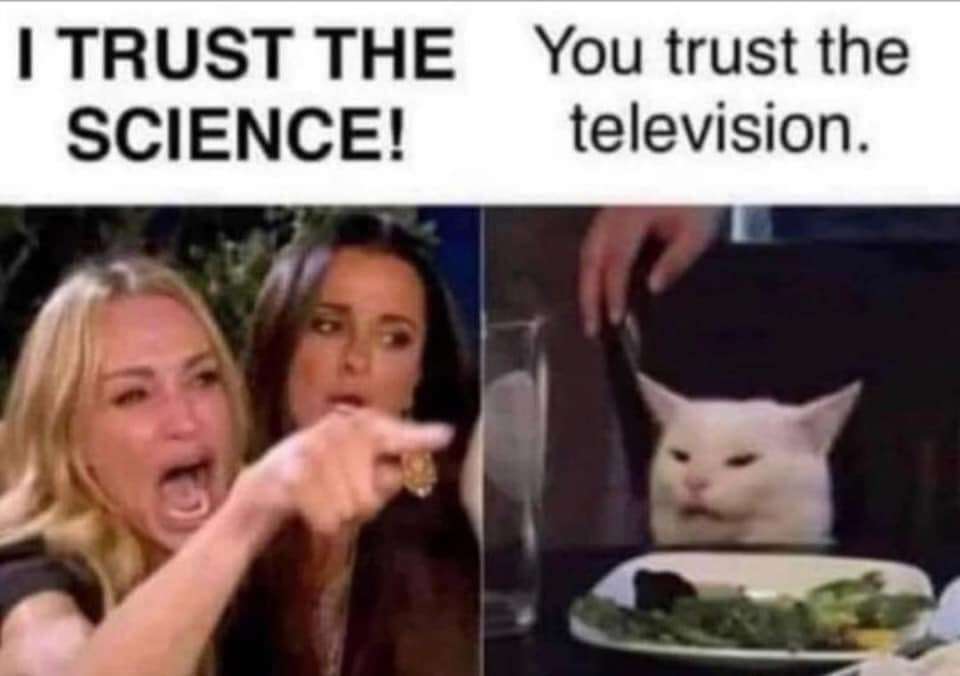


 The
The  Now my full-time jobs have lasted awhile, on average. Against the obvious expectations, this is more of a bug than a feature when it comes time to go looking, because this recruiting-world can change dramatically while I’m disconnected from it. Some people have spent twenty years or more contracting and haven’t been in any one gig for more than a year or so, which must be interesting. I lack their familiarity with the system. And so a few years after the calendar changed, I woke up from my slumber and discovered everything else changed too. This “soft skills” assessment that’s supposed to screen out double-chin guys who’d steal the dinosaur embryos, had exploded like a supernova, incinerating and consuming everything else. Fifteen years onward I’m still figuring out how to process this. The technology has become much more complicated and there are many more horror stories of enterprises hiring the wrong guy — wrong in the skills department — and having to dismiss him. And so the concern is there. But it doesn’t seem to percolate through the system. It’s like Human Resources has thrown a protective barrier around this process and imposed its own system of priorities, excluding all others.
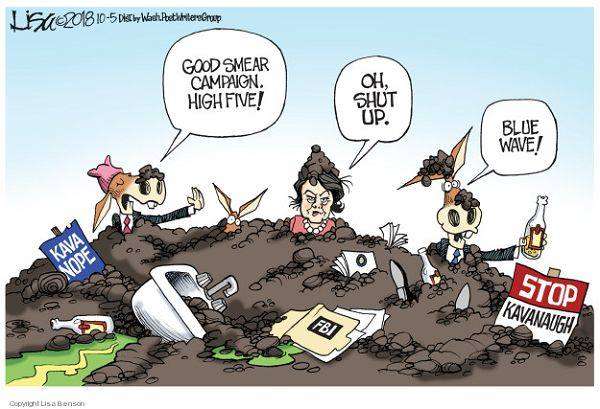 I say now, to the lads who are available and are struggling to fix what’s broken: That’s what’s broken. Fix that first. The women who are doing the selecting, like all other selecting adults, are struggling to properly assess the answer to the question “Are you serious?” And they’re confused because the most common way to resolve that is to figure out if the prospective suitor is not serious. No wonder they’re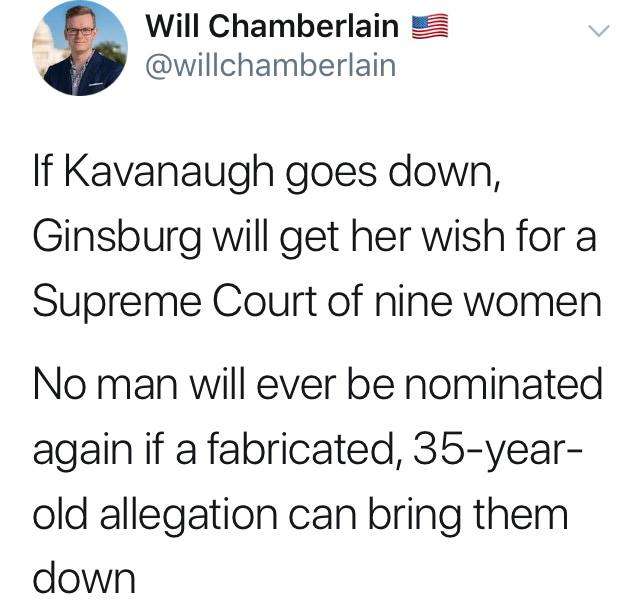
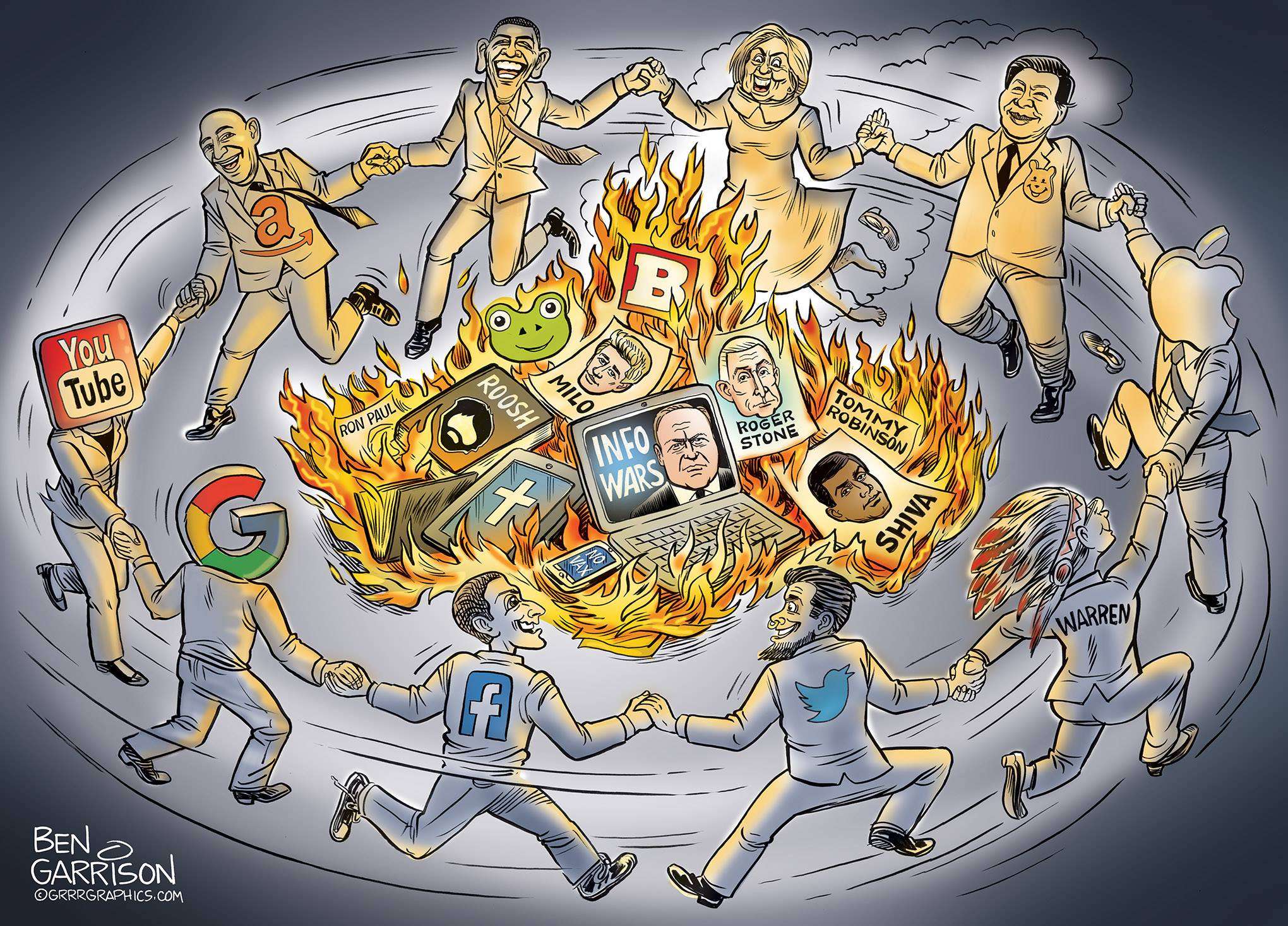
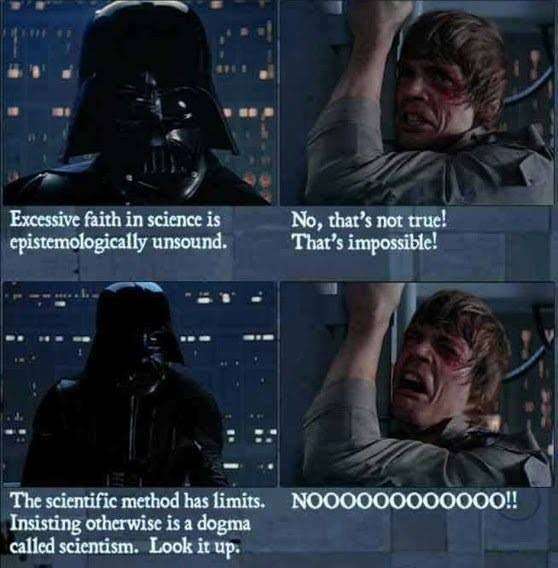 Ladyman, Ross, and Spurrett assert that “although scientific progress is far from smooth and linear, it never simply oscillates or goes backwards. Every scientific development influences future science, and it never repeats itself.” Alas, in the thirty or so years I have been watching, I have observed quite a few scientific sub-fields oscillating happily and showing every sign of continuing to do so for the foreseeable future. The history of science provides examples of the eventual discarding of erroneous theories. But we should not be overly confident that such self-correction will inevitably occur, nor that the institutional mechanisms of science will be so robust as to preclude the occurrence of long dark ages in which false theories hold sway.
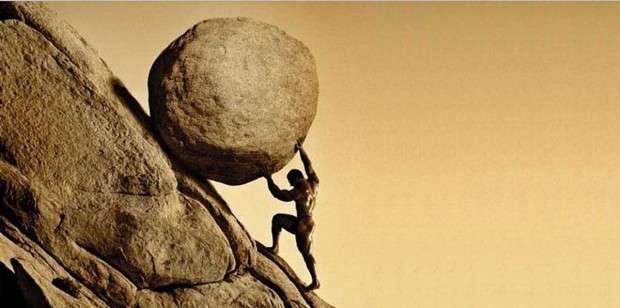 Sisyphus, in Greek legend, was an arrogant king who angered the gods on Mount Olympus, and his punishment was to
  He, or that corporation over there, made such-and-such much money and didn’t pay any taxes.
 What we should do about it is…acknowledge the truth. This stuff is powerful not just because it works on guilt, and not-shutting-up, but also because there is truth in it. Some people have good upbringings. Some people’s parents know, or knew, the right people to get them started. Those who are privileged should form an appreciation for all this. And it might be healthy to get the inventory started of all these benefits, you might find there are a lot more of them than you realized. Especially if someone else gave up something so you could have them. The falsehood is in the “you” or the “we” or the “their” or the “our.” If you are a SJW sucking in YouTube clips and tweeting up a twitstorm about “[blank] needs to check their privilege”…then you are among the privileged!
 A straw man is a common form of argument and is an informal fallacy based on giving the impression of refuting an opponent’s argument, while actually refuting an argument that was not presented by that opponent. One who engages in this fallacy is said to be “attacking a straw man.”
 3. They “diagnose” under-achieving boys in school with “learning disabilities” just for under-achieving in an environment designed for girls, and acting too much like boys.
 30. They have all these opinions about guns, like how people will react to them, how easy it is to buy one, which ones should be banned because they’re too dangerous; and yet so often it turns out the most opinionated among them have never owned or operated a gun.
 Because of personal things going on, my wife and I have been having to grapple with the definition of nihilism. It occurs to me that society-at-large, whether it realizes it or not, has been having to do the same. All this rancorous debate, the bad kind not the good kind, the discourse that generates lots of heat and very little light — it always seems to involve one side that cares passionately about not caring.
 If you know one of these kids, and you probably do…you’ll find a few items on this list that don’t work for them. Maybe all of them don’t work. By which I mean, they’ll be rejected, forcefully — meaning exactly one thing. Proving, not merely suggesting, that the nihilist has values. And he cares about them rather passionately.
 No system of values — psychological, political, or moral — can work by ignoring reality. Human aggression and men’s visual sexual interests are often treated, especially by the Left, as dispensable inconveniences rather than as core elements of the human condition.