Archive for the ‘Poisoning Individuality and Reason’ Category

I Made a New Word XVII

Wednesday, July 2nd, 2008

cat∙tle∙ness (intangible n.)

1. The proclivity of some to live like human cattle, meandering throughout their entire lives without changing the direction or outcome of anything by means of their participation, even as they may place great emphasis on the endeavor to so participate.
2. More specifically, the drive to become more receptive to the ideas of others, and to find creative new ways to communicate those ideas to even more others, coupled with a stultifying and bewildering apathy regarding what those ideas should be or the logical merits thereof.
3. The desire to criticize that which is already being criticized by others, nevermind whether or not it makes sense to criticize; coupled with a steadfast refusal to be the first to criticize something, even though it might make a lot of sense to criticize it. Human cattle tend to use the “box of donuts” rule when it comes to criticism — it’s okay to grab the biggest gaudiest dripping maple bar and start ripping into it rapaciously once someone else has already busted the box open, but nobody wants to go first.
4. Loosely, it may refer to a determination to live life for the purpose of being happy, and for no higher purpose, since cows are kept for the purpose of producing a product and it is often said they produce it in greater quality and quantity when they’re happy.
5. A drive to convince other humans in proximity to live their lives like human cattle, by means of scolding, encouragement, coaxing and bullying. To denounce individuality and independent thinking in others, once one has purged those things from his or her own psyche.

24. People who imagine themselves as part of a group, with no individual identity, don’t want anyone else to have an individual identity either.

— From Everything I Know About People, Minus What I Was Told When I Was A Child

Cattleness is both a behavior and a membership; an important part of the behavior is to seek to expand the membership. All instances of cattleness involve this recruiting, but all efforts to recruit are not necessarily related to cattleness. The litmus test is that a great, universal, infinitely-expanding mob of people is invited to participate in the behavior — but the privilege of defining what that behavior is supposed to be, is confined to an elite few.

Therefore, the commoners propel, and the elite steers; the commoners pretend to do the steering while obediently awaiting their next orders. Where that dichotomy takes place, you have cattleness.

And my inspiration, of course, is the post previous in which we’re treated to the sight of box office star Will Smith faithfully following that “Box o’ donuts” rule in criticizing a President who’s not going to be President anymore in half a year no matter what. His criticism? There must be something wrong with that guy, because the Europeans are being rude to us.

Will Smith has a bigger brain than the average cow, I’m sure; the problem is he isn’t channeling the surplus nodes and synapses, and therefore it doesn’t very much matter what equipment he has upstairs. The thought “y’know, maybe this says a lot more about rude Europeans than it does about anything else” appears to have made itself a stranger in those parts. I don’t know how you avoid even pondering it for a second or two, but thanks to his cattleness he seems to have accomplished exactly that.

Maybe I’m too tough on the guy, making up a whole new word just for him. After all, it’s not like he’s the first hollywood dimwit to criticize George W. Bush; and it’s not like he’s the first celeb to criticize President Bush just because Europeans are being rude to Americans.

It’s not like he’s the first guy to say any of the things he’s said.

But that’s exactly the point. Isn’t it?

Meister on Those Scolding Europeans and Will Smith

Wednesday, July 2nd, 2008

3. Accept all criticism, even when it makes absolutely no sense. Become less of what you are, until people decide you’re okay, even though they never will.
4. Even as you accept unreasonable criticism, avoid criticizing anything anybody else does, unless someone else is already criticizing it.

Those are two of my tips about how to earn a eulogy full of awkward, empty bromides. Agree with everything negative ever said about you even though it makes no sense, and don’t say anything negative about anything else — unless that’s become “The Thing To Do,” in which case you should dish out scoldings by the bushel. In short, let the bandwagon be your “something’s-wrong-with-that” compass.

So is Will Smith earning a eulogy full of awkward, empty bromides? He certainly seems to be trying to, I can see by Pam Meister’s expose in Pajamas Media today. The lad is younger than me, stronger than me, looks much better than most of us and who wouldn’t love to have a house and a bank account like his?

But whatever eulogy I have coming my way, I’ll keep it warts-and-all, thankewverymuch. Mr. Smith can hang on to his. I’m sure there’ll be a few non-awkward sprinklings in the nice things said about him when it’s time, his charities, his movies, funny things he did, etc. But by-and-large, he represents exactly what I was describing.

Just when you thought it was safe to go back to wading in the Hollywood cesspool, another witless celebrity decides to trash America.

Will Smith is the latest overpaid navel-gazer to join the “Embarrassed to Be a Rich American Celebrity Tour.” On a recent Today Show appearance to hawk his upcoming movie Hancock — which, if this report is correct, is likely to be a box office disaster — Smith had this to say about his recent travels abroad:

You know I just, I just came back from Moscow, Berlin, London, and Paris and it’s the first, I’ve been there quite a few times in the past five to 10 years. And it just hasn’t been a good thing to be American. And this is the first time, since Barack has gotten the nomination, that it, it was a good thing.

How incredibly popular this has become; how many Will Smiths there are. You complain about George Bush, so I’m going to complain about George Bush. If it’s nonsensical to complain about X but you’re doing it anyway, I’ll help you complain about it. If it makes lots of sense to complain about Z but nobody else is complaining about Z, I’ll keep my silence on it. The bandwagon is the compass.

Pam Meister continues to opine, raising the fascinating rhetorical question of just who, exactly, died and made the Europeans boss:

It does surprise me that Smith refers to being relieved of his embarrassment in Berlin, considering that country has moved to ban Scientology, something Smith has been dabbling in for some time now. Is the German government’s move to ban a, er, religion — in light of Germany’s history of religious tolerance — something the Germans should be embarrassed about when they travel abroad? Perhaps the next time I see a German tourist I’ll ask in somber tones, “What do you think about your government banning Scientology?” in the same manner so many Europeans like to ask Americans, “What do you think about your president?” and if you reply in a positive manner they stare at you as though you have just sprouted a second nose.

Ouch. That’s gonna leave a mark.

Mr. Smith is only among the most entertaining and appealing elite of what has become a majority, a vocal majority if no other kind, of bullying nonsense-peddlers. They insist the rest of us accept their judgment as a lodestar, while proffering that sense of judgment only as a proxy. None of ’em take responsibility for anything. They criticize, not what it makes sense to criticize, but instead what lots of folks among them are already criticizing. This has become painfully obvious as it has become later into George W. Bush’s second and final term: We can debate into all hours of the night whether or not President Bush deserves criticism, but we can’t debate whether it makes sense to criticize him. It doesn’t. What’s the other guy going to say when you make your criticism stick? “Oh that does it then, I’m not gonna re-elect him“?

So what do you say at Will Smith’s eulogy? He had the courage to criticize some things it made no sense to criticize, when a bunch of other people were already doing it. That’s an awkward, empty bromide if ever there was one.

How much company does he have? Consider the contract made by people like him: LET ME INTO THE CLUB. I will voice my opinion courageously, after others have already done it…and there is no residual question remaining about whether it is the voice of the majority or not. I will add my energy and my charisma, but never my judgment for my judgment will simply be a clone of what others have judged.

I will lean on the oar. My hand will stay off the tiller. I am propulsion; I am not direction. I change the vector but not the bearing.

I will not change the outcome. In anything. But it will be lots of fun to look at me.

What do you say about someone like that when their time comes? You say you will miss them — and then what? The thing that floats just under the surface, the elephant in the room that makes the eulogy truly awkward and unbearable, is that all fun things come & go and we adapt just fine. We will learn to get along without ’em. After we so learn, we will be better people than we were before.

That isn’t the case with people who have the courage to change an outcome — stamping their individual identities under the changes. In the middle of droning out their eulogies, you wonder what in the world is going to happen now. You wonder how things would have been different. It’s a different eulogy. Trust me, I know; I’ve delivered them. It’s a tough one to do, but I’d much rather deliver that kind, than the kind of eulogy you give for someone who has no memory worth cherishing, no outcome changed because of his presence, the guy who criticizes only that which others are already criticizing. Human cattle.

Well, maybe the fact that no eulogy can be comfortably delivered, is the point. Green burials are becoming increasingly popular in the Europe from where Will Smith takes his marching orders, and some of these are lacking in a headstone or even a ceremony. So it’s not as if these folks have failed at anything by passing through their entire lifespans without making a real difference in things. Except — Will Smith actually does good things for charity. Good for him, but I wonder how he reconciles this?

When you’re trying to avoid upsetting the status quo in looking for things to criticize…avoiding any decisions for yourself, avoiding making any disruption in what has already been decided by others…but then you want to “make a difference” in things other people will think are nice and wonderful — the common thread devolves to a singularity. And that is earning the approval of strangers. Once that becomes what life is all about, it makes for a very awkward eulogy indeed.

Dionne Didn’t Read the Decision

Sunday, June 29th, 2008

Phil’s eyes are bleeding as he reads the commentary from E. J. Dionne about the DC vs. Heller decision.

Me, I’m just shaking my head and giggling. Dionne has just ‘fessed up to writing about the decision without reading it, and the poor bastard doesn’t even realize that’s what he’s done. But to anyone who’s so much as skimmed through it, it’s crystal-clear.

Dionne writes…apparently, thinking he’s making a great point, and playing the English language like a virtuoso plays a fine Stradivarius violin…

Conservative justices claim that they defer to local authority. Not in this case. They insist that political questions should be decided by elected officials. Not in this case. They argue that they pay careful attention to the precise words of the Constitution. Not in this case. [emphasis mine]

I’m rewording slightly, here, my comments to Phil’s post (pending moderation there as of this writing):

Um, E.J., Justice Scalia began to parse out the exact wording in the Constitution on p. 2 (5 in the Adobe PDF file), and is concerned with absolutely nothing else until p. 27 (30) when he turns to relevant historical events. He even has footnotes in his analysis in which he respectfully deals with opposing viewpoints of the language.

I struggle to remember the last time I’ve seen so few words in the Constitution, analyzed by so many words in the decision that labors to fairly and accurately interpret them. Each significant noun and verb is subject to cool, reasoned scrutiny about what it might possibly mean and what it could be reasonably interpreted to mean. The reading within those 26 pages, as one might expect, ends up being a little dry; so I suppose it’s understandable you couldn’t get around to grinding through it — except, that is, for your wanting to write about it, in which case I would have expected you to at least crack it open.

Now you’re nailed. How embarrassing for you.

How did a talented, intelligent guy like Dionne get here? By being overly concerned with what others are thinking, and trying too hard to be a loyal member of a group. From there the words “The Constitution,” seemingly unambiguous, take on a life of their own. That phrase comes to represent the intents not of the Founding Fathers as they signed a specific document, but of liberals in good standing.

So he ends up bitching at Scalia for not being a good liberal. But as he delivers his snotty lecture, behind him the trained eye can see the DC v. Heller decision lying on his desk, with the seals intact, under a thin layer of dust. Dionne didn’t read it. Dionne didn’t skim it. Dionne knows not of what he speaks. Dionne’s opinion is utterly worthless, and he’s the last one to know how much.

But where it really sucks to be Dionne? A year or two from now, DC v. Heller will be a part of law that you will be expected to know if you’re a first-year law student. It does what Supreme Court decisions are supposed to do — end the debate, not with phony aristocratic authority, but with reasoned scrutiny and logic. It’s settled, and the nation will by then have moved on…and Dionne will be hoping-against-hope that the law students will somehow remain ignorant of his ignorant comment on it.

How to Earn a Eulogy Full of Awkward, Empty Bromides

Saturday, June 28th, 2008

1. Don’t notice anything someone else hasn’t already noticed even if it becomes painfully obvious; and if you do notice it, don’t say anything.
2. Don’t look for ways to make anything better.
3. Accept all criticism, even when it makes absolutely no sense. Become less of what you are, until people decide you’re okay, even though they never will.
4. Even as you accept unreasonable criticism, avoid criticizing anything anybody else does, unless someone else is already criticizing it.
5. Be eager to contribute your energy but avoid contributing your judgment — don’t decide anything. Just be a beast of burden.
6. Don’t do anything that involves risk; before you become part of something, make sure it’ll succeed just as well without you as it would with you.
7. Don’t take yourself too seriously, in fact don’t take yourself seriously at all. Be the comedy relief.
8. Don’t do anything until you’re sure it will earn approval from others.
9. When choosing people to do things for you, favor the mediocre.
10. Avoid decisions; when forced to make one, side with the majority.
11. Learn by repeating what others have to say. Don’t validate anything; when you see authorities contradict each other, decide in favor of the ones you presume have power over you.
12. Eschew any form of confrontation — except, that is, for confronting people who aren’t following the eleven rules above.

14To the angel of the church in Laodicea write:

These are the words of the Amen, the faithful and true witness, the ruler of God’s creation. 15I know your deeds, that you are neither cold nor hot. I wish you were either one or the other! 16So, because you are lukewarm—neither hot nor cold—I am about to spit you out of my mouth.
— Revelation 3:14-16

Stare Decisis, and Panic For Sake of Panic

Friday, June 27th, 2008

I was checking out Brutally Honest, Rick’s site to follow up on a mildly interesting and explosively-expanding thread underneath the Harley Davidson “Screw It, Let’s Ride” commercial. I have found it to be a dialog worth following, because it has morphed into a deliberation of manhood; an inspection of what, exactly, it is. We can always use more of that, and I’ve noticed both sides are putting a lot of thought into it. Rick (and Gerard too, evidently) sympathized with the ad and the attitude it sought to promote. Guest blogger and frequent commenter BroKen did not. It would seem at first blush that such an exchange wouldn’t have much place to go, since it’s a battle between pet peeves and therefore between emotions. Rick is sick and tired of being told the planet is in danger and we all need to buy some carbon credits and unplug our cell phones; Ken is sick and tired of apathetic, irresponsible people.

I think Ken’s crime, here, is one of overanalysis. He’s rather like the guy who’s told the urban legend about the late-night pedestrian who sees two headlights coming toward him, assumes they’re motorcycles, and goes between them…is DRT (Died Right There)…and upon hearing the story, the guy asks “but how do they know what he was thinking if he died?” Sometimes logical questions can open up entire sub-arguments that, when all’s said & done, aren’t worth pursuing. It’s possible.

Also possible, is the Panic For Sake Of Panic, and although I’m sure Rick has other examples in mind besides global warming, the environmental movement is certainly central to his inspiration. We’re being called-upon to panic over things quite a lot lately. Panic is not constructive thinking. Masculinity, Ken’s comments about it notwithstanding, can have a lot to do with letting it pass by with little action, or even no action at all. This would be the “keep your head together” aspect of manliness. In the case of the gas that costs almost five bucks a gallon, our error is in forgetting supply-and-demand, being too quick to blame cartoonish stereotypes like “Oil Executives”…presuming that our destruction is desired by people who are engaged in trade with us, and not by the people who seek re-election to Congress periodically through messages that resonate with our suffering. In the case of global warming, we’re confronted by a boogeyman that exists in the mind. Buzzwords, a few “scientists” funded with George Soros’ money, the allure of knowing massive bureaucracies and orthodox fellowships are already mobilized into motion around the boogeyman. The ambition to be part of something huge, nevermind having no impact at all on what it does based on one’s individual participation in it. Like the Barack Obama campaign, modern radical environmentalism has become a tantalizing pastime for those among us who lack intellectual masculinity. Those who desire to clamber on board a massive ship so they can be seen being on it, to grab an oar and help row it so they can be seen rowing it…and have nothing to do with steering it. Steering entails decision-making, and decision-making involves far too much responsibility for the gelded mind.

The four-word tagline “Screw it, let’s ride” is a joke that’s gone over Ken’s head, I’m afraid. In some situations, it can be a healthy and mature attitude. Like, anytime panic is the point. When someone nameless and faceless wants you to lose your bearings, and whispers scary campfire stories into your ear so you’ll fearfully listen to whatever comes next. The headstrong, able-minded manly man says “screw it, let’s ride.”

Through the kernel of truth that was involved in the scary story to make the remaining 99% of the panic digestible, this may entail risk. But we tend to forget that life is all about risk, and it is only through the elimination of life that you completely eliminate all risk.

Enough about that particular confusion vis a vis manhood, masculinity, manly thinking, etc. Let us examine another flavor of such confusion. Let us turn our attention from those who over-analyze, to those who do not analyze enough.

Rick has some more good stuff that is worthy of comment.

Dahlia Lithwick has made a career out of commenting on American law, especially as it is molded and shaped in our Supreme Court. She was born, and remains, a Canadian citizen. If you’ve exchanged ideas over the innernets with enough Canadian citizens about American law, as much as I have, you know what’s strange about that. For the benefit of the uninitiated, I shall expound…

The weakness in her mindset is betrayed by the passage:

The conventional wisdom that the Supreme Court is precariously balanced on a knife’s edge—with four liberals and four conservatives battling for the heart and mind of swing Justice Anthony Kennedy—is too simplistic. The current term has seen enough unanimous and near-unanimous decisions to suggest that the story of a 5-4 court is dramatic but inaccurate. That said, it’s clear there are four justices on the bench who deeply mistrust the judiciary, in the manner of a Rockette who doesn’t care for dancing. Dissenting in this month’s habeas case, Justice Antonin Scalia predicted that judicial overreaching “will almost certainly cause more Americans to be killed.” John Roberts added that “unelected, politically unaccountable judges” should not shape detention policy. One more jurist at the high court who generally believes that jurists cannot be trusted would spell the difference between a court that is a coequal branch of government and one that cheers from the bleachers. [emphasis mine]

Okay, now for this to make any sort of sense — you have to believe that any self-imposed limitation on the Supreme Court’s authority would be tantamount to an internal, self-criticizing belief “that jurists cannot be trusted.” Her “Rockette” crack makes it clear, to me, that she means to devalue such restraint, to make it equivalent into almost to sort of a mental illness. Perhaps she doesn’t realize the extraordinary intellectual difficulty that would be involved in applying this rule to the Supreme Court, and keep other institutions insulated from it, but I’m willing to go out and a limb and presume: Dahlia Lithwick does not believe in restraint of authority anywhere. Wherever someone can order something, they should. She probably liked it just fine when Gavin Newsom handed out marriage licenses when the law clearly said he didn’t have the authority to do it; I’m sure she was just as fond of the Supreme Court giving George Bush the smackdown over Guantanamo detainees and military tribunals.

How about President Bush’s decision to form those tribunals before the Supreme Court decision came down? If I’m correct in thinking Lithwick admires lack of authoritative self-restraint, that’d be a great example of it. Her careless, breezy use of the word “coequal” implies that she thinks the three branches should be able to do more-or-less the same things, and her implication that the Supreme Court carries legislative power would help to substantiate that. Somehow, I don’t think Lithwick is going to be quite as big a fan as that. No, she likes restraints on government-branch power to be jettisoned, when the decision under consideration is one she happens to like.

You simply can’t have separation of powers…a uniquely American doctrine…with that in place. Furthermore, as it’s been pointed out in many other places since then, Lithwick is engaged in some Holy Battle in which we old white males represent the forces of evil, because we’re old, white and male:

Anybody who believes the current Supreme Court looks like America needs to take a few more trips on a Greyhound bus. All the judges are white and/or old; most are both. [emphasis mine]

I have to stand on what I entered at Rick’s place:

What I wouldn’t give for a pleasant (hopefully, to stay that way) dinner conversation with her, or someone from this planet. Is their idea of the “wall of separation” between judiciary & legislature, the same as mine? Do they even have one? Or are they so much into “pack every single panel that has any authority at all with good people like me” that they haven’t even put that much thought into it?

In order to define what exactly is wrong with nutty, delusional people, sometimes it’s necessary to state the obvious. Popular belief notwithstanding, this is something I really hate doing…but let’s go for it.

You have a law. Like most laws, it leaves room for interpretation. Perhaps because the law exists in a context in which it’s impossible to avoid that, or perhaps because the law just happens to be worded badly. Let’s make it a badly worded law to make the example clearer — the law is:

Don’t Drive Fast Here

You drive through there at 45 because you think that isn’t fast. Why, on the freeway, you’re allowed to go as fast as 65! But the cop who busted you thinks anything over 30 is pretty fast. He busts you. You appeal. The case goes all the way to the Supreme Court.

The Court, here, essentially has two options: 1. It can uphold your penalty or 2. It can let you off the hook. It comes down to the “opinion” of the Justices overruling all other opinions now and forevermore (or at least, until a better sign is put up with a better law behind it). The side effect is that, if you are let off the hook for driving 45, it will become legally impossible to cite someone for driving through the same thoroughfare doing 35. On the other hand, if you’re busted, then anyone who gets a ticket for driving 55 and wants to appeal can just forget it.

This is jurisprudence. It is, specifically, stare decisis et non quieta movere; “stand by and adhere to decisions and not disturb what is settled” — or at least, that’s what it is called the next time a different case presents the same question. It is “law,” in all the ways that matter, but without democratic participation by the electorate, without critical thinking, without deliberation about cause-and-effect. Consistency is the only virtue to it.

I made reference to Lithwick’s “planet.” On mine, stare decisis is a noble ideal but when too much emanates from it, that is a toxic agent. So people like me see the Supreme Court as engaged in a struggle, to continue deciding cases for as many decades as possible without hopelessly tying itself up into a huge knot. The nightmare scenario is one in which stare decisis runs headlong off in one direction, and common sense sprints in the opposite direction. At that point, the Supreme Court must overrule itself, and admit that justice has been miscarried. For years.

Lithwick’s planet is one in which this is a desirable outcome. Bad laws like “Don’t Drive Fast” breathe life into the judicial branch, give it a reason for being “coequal,” and the courts are at their most noble and glorious when they seize this false authority and wield it.

I do not know what people on Planet Lithwick mean by “coequal,” exactly. I really don’t. I don’t think they know either. It’s clear to me they think decisions are “good” when they exude greater volumes of stare decisis side-effect…make things illegal that weren’t before…make things legal that were illegal before. It’s obvious they think more highly of the decision when the interpreted effect is contrary to the reasoned expectation of Congress, or other lawgivers, when the laws were legislated or ratified. They place a value on unintended consequences.

On my planet, we call that what it is: Bad law. We count on the judicial branch to step in, and make law that way where it did not exist previously — when Congress is unwilling, or unable, to do it’s job. And it’s an occasion for mourning, not celebration, because we know a law has just been made that has no common sense behind it. We know a “committee” decision — the most dreadful kind — has just been made, and nobody will be accountable to it because it will not have been made in any one individual’s name. Breathy, throwaway phrases like “evolving social mores” and “standards of decency” will be used to announce the results of polls — polls that were in fact never taken. Impact without ownership. Remember what I said about decision-making being an unacceptable burden to a gelded mind. This is an entire system of government, ruled by gelded minds.

So I agree with Planet Lithwick about the stakes being “very high.” She’s right. Just not in the way she thinks she is.

This is America. You may have heard of it, Dahlia. It is a place where our Supreme Court, and all the rest of our judicial branch…is not a supplementary Congress.

Our real Congress has long vacations for a reason, after all — we can only take so much of what they do. The courts are places where Congress’ messes are cleaned up. Congress certainly doesn’t need help making them.

Plagiarizing Goebbels

Thursday, June 26th, 2008

The Anti-Idiotarian Rottweiler thinks George Lakoff, author of “The Political Mind” (Viking, $25.95) is stealing material from Joseph Goebbels. Lakoff’s point is that we’re voting “the wrong way” because our synapses are being unfairly exploited by conservatives, and if “progressives” simply retool their messages to manipulate our frames of references rather than give us these pesky “fact” things, we’ll start voting the right way again. Which is a chuckle and a snort to anyone who’s been paying attention to what kind of material the “progressives” have been selling up ’til now…sure they’ve got problems, but dishing out facts doesn’t seem to be one of ’em, at least to me.

They think they can win elections by citing facts and offering programs that serve voters’ interests. When they lose, they conclude that they need to move farther to the right, where the voters are.

This is all wrong, Lakoff explains. Neuroscience shows that pure facts are a myth and that self-interest is a conservative idea. In a “New Enlightenment,” progressives will exploit these discoveries. They’ll present frames instead of raw facts. They’ll train the public to think less about self-interest and more about serving others. It’s not the platform that needs to be changed. It’s the voters. [emphasis mine]

As Rottie has pointed out — the idea that liberals offer “programs that serve voters’ interests” is something of a hoot as well. That is, unless you consider the possibility that liberals have now successfully recruited so many illegal aliens and dead people into the voting process that the term “voter” has substantially changed.

And I’m wondering how neuroscience goes about showing that self-interest is a conservative idea. What’re they doing, strapping a guy in a chair, having him make self-interested choices in some creative experiment and then peeking at his “conservative” lobe to see if it lights up? Hmmm, I wonder what the conservative lobe would be. I would guess when you know a stove is hot, the liberal lobe is the one that lights up when you think “I think I’ll put my hand on that” and the conservative one would be the one that lights up next time ’round, when you think “that didn’t turn out so good, I believe this time I will not be doing that.”

From this, Lakoff’s agenda follows. In place of neoliberalism, he offers neuroliberalism. Since voters’ opinions are neither logical nor self-made, they should be altered, not obeyed. Politicians should “not follow polls but use them to see how they can change public opinion to their moral worldview.”

Yeah, I’m reading through all this stuff and you know what I’m seeing?

“I want liberal ideas to prevail and they damn sure aren’t going to prevail if those promoting them continue to muddle around with ‘facts’ and ‘logic,’ so I want them to start selling snake oil instead.”

And I don’t think Goebbels is the only one plagiarized here. I remember seeing it just a short time ago. Ah…here it is — here and here and here.

This column from Robyn Blumner about a psychology professor named Drew Westen telling Democrats to abandon fact-based campaigning and employ emotional tactics instead would be knee-slappingly hilarious, something fit for the pages of The Onion, were she not so gosh-darn serious about it all.

In one exceptionally clear 400-page volume, Drew Westen, a professor of psychology at Emory University, lays out everything that Democrats have been doing wrong. He explains it all in neuroscientific terms according to what regions of the brain control political decisionmaking, but it comes down to this. In election after election, Democrats have been appealing to the dispassionate, rational, fact-sensitive voter. A being, apparently, who doesn’t exist.

According to The Political Brain: The Role of Emotions in Deciding the Fate of the Nation, winning elections is all about influencing feelings and emotions. Westen says bringing more passion into politics requires the use of storytelling narratives and other emotional cues that powerfully engage those circuits of the brain that recruit and reinforce beliefs.

Democrats keep losing presidential campaigns, not because the issues they stand for are unappealing, but because they tend to structure their campaigns to engage the brain’s reasoning centers. And that just doesn’t cut the synaptic mustard.

I actually heard about this guy on Rush Limbaugh the other day. Basically, his strategy for winning elections for Democrats is to have them appeal to the emotions of voters rather than their reason. Which, to me, sounds a bit like “just tell ‘em what they want to hear.” Not to mention more than a little insulting for American voters. Apparently we’re all a bunch of morons who aren’t smart enough to wrap our minds around the brilliance and nuance of liberal policies.

Though I’m curious as to how Professor Westen thinks won Democrats the last election. Did they win because they just told Americans what they wanted to hear? Did the Democrats abandon reason and play on our emotions?

Exactly the question I had with this Lackoff guy. We’re still in the first term of the Marc Foley Congress, in which democrats took charge of everything because we “all” figured out they’re so great and Republicans suck so much. That’s what I keep getting told, anyway…doesn’t that mean our “progressives” are happy with the way things turned out? Westen’s masterpiece popped up during this first term, in fact when the victory was supposedly still fresh. Lackoff’s book, also, is published during this first term.

I’m already familiar with the fact — oops! Sorry guys! — that liberals have a distinct tendency to engage schemes that have failed repeatedly…like universal healthcare, minimum wage, price caps, gun control, the list goes on and on. So it took me by surprise, although I suppose maybe it should have been a foregone conclusion, that they want to change things that have worked well.

Is that what’s going on here? Or should I stick to my original theory, that the way they run their political campaigns is in a manner completely opposite to the way they want to run things once they accumulate more power across the national landscape? I’d like to know which it is, because I like that original theory better and it seems to hold true. You little people should be ashamed of being able to hold on to your money…we can have tax loopholes…you should ride razor scooters to work…we get to ride in limousines…you have to call 911…our bodyguards can carry Smith & Wessons…the world is mad at you for recognizing enemies…we shall prevail over our Republican opponents no matter what it takes…

Either way, I pity the poor democrat strategist who’s been tasked to read Lackoff’s book and look for ways to implement it. How do you shun facts, and embrace phony propaganda, more than the democrats have already been doing it? How do you repeat empty, vapid messages more often than they already have? In 2008 they’re down to just repeating the monosyllabic “hope…change” over and over again.

And, finally, I have to revert back to one of my favorite questions about liberals. Wouldn’t it be nice if they could rustle up just half the acrimony, half the anger, half the resolve and half the determination to prevail against an enemy at any cost — against the terrorists, as they do against Republicans?

A Blue State Columnist Comments on Our Gun Culture

Sunday, June 22nd, 2008

My goodness, that thing I know about people that nobody told me when I was a child, is getting a good workout. Let’s start with the headline of the column:

Walsh: Time to grow up and put your guns away

Christ on a cracker, are we in a competition for the “snooty condescending prick” award here?

I understand the thrill of firing a Glock (I’ve done it), the euphoria of hitting the center of a target (and that, too), generations of family deer-hunting weekends and the legitimate self-preservation instincts of Utah’s elected concealed weapon carriers.

But the OpenCarry movement is a mystery to me. What kind of psychology – overcompensation, paranoia, antisocial personality – is behind that thinking?

Uh…how about taking real responsibility for something, as in, “I’ll pack the equipment to do it myself if everything else fails”? And since that is a far bigger issue than just the conceal-carry situation, you, Ms. Walsh, have just revealed yourself to be a stranger to that line of thinking. Good. Now I know you’re one of those “I done my bit and if it goes to crap it’s not my fault” people.

Hope nobody’s depending on you for protection.

“Second Amendment questions aside,” says [Anthropologist Charles] Springwood, a professor at Illinois Wesleyan University, “the real debate seems to me a cultural and social one: Do we want a society in which it is an unconscious emblem of everyday life that folks move about with ‘portable killing machines’ strapped to their bodies?”

Well I dunno. I was born well after the days of the Old West, so I haven’t lived in “a society in which it was an unconscious emblem” blah blah blah. But I was born in the sixties. So I’ve lived in a society in which violent criminals got arrested for damaging property and hurting people, and released on technicalities, and then when men women and children were chopped down like cattle marching to slaughter the law rolled it’s eyes and sighed and said “ah, well.”

Ms. Walsh, I recommend you just think of it as the mark of a civilized society — people living here have the right to defend themselves. That means, if they anticipate something bad might happen to them they can prepare for it, and it’s not the business of you or the busybody lawyers and anthropologists in your rolodex to second-guess ’em about it. Nerdy little boys, getting beaten up by bullies on the playground, can hit back. All that good stuff.

Mark of a civilized society. As opposed to one that requires the people living within it to just sit around waiting to be victimized…which would be the mark of a primitive society.

Oh, and that thing I know about people that nobody told me when I was a child, that’s getting such a good workout lately? That would be #27:

27. People who make a conscious decision not to offer help or defense to someone who needs it, don’t want anyone else to help or defend that person either.

Memo For File LXII

Saturday, June 21st, 2008

Now that I’ve picked on him, noodle on the following as an equal and opposite righteous thrashing of the other guy. Along with all those bosses you know you’ve had…the aggravating ones that, now that you’re done with ’em, they haven’t been worthy of too much thinking since then.

I was trying to find this description of Wesley Mouch in Atlas Shrugged, last year sometime, and anytime you go looking for anything in Atlas Shrugged it’s like finding a tiny needle in an enormous haystack. I came up empty back then — and then when I went looking for the passage about Cherryl Taggart (finally locating it on p. 827) I stumbled across the Mouch thing on p. 496.

It’s pure gold. Describes much in our lives. More than it should. You know people like this; you know you do.

Wesley Mouch came from a family that had known neither poverty nor wealth nor distinction for many generations; it had clung, however, to a tradition of its own: that of being college-bred and, therefore, of despising men who were in business. The family’s diplomas had always hung on the wall in the manner of a reproach to the world, because the diplomas had not automatically produced the material equivalents of their attested spiritual value. Among the family’s numerous relatives, there was one rich uncle. He had married his money and, in his widowed old age, he had picked Wesley as his favorite from among his many nephews and nieces, because Wesley was the least distinguished of the lot and therefore, thought Uncle Julius, the safest. Uncle Julius did not care for people who were brilliant. He did not care for the trouble of managing his money, either; so he turned the job over to Wesley. By the time Wesley graduated from college, there was no money to manage. Uncle Julius blamed it on Wesley’s cunning and cried that Wesley was an unscrupulous schemer. But there had been no scheme about it; Wesley could not have said just where the money had gone. In high school, Wesley Mouch had been one of the worst students and had passionately envied those who were the best. College taught him that he did not have to envy them at all. After graduation, he took a job in the advertising department of a company that manufactured a bogus corn-cure. The cure sold well and he rose to be the head of his department. He left it to take charge of the advertising of a hair-restorer, then of a patented brassiere, then of a new soap, then of a soft drink — and then he became advertising vice-president of an automobile concern. He tried to sell automobiles as if they were a bogus corn-cure. They did not sell. He blamed it on the insufficiency of his advertising budget. It was the president of the automobile concern who recommended him to Rearden. It was Rearden who introduced him to Washington — Rearden, who knew no standard by which to judge the activities of his Washington man. It was James taggart who gave him a start in the Burueau of Economic Planning and National Resources — in exchange for double-crossing Rearden in order to help Orren Boyle in exchange for destroying Dan Conway. From then on, people helped Wesley Mouch to advance, for the same reason as that which had prompted Uncle Julius: they were people who believed that mediocrity was safe. The men who now sat in front of his desk had been taught that the law of causality was a superstition and that one had to deal with the situation of the moment without considering its cause. By the situation of the moment, they had concluded that Wesley Mouch was a man of superlative skill and cunning, since millions aspired to power, but he was the one who had achieved it. It was not within their method of thinking to know that Wesley Mouch was the zero at the meeting point of forces unleashed in destruction against one another. [emphasis mine]

Kinda reminds me of a certain energetic and charismatic young man — a decidedly underqualified young man — running for President this year. But that’s just my opinion, of course.

Update: One of that underqualified young man’s supporters argues for nationalizing the refineries…as classic an illustration as can possibly exist, of confusing mediocrity with excellence.

Link: sevenload.com

Hat tip to St. Wendeler at Another Rovian Conspiracy. The uh, er, socializing, I mean, uh, whatever was acknowledged to be a Maxine Waters “oopsie” moment…mouth started getting ahead of her brain there. Well, it doesn’t seem to have been a misstatement at all. As St. Wendeler points out, they’re getting more brazen, more sure of themselves, and their true colors are starting to show.

They’re disciplined in dealing with the situation of the moment, and therefore presume that those among them who are capable of amassing power, must be cunning and brilliant and therefore their plans must be ingenious. It’s a simple case of mediocrity being confused with excellence. And plans that have been tried repeatedly, and failed, being thought to possess some sort of beneficiality or merit.

Be afraid; be very afraid.

Thing I Know #230. We’d call them “rationalists” if they thought things through rationally; that’s why they’re called “socialists.”

Obama Underwear Run

Saturday, June 21st, 2008

UCLA students show their support for the Obamessiah — you’ll notice, there seems to be something terribly wrong with keeping that kind of support secret — by streaking in their underwear.

There’s another first in the Barack Obama campaign, and it came from UCLA students. Hundreds of UCLA men and women donned designer underwear with Barack Obama’s picture on the front, and dashed across campus early Thursday.

The briefs were the creation of designer Andrew Christian. A silhouette of Obama was on the front, and “08” on the back. Christian said the Obama underwear run were a perfect vehicle for him to premiere his campaign-themed garments. He might consider a Hillary Clinton bra, if she makes the ticket as vice-president.

There won’t be any John McCain underwear, since Christian is a Democrat.

My gal came up with a priceless retort to this. Okay, so a President Barack Obama is in favor of unruly kids running down the street without any clothes on — duly noted.

The underwear run is an annual event at UCLA. It’s a way for students to blow off some steam, before final exams.

Why bother? This kind of gets into the previous bunch of ramblings about critical thinking, and the paradox called out there certainly applies here.

College is a place where you or your parents pay some premium tuition so you can learn how to think critically — it costs more now than it used to, and you have a lot more time to learn how to do it than your parents ever did. And yet, what passes for college-level decision making today, is looking around, seeing that your pals are streaking in their underwear, and deciding to vote the way they’re voting because it’s so coooooooool.

Tomorrow’s leaders.

Color me unimpressed. Umptyfratz-and-eleventy thousand dollars should be able to buy some better critical-thinking skills than that.

Scott McClellan Doesn’t Know

Saturday, June 21st, 2008

Over in Ed Morissey’s corner at HotAir, he points to Anchoress, who notes something interesting about Scott McClellan’s testimony regarding the +++rolls eyes+++ Plame “scandal”:

Well, I’m sure Congress feels like they accomplished something today with their interrogation of former White House press secretary Scott McClellan. After making a series of inflated allegations in his memoirs, What Happened, he told Congress that he really doesn’t know what happened — at least not in l’affaire Plame. When asked whether President George Bush knew about any effort to leak Valerie Plame’s identity to the press, he said Bush didn’t know about it — and McClellan doesn’t know anything about anybody else’s efforts, either:

U.S. President George W. Bush did not know about a White House effort to leak the identity of a CIA agent but tried to protect staffers who were involved in one of the biggest scandals of his administration, former Bush spokesman Scott McClellan told Congress on Friday.

McClellan said he did not think Bush was involved in a 2003 effort to blow the cover of CIA agent Valerie Plame Wilson, whose husband had accused the administration of twisting intelligence to justify the Iraq war. …

Vice President Dick Cheney’s involvement in the leak might have been greater, McClellan said.

“I do not think the president in any way had knowledge about it,” McClellan told lawmakers. “In terms of the vice president, I do not know. There is a lot of suspicion there.”

McClellan said that Bush ordered him to tell the press that Karl Rove and Scooter Libby didn’t have anything to do with the leaks, through the chief of staff at the White House. However, that might be because Bush believed that they didn’t. If Bush didn’t know about the supposed effort to leak Plame’s identity, then it stands to reason that he believed the assurances of both men that they didn’t have anything to do with it. And since neither of them had talked with Robert Novak, in whose column the leak occurred, that may well have been the case — at least as far as Bush was concerned.

Anchoress opines further at Pajamas Media. This is why I like Anchoress — the subject to be explored, is what immediately popped into my head when reading Mr. McClellan’s “testimony,” indeed pops in there just about any time I’m reacquainted with my disgust over this Plame thing: Critical thinking, and the desperate fit of thrashing around it’s doing lately on its deathbed.

“Yeah, it is that simple. He lied, and we all know it. So STFU. Now.” — Marecek

That was one of 1,643 comments left in response to Fred Hiatt’s June 9 piece in the Washington Post, entitled “Bush Lied? If Only It Were That Simple,” which covered the findings of the Select Committee on Intelligence, headed by Senator John D. Rockefeller IV (D-WV).

Marecek’s was the majority opinion.

In writing his piece for the editorial page of the Washington Post, Hiatt — that page’s editor — made the mistake of actually quoting passages of this report, which claimed that a host of “lies” of which President Bush has been accused since 2003 were “substantiated by intelligence.”

Vituperation and ad hominem attacks were left as commentary at the paper’s website, with calls for Hiatt’s immediate firing, for — apparently — his treason in quoting a report, written by a Democratic majority, that dared to depart from a narrative that has become conventional wisdom.

You know? The more I think about this lying idiot that edits WaPo, the more I realize how venal and corrupt the neo-cons really are. They really have no shame. No shame at all. Their corruption is complete. Frankly, the Emperor in Star Wars had more integrity than these neo-cons. Hiatt truly is a lapdog. — santafe2

I showed the article and comments to several friends of various backgrounds. One who works in media shot back: “if you don’t like the message, ignore it and kill the messenger!”

A friend who homeschools her children — and does it so well that the oldest has won a full academic scholarship to a university — was surprised that commenters would express such contempt not for the committee findings, which contradicted their worldview, but for the reporter who covered it. “It’s illogical,” she said. “Do public schools no longer teach critical thinking skills?”

Curious about that myself, I asked a friend who teaches social studies at a local and very well-regarded high school. “We’re supposed to be teaching critical thinking,” she said. “It’s in all the local and state standards, but in practice … there’s only so much time.” [bold mine]

I wish words could express my extreme lack of sympathy.

If, over the last two hundred years, we had somehow regressed from a technologically-rich culture stuffed chock-full with iced mocha vanilla lattes, iPods, a personal computer in every house running a 32-bit flat-memory-model operating system, flatbed scanners, twelve megapixel digital cameras, coffee cup warmers, Tivo, wireless hubs, tablet PCs, snips snails and puppy-dog’s tails…down to a dystopian wasteland in which everyone can do whatever they’re going to do after putting in their fifteen hours a day plowing fields for the spring potato planting, so that their ten or twelve children don’t starve to death, that is the ones that don’t succumb to smallpox or yellow fever or malaria — had we gone in that direction, then I could see it. Oh dear oh dear, there’s all that planting and harvesting to be done. We’d better just cover reading, writing and penmanship. Critical thinking they can learn to do at home (they’d have to do it anyway, huh?).

As it is, we’ve been trudging headlong in the opposite direction. We have comfort. Our grandparents did not. The widespread loss of critical thinking is something far more poignant than an event transpiring coincidentally with our accumulation of jewel-encrusted cell phones and dogs bred to be carried around in $600 purses. It is a symptom. We don’t think critically because there’s little need to. If you can’t think your way out of a paper bag — you’ll still have a warm dry place to sleep tonight, and a plateful of grub when you get up tomorrow. Necessity gone. Critical thinking, a thing of the past.

How tough do we have it, really? Our most threatening menace is a gallon of gas that costs four dollars and sixty cents. And we really don’t have much call for facing down such a menace; just bitching about it for a second or two, and we’re done with that. So we don’t confront threats. We don’t do it every day, we don’t do it once a month, we don’t even do it as the years roll by. Without the necessity of truly confronting a threat, in command of responses-to-stimuli that can actually change the outcome, the need to think critically becomes a memento from the distant past.

What you’re seeing here is the struggle to remain part of an accepted group. Hey look at me I still think Bush lied. Hey look at me I have all this dripping acrid venom for anyone who suggests otherwise. Look at me, look at me, look at me…I’m saying all the right stuff.

Please let me keep my membership card.

Meanwhile — Scott McClellan doesn’t know much of anything. There are no facts to back up this opinion that Bush, Cheney, et al, lied. There is only the big money of George Soros, spent to convince teeming millions of fellow citizens that they did. This provides reassurance that there will be a large group, ready to accept anyone who hates Bush and is willing to say so. And membership of a group — any group — has taken the place of a bushel of grain. It is the new coin of the realm, the new token of continuing survival. There has to be one, at all times, you know. It’s how we operate.

Without the necessity of getting that fall harvest in, or of killing diseases before they wipe out your whole family, or driving off a pack of wolves with a blunderbuss — or something like those — all that’s left is the challenge of staying socially accepted. And you’ll notice as these challenges continue to disappear, the challenge of staying socially accepted becomes something that has to be “confronted,” such as it is, more and more frequently. The membership is up for renewal every month, then every week, then multiple times a day they have to spew their nonsense to stay inside that glorious perimeter.

This acceleration over time rises up as an especially intriguing commentary on the human mind and how it works. I would almost call it an indictment; logically, no protective countermeasure should have to be brandished or deployed with greater frequency, as the associated threat is in a state of recession…but here we are. What we’re seeing is a short-circuiting that takes place, manifesting our collective conscious’ inability to deal with diminishing problems: With a constant voltage, current is inversely proportional to resistance, so with resistance removed the current skyrockets toward infinity, eventually melting down whatever hardware is used to carry it.

That’s what is happening to us. That is precisely what is happening to us.

How else to explain it? The social studies teacher has time to teach critical thinking, time that teachers of the post-civil-war era didn’t have. And she can’t quite get ‘er done. Not that I would blame her; the kids aren’t ready for it anymore. Their circuitry has melted down.

Collecting their news and information from Comedy Central and internet forums rich with satire and irony, everything has become a joke for our young — the “truthiness” that “feels” right, an acceptable alternative to solid facts or findings. But clever jokes and easy cynicism will not right the wrongs of the world or encourage serious governance over the cartoonish politics of the day.

I should mention I first learned of Anchoress’ fine piece via Rick, who has his own thoughts.

This is a great splitting-boundary between the stuff we call conservatism and the opposite stuff we call liberalism. It defines the boundary because it identifies an area in which we are adapting to a new set of challenges by jettisoning the abilities we needed to confront the older set of challenges. We are evolving, and in so doing, becoming less capable.

Boiled down to its essentials, modern-day liberalism asserts that all evolution is good, even if it incorporates weaknesses that did not exist previously, or expunges capabilities and talents that did. Conservatism is simply a more open-minded and curious opposite, daring to pose the question: Maybe all change is not necessarily good? Liberalism, being inherently closed-minded, has no response for this question but anger, scorn, ridicule and aspersion.

Sleepin Wit Da Bad Boy

Wednesday, June 18th, 2008

Via Boortz: Looks like, all around the globe, we just don’t care that much for nice guys.

As President George W. Bush limps through his lame-duck year, it won’t surprise you to read that he’s hugely unpopular. Now a new poll taken in 20 countries by WorldPublicOpinion.org and released exclusively to NEWSWEEK confirms the world’s low opinion of the president—but adds a twist. No other major world leader enjoys significantly greater trust abroad. In a sense, they’re all Bushes now.

Just as striking are the leaders who do best, albeit by a slim margin: Vladimir Putin, Gordon Brown and Hu Jintao. That’s one democrat and two dictators. In other words, the bosses of what are often cast as the biggest, baddest authoritarian states—China and Russia—are among the planet’s most trusted officials. That should seriously alarm the leaders of the West, and particularly President Bush and Condoleezza Rice, his secretary of State, who have made the export of democracy a centerpiece of U.S. foreign policy.

Now, this is an interesting piece of human development, and I’ll bet if you could achieve immortality and thereby earn the privilege of watching hundreds and hundreds of years of progress in world politics, you’d find it to be an enduring trend: The People Have Spoken, and they are thinking like an immature high school cheerleader. Nice guys are boring, they’re after the bad boy. They like the bad boy better…they trust him more.

And, paradoxically, the current “mood” is to elect exactly what people don’t like…once that guy is actually in charge. Barack Obama. Oh yes, you look out on the campaign trail and you see Obama is as popular as cold beer in Hell. Sure. But you can’t find any evidence that people remain happy with this leadership style, once it takes effect. Especially now.

I think if you could hang around for the better part of a millenium watching these cycles first-hand, you’d find this is an enduring paradox. You’d find humanity has a tendency to say it wants one thing, when it wants the exact opposite. We’re most vociferous about accepting Mr. Rogers as our next savior, by our words, when by our deeds one can see we’re most enamored with Vito Corleone.

The issue of trust is somewhat interesting. There is, indeed, a certain sincerity to the bad boy. It’s not that you always know where you stand with him. But with the sweater-wearing Bill Clinton Jimmy Carter Barack Obama Nice Guy, of course, you never do. He tells you what he feels he needs to tell you to make you feel good, kindly shows himself out, and then when he meets with those other guys he tells ’em…y’know…like, whatever.

George Bush has managed to illustrate this paradox all by himself. I’ve watched his popularity ratings plummet, and it’s been a pretty consistent trend for him. “You’re either with us or your with the terrorists” — back then, his approval ratings were pretty damn high. By the time he publicly regretted saying it, he was doing it to try to snap out of a tailspin with those approval ratings. And, of course, being a reformed nice guy, he failed. Then he got nicer and more liberal. And his approval ratings tanked some more.

My theory? It’s a product of evolution. We’re wired to investigate, pragmatically, who makes a good friend and who makes a good enemy. If there’s a price to be paid for being your friend but a lesser price to be paid for being your enemy, we don’t need a reason to be your enemy. We like to pretend there has to be a reason because it makes us feel better about ourselves. But the unpleasant truth is that, for most people, questions of friend-and-enemy boil down to cost-benefit decisions, and are very rarely based on principles.

So around 24 time zones, we’re buried in this Big Lie. We seem to be caught in this vicious cycle of telling each other, “remove all of the costs involved with being your enemy, and I will be your friend.” President Bush just found out the hard way, over the last five years, that that’s a load of crap…which is why it’s never actually stated outright word-for-word. But that’s the pact, and it looks like a few million of us are about to be fooled exactly the same way. We should know better.

Airplane of Babel

Saturday, June 14th, 2008

In January I complained that communication, in written and verbal form, seems to have diminished to a purely ornamental ritual. The evidence in front of my eyes indicates there has been a widespread resignation to the defeatist realization that, no matter how many words & syllables are used, very few ideas are going to be exchanged. You see it in quite a few places. Ordering food is the most common and frustrating example, but there are many others.

Via Boortz, we learn about a plane that nearly crashed because the pilots didn’t speak English.

The navigation problems occurred because the co-pilot had entered the wrong coordinates before takeoff, causing the navigation system — which also runs the auto-pilot — to shut down.

The pilots were then forced to use emergency controls and rely on directions from the ground.

On several occasions, the co-pilot steered the plane in a different direction than the air traffic controllers instructed, The [London Daily] Mail reported.

The airliner almost crashed into another airplane at one point, forcing the other plane to change its course.

My goodness, what are we to do about this? Oh wait, there seems to be a solution. The article continues…

Only a few Polish pilots understand English, which is the international language of aviation, The Daily Mail reported. Many countries have failed to ensure that their pilots were proficient in Engilsh by March this year, a deadline set by the International Civil Aviation Organization. [emphasis mine]

Hmmm…….

You know, I live in a country that speaks English. Except that is not the official language of this country; my country doesn’t have an official language. Some are of the opinion that would be racist. Now I don’t know if they’re in the majority, but the people who make the rules sure seem to be afraid of those folks so in my lifetime I don’t think I’m going to see English made the official language of the United States of America. Not on paper anyway…not without a whole lot of yelling. In something.

Well gosh. It looks like the international aviation world is way ahead of us. And the language they chose is — English! What a bunch of damn racists!

But it’s easy to see, this is a world in which babbling away and playing games of make-believe that the other guy understands what you said — which seems to be exactly what’s happening at the fast food counter, every time I see business transacted across one — are luxuries that can’t be afforded at ten or twenty thousand feet. And so they did what was necessary.

Down here on the ground, it seems we have things completely backwards. When it comes to thoughts you carry around in the privacy of your cranium, we “standardize”…you aren’t allowed to think certain things, even though those things make a lot of sense. Like, for example, the English language isn’t racist. Then when the standardized ideas are carried to our mouths suddenly the standardization falls away. Jabber away in valley-girl-rap-hybrid, ebonics, Leeloo’s Fifth Element language, Klingon, Pig Latin, surfer-dude, whatever you want. It’s the other guy’s problem to figure out what you’re mumbling.

This is the one place where we can really use standardization — where we try to convey and receive thoughts. If there isn’t a common platform, it’s a futile endeavor.

Our prevailing sensibility seems to be pushing us into an unhealthy habit of standardizing on everything else. Where that plane bumbled around and nearly crashed, there but for the grace of God fly the rest of us.

One Question For Our College Kids

Saturday, June 14th, 2008

If I were a perfesser — don’t worry, not gonna happen anytime soon — I would ask my class a single question with the opening of every semester. Maybe again at the close.

It would be a very dangerous question.

I’m looking at Boumediene, and I’m looking at Burge. I’m looking at one of the Things I Know About People Minus What I Was Told When I Was A Child

27. People who make a conscious decision not to offer help or defense to someone who needs it, don’t want anyone else to help or defend that person either.

…and I’m looking at what I had to say about Gerard’s essay a couple of weeks ago:

Twenty-first century American liberalism in a nutshell: That which builds or preserves must, at all costs, be destroyed; that which destroys must, at all costs, be preserved.

I’m looking at things that need defending, that I’m told don’t need defending, and I’m looking at other things I’m told do need defending and there’s something reprehensible and atrocious taking place if those other things aren’t defended.

I’m looking at the defense that is provided to people who are convicted of killing other people. I’m looking at the “defense,” if you can call it that, of those people who have already been killed, and who cry out for justice from beyond the grave. The defense provided to the ones who did the butchering, always seems to be more energized. There’s a steep differential there, and it seems the people in authority — those who were provided this privileged “education” a generation or two ago — are the ones who say we should keep that steep differential in place. Without coming out and saying so. Without even admitting it to themselves.

Funny. I’d have presumed when you’ve been afforded the benefits of an expensive education, the very first thing you would’ve learned is the meaning of the words coming out of your mouth.

I see how politicians pledge to fight terrorists, and I see how they pledge to fight each other. They’ve prevailed over each other many times, they’ll prevail over each other many times later on — yet they have not yet prevailed over the terrorists. But the battle to prevail one more time over each other, always seems to be worthy of the greater expense of energy and effort. Battling the terrorists, taking no prisoners, never saying surrender and never saying die…well, these same politicians seem to be caught in an endless-loop of telling me it can’t be done.

So my dangerous question for our Leaders of Tomorrow, that I’d ask, if I could…and I can’t…would be…

What things, in your mind, are worthy of a costly defense? A defense that can be provided only at the expense of something precious. Safety…treasure…limbs…lives.

Not necessarily yours.

But I want specifics. “The Constitution” is too vague. Even “Freedom of Speech” is too vague. Don’t hide behind “the environment” because that’s too vague, too. “Civil liberties?” Try again. That is a cliche that was built to be vague. I want specific items, I want stated consequences, I want well-thought-out cause & effect. Now, tell me what things are worth a real, not merely lip-service, defense.

What, in our society, is so sacred that it justifies a defense involving overwhelming, disproportionate force?

What justifies an exorbitant defense?

What justifies an unreasonable defense?

What justifies a devastating defense? A deadly defense? A defense involving entirely innocent collateral damage?

What justifies a defense that goes beyond mere lip service?

Because I’m looking around, and I see everything our “hip & with-it” leaders want defended and preserved…each thing that they think is worth the sacrifice of something else…each and every one of those things…is something that destroys. Or, it’s something that defends something else that destroys. Or — something that defends something that defends something that, in turn, destroys. The last link in the chain, it seems, is always a destructive agent — if it isn’t, they’re just not that into defending it.

Halfway through Atlas Shrugged there’s an ugly scene in which James Taggart, who’s verbally abusive to his new wife Cherryl on a constant basis, hops over the fence and beats her for the first time. The last thing she said before he struck her with his hand, was the one thing he dedicated his entire life to keeping concealed from everyone, even from himself. He went about the entire thousand pages of the novel, without ever acknowledging this purpose he had to his life. This primary, central purpose — this purpose that took a back seat to none other, even though he couldn’t admit the purpose was there.

The words she said to him, just before being sent sailing across the room by his hand to her chin, were…

Then the headlight she had felt rushing upon her, hit its goal — and she screamed in the bright explosion of the impact — she screamed in physical terror, backing away from him.

“What’s the matter with you?” he cried, shaking, not daring to see in her eyes the thing she had seen.

She moved her hands in groping gestures, half-waving it away, half-trying to grasp it; when she answered, her words did not quite name it, but they were the only words she could find:

You…you’re a killer…for the sake of killing…

It was too close to the unnamed; shaking with terror, he swung out blindly and struck her in the face. [emphasis mine]

And that’s why he had to give her a beat-down. He couldn’t admit this to himself. In fact, at the end of the book when he finally said it out loud himself, (SPOILER: Highlight To Read) his brain melted down and he became a vegetable.

Maybe we’re there. Maybe our leaders of today and tomorrow are destroyers, who do their destroying by carefully avoiding any admittance that this is what they are. The trend, so far as I can see it, holds up: They defend only that which destroys other things. Any other kind of defense is, in Gerard’s parlance, uncool.

We can be such deliberate destroyers without being James Taggarts. Let’s just admit what we are. Much better for your mental health that way.

Grim Start to Bike Week

Thursday, June 12th, 2008

I love this “do-this-do-that-week” stuff. It’s not just green commuting. It’s awareness months, it’s take-your-blank-to-work-day — all that stuff. Of course it’s about getting attention and not engaging any process that operates according to cause-and-effect. And that’s fine. But the people who promote these promotable events, get pretty lippy to the effect that it’s about engaging cause-and-effect. They get pugnacious and combative with anyone who dares to suggest otherwise.

But if it was cause-and-effect, and it was smart, there wouldn’t be a “week.” You’d do it all the time.

Nevertheless, a good argument can be made that there’s no harm in these things. That’s right, isn’t it? Even if my point stands about contrasting the getting of attention, against real human achievement — once we acknowledge that, it remains benign, right? I used to think so…I may have to reconsider now (H/T: Boortz).

One bicyclist was dead and another injured two days into a week promoting safe bicycle commuting in the Chicago area.

A white bicycle on the 900 block of North La Salle stood in tribute Tuesday to Clinton Miceli, the fifth bicyclist killed in a collision with a vehicle in Chicago this year.

Miceli, 22, was cycling in the bike lane on La Salle around 6:45 p.m. Monday when he slammed into an open SUV door, was thrown from his bike, then struck by a second car. The driver of the Nissan Xterra who opened the door into Miceli’s path was cited for opening a car door in traffic, police said.

A second rider collided with a CTA bus around 8:50 a.m. Tuesday at Broadway and Patterson in Lake View. That cyclist was taken to Advocate Illinois Masonic Medical Center in serious condition, a Fire Department spokesman said. The CTA driver was cited for failure to yield and suspended without pay, authorities said.

Like a lot of folks who are convinced the global warming thing and the carbon cap-and-trade thing are scams, I have a bike, I keep it in shape, and I ride mine more than most others ride theirs. Yes, you read that right. People who believe in the globular wormening climate-change ManBearPig, don’t ride bikes. They drive big fat cars, and they drive ’em everywhere. Oops, outta milk. The convenience store is 200 feet away, I’ll climb in the Lincoln Navigator.

Anyway, I digress.

I work pretty hard to avoid mingling with cars, if I can. Cars don’t see you. If you’re forced to do a move that depends on the car seeing you, for you to get through it alive, then what you’ve got to do is engage the driver’s attention through his windshield and get an acknowledging nod. And if you’re forced to do that — remember, you only have one shot at this stuff — it’s best just to go somewhere else.

Training is good. Most of us have been walked through this kind of thing in fifth grade or thereabouts, but very few of us have had occasion to practice it since those days. Classes, with reflective tape, bike lamps, vests, helmets, reflector mirrors.

I have an even more effective suggestion though: Don’t have “weeks” for this stuff. If we can come to an agreement that such events are about getting attention and not about actually fixing anything, I would hope we’d come to a consequent agreement that this isn’t what the environment needs, and it certainly isn’t what the climate change — yes, I’ll say it because it’s true — political movement needs. C’mon, get real. Everyone who’s paying it attention, not the sneering eyeball-rolling kind I have ready for it but rather the respectful attention it craves, is already paying it as much attention as they’re gonna.

And a “week” has a starting event. During which time, traffic, both cars and bikes, have to adapt to the intermingling. That means people who don’t know what they need to know, have to learn it the hard way. Clinton Miceli paid the ultimate price to make that happen. It’s no different from computer programming, you know — the screw-ups happen where one process hands the data off to another. Where things change. Where a buffer is flushed to disk and a bunch of counters are accordingly reset. If it’s something that’s just a perpetual thing, you don’t have this. And then, maybe this poor fella would still be around today.

And while I can appreciate that Mr. Miceli has emitted his last pound of carbon and thus saved the environment from his own portion of “human caused climate change,” somehow I don’t think that’s the way this is supposed to work. The climate change movement is not supposed to be a eugenics movement.

Unless maybe it is. Hmmm…human-inducted climate change…gotta save the planet…hmmm.

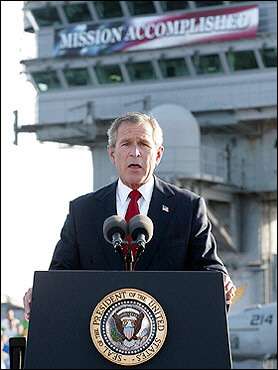
Mission accomplished?

Deniers Are Like Fritzl

Tuesday, June 3rd, 2008

Commenter dc wants to know why I walked through the details of all the things I’ve learned about people since I came of age, when it seems “people like to conform to each other” would do the trick. Well, I’ve already explained, that doesn’t really do the trick…if there’s a common theme, it’s that we have a tragic predilection toward conforming toward dysfunction, disability, weakness and chaos.

dc is, perhaps, just helping to prove, tongue-in-cheek, observation #9:

People who don’t write anything down, get upset and frustrated when they see someone else has.

But maybe he’s sincere. If that is the case…feast your eyes on the latest real-life substantiation of observation #15 — which is —

People who have been duped by something and have come to realize it, want everyone else to be duped in the same way.

How nasty do you think people can be, what awful, vitriolic things do you think they can say, in service of Thing I’ve Learned About People That Nobody Told Me #15.

Better trot out that many paces, and then jog a good distance further. See the acid and bile that drips when people see other people, showing healthy skepticism where they know damn well they should have:

People who fail to tackle climate change are acting like an Austrian man who locked his daughter in a cellar for 24 years, an Anglican bishop has said.

The Bishop of Stafford, Gordon Mursell, wrote in a parish letter that not confronting global warming meant people were “as guilty as” Josef Fritzl.

It meant future generations would be left in a futureless world, he said.

Mr Mursell added he was not accusing people of being child abusers but shocking analogies were needed.

Gee whiz, why’s that Bishop Mursell? If it’s all climate science blah blah blah consensus has spoken blah blah blah mean global temperature blah blah blah greenhouse gas blah blah blah…why not just have a reasoned debate about it? I’m still waiting to see some evidence that carbon saturation causes an increase in temperature, rather than the other way ’round. Still waiting to see evidence that industry has more of an effect on the mean global temperature than any natural phenomena, terrestrial or extra-.

In that vein, I’m still waiting for a concrete, objective, measurable definition of “mean global temperature.” Still waiting for a reasoned argument that our temperature measurement methods have been so accurate and consistent across the generations, that an increase of 1 degree in that time means anything at all.

What is this stuff you call “science” that cannot be explained without analogies loaded with shock value? This process, in which we abandon the enterprise of answering the quite reasonable questions above…and start comparing child molesters with people who simply disagree with you? Or who merely question you? People who haven’t been duped as you have. Inigo Montoya Time: I do not think that word — “science” — means what you think it means.

But anyway, dc. We’re going to keep seeing examples like this, and that’s why we walk through the disastrous human tendencies one by one by one. Saying “I toldja so” is kinda fun…I’ve never pretended to be above it. And things that are true, tend to be proven out over time.

Things that aren’t, tend to depend on “shocking analogies.”

H/T: Rick.

The Common Thread: It Would’ve Succeeded Anyway

Monday, May 19th, 2008

Me quoting me, on the tenth of March:

As this sense of community becomes more militant, people begin to get the idea that they are “giving back” simply by becoming an additional voice in micro-revolutions that are already several voices strong. A great example of this is one of the favorite recurring platitudes from the utterly anti-individualist social-butterfly Obama fan: “I want to be part of this.” And so across the landscape there arises a feeling that each individual has contributed, by “helping” to make something happen that would have happened anyway. This poisons the idea that an individual can make a difference, while offering a toxic disguise that what is taking place is precisely the opposite — we start to make what are thought of as “differences” by adding our support to things that would’ve hummed along just fine without us.

Me quoting me, on the ninth of May:

Have you ever noticed that when left-wingers “want to be a part of this,” the “this” under discussion is seldom-to-never something that actually needs their support in order to succeed? They don’t seem to want to actually change the outcome of anything when they “want to be a part of” something. You can grow old waiting for liberals “want[ing] to be a part of” something that needs a tie-breaker vote; I don’t recall hearing of any liberals “want[ing] to be a part of” a Gore victory in 2000 or a Kerry victory in ‘04.

Me quoting me, today, commenting on Sister Toldjah’s blog which includes an amazing picture of the weekend Obama rally…seventy thousand heartbeats, give or take, “want[ing] to be a part of” something that really doesn’t need that much help, and maybe that’s exactly why they “want to be a part of” it.

And if I dare say so myself, my final uppercut is worthy of emphasis here:

Just had a “GOP commercial we really need” moment.

I don’t know if you can wrap up the following in thirty seconds, but it would really drive the point home assuming people would pay the level of attention to it that I would.

Think of Jay Leno’s “jaywalking” format. The reporter shoves a microphone in the faces of random people and asks them, what things did you decide to do because a lot of other people were already doing them?

And he gets back answers like go to a rock concert, go to an Obama rally, take part in an anti-war demonstration, go to an Obama rally, smoke some dope, go to an Obama rally, jump off a bridge, go to an Obama rally…

Next question: How happy are you with those things you decided to do…and the answers are…kinda sorta, not very, I guess it would’ve gone all right without me, I was young & dumb, what can I say…seemed like a great idea at the time.

I dunno. Maybe there’s no effective way to get that message across. Things we do just because everyone else is already doing them, aren’t going to culminate in a demonstrably positive effect on anything. And maybe that’s the whole point. Having a notable and beneficial effect on something, an effect that wouldn’t take place if you were missing, can be a frightening thing to an immature mind.

They want to be a part of something, without having an effect on that thing by including themselves in it.

What an exquisitely frustrating thing this internal contradiction must be. It must be like drinking endlessly from an elixir that is supposed to slake an agonizing thirst, and feels like it is, and ultimately is not. “I want to be a part…I want to make a difference…ooh, no, no I don’t, I want to be a part of something without making a difference one way or the other. I want to go through the motions of contributing to collective inertia, while in fact individually remaining completely devoid of mass.”

Poor, frustrated, delusional, demented souls.

D’JEver Notice? II

Wednesday, May 14th, 2008

Mission AccomplishedThe graphic you see to the left has become a widely-recognized and caustic symbol of right-wing hubris. It is our President giving an address to the troops on the deck of the USS Abraham Lincoln on May 1, 2003 — at which time many of the men and women listed as troop casualties in the operations, were still alive. The point is, therefore, that the people we call “conservatives” have a proclivity for declaring victory when victory has not yet been realized, and may never be realized.

The dirty little secret is, though, that on May 1 Saddam Hussein’s regime had been overthrown. The mission had been accomplished; that’s just a fact.

Furthermore, a lot of the folks who make a point of flashing this graphic around, or making their petty, bickering references to it, I notice are oftentimes the very same folks who point to strange “accomplishments” in foreign policy — usually with regard to former President Jimmy Carter. And, almost always, with regard to some signature on a document Carter has acquired from those whose signatures don’t really seem to be worth very much. On treaties that have since been broken outright, had unforeseen ancillary consequences in direct contradiction to the benefits they were supposed to bring, or failed entirely. The U.S.-North Korean Pact of 1994. The Oslo accords of 1993. The Camp David accords of 1978.

The propaganda in which we are awash, therefore, is supposed to inform us that actions don’t “accomplish” anything and talking is supposed to “accomplish” everything. For the propaganda to work, we have to believe it over our lyin’ eyes. North Korea is making weapons. And Saddam Hussein is dead and cold in the ground.

The same people are moving the goalposts around in both directions.

You People Need to Let Go of This

Sunday, May 4th, 2008

Thing I Know #112. Strong leadership is a dialog: That which is led, states the problem, the leader provides the solution. It’s a weak brand of leadership that addresses a problem by directing people to ignore the problem.

Goldfish Rights

Thursday, May 1st, 2008

Via Gerard:

Government control over the citizens does not come about just through the legislation of the large issues a la the Canadian Hate Speech Tribunals. It also happens — and much more frequently — by the assumption of the government by fiat of the right to control all manner of little things. The recent best seller, “Don’t Sweat the Small Stuff,” has it exactly backwards. The small stuff is what has to be sweated. All the time.

If you are of a certain age you’ll remember the arguments against seat belt laws and motorcycle helmets mandates. In general it ran, “If they can do this to these things, they can do it to bigger things and everything.”

Nonsense, was the rejoinder, this is simply “for your own good.” An extension of this rationale was, “It is for the good of the children.” Fast forward a few decades and take a searching and fearless inventory of all the things you simply cannot do that are just things that involve you own personal behavior. You’ll find that they are numerous and growing. The new argument for laws and regulations that diminish your freedoms and liberty centers around “saving the planet.” This one is perfect since, simply by being alive, there are many things you do — such as exhaling carbon dioxide — that threaten the planet.

What inspires this tirade?

What indeed

Under a new Swiss law enshrining rights for animals, dog owners will require a qualification, anglers will take lessons in compassion and horses will go only in twos.

From guinea-pigs to budgerigars, any animal classified as a “social species” will be a victim of abuse if it does not cohabit, or at least have contact, with others of its own kind.

The new regulation stipulates that aquariums for pet fish should not be transparent on all sides and that owners must make sure that the natural cycle of day and night is maintained in terms of light. Goldfish are considered social animals, or Gruppentiere in German.

Good ol’ Europe; yeah liberals, let’s become exactly like them. Must! Ought! Should! Have to! Got to! Gotta gotta gotta! Must! Your dreams are coming true — we haven’t that far to go. Makes me want to put a brand new wreath on the tomb of the gentlemen who chucked the first crates of tea into Boston Harbor, or toss in a bag or two all over again.

Or as Gerard elegantly and expertly summarizes in the money quote…

In a way, it is a symptom of a civilization that has just ground to a halt. The Swiss have simply run out of rational things to regulate and so they move on to the world of compassionate bullshit.

If Women Ran The World

Tuesday, April 29th, 2008

Kate says,

If women ran the world, we would not have the jet engine. It has nothing to do with intellect. It just isn’t in our nature to want one.

And as of this writing, there are 114 comments under it. Hmmm.

I have to take some issue with this. Nowadays, it is outside of the nature of a lot of men to want a jet engine. Or to confront historically masculine challenges of a far less ambitious nature…like, dropping a loogie on a leaf floating in the creek from a really high bridge, just to see if you can hit it.

In my time, the little girls had no idea what the fuss was about. Now nobody does. Call it inferential thinking…versus procedural. As time goes on, more and more of us want to engage in procedural thinking, and they want everyone else to think that way too. Step one, step two, step three — and forget all about the if-this-then-that stuff.

Good thing we have the jet engine already. Because we sure as hell wouldn’t be getting one from here on out, if we didn’t already have it.

Update 4/30/08: The linked article by Christina Hoff Sommers makes it clear, to me anyway, that the underlying trouble and confusion comes from a conflict between the inferentialists and the proceduralists. The subject under discussion is the Title IX “Hammer” getting ready to bang away at our nation’s science and technology departments. Science is inferential thinking wrapped up in procedural thinking — you do things a certain way, but at some point you use your individual intellect to figure out something that would otherwise elude you. If you don’t get that far in your efforts, they’re kind of pointless.

Regulating such a discipline into oblivion, on the other hand, is procedural thinking because it involves blowing the whistle on things that aren’t being done a certain way. As is the case with all step-1 step-2 step-3 things in life, there is no way to do it with excellence.

That’s why people who engage in procedural activities, see the world in pass-fail terms. And they want everyone else to engage in procedural activities too. They end up stamping out inferential thinking, and all the gifts we enjoy thanks to someone who once upon a time pursued it — without even realizing that is what they’re doing.

At a recent House hearing on “Women in Academic Science and Engineering” Congressman Brian Baird, a Democrat from Washington State, asked a room full of activist women how best to bring American scientists into line: “What kind of hammer should we use?” The weapon of choice is the well-known federal anti-discrimination law “Title IX,” which prohibits sex discrimination in “any education program or activity receiving Federal financial assistance.” Title IX has never been rigorously applied to academic science. That is now about to change. In the past few months both the Department of Education and National Aeronautics and Space Administration (NASA) have begun looking at candidates for Title IX-enforcement positions.
:
Although Title IX has contributed to the progress of women’s athletics, it has done serious harm to men’s sports. Over the years, judges, federal officials, and college administrators have interpreted it to mean that women are entitled to “statistical proportionality.” That is to say, if a college’s student body is 60 percent female, then 60 percent of the athletes should be female — even if far fewer women than men are interested in playing sports at that college. But many athletic directors have been unable to attract the same proportions of women as men. So, to avoid government harassment, loss of funding, and lawsuits, educational institutions have eliminated men’s teams — in effect, reducing men’s participation to the level of women’s interest. That kind of regulatory calibration — call it reductio ad feminem — would wreak havoc in fields that drive the economy such as math, physics, and computer science.

Don’t blame the gals, I say. Blame the procedural thinkers, the step-1 step-2 step-3 people; some of them are female, probably most are, but not all of them are. The inferential thinkers don’t care how others think, but the procedural thinkers want everything done their way.

And…a society that does everything by steps & numbers, doesn’t build anything. It can’t. That’s just about where we’re headed now.

America’s Most Overrated Product: The Bachelor’s Degree

Tuesday, April 29th, 2008

Money quote:

Colleges should be held at least as accountable as tire companies are. When some Firestone tires were believed to be defective, government investigations, combined with news-media scrutiny, led to higher tire-safety standards. Yet year after year, colleges and universities turn out millions of defective products: students who drop out or graduate with far too little benefit for the time and money spent. Not only do colleges escape punishment, but they are rewarded with taxpayer-financed student grants and loans, which allow them to raise their tuitions even more.

I understand it’s overly-simplistic to focus on one bad guy, and having not been to college, I realize this is a little bit out of my league.

But I’ve held a lot of jobs in which you’re supposed to have a college degree, without actually having one. And I’ve met a lot of frustrated college graduates who are not enjoying much of a career boost, or are enjoying one far too late in life.

I don’t have to go swimming in poop, to know it isn’t my thing. And I can tell a busted situation when I see one. Something’s busted here.

Are Kids Coddled?

Sunday, April 27th, 2008

MSN, which is convinced I’m female — regularly plying me with such delightful tomes as “Make Him Commit” and “Slim Down for Bathing Suit Season” — today, parades before my eyeballs, a subject on which I am uniquely qualified to comment.

Would you let your fourth-grader ride public transportation without an adult? Probably not. Still, when Lenore Skenazy, a columnist for the New York Sun, wrote about letting her son take the subway alone to get back to her Manhattan home from a department store on the Upper East Side, she didn’t expect to get hit with a tsunami of criticism from readers.

“Long story short: My son got home, ecstatic with independence,” Skenazy wrote on April 4 in the New York Sun. “Long story longer: Half the people I’ve told this episode to now want to turn me in for child abuse. As if keeping kids under lock and key and helmet and cell phone and nanny and surveillance is the right way to rear kids. It’s not. It’s debilitating—for us and for them.”

Lenore’s interior plumbing notwithstanding, there is a clean and tidy demarcation between the hens and the roosters on this issue: The mother attends to the child’s daily needs, making sure he is safe, happy and whole, while the father has a stronger tendency to plan for his own demise, to make sure the next generation can get along without him.

Each of these gender roles reaches across the divide from time to time. But not much.

As our son’s face loses it’s spherical shape and becomes elongated with looming adolescence, this has become more of a thorny issue between “Kidzmom” and me. The cosmetic presentation is that, as his parents, we both have the same interests at heart. I want him to live to see another day just as much as she does; she wants him to grow up to be an independent man just as much as I do. But that is packaging. That’s not substance. The wiring that was put in place by thousands of years of evolution, is gender-based, and you really don’t have to listen to us go back and forth about it for too long before it becomes not only obvious, but undeniable.

I remember once, in exasperation at her latest umpty-fratz protest that he can’t cross a street by himself because he’ll get hit by a car, I yelled back “then the human race would be better off overall, if he’s such a weakling that he can’t manage that at his age” or something. I think she knew I was kidding about that. But there’s a point to it: We, as parents, don’t get to decide that our children are disposable chaff. Nor do we get to decide they are not. The world will make up it’s own mind on that question, based on what the specimens can and can’t do.

The other recent event to make this a more prickly issue, is her relocation. She’s not twenty minutes up the road anymore; she’s eight hours away. So instead of handing him off back-and-forth throughout the week, we hand him off back-and-forth throughout seasons. I think, overall, that’s a good thing. He’s shown signs of understanding that the “packaging” of his parents’ arguments, does a poor job of reflecting truth — different things are expected of him in different households. Better to shake the soda can once every couple of months, than twice a week.

But are kids coddled? Oh, absolutely yes. I remember that dirt field down the street; the one my brother and I explored, in our bare feet, sometimes with each other and sometimes alone. Where the hell was it? How am I supposed to know…we left that neighborhood right after I turned SIX.

That’s unthinkable now. When’s the last time you heard a mother bitching away that her kid(s) failed to turn up by dinner time? Or, in exasperation, sending a brother/sister out to collect them? It’s been awhile for me. And now, we have a childhood obesity epidemic:

The prevalence of overweight children tripled from 6.5 percent in the mid-1970s to 18.8 percent today for children between 6-11 years old, and 5 to 17.4 percent for those 12–19, according to a survey by the National Health and Nutrition Examination Survey.

There is more evidence. Men don’t have gab-fests like women do, usually; but there was one that came to mind after one of the more talkative fellows in our office announced his plans to acquire a sidecar for his newly-restored motorcycle, for the benefit of his eight-year-old daughter. One Monday morning he reported on his weekend long-distance argument with his ex-wife, about the safety merits or lack thereof. Enter that male-female divide. Look, it’s not like I’m going to do something to her that will make it likely she’ll get hurt — she’s my daughter, too! Exactly.

It’s those two things: They’re our kids too, and we’re not going to put them in situations involving certain doom. And — Ms. Skenazy’s point — if the kids aren’t ever challenged in anything, they’ll grow up being able to do exactly nothing.

Sorry, gals. I know when you act all funny, it usually means I’m the one missing out on this-or-that critical point. But on those two items above…looks to me like the fairer sex hasn’t quite yet thought things out. Not, I hasten to add, that they have a monopoly on this.

If you think this is going to turn into a bitch-pitch about video games, you’re right. My kid’s got it pretty bad. I blame myself, and Columbine. Back when he was about to turn two, the Columbine school got shot up, and the big controversy was about whether kids could play violent video games and still have respect for human life afterwards. I was distracted by this, looking back on it. The evidence clearly indicated our son remained concerned about the health and well-being of his playmates, even after hours spent shooting at zombies with shotguns. And so, I insisted, a mentally healthy child will be able to distinguish between reality and fantasy.

Well, I was right on that. But I lost my sense of perspective on the other issue…a good old-fashioned addiction. He’d form bad habits, we’d take away the video games, he’d do things right and then get his video game back. Then he’d go back to being weird.

I think we’ve got a handle on it now. Once he got a little bit older, we’d discuss this with him at a higher level. It started with Pokemon. He’d ask why I don’t like it, and I started to explain it doesn’t have anything to do with personal tastes: Frankly, after you’ve been playing/watching Pokemon for awhile, you start to act like a helpless whelp and I get tired of watching that.

Pokemon, if you’re not familiar with it, is a series of cartoons and games in which these kids mouth off at each other and challenge each other to fights, and then get these adorable creatures to do all their fighting for them. The kids only do one thing to alter the outcome of the fight toward their favor: They whine. All the work is left up to these imaginary creatures.

It got worse before it got better. Pokemon became the “Forbidden Fruit.” But, sooner than I thought, he outgrew Pokemon. He won’t admit it, but I think he began to see it my way. The kids talk smack to each other, and then pull out their adorable creatures and explain to said creatures, “Okay I just got us embroiled in a fight with this mouthy kid, now you have to do the dirty work.” If the boy has any streak of independence whatsoever, he’s going to get tired of it. Really, I never understood the appeal of it in the first place.

Pokemon is both a symptom and a cause, the way I see it. A generation ago, it would not have had appeal. It’s going to be fun to imagine yourself as the cockfighter — er, I mean, the mouthy kid — if you imagine yourself winning all the time. Permit an old man his own generational turn to utter the timeless words “back in my day” — in my time, we got our butts beat constantly. We were forced to learn to cope. We lost at baseball. We lost at football. We lost races. We lost Capture The Flag. We learned to imagine ourselves losing, because we had no choice but to so imagine.

To the best I can perceive it, Pokemon’s allure depends on never imagining yourself losing. Yes, on the TV show it happens pretty regularly, about a third of the way through. There really aren’t too many things the protagonist can do. You’ve never seen anything more pathetic. There are no skills to be sharpened, there are no post-mortems to be conducted on the match-up that was just lost…just whining. “Awww, Pikachu, why didn’t you listen to me?”

So I think the latest generation does have a problem, and I think the problem begins there. Not with Pokemon, quite so much…but with reckoning with the potential of defeat. And that is why it’s scary, lately, to let them do simple things like cross the street. Peripheral vision, taking the initiative to look both directions, etc., these are all secondary. The primary skill is understanding the potential of failure. If he has mastered all the skills of crossing the street, but doesn’t understand that the possibility exists of his getting killed, then the skills aren’t going to very much matter and he’ll probably end up getting killed.

Oh, how’d we solve the video game problem? I’m knocking on wood, imagining the worst is behind us. Now that Pokemon isn’t cool anymore, that’s probably a safe bet. We began a “minute for minute” program. You do an hour of playing outside doing dangerous things, playing ball, riding something with wheels — doing something in which it’s possible to get physically hurt — you get an hour with the damn game. It’s barely better-than-nothing…but it works. I think it addresses what’s really busted.

Parents have to be conscious, not so much of what their kids are doing one hour to the next, but what kind of world it is in which they are living. And not so much what is in that world, but what is missing from it. The irony is, that without that potential for defeat, the child won’t comprehend a potential for victory either because the whole concept of competition will be foreign to him. And so confidence won’t germinate and grow until some losing has been goin’-on.

What’s written above is fairly obvious. The real puzzle is, how come we have this new generation of parents, that needs to have it pointed out to them. Perhaps it’s our fault; the problem began with us. This spirit of “If I do not play, then I cannot lose.” Insisting on more safety, and more, and more, and more until life itself is no longer being lived.

That really is the crux of the whole problem, isn’t it?

The Pornography of Barbarism

Monday, April 21st, 2008

Rick brings to our attention a lamentation from The Doctor, which seems to conclude that we have either lost our way or we are perilously close to doing so.

There was, at the first, the video: a teenage girl, lured into a trap, then brutally beaten by six other girls her age for thirty minutes continually, carefully recorded on video for upload to YouTube.

Then came the Yale “artist” who repeatedly impregnated herself by artificial insemination, then aborted the fetus with drugs, carefully saving the results for display wrapped in plastic and Vaseline for her senior art exhibit.

Then this morning, in the local paper: a man — a school bus driver — convicted for sexually assaulting a 4-year-old girl left alone on his bus.

One could multiply such incidents, ad nauseum, on almost any given day, in any part of the world — beheadings and genocide, ghoulish scenes of body parts and bloodied walls from yet another heroic martyr seeking virgins through hyperviolence. Yet these events, small on such a savage scale, in some way troubled me more than most.

One wants to rail at a society gone mad, at a civilization which has lost its bearings and moral compass, at a decadence fed by materialism and secularism, force-fed with the rotgut wine of postmodern relativism, drunk with the notion that ideas have no consequence and idols worshiped bring no destruction.

Yet the time for such anguished mourning seems long past, its passing but a point in a pitiful past history. We have, it seems, entered the post-human age.

The Doctor went on to talk about the “consensus among the civilized that certain behavior and unrestrained license threaten [civilization’s] very existence” that is the real mortar holding together the bricks of our society, much more responsible for our continuing survival than any fighting force.

One thing I notice is that this wandering into such dark territory, seems to coincide not with so much a relaxation of classical standards of decency, as with a sudden ratcheting-up of new ones. As I said over at Rick’s place, “Our ability to blow the whistle & call shenanigans on each other, is just as robust and sensitive as it as ever been. What we’ve lost is the willingness to do it out of a sense of decency.” Not s’poseda have a gun in your home. Not s’poseda flush the Koran. Not s’poseda eat meat, pray in school, wear a flag lapel pin, support the Boy Scouts, call out the race of someone running from the police, invade nations pre-emptively…et cetera. And then there are all the quotas. Can’t emit more than so-many tons of carbon, can’t hire more than X percent straight-white-guys, can’t pay less than Z dollars per hour.

I notice with the global warming, the central thesis to it is that if you read the data the right way, you can plot a graph across certain segments of time in which “global temperature” is shown to reach a sharp upswing in recent years. It’s that sharp upswing that scares us. We see the line zipping upward like a bottle rocket at the right side of the graph, representing the present or the point of time closest to the present, and we think zowee! Something bad must be about to happen! That something bad really is about to happen, is perhaps the most weakly asserted portion of this “science” of global warming because it doesn’t have to be very strong. Our minds supply us with a psychological tendency to fill that part in…triggered by the bottle-rocket upswing at the right side of the graph.

It’s odd that we don’t do this with phony rules. The rules some faceless aristocrat pulled out of his arse — rules that exist more to service an elitist layer among us, than to reflect any lessons learned from any decent survey of history. Because who among us, with an adequate command of history, can deny that a graphing of phony-rules would fail to display the bottle-rocket curve on the right side of such a graph?

Jehovah is out; Gaea is in. Abandonment of rules is not the problem. We’re rapping each other across the knuckles left & right, day in and day out. We’re just cranking out the rules in service of a false deity. The rules multiplying so rapidly of late, don’t have anything to do with treating each other in a neighborly way. They just have to do with fanciful theories about what might & might not bring harm to certain segments of our society to whom we’re supposed to be especially sensitive, or to the “environment” itself.

Humanity, in a generic sense — as in, the sense of defining a species of which all of us humans are a part, regardless of our birth nation, skin color, sex, or political leanings — is the last beneficiary of the rules we make today. We are much quicker to crank out one more rule in service of this chunk of it, or that one. And then we use the word “environment” to refer to some more of those rules, because it rankles us to admit this-or-that rule is not intended to help anyone.

So it stands to reason…we are becoming less decent, at the same time we are becoming less free.

Thing I Know #196. Real freedom is actually pretty boring. It has very little to do with noteworthy events, save for the one event marking its arrival. When classes of people take turns, over time, enjoying special privileges, not one man among them enjoys genuine freedom.

On the Easterlin Paradox

Saturday, April 19th, 2008

I’ll let the New York Times guest-column speak for itself:

Arguably the most important finding from the emerging economics of happiness has been the Easterlin Paradox.

What is this paradox? It is the juxtaposition of three observations:

1) Within a society, rich people tend to be much happier than poor people.
2) But, rich societies tend not to be happier than poor societies (or not by much).
3) As countries get richer, they do not get happier.

Easterlin offered an appealing resolution to his paradox, arguing that only relative income matters to happiness. Other explanations suggest a “hedonic treadmill,” in which we must keep consuming more just to stay at the same level of happiness.

One criticism of the Easterlin report is that the data upon which it is based, comes mostly from survey responses and there is a psychological hobgoblin at work here because we don’t tend to think highly of ourselves when we admit we’re unhappy. So it stands to reason the responses are going to be skewed toward “oh yeah, I’m ecstatically happy.”

But another criticism I would have is that we have a societal taboo against acknowledging one of the possible — and I would label highly probable — outcomes: That money makes you happy. Let’s face it: Overly-simplistic as that may be, missing money when you need some really sucks!

But I think anyone pondering the situation for a minute or two would have to admit there has been, at least since the 1950’s or so, a swelling of pressure on people to presume out loud that wealth is only tangentially related, if it’s related at all, to a state of happiness. The pressure is sufficiently significant that it has an effect on people who have no personal experience at all, with being destitute & happy, or with having wealth in abundance and being dismal. And that’s my definition of significant pressure: When people are missing anecdotes within their personal experiences that would be needed to back something up, and will nevertheless sit there and say “oh yeah…uh huh, that’s right on.”

Well, the author of the column, Justin Wolfers, goes on to drop a bombshell:

Given the stakes in this debate, Betsey Stevenson and I thought it worth reassessing the evidence.
:
Last Thursday we presented our research at the latest Brookings Panel on Economic Activity, and we have arrived at a rather surprising conclusion:

There is no Easterlin Paradox.

The facts about income and happiness turn out to be much simpler than first realized:

1) Rich people are happier than poor people.
2) Richer countries are happier than poorer countries.
3) As countries get richer, they tend to get happier.

Moreover, each of these facts seems to suggest a roughly similar relationship between income and happiness.

Now, you can see from the reports and the cool graphics, that there is an abundance of data going in to these conclusions. So a disturbing question arises: Assuming this attack on the Easterlin paradox withstands scrutiny better than the paradox itself, are there some negative social ramifications involved in realizing this? Once it settles in that money does indeed make us happy isn’t there a risk that we’re all going to become a bunch of hair-pulling eye-gouging money grubbing zombies?

Well…to answer that we’d have to get into the debate about the “pie people”: Those who insist, like Michelle Obama, that when some among us have bigger pieces of pie then someone else must have smaller pieces, and in order to get more pie to those deprived persons it will be unavoidably necessary to confiscate pie from someone else. All transactions are zero-sum, in other words.

Seems to me, if you buy into that you have to agree there was at least a social benefit to the Easterlin paradox, even if it wasn’t true. And there must be a commensurately deleterious effect involved in repealing it.

I suppose, like the Easterlin paradox, the Pie Paradigm ought to be given a benefit of doubt, of sorts, so it can remain standing on clay feet across the generations without much supporting evidence. There must be a truth to it, and even if there isn’t, there must be a social benefit to believing it, and even if there isn’t, darn it it just feels so good to say it’s true.

Except, like Columbo, I can’t help noticing just one…little…thing.

So many of these Pie People, like Ms. Obama herself — are stinkin’ rich. What does that say about them, if they really do believe in the pies?

Memo For File LVIII

Thursday, April 17th, 2008

I barely have the time this morning to deal with all of what’s busted in whiny, insipid, counterproductive, self-serving snotty immature screeds like this one…although I’m sure if I take a passing glance to it later, I’ll spot even more. The subject under discussion is why, oh why, aren’t there more female bloggers and how come the ones that are out there, don’t get more attention?

I asked around and heard a lot of different answers. Some say it’s because the men got a head start. Jen Moseley, the politics editor at Feministing says, “I think there are a lot of female political bloggers out there. But since most of the ‘old guard’ big political blogs (funny that something 4-5 years old can be considered old now), were started by men, so they’re still looked at as the only ones that matter.”

Amy Richards, an author and one of the co-founders of Third Wave, thinks that the amount of attention focused on the boys might be more than just their first-mover status—it’s an artifact of their historical control of the media. Richards claims that “Political punditry has always been dominated by men and thus blogging is likely to follow that pattern.” Richards agrees that women aren’t becoming blogospheric stars as quickly as some of their male colleagues. She says, “I know that women are jumping into this debate with their opinions and perspectives, but because they are doing so in spaces more likely to attract women—they aren’t being legitimized.”

Ezra Klein agreed with Amy about the ghettoization of female voices, noting that while male political bloggers are known as “political” bloggers, women are more often known as “feminist” bloggers. “There’s this rich and broad feminist blogosphere, which is heavily female and very political, but considered a different sort of animal. Is Jill Filipovic a political blogger? Ann Friedman?” he says. Male bloggers are seen as talking about politics with a universal point of view, but when we women bring our perspective to the field, it’s seen as as a minority opinion.

But does it have to be that way? Blogs are supposed to be populist and thus it would seem like women could more easily level the playing field here than in other media. Red State’s Mike Krempasky says, “You’d think the internet would be the great equalizer or the ultimate meritocracy. ‘far from it.”

What a festering, rotting open sore of microbial, infectious, stupid ideas. What a fetid, bubbling stewpot of poppycock.

It’s like an invasion of scavengers hitting your farm all at once. Coyotes, hyenas…buzzards…what have you. Craven. Cowardly. Seeking to survive on the merits of others. There is so much wrong with this, it’s like a big herd of such scavengers descending in unison, each scavenger blissfully unaware the others are there.

A fine buckshot approach to this invasion is to simply withhold my own fire and rely on a non-whiny female blogger like Cassy Fiano, who was responsible for me finding out about this in the first place. And Cassy lays out the hot lead in such a way that most of the scavenger-herd is…addressed…leaving few stragglers.

Whenever I read these kinds of articles, I just want to smack the author in the face. Here’s what they seem to be completely incapable of understanding: if you think you’re a victim, that’s all you’ll ever be.

First of all, is Arianna Huffington really the best example of a female blogger she could come up with? I can think of several right off the top of my head: Michelle Malkin (duh!), Pamela Geller, Em Zanotti, LaShawn Barber, Mary Katharine Ham, Rachel Lucas, Melissa Clouthier… the list goes on and on, and these are just conservative female bloggers.

Right Wing News even did two pieces on female conservative bloggers, and most of them looked at being a female blogger as an asset.

I’ve never had one single person tell me my opinion had less merit because I’m a woman, or that I wasn’t as good as the guy bloggers out there. I’ve seen no evidence of a “boy’s club” in the blogosphere; in fact, every single male blogger I have had any kind of communication with whatsoever has been gracious, helpful, and more than willing to assist me in building my blogging career.

And good grief, the “ghettoization” of female voices?! What the hell planet is this Megan Carpentier writing from? Because there are more male bloggers than female, female voices are being “silenced” and “ghettoized”?!

Uh, sorry, honey. Not quite. Maybe if you live in Saudi Arabia you could have a point. But here, the only thing keeping female bloggers back is… female bloggers.

Why, then, are there more male bloggers than female? The answer is simple, and it’s feminism’s favorite catch phrase: choice. Men, in general, are more interested in politics than women are. Sure, women are interested, but I don’t think that there are as many women who are diehard political junkies like there are men. Go ahead, feminists, rip my skin off for stating That Which Must Never Be Said: that women do not have the same interests as men do. Anyways, if you want proof, look at blogosphere readership. Most people reading politics blogs are men, so it stands to reason that most political bloggers would be men as well. This also means being a female blogger is more of an asset, and not just because it gives all your male readers something to ogle at (although that’s a plus, too). It means you stand out more, your blog stands out more. And that’s a good thing.

Women also tend to be more thin-skinned. The insults female bloggers get are very personal, and very hurtful. They very often have nothing whatsoever to do with what you’re actually writing about, unless of course you’re talking about how ugly you are or perverted sexual tendencies. A lot of women just cannot take that kind of thing. It’s like an arrow to the heart for them. After so much of that, a lot of them quit, because it isn’t worth the stress and heartache for them.

And why does the internet — the political blogosphere, specifically — need to be “the great equalizer”? Why does it matter how many female vs. male bloggers there are out there? There is not one blog I read because of the gender of the author. I read them because of the content in the blogs, what the blogger has to say. I could give two shits whether it’s a man or a women writing behind the computer screen. Putting the emphasis on something as shallow as gender accomplishes what? Instead of focusing on the skin-deep, why doesn’t this lady focus on the ideas different bloggers put forth?

I don’t know where feminists got this idea that all male-dominated careers were unfair to women unless there are an exactly equal number of women participating in these careers, but it’s ridiculous. They need to get over the bean-counting. Living in a state of perpetual outrage or victimhood will get you nowhere.

One blast. All farm scavengers tremble in fear before the fury of Cassy’s 12-gauge.

But some wounded furballs are still limping around. For example, Cassy’s retort to the “ghettoization” remark is limited to chastising Carpentier for her lack of perspective in identifying what might be amiss in the status quo. She did a fine job of dealing with that, but I’m more concerned with what thoughts were percolating away in what passes for Carpentier’s cranium before she jotted down her whiny bromide. If I want to “ghettoize” someone, or a class of someones, in the blogosphere — how do I go about doing this? What are my goals, exactly? Assuming the solution would resemble the problem, it must be up to the reader to fill that in because Carpentier admits ignorance in understanding how to fix it.

Megan Carpentier is kind of like Luke Skywalker wandering into the dark cave; she found in there what she brought in with her. Her point is “these blogs that I’m looking at are mostly male” but she could have looked at some other blogs. Prominence is measured, on the blogosphere, mostly in the eye of the beholder. What Carpentier has done, is confess — without even realizing she’s so confessing — that she comes from a weird, surreal universe in which that is not the case. She’s used to living in a place where some central kiosk tells everyone what to watch.

But it must be a two-way street, in some way, or else there’d be no point in Carpentier whining away. She must be an example of what I’ve noticed about most people who can’t cope without a central authority telling them what to do: Now and then, such complainers want to have a voice in telling the central authority what to tell others to do. So there’s a pecking order to this. Sniveling whiny complainer supplies instructions to the central kiosk; central kiosk radiates the instructions to the unwashed masses within line-of-sight.

I’ve never had any respect for people like this. I’ve always thought of them not only as tedious, thin-skinned banshees, but as shallow thinkers. They do their shrieking selectively. They only complain about the things we decide for ourselves, that have come to their attention at any given time, remaining agnostic and unconcerned about our choices of: Ice cream flavor, color of socks to wear today, stick shift or automatic, plain-cake or chocolate-with-sprinkles, the list goes on and on. One can’t help but nurture a fantasy that has to do with calling their attention to all these things at once, and kicking off some kind of carping-bitching-overload chain reaction. Like Captain Kirk and Mister Spock talking some ancient alien computer into a sparkling, smoky mess of paper mache and dry ice on the stage of Desilu.

We live as free men, deciding for ourselves and living with the consequences. Too many who pretend to walk among us are left unsatisfied by this state of affairs. Let posterity forget they were our countrymen, as the saying goes.

Cassy has been distracted by the great umbrage she’s taken — rightfully so — to the low pain threshold of Screechy Megan. What her criticism has allowed to walk away mostly unscathed is Megan’s mindset. The mindset of insects. Except insects, so far as I know, don’t bitch when the queen tells them to go someplace not to their liking.

I think my afterthought-comment over at Cassy’s place might address what’s left…

I was doing some more thinking about this. It seems we have some “dry rot” in the blogosphere, people who are blogging, and for the sake of their own sanity probably should not be.

How do we change that? How loud do women have to shout?

The ‘sphere promotes equality by failing to embrace it. Let’s say some left-wing pinhead says something on TV and it rubs Michelle Malkin the wrong way. Cassy Fiano is also piqued about the same thing. Malkin writes it up with something original; Fiano also writes it up with something original.

I like what Michelle said and I also like what Cassy said. Neither one linked or referenced the other, and they both said essentially the same thing. Linking both of them is pointless. I have a finite amount of time to blog and my readers have a finite amount of time to read.

So I must choose…

…and I’m going to link Malkin because she gets more traffic. And so, male or female, a blog “hits a groove.” It gets to the point where it is hit more because it does not need the traffic. It’s like a society with the ultimate regressive tax system — we all get together to help out whoever doesn’t need it.

The system works, because it achieves a blend of group-think and individuality. We’re all looking at the same stuff…kinda. But we’re also looking at our own stuff and forming our own ideas.

The exasperated inquiry “how loud do we have to shout” betrays an immature mindset, one that is accustomed to an all-powerful centralized authority. A “mommy” figure. But a weak mommy figure; one that panders to whichever “child” does the most bitching.

Not that I mean to imply Ms. Carpenter [sic] grew up that way. But if I had to bet some money, I’d bet it on the affirmative, and that would go for a random selection among her regular readership as well. The notion that some adequate amount of carping and bellyaching will change the universe to the liking of whoever’s doing it, is hideously offensive to me…to most men…and I would add to all “real” women as well. It’s a decidedly out-of-date 1960’s mindset, one that pays lip service to “choice” but only honors the choices made by certain, deserving people, and insists that everyone else has to follow along whether they like it or not.

How do you make more bloggers female? Might as well make more cars on the road listen to country music on their radios. It’s up to the dude/dudette behind the steering wheel, and it seems Ms. Carpenter [sic] just can’t handle that.

Bad Stuff About Warman

Sunday, April 13th, 2008

A couple days ago I had directed the following comments toward Richard Warman, or more precisely, his Wikipedia page:

His Wikipedia page contains four major categories as of this writing: Legal activism; Canadian human rights tribunal; Political activism; References. Who is he? The wonderful glittering text in the main article informs us…

He is best known for initiating complaints against white supremacists and neo-Nazis for Canadian Human Rights Act violations related to Internet content. In June 2007, Warman received the Saul Hayes Human Rights Award from the Canadian Jewish Congress for “distinguished service to the cause of human rights”. He holds a BA (Hons.) in Drama from Queen’s University, an LLB from the University of Windsor, and an LLM from McGill University.

He’s a Nazi hunter! Wow, what a great guy! And he’s got letters after his name and everything.
:
…wouldn’t you want to know some of the less flattering things about Mr. Warman? Especially if you’re sufficiently interested in him to go look up the Wikipedia entry about him? Well, it turns out at least some of the Wikipedia admins don’t seem to think so. They think you should only know the flowery parts. Or at least, they’ve so far come up with some wonderful excuses for excising anything else from the article.

Now, I don’t know if the Wiki admin in question is a Warman “fan,” per se, or if he’s simply scared that Wikipedia will face undesirable repercussions should it act as a repository for unflattering items about he who is demonstrably a hyper-litigation minded individual. But I do know this: I have never, in all the time I’ve been acquainted with Wikipedia, seen an article on a more controversial personality that made it so far without being pockmarked by so much as a “Criticism” section.

Well, it’s two days later. Guess who has a Criticism section now?

Criticism
Syndicated columnist Mark Steyn states that Warman abuses the intent of the Canadian Human Rights Act by personally appearing as the plaintiff about half of section 13 “hate speech” cases in the history of CHRA, and all of such cases since 2002.

Publisher and columnist Ezra Levant argues that Warman’s actions as plaintiff before the Canadian Human Rights Commissions are tantamount to censorship in the name of human rights. In response, Warman sued Levant for defamation.

Charlie Gillis of MacLean’s magazine asserts: “Richard Warman says he’s fighting hate. Critics say free speech is the real victim.”

It really shouldn’t have gone this far, though. I find it ironic — if there’s any one individual in all of its pages, who stands opposed to the way Wikipedia is supposed to work, that one individual would have to be Richard Warman. I mean look at that second paragraph again — Levant brings up, y’know, these lawsuits on behalf of “human rights” amount to censorship in the name of human rights. What does Warman do? Does he engage in vibrant, spirited debate to the effect of “Nuh-huh!” Or “You wouldn’t be saying that if your human rights were the ones being defended”? Or “Sometimes the greater good must prevail” or some such?

Nope. He just goes and sues him.

And one editor, or a plurality of editors, ends up slipping on his own fecal matter scrubbing the “Richard Warman” article sparkly clean of anything that might hurt Poor Richard’s feelings. And who can blame said editor for at least having the impulse? This guy, apparently, sues for a living. And so the great Wikipedia contradicts its own policy:

Wikipedia is not censored

Wikipedia may contain content that some readers consider objectionable or offensive. Anyone reading Wikipedia can edit an article and the changes are displayed instantaneously without any checking to ensure appropriateness, so Wikipedia cannot guarantee that articles or images are tasteful to all users or adhere to specific social or religious norms or requirements.

While obviously inappropriate content (such as an irrelevant link to a shock site) is usually removed immediately, or content that is judged to violate Wikipedia’s biographies of living persons policy can be removed, some articles may include objectionable text, images, or links if they are relevant to the content (such as the articles about the penis and pornography) and do not violate any of our existing policies (especially neutral point of view), nor the law of the U.S. state of Florida, where Wikipedia’s servers are hosted.

This is the trouble with thought policing. It is inherently non-egalitarian, because, as Mark Steyn has pointed out, Section 13 of the CHRA has ended up being Richard Warman’s personal law. Here’s an online encyclopedia well beyond the “Maple Curtain,” down in Florida, and they’ve been worried sick about offending this one guy up north. Seriously. After “Wikipedia may contain content that some readers consider objectionable or offensive,” you may as well have stuck in the four words “except to Richard Warman.”

But I’m delighted to see that the dam has been broken, and there’s finally three paragraphs of less-than-pleasing stuff about this guy. Couldn’t happen to a nicer fella.

And the version log says it happened just yesterday. Heh heh. All tremble in fear of The Blog That Nobody Reads.

I Made a New Word XV

Thursday, April 10th, 2008

bo∙lus∙te∙mo∙lo∙gy (n.)

A portmanteau of e·pis·te·mol·o·gy:

…a branch of philosophy concerned with the nature and scope of knowledge. The term was introduced into English by the Scottish philosopher James Frederick Ferrier (1808-1864).


…and bo∙lus

A soft, roundish mass or lump, esp. of chewed food.

Bolustemology, therefore, describes a system of intelligences and beliefs that cannot be justified or proven by any means intrinsic to the consciousness that maintains such things, because they have been pre-chewed and/or pre-digested by someone else. Bolustemology is soft and squishy intellectual matter, warm, wet, smelling of halitosis, more than likely infected with something. When you offer it to someone, you may be offering to put forth the effort they themselves cannot sustain, so that they can be nourished. But it’s far more likely that you’re engaging in an exercise to make them feel fed, without doing the necessary chewing…because you don’t want them to.

Very few among us will ‘fess up to consuming bolustemology, so infatuated are we with the fantasy of thinking for ourselves about everything. But at the same time very few among us can speak to the issue because most of us have not bothered to become bolus-aware. This is demonstrated easily. Last month, for example, Presidential candidate Barack Hussein Obama was forced by the inflammatory words of his bigoted pastor and spiritual mentor, to speak to the issue of racial disharmony. And so, swaggering to the podium as if it was his idea to do this, he droned on in that Bill-Clinton-like crowd-pleasing way of his for a few minutes, after which we were offered prime tidbits of bolus such as

Obama speech opens up race dialogue
Will it stand alongside the great speeches in US history?

:
Several students of political rhetoric suggest Senator Obama’s moving speech in Philadelphia Tuesday could stand with some of the great speeches in American history.

True, say some, the Democratic presidential candidate was forced into giving a speech that would explain his relationship to the Rev. Jeremiah Wright Jr., the outspoken minister of Obama’s church, known for some antiwhite and anti-American sermons.

While argument continues over whether Obama’s explanation was sufficient, his speech did seem to achieve this: It has sparked a conversation about race relations, one of the frankest Americans have had since the civil rights era.

And

The Obama speech was also a topic of discussion on Wednesday at the Washington office of the National Council of La Raza, a Hispanic advocacy and social welfare group. Hispanics can be white, black or of mixed race. “The cynics are going to say this was an effort only to deal with the Reverend Wright issue and move on,” said Janet Murguia, president of La Raza, referring to the political fallout over remarks by Mr. Obama’s former pastor, the Rev. Jeremiah A. Wright Jr., which prompted Mr. Obama to deliver the speech.

But Ms. Murguia said she hoped that Mr. Obama’s speech would help “create a safe space to talk about this, where people aren’t threatened or pigeonholed” and “can talk more openly and honestly about the tensions, both overt and as an undercurrent, that exist around race and racial politics.”

If there are any facts to back up this conclusion that the Obama speech stands alongside the great speeches of U.S. history…that it opens up a “race dialog”…that it creates a safe space to talk about this, where people aren’t threatened or pigeonholed…or where they can talk more openly and honestly about the tensions that exist around racial politics…such factual foundation is missing from the stories I’ve linked, altogether, and it’s missing from every single other item of discussion about this speech. The facts simply don’t back up any of this. Nor can they, because this is all a bunch of stuff that would be judged by each person hearing the speech. It’s all in the eye of the beholder. And the ivory-tower types writing about it in such sugary tones know nothing about this, nor can they.

No, the factual foundation says the “cynics” are quite correct. Obama’s speech “was an effort only to deal with the Reverend Wright issue and move on.” In fact, you don’t need any cynicism to conclude that. All you need to have is a decent and functional short-term memory.

But our High Priests of journalism, rushing to the press with their editorials built to be printed up in the wrong sections of the respective papers, weren’t interested in factual foundations, logical conclusions, et al. Nope, that’s all out of scope. They were all about bolustemology. About pre-chewing the food for others. About bludgeoning and cudgeling. About giving total strangers instructions about what to believe.

Obama may very well have given his speech in service of purely altruistic and idealistic motives. In doing so, he may very well have accomplished his stated goal of “opening up a national dialog” or some such…created a sounding board of safety for those who otherwise would have felt threatened participating in such an exchange. All those things could, in theory, be true. But all who desire to think independently for themselves, or at least to be thought of by others as capable of doing this, should be offended at the manner in which these cognitions were being handed to them. Valid cognitions have no need for pre-chewing. Each thinking recipient can figure it out for himself or herself. Yet, here, the pre-chewing was rampant.

I have some less subtle examples of the same thing in mind, in case the race-dialog item fails to illustrate the point properly. Michael Ronayne, about whom we learn via Gerard, distills the latest eco-bullying episode for us quite elegantly:

For the background, you can turn to JunkScience, which has a decent write-up including the e-mail exchange between a BBC reporter and a climate-change activist, reproduced in entirety here:

I have been emailed the following correspondence, purportedly between an activist, Jo Abbess, and BBC Environment reporter Roger Harrabin. It would appear that the result of the email exchange between the activist and the reporter was that the BBC changed its story. In particular instead of reporting the story as received from the World Meteorological Organisation, the BBC modified the story as demanded by the activist who was concerned that in its original form it supported ‘the skeptics’ correct observation that there has been no warming since 1998.

From Jo, April 4, 2008

Climate Changers,

Remember to challenge any piece of media that seems like it’s been subject to spin or scepticism.

Here’s my go for today. The BBC actually changed an article I requested a correction for, but I’m not really sure if the result is that much better.

Judge for yourselves…

from Jo Abbess
to Roger Harrabin
date Fri, Apr 4, 2008 at 10:12 AM
subject Correction Demanded : “Global temperatures ‘to decrease’”

Dear Roger,

Please can you correct your piece published today entitled “Global
temperatures ‘to decrease’” :-

http://news.bbc.co.uk/1/hi/sci/tech/7329799.stm

1. “A minority of scientists question whether this means global
warming has peaked”
This is incorrect. Several networks exist that question whether global
warming has peaked, but they contain very few actual scientists, and
the scientists that they do contain are not climate scientists so have
no expertise in this area.

2. “Global temperatures this year will be lower than in 2007”
You should not mislead people into thinking that the sum total of the
Earth system is going to be cooler in 2008 than 2007. For example, the
ocean systems of temperature do not change in yearly timescales, and
are massive heat sinks that have shown gradual and continual warming.
It is only near-surface air temperatures that will be affected by La
Nina, plus a bit of the lower atmosphere.

Thank you for applying your attention to all the facts and figures available,

jo.

=x=x=x=x=x=x=x=x=x=x=x=x=x=x=x=x=

from Roger Harrabin
to Jo Abbess ,
date Fri, Apr 4, 2008 at 10:23 AM
subject RE: Correction Demanded : “Global temperatures ‘to decrease’”

Dear Jo

No correction is needed

If the secy-gen of the WMO tells me that global temperatures will
decrease, that’s what we will report

There are scientists who question whether warming will continue as
projected by IPCC

Best wishes
RH

=x=x=x=x=x=x=x=x=x=

from Jo Abbess
to Roger Harrabin ,
date Fri, Apr 4, 2008 at 10:37 AM
subject Re: Correction Demanded : “Global temperatures ‘to decrease’”

Hi Roger,

I will forward your comments (unless you object) to some people who
may wish to add to your knowledge.

Would you be willing to publish information that expands on your
original position, and which would give a better, clearer picture of
what is going on ?

Personally, I think it is highly irresponsible to play into the hands
of the sceptics/skeptics who continually promote the idea that “global
warming finished in 1998”, when that is so patently not true.

I have to spend a lot of my time countering their various myths and
non-arguments, saying, no, go look at the Hadley Centre data. Global
Warming is not over. There have been what look like troughs and
plateaus/x before. It didn’t stop then. It’s not stopping now.

It is true that people are debating Climate Sensitivity, how much
exactly the Earth will respond to radiative forcing, but nobody is
seriously refuting that increasing Greenhouse Gases cause increased
global temperatures.

I think it’s counterproductive to even hint that the Earth is cooling
down again, when the sum total of the data tells you the opposite.
Glaringly.

As time goes by, the infant science of climatology improves. The Earth
has never experienced the kind of chemical adjustment in the
atmosphere we see now, so it is hard to tell exactly what will happen
based on historical science.

However, the broad sweep is : added GHG means added warming.

Please do not do a disservice to your readership by leaving the door
open to doubt about that.

jo.

=x=x=x=x=x=x=x=x=x=x=

from Roger Harrabin
to Jo Abbess ,
date Fri, Apr 4, 2008 at 10:57 AM
subject RE: Correction Demanded : “Global temperatures ‘to decrease’”

The article makes all these points quite clear

We can’t ignore the fact that sceptics have jumped on the lack of
increase since 1998. It is appearing reguarly now in general media

Best to tackle this – and explain it, which is what we have done

Or people feel like debate is being censored which makes them v
suspicious

Roger

=x=x=x=x=x=x=x=x=x=x=

from Jo Abbess
to Roger Harrabin ,
date Fri, Apr 4, 2008 at 11:12 AM
subject Re: Correction Demanded : “Global temperatures ‘to decrease’”

Hi Roger,

When you are on the Tube in London, I expect that occasionally you
glance a headline as sometime turns the page, and you thinkg “Really
?” or “Wow !”

You don’t read the whole article, you just get the headline.

A lot of people will read the first few paragraphs of what you say,
and not read the rest, and (a) Dismiss your writing as it seems you
have been manipulated by the sceptics or (b) Jump on it with glee and
e-mail their mates and say “See ! Global Warming has stopped !”

They only got the headline, which is why it is so utterly essentialy
to give the full picture, or as full as you can in the first few
paragraphs.

The near-Earth surface temperatures may be cooler in 2008 that they
were in 2007, but there is no way that Global Warming has stopped, or
has even gone into reverse. The oceans have been warming consistently,
for example, and we’re not seeing temperatures go into reverse, in
general, anywhere.

Your word “debate”. This is not an issue of “debate”. This is an issue
of emerging truth. I don’t think you should worry about whether people
feel they are countering some kind of conspiracy, or suspicious that
the full extent of the truth is being withheld from them.

Every day more information is added to the stack showing the desperate
plight of the planet.

It would be better if you did not quote the sceptics. Their voice is
heard everywhere, on every channel. They are deliberately obstructing
the emergence of the truth.

I would ask : please reserve the main BBC Online channel for emerging truth.

Otherwise, I would have to conclude that you are insufficiently
educated to be able to know when you have been psychologically
manipulated. And that would make you an unreliable reporter.

I am about to send your comments to others for their contribution,
unless you request I do not. They are likely to want to post your
comments on forums/fora, so please indicate if you do not want this to
happen. You may appear in an unfavourable light because it could be
said that you have had your head turned by the sceptics.

Respectfully,

jo.

=x=x=x=x=x=x=x=x=x=x=

from Roger Harrabin
to Jo Abbess ,
date Fri, Apr 4, 2008 at 11:28 AM
subject RE: Correction Demanded : “Global temperatures ‘to decrease’”

Have a look in 10 minutes and tell me you are happier

We have changed headline and more

Remember: Challenge any skepticism.

Now look at that graphic up there carefully: Blue is the old stuff, green is the post-capitulation, post-bend-over, post-take-it-up-the-chute-from-Ms.-Abbess stuff. And then read the nagging again…carefully. Jo Abbess doesn’t take issue with the facts presented, for she can’t — they’re facts. Facts iz facts. She objects to the conclusions people may draw from them, and nags this guy until he changes the presentation to her liking, so people will draw a conclusion more in line with what she expects. She’s trying to sell something here. Challenge any skepticism.

There are other examples around, if you simply take the effort to become bolus-aware and look around. There is, for example, the sad tale of Richard Warman. His Wikipedia page contains four major categories as of this writing: Legal activism; Canadian human rights tribunal; Political activism; References. Who is he? The wonderful glittering text in the main article informs us…

He is best known for initiating complaints against white supremacists and neo-Nazis for Canadian Human Rights Act violations related to Internet content. In June 2007, Warman received the Saul Hayes Human Rights Award from the Canadian Jewish Congress for “distinguished service to the cause of human rights”. He holds a BA (Hons.) in Drama from Queen’s University, an LLB from the University of Windsor, and an LLM from McGill University.

He’s a Nazi hunter! Wow, what a great guy! And he’s got letters after his name and everything.

But a quick visit to the “Talk” page reveals some intriguing conflict:

You removed what I believe were valid entries in support of the of criticism of Richard Warman.

You claim that the entries are not “encyclopedic”. Please explain what you mean, provide an example, and a Wikipedia reference in support of your position. Note also that one of the references was to another article in Wikipedia.

I am going to assume for the moment that you are acting in good faith, and will not censor valid criticism. Then there should not be too much difficulty in finding criticism of which you approve, since Richard Warman’s complaints before the CHRC are currently one of the most widely discussed topics on Canadian blogs. I provided just two references, whereas there are hundreds of others.

The entries you removed are:

Critics have charged that Warman abuses the intent of the Canadian Human Rights Act by personally appearing as the plaintiff in the majority of CHRA section 13 “hate speech” cases which have been brought before the Commission, a former employer of Warman. – – Critics further charge that many CHRC “hate speech” complaints such as Warman’s have had a chilling effect on the human right to freedom of expression.

I look forward to your prompt, reasoned response. Thank you.

Another piqued Wiki contributor writes in with an inflammatory sub-headline:

Bias in article maintenance and corrupt admins

This article is being maintained by politically motivated individuals trying to protect the information from being changed at all costs by removing any reference to well-sourced articles that don’t shed good light on this individual. These same individuals and admins have engaged in slander in other articles

What are these unflattering tidbits about Mr. Warman? Well, it seems lately he is in conflict with Ezra Levant, having served papers on the publisher. Levant paints a different picture of the former Human Rights Commission lawyer:

Today I was sued by Richard Warman, Canada’s most prolific – and profitable – user of section 13 of the Canadian Human Rights Act. As readers of this site know, Warman isn’t just a happy customer of section 13 and its 100% conviction rate, he’s a former CHRC employee, an investigator of section 13 thought crimes himself. In fact, he was often both a customer and an investigator at the same time.
:
It’s impossible to criticize section 13 without criticizing Warman, because without Warman, section 13 would have been defunct years ago – almost no-one else in this country of 33 million people uses it. I’d call it “Warman’s Law”, but I’ve already given that title to another law enacted because of Warman. Warman’s Law is a law brought in by the B.C. government specifically to protect libraries from Warman’s nuisance defamation suits. (We should find some way to set up a Warman’s law to protect universities from Warman, too.)
:
The more I learn about Warman, the more I write about him. And, like the CHRC, he hates public exposure. Earlier this year, Warman’s lawyer served me with a lengthy Libel Notice, which I posted to my website here, with my commentary on it here.

Again — you may read all of the above and end up still a big, slobbering fan of Richard Warman. You may decide to dismiss all of the reservations people like Levant have against him…which might be fair, since Levant is a defendant and Warman is a petitioner. You should expect that inviting Levant and Warman to dinner on the same night and seating them next to each other, would be a plan deserving of a re-think or two.

But…wouldn’t you want to know some of the less flattering things about Mr. Warman? Especially if you’re sufficiently interested in him to go look up the Wikipedia entry about him? Well, it turns out at least some of the Wikipedia admins don’t seem to think so. They think you should only know the flowery parts. Or at least, they’ve so far come up with some wonderful excuses for excising anything else from the article.

Hell, I’d sure want to know about this:

* Complaints filed to CHRC: 26
* Former employee and investigator at the Canadian Human Rights Commission
* In December 2006, the Law Society shows he works for the Department of National Defence
* Education: degree in Drama from Queens University
* Member: Law Society of Upper Canada and EGALE Canada
* Gave a Keynote speech to the Violent Anti-Racist Action
* Warman is a frequent poster on “Neo-Nazi” Stormfront website
* Warman is a frequent poster on “Neo-Nazi” VNN website.
* Pretends to be a woman named “Lucie”
* Has signed his posts with “88” (according to Warman means: Heil Hitler)
* Has called Senator Anne Cools a “nigger” and a “c*nt” on the internet

And I’d want to know what Mark Steyn had to say yesterday:

He has been the plaintiff on half the Section 13 cases in its entire history and on all the Section 13 cases since 2002. There are 30 million Canadians yet only one of them uses this law, over and over and over again, which tells you how otherwise irrelevant it is to keeping the Queen’s peace. Section 13 is, in effect, Warman’s Law and the CHRC is Warman’s personal inquisition and the Canadian Human Rights Tribunal is Warman’s very own kangaroo court. Whether or not the motivations were pure and pristine when this racket got started, at some point his pals at the CHRC and the “judges” of the CHRT should have realized that the Warmanization of Section 13 doesn’t pass the smell test: Justice must not only be done, it must be seen to be done, and when you see what’s done at the CHRC you understand it’s a cosy and self-perpetuating romance between a corrupt bureaucracy and its favoured son.

But the over-zealous Wiki editor(s) says no. They’re taking the Soup Nazi approach with these nuggets of unflattering information about Mr. Warman. Not-a For You!

Lying by omission — that’s a perfectly good example of bolustemology.

Perhaps you’ve heard of Matthew LaClure. He’s just like Richard Warman, it seems…standing for our rights, in his satin tights, and the old red white and blue-hoo-hoo-hoo…

Matthew LaClair, of Kearny, NJ, stood up for religious freedom and the separation of church and state in the face of ridicule and opposition. During his junior year in high school, Matthew had a history teacher who promoted creationism and other personal religious beliefs in the classroom. When Matthew confronted the teacher and asked the school officials to address this, he became the target of harassment and even a death threat from fellow students. Despite this opposition, Matthew worked with the ACLU of New Jersey to make sure that the First Amendment is respected and upheld at his high school. Matthew won the battle at his school and thanks in large part to his advocacy, the Student Education Assembly on Religious Freedom was created at his high school so that all members of the school community will understand their rights and responsibilities.

There follows an essay from the young LaClair about what he did, what happened to him as a result, and how it changed him. I suppose it might be encouraging to some who share his and the ACLU’s values, such as they are…but regardless, you have to notice the phrase “civil liberties” is peppered throughout, with negligible definition about what exactly this two-word cliche is supposed to mean.

I hope that what I did encourages others to stand up for civil liberties. I want to take what I have learned from this situation and apply it to other situations I will experience in my life. I now have a greater chance of making a bigger difference in the world, and I think that the experience will serve to expand my abilities further.

To figure out what “civil liberties” he’s droning on about, you have to consider what exactly it was that he did. And what he did was…start mouthing off at teachers when he was asked to stand for the pledge of allegiance. So the civil liberties in question would be…uh…the civil liberty to sit there while everybody else stands. Well, gosh, it turns out to the extent kids have that civil liberty post-LaClair, they had it before he ever came along. How about the civil liberty of doing that without some strutting martinet getting in their faces about it? Well, no change there either.

In the final analysis, the ACLU is making their apotheosis because Master LaClair mouthed off like a little brat. Any fantasy involving any more nobility than that, is bolustemology and nothing more.

But what’s he done for us lately, you might be asking? Glad you asked. Matthew LaClair, who has no axe to grind here, nosiree, has again impressed certain segments of the halfway-grown-up community by making a big ol’ racket about…exactly the same kind of stuff as last time.

Talk about a civics lesson: A high-school senior has raised questions about political bias in a popular textbook on U.S. government, and legal scholars and top scientists say the teen’s criticism is well-founded.

They say “American Government” by conservatives James Wilson and John Dilulio presents a skewed view of topics from global warming to separation of church and state. The publisher now says it will review the book, as will the College Board, which oversees college-level Advanced Placement courses used in high schools.

Matthew LaClair of Kearny, N.J., recently brought his concerns to the attention of the Center for Inquiry, an Amherst, N.Y., think tank that promotes science and which has issued a scathing report about the textbook.

“I just realized from my own knowledge that some of this stuff in the book is just plain wrong,” said LaClair, who is using the book as part of an AP government class at Kearny High School.

Yyyyyyeah. Uh huh. Just kind of blundered into that one, huh? Kinda like Murder She Wrote…have to wonder what dead body you’re going to find next week.

Just plain wrong. How interesting. Especially when one takes the trouble to actually read the report from the Center for Inquiry.

Unlike Matt LaClair, I’ll encourage you to do so. But just in the interest of saving time, the report boldly confronts six distinct areas of “just plain wrong” ness: global warming; school prayer; same sex marriage; constitutional government and “original sin”; the meaning of the Establishment Clause; and the significance of the Supreme Court’s denial of a writ of certiorari.

Of those six, the fourth and last are the two items that represent, in my mind, what you might call “a real stretch.” The CFI takes issue, there, with small snippets of the textbook in question, and reads meaning into them so that the whistle can be blown. For their criticisms to stand, a certain interpretation has to be applied to these snippets. The fifth objection is probably the most durable because it’s clear to me it is the best-researched. But here, too, the phrase “last minute” has to be given a literal interpretation (in the context of the time frame in which the First Amendment was ratified in the late eighteenth century) — so it can be properly debunked. So with all of the final three of the subjects, the authors of the textbook under review could respond to the CFI solidly and plausibly by simply saying “that isn’t what we meant.”

But it’s with the first item that my interest was really aroused:

The textbook‘s discussion of the science of global warming is devastatingly inaccurate. As explained below, the overwhelming weight of scientific evidence establishes that global climate change caused by global warming is already underway and requires immediate attention. The international scientific community is united in recognizing the extremely high probability that human generated greenhouse gases, with carbon dioxide as the major offender, are the primary cause of global warming and that this global warming will produce harmful climate change.

And much later…

In brief, debate within the scientific community over the existence and cause of global warming has closed. The most respected scientific bodies have stated unequivocally that global warming is occurring and that human generated greenhouse gases, with carbon dioxide as the major offender, are the primary cause of well documented global warming and climate change today. These conclusions are detailed in the landmark 2007 report of the Intergovernmental Panel on Climate Change (IPCC), the international scientific body organized to evaluate the scientific evidence for human-induced climate change.

Have you got any red flags raised when you read hackneyed phrases like “overwhelming weight”? If so, maybe you’re on the road to becoming bolus-aware. If not, then maybe you aren’t. Perhaps all six of the objections are legitimate, meritorious, and productive. But it’s easy to see the CFI report seeks — not to inform, but — to bully. To intimidate. To coerce. To get the whole world running the way certain people want it to…and since Matt LaClair is one of ’em, naturally he thinks they’re wonderful and vice-versa. None of this changes the fact that this is all pre-chewed pablum.

Notice — none of these observations have to do with truth. They have to do with who is recognizing it…and the subservient role others are invited to fill, as they are beckoned to slavishly follow along. The only other important thing to remember about this is that once one person is caught up in the undertow, he’ll piss rusty nickels to get everyone else sucked down with him. People who suck down bolus, don’t want to see anyone else do any chewing.

Oh, but I do have one thing to point out that deals directly with truth: The Intergovernmental Panel on Climate Change is not a scientific body, it is a political one.

The common perception of the Intergovernmental Panel on Climate Change (IPCC) is one of an impartial organisation that thoroughly reviews the state of climate science and produces reports which are clear, accurate, comprehensive, well substantiated and without bias.

One only needs examine some of its procedural documents, its reports and its dealings with reviewers of the report drafts to discover how wrong this impression is.

The IPCC is not and never has been an organisation that examines all aspects of climate change in a neutral and impartial manner. Its internal procedures reinforce that bias; it makes no attempts to clarify its misleading and ambiguous statements. It is very selective about the material included in its reports; its fundamental claims lack evidence. And most importantly, its actions have skewed the entire field of climate science.

As the saying goes, I’m much more concerned about the intellectual climate. Happy reading.

Class dismissed.

Update 4/11/08: You know, it occurs to me that even with all the examples above of strangers figuring things out for us and telling us what to think, not even handing us the glimmer of factual foundation so we could at least go through the motions of coming to the conclusions they want from us on our own…and with all the other examples we continue to be handed on a daily basis — Iraq is a quagmire, Boy Scouts is a hate group, etc. etc. — for some among us, the point still might not yet be pounded home. When you aren’t bolus-aware, you are very easily convinced of some things, but it’s an endless chore to bring your attention to certain other things.

It further occurs to me that it doesn’t need to be this complicated. Not even close.

We have three clear front-runners for the President of the United States in ’08, one Republican and two donks. Can there possibly be any example of our societal gullibility, than what follows. The one Republican is, by far, the most liberal left-wing Republican in the entire Senate. The two donks are, against all odds, the most liberal left-wing donks in the entire Senate.

If what I have used all those paragraphs to describe, above, is not an epidemic covering all the mass between the great oceans, lately reaching “I Am Legend” proportions and intensity…you would be forced to conclude that that is just a cohweenkadeenk. The odds? My calculator says one in 124,950.

The Dark Age

Saturday, April 5th, 2008

In our relatively recent memory, there is a micro-era just 76 months long that shook the world. That this tiny epoch exists in our past, says a great deal about how we live with each other, how we’re slaves to fad and fashion, and how we’re not nearly as independent as we like to think we are.

My son’s been having this interest in cultural events that immediately preceded his birth, which was in ’97. This could be a sign of genius, if he knows what he’s doing…something that is always open to question. It could be hereditary. In my case, back in my childhood I had an interest in what was going on in the sixties and seventies, barely conscious of the fact that “big things” were going on, and I didn’t quite understand what they were. But they were bigger than me. My similar interest was decidedly a case of not knowing what I was doing. If I had my childhood to live all over again, knowing back then what I know now about post-modern feminism and the effect it’s had on our culture and on our public policy, I would have read every single newspaper I possibly could have gotten my hands on.

There are cycles, waves, and other such patterns involved in the way we value things across time. We’ve always had this tendency to elevate one demographic onto a pedestal, and bury another one shoulders-deep into the ground for a vicious virtual-stoning. We take turns doing this, and throughout it all we have this self-deceptive way of telling ourselves we’re treating everyone “equally” when we all know it isn’t true. It’s a delicious and intriguing piece of human hypocrisy, something woven deeply into us inseparable from our body chemistries.

Maybe we picked it up when we bit that damned apple. Who knows.

And we exercise it as individuals. In a couple of years, my son will be a teenager and the “My Dad Knows Everything” phase will come to a bitter end. I’ll be the clueless dolt who doesn’t know a damn thing.

James BondIn the meantime, my son likes James Bond movies. He seems to be in search of the elusive James Bond question that his father can’t answer. And always, always, we keep coming back to the above-mentioned chapter. He’s figured out that the history of the movie franchise is inseparable from the history of modern America…double-oh seven’s adopted parental country. How it is connected, he’s not quite completely sure. But he understands there is a connection.

Always, we come back to the elephant in the room. The one thing about the superspy that cannot be ignored…but defies explanation because it defies definition. The one things in Bond’s timeline that is absolutely intermingled with and inseparable from ours. I’ve made several casual references to it, but have never thoroughly explored it before in these pages.

The Dark Age.

The time when the Knight of the Cold War underwent a timeless and decidedly female fantasy — the story of Persephone, Sleeping Beauty and Snow White. He was taken away. He slept. The world tried, and arguably failed, to get along without him.

This has been an educational experience for me; the one facet to this Dark Age that fascinates me, above all else, is that it is a classic case of the few dictating the tastes of the many. We recall it — when we do — as a grassroots event, a natural consequence of the everyday folks getting fed up with an over-saturation of machismo. It simply isn’t true. It wasn’t bottom-up; it was top-down. Our elders decided they knew what was best for us, and they decided we were tired of James Bond. It was part of a much larger thing. Manhood was out of style. Masculinity, it was thought…although nobody came out and said straight-out, for it made far too little sense…was something that enshrouded us in the age of warfare, and now that the Cold War was over manhood no longer had a home. Anywhere. It was time for it to go away.

And so it became obligatory for the Lords and Vicounts and High Priests to instruct the peasants not to like James Bond. Or cigars, or martinis, or…well…anything you might’ve seen your “daddy” doing, be it Yankee or Anglican.

Working on cars on a summer day in an old greasy tee shirt. Drinking beer. Knowing best. Peeing on a tree. Opening jars for the wife. Telling dirty jokes. Growing facial hair. We were “above” all that, as we explored this new chapter in which 007 would be 86’d.

James Bond’s long slumber, the span between the sixteenth and seventeenth film installments, neatly bookends a small era in which we wanted none of these things…because we were told we should want no such things. And this year, as my son teeters on the brink of teenagerhood and is about to lose his curiosity about the Dark Age, and as Senator Hillary Clinton repeatedly struggles and fails to bring the Dark Age back again, perhaps it would be fruitful to re-inspect exactly what happened to us.

Supposedly, what happened was that Ian Fleming’s creation stalled out with the always-crescendoing legal troubles that arose from ownership disputes. There is certainly some truth to this; the evidence seems to suggest, on the question of Fleming taking indecent liberties with Kevin McClory’s contribution of the storyline in Thunderball, that Fleming is actually guilty. But it doesn’t really matter, does it. The very thing that makes this explanation plausible, is the thing that makes this explanation all bollywonkers and gunnybags. James Bond, at least in film form, has always been in legal trouble over this McClory issue. It is the reason there were two James Bonds in 1983. It is the reason that, in For Your Eyes Only two years previous, there was that surreal “Blofeld” appearance nobody can explain completely — the one with the smokestack, the wheelchair, the helicopter, and the delicatessen in stainless steel. Yeah, that.

Personally, I’ve never completely bought into this line that James Bond went away because of legal problems. He went away because he was out of style. Our feminists didn’t want us watching him. They told us what to do, and we obeyed our feminists. Starting with Hollywood, which made the regrettable decision — and today, looking back, the most ludicrous one — that the most profitable years of double-oh seven were in the past.

When one inspects what James Bond really is, one can easily see why our feminists have always hated him so much. He isn’t really a British spy, you know. He is the very apex of male fantasy. Let’s face it, international espionage doesn’t really have a great deal to do with saving the world from a madman with a laser orbiting the planet. It certainly doesn’t have to do with Aston-Martin automobiles, or sleeping with a lot of women. Or wearing a two thousand dollar suit and a three thousand dollar watch, when a couple hundred bucks divided among the two of those acquisitions will do quite nicely.

No, what those things have in common is that they typify male fantasy. They define manhood. Being entrusted with an important job, going about it, noticing something is about to happen that will injure millions of people you don’t even want to ever meet, preventing an enormous disaster and then retreating back into the shadows to go about your more mundane daily duties. Huh. I’ve just described the typical Superman episode. I’ve also just described a day in the life of any knight sitting at King Arthur’s round table. This is male fantasy that goes back a good stretch before Ian Fleming’s parents ever met.

And as frosting on the cake of feminist hatred toward the British superspy…once these male fantasies solidify into a newest James Bond movie installment, and the knuckledragging males like myself move heaven and earth to go see it…we don’t go alone. No, we bring our women along. Yes, women following men into the theater to watch a man’s movie. And we don’t jam our “honey do jars” full of bits of paper promising to do this or that pain-in-the-ass thing in compromise. We don’t have to. Our women want to go. Our women want to see the next James Bond movie more than we do.

This is what earns James Bond a fatwa from the feminist movement. He reminds us that men are noble creatures, and that women are complicated. Our feminists tend to hunger for the exact opposite, you know…they like men to be disposable and they like women to be simple. But with not a single sign of Meg Ryan crying, or Hugh Grant acting like a dork, the simple woman isn’t supposed to be having any fun. And she wouldn’t be. Yet the latest Bond flick comes out, and our women are practically jumping in the car, warming up the engine for us, offering to buy the popcorn.

James Bond is a sign that feminists may have more to learn about women, than anybody else.

And so, during the Dark Age, they killed him. They did what feminists desire to do: Shape our culture and define the values we exercise therein. Glittering recruiting-buzzwords like “power” and “freedom” and “choice” really have very little to do with any of it.

But…when angry women want us to do things, we find it hard to tell them no.

For the two thousand three hundred and thirteen days that began in the summer of 1989, James Bond slept.

The world went un-saved.

And when the experiment was over, it turned out — maybe the world doesn’t need saving after all — but it certainly does need James Bond. That male fantasy that he’s really all about. We depend on it; that’s just the way it is, and the feminists can get as grouchy about that as they want to get, but it’s true and will always remain such.

The feminist edict that James Bond should go away, began the way all cultural impulses do: With a tailwind, and on a downward slope. It caught on because resistance was at a low ebb. Certain external events created a climate in which it was handy and convenient to suggest a retirement from MI6 and from Hollywood. The AIDS crisis had reached a plateau, and some would say it was still on a sharp upswing. The baby boom generation, always numerous, always powerful, and always hostile to anything that might have been identified with the generation previous to them, had reached middle age and they started to occupy positions that were powerful, positions in which “real” decisions were made about things. And with Russia’s troubles, anything even remotely connected to a “cold war” seemed naturally headed to the trash heap.

It was Timothy Dalton’s second venture in this role. It is sometimes said that his style, notable in fidelity to the book version of Agent 007, grated on the movie audiences and there may be some truth to this as well. But another thing about Dalton that doesn’t get a lot of mention is that he was the first “Fountain of Youth” James Bond. Fans were expected to believe this was the same guy who outwitted Dr. No in 1962 and wrecked that railroad car on the Orient Express with Red Grant the following year; here he was, maybe seventy years old, wrestling control of an airplane in mid-flight after waterskiing behind it in his bare feet. The storyline was original enough, involving Bond’s defection from the British Secret Service and carrying out a personal vendetta on behalf of his friend Felix Leiter. And Robert Davi had all kinds of things going for him as the bad guy. He was dark, sinister, bloodthirsty, cruel and charming.

But — and looking back on it, this was probably the nail in the coffin — the bad guy was also a drug lord. In the previous film, The Living Daylights, it turned out that bad guy was also a drug lord. James Bond fighting the war on drugs. Nothing says “past the prime” quite like that.

The only sense of continuity was that Dalton had signed up to do three movies, and this was the second. Other than that, there was no momentum at all.

The death knell also came from bad returns, and the bad returns undoubtedly resulted from bad promotion. The film competed with Batman; Indiana Jones and the Last Crusade; Lethal Weapon 2 and many others. Bond had been a summer phenomenon with every film appearance since The Spy Who Loved Me, but evidently the time had come to re-think that, and perhaps it was re-thought a bit too late.

When the thumping came from the dismal revenues, feminists, and others invested against Bond’s success, trumpeted that we were tired of men saving the world from disaster, conveniently ignoring the success of Die Hard just a year ago. The talking point stuck. They talked it up and talked it up. Meanwhile, MGM/UA sued Danjaq, the parent holding company of Bond-related trademarks and copyrights…another outgrowth of the McClory mess.

That winter, in a dark omen about the times in which we were about to live, carefully sanitized of any male heroism or derring-do or respect for same, Marc Lepine murdered 14 women at the University of Montreal. The Montreal Massacre has come to epitomize what’s wrong with feminism, why it is the very last mindset that should have anything, whatsoever, with the formation of public policy.

Let us summarize it here: Feminists talked down male heroism. They opposed it at every turn. They poured vast sums of money and energy into sneering at it, indoctrinating entire generations of people to the idea that the Real Man is a myth, and if he is indeed real he serves no purpose, in fact is something toxic and ugly. And Mark Steyn, quoting himself after the Virginia Tech shooting, fills us in on what happened next:

Yet the defining image of contemporary Canadian maleness is not M Lepine/Gharbi but the professors and the men in that classroom, who, ordered to leave by the lone gunman, meekly did so, and abandoned their female classmates to their fate — an act of abdication that would have been unthinkable in almost any other culture throughout human history. The “men” stood outside in the corridor and, even as they heard the first shots, they did nothing. And, when it was over and Gharbi walked out of the room and past them, they still did nothing. Whatever its other defects, Canadian manhood does not suffer from an excess of testosterone.

The conclusion is inescapable. Masculinity was killed, and soon after it the real women it had been defending.

Well, Mark Steyn has his opinion about what it all means, but the prevailing viewpoint has another take on it…

Since the attack, Canadians have debated various interpretations of the events, their significance, and Lépine’s motives. Many feminist groups and public officials have characterized the massacre as an anti-feminist attack that is representative of wider societal violence against women. Consequently, the anniversary of the massacre has since been commemorated as the National Day of Remembrance and Action on Violence Against Women. Other interpretations emphasize Lépine’s abuse as a child or suggest that the massacre was simply the isolated act of a madman, unrelated to larger social issues. Still other commentators have blamed violence in the media and increasing poverty, isolation, and alienation in society, particularly in immigrant communities.
:
The massacre was a major spur for the Canadian gun control movement. One of the survivors, Heidi Rathjen, who was in one of the classrooms Lépine did not enter during the shooting, organized the Coalition for Gun Control with Wendy Cukier. Susan and Jim Edwards, the parents of one of the victims, were also deeply involved. Their activities, along with others, led to the passage of Bill C-68, or the Firearms Act, in 1995, ushering in stricter gun control regulations. These new regulations included new requirements on the training of gun owners, screening of firearm applicants, new rules concerning gun and ammunition storage and the registration of all firearms. The gun registry in particular has been a controversial and partisan issue, with critics charging that it was a political move by the Liberal government of Jean Chrétien that has been expensive and impractical to enforce.

Who’s right? Form whatever opinion you wish to form; I’ve formed mine. This culture conflict between male-friendly and male-hostile forces had been going on for awhile, and ultimately it culminated in the death of James Bond, the greatest family-friendly male fantasy material ever put to the big screen. And then the Montreal Massacre showed us the horrific consequences in store for us if we eradicate masculinity…and in response to that…our neighbors to the North, in their infinite wisdom, eradicated masculinity some more. Day of Remembrance and Action on Violence Against Women — as if deranged gunmen pay attention to such things, before making the fateful decision to go charging through a college campus shooting people.

Little things began to happen in popular culture about this time, poisoning the well just a little bit further. The Simpsons premiered — the madcap adventures of a little poorly-drawn cartoon boy named Bart. It turned out his doofus dad Homer had special resonance with our now thoroughly-vaginized audience, and in the years to come the family patriarch would steal center stage. Homer Simpson, in this way, continued the trend set by Al Bundy in Married…With Children — albeit as a less sympathetic character — and the Age of the Doofus Dad began in earnest.

On the big screen and the little screen, things started popping up “geared toward” girls and women…which means deliberately excluding men. The studios discovered women were feeling a special attraction toward things that not only entertained them, but were assured to provide little-to-no entertainment for anybody else. They called it “tailoring” or “customizing” or “specially targeted” or whatever. The meaning was all the same: Men wouldn’t like it.

Makes sense. Guys, when you take your sweeties to the movies, it should hurt. Makes as much sense as that ring that should cost a lot. Sacrifice is the point.

So we were buried in an avalanche of things men wouldn’t like. The Little Mermaid marked the beginning of what became an annual pilgrimage — Disney would market the hell out of their next big feature cartoon, full of strange people and animals with eyes the size of dinner plates, with obscene volumes of merchandising tie-ins. Next year, they’d go back, Jack, and do it again. All of it “tailored.” Cleansed of anything that might be interpreted as even residual masculine appeal. All of it calculated to make Dad barf.

Steel Magnolias. That spring, Pretty Woman. Ghost. Feelings, feelings, feelings…bits of fluff to make you cry, tossed up there for the purpose of pulling in the little gold statues of the man who has no face.

Ryan White died of AIDS. Such poignant deaths tugged at our heartstrings, and helped to remind us that the era of feelings could not have crested out just yet. It was just getting started. After all, if you resolved to confront the AIDS crisis with your brain instead of with your heart, what in the world would you do? There was nothing to do in the Realm of Thought except throw a little bit more money at the disease. And then a lot more money. Well, when people can’t form a plan that seems complete, they like to feel their way through things so with every AIDS-related news event we did some more feeling.

Manhood being coupled with stoic, rational thinking, it was buried a little further in the ground as we continued to bury our brains. We had to be more sensitive. People were dying of AIDS. Nobody ever explained how being more sensitive would stop AIDS deaths, but that’s the beauty of feeling your way through things — no explanation necessary. Just think happy thoughts. Or sad ones. Whatever fits the occasion. Just be compatible. Doing constructive things, that was out of style now.

The era of James Bond continued to slip into the past. In August of 1990, movie producer Albert “Cubby” Broccoli parted company with screenwriter Richard Maibaum, and John Glen, director of the previous five films. Half a year after this unfortunate event, Maibaum would be dead.

The environment took center stage, now that we were being extra-feminized and sensitive. We had a new Earth Day, to commemorate the twentieth anniversary of the 1970 event, and that summer Captain Planet and the Planeteers premiered on TBS.

Men were understood to be inherently bad and women were understood to be inherently good. We began an endless fascination in women doing those heroic male things, like catching the bad guy. This is the year in which Clarice Starling became famous, as portrayed by Jodie Foster in Silence of the Lambs. And then there was Thelma and Louise. Of course, the Tailhook scandal helped out a lot. Women were heroes — and hero status was incomplete if it was even suggested that maybe, just maybe, there might be some things men could do that women could not…that wouldn’t do. We pretended otherwise. And if anybody dared to get tired of it, we’d simply explore how women were victims — and that would return them to “hero” status.

The dysfunction that took hold in our society, wasn’t so much that we saw good things in women. The most “patriarchal” societies, contrary to popular belief, have it in common that they have seen women as innately good and worthy of protection — hence the necessity of strong men. No, in the 76 months of this Dark Age, the real damage was irony. Things seemed, to us, to be the opposite of what they really were…starting with strength and weakness. Weakness was now the new strength. In the news as well as in fiction, people were shown to be strong through a ritual of showcasing their frailties. Rodney King was worthy of our attention because he got beaten up. The beating was worth talking about. His leading the police on a high speed chase through a densely populated suburban neighborhood…wasn’t worth talking about, because this didn’t service the goal of portraying King as a victim. Starling was strong because she was a victim. Thelma and Louise were strong because they were victims. The Tailhook ladies were strong because they were victims.

Strong didn’t have anything to do with being ready, willing or able to defend someone in need of a defense. That would be too patriarchal.

In July of 1991, Patricia Ireland succeeded Molly Yard as the head of the National Organization of Women. This was a pivotal event because it was a generational hand-off; Ireland is a baby-boomer, and Yard came from the generation previous. Three months after this, Susan Faludi published her book, Backlash: The Undeclared War Against American Women. Strength-through-victimhood continued.

Feminists, during this time, could be as nasty as they wanted to be. If anyone called it out they’d just call it a “backlash” and do some more complaining about dark and sinister undercurrents in our society, working against them. Meanwhile, James Bond was dead…along with countless other “patriarchal” trinkets, involving far less meaning to us item-by-item than they meant collectively. The feminists were being exactly what they called others. Rodney King’s famous query was “can’t we all just get along?” The irony was, those who worked day and night to make sure everybody heard the question, also labored with equal gusto to make sure the answer was a resounding “Hell, no!”

Jeffry Dahmer was arrested. For eating people. The police got in trouble when it was discovered Dahmer fooled them into returning a bleeding, naked little boy to his care…who he later had for dinner. He ate lots of other people, but the police got in trouble because of this one boy. Don’t worry about Dahmer, he’s probably the last cannibal we’ll see for awhile, but we’d better fix the police because they’re feeding little boys to cannibals!

So the pattern continued. Those who did harm, were presented to us as nothing more than a curiosity…maybe even something deserving of our sympathy. Those whose job it is to protect us from the harm, are presented as part of the real problem. Ostensibly, this is done to make sure our protection is worth something. But every crime needs a protagonist, doesn’t it? If I’m a cop I can’t very well feed someone to a cannibal if there’s no cannibal around, can I? The police were a danger, the protagonist was not.

In November, Freddy Mercury died of AIDS. The feeling-over-thought continued. Bohemian Rhamsody, that winter, blared from every loudspeaker on every radio and every television.

Disorder was the new order. Justice was dispensed, not from the courtroom in which Stacy Koon and his colleagues were acquitted for the Rodney King incident, but in the riots that followed in downtown LA. Again…it was all about solving problems with feeling instead of with thought. Justice becomes a myth when you do that; just a glorified system of might-makes-right. More irony: People who want to disclaim masculinity, manhood, “patriarchal oppression” and so forth claim that as their goal — to elevate themselves and society above an anarchy in which might-makes-right. But that’s exactly what they cause to happen.

Meanwhile, nobody noticed that the Maastricht Treaty had been signed. This was the beginning of the European Union. Just like any other union, it was constructed to “level the playing field” against someone who had an “unfair advantage” — which means to attack that someone. In this case, it was the United States.

The importance of the Maastricht event cannot be overstated. Sixteen years later, we have been dutifully fed our talking points that the United States is seen by our “allies” as an oppressor. Most people who believe this uncritically, fail to comprehend how intricate and robust is the organization that is really responsible for all this “seeing.” It is an international union formed for the purpose of gaining more power…against the United States. With a little bit of a longer memory, one can see there is more to that story than just President George W. Bush. The hostility against America has roots in it, that go all the way back to this event. This quiet event.

Then came the Year of the Woman. It was part of a global fashion trend. That year, Betty Boothroyd had been elected as the first woman Speaker of the House of Commons in the United Kingdom, and Stella Rimington became the first woman head of MI5, the domestic counterpart to Agent 007’s MI6 international espionage branch. The movie industry continued to assault us with their feeling-over-thought anti-man pap: A League of Their Own; Lorenzo’s Oil; Prelude to a Kiss.

Dan Quayle, technically correct, perhaps even prophetic, but hopelessly tone-deaf, gave a speech on the harm Murphy Brown was doing to our society. It was something we needed to have pointed out, but we weren’t ready for it at the time. Our sense of direction was utterly destroyed by now. Chaos looked like order, women looked like men, cops looked like robbers and robbers looked like cops. When cowardliness led to piles of womens’ dead bodies, we thought the best way to protect our women was to embrace more cowardliness. Murphy Brown’s dysfunction? It looked like function.

As Quayle’s boss faced re-election that fall, the worst debate-question ever was asked by pony-tail guy at the debate in Richmond, VA: “How can we, as symbolically the children of the future president, expect the two of you—the three of you—to meet our needs?” Rush Limbaugh provided more context for the quote here (link requires registration with Rush 24/7):

RUSH: Shall we go back to March 30th, 1993, from my Television Show, I played this sound bite from October 15th of 1992. This was the presidential debate, Perot, Clinton and Bush 41 in Richmond, Virginia.

THE PONYTAILED GUY: The focus of my work is domestic mediation, is meeting the needs of the children that I work with by way of their parents and not the wants of their parents, and I ask the three of you, how can we as symbolically the children of the future president expect the two of you, the three of you to meet our needs?

RUSH: That’s the famous Ponytail Guy from the Richmond debate in 1992. These presidential candidates are our fathers, the president’s going to be our father, and what can we expect from our father, you, to meet our needs?

The irony continued. Dependence was independence.

As the Danjaq/MGM case wound its way through the courts, The Crying Game was released…continuing the irony, women were men. Superman, the defender of Truth, Justice, The American Way, died. Just as well. We had some significant questions about what exactly all three of those were…and at the time we didn’t even realize we had those questions. But Superman just plum ran out of ways to save the day — without offending insecure women with his masculine oppression and what-not. So down he went.

Clinton appointed a whole bunch of women to his cabinet. Had he been seeking the best and the brightest for these important positions, he might have accidentally picked some pretty ones, and that would have been threatening. So he made sure they were all physically unappealing. Reno. Shalala. Albright would come later…and of course later that year Ruth Bader Ginsburg would be nominated and confirmed to the Supreme Court. I don’t wish to be unkind, but these ladies are homely. To doubt that there was an agenda in place to select them that way, is to doubt the evidence of our senses. If you sent me out to find some that look like this, I’d be out there all day long…probably finding none at all, or no more than one. In one of his first acts of office, not quite content with his retroactive tax increase, he passed the Family and Medical Leave Act, or FMLA.

Because as anybody knows, the first step to making the economy stronger is to make it godawful expensive to hire people. Yeah, that’s the ticket.

Country music didn’t escape the Age of Dysfunction either. Eilleen Regina Edwards, better known as Shania Twain, released her debut CD. Country Music purists became apoplectic, and the schism helped to channel this seemingly limitless supply of anti-tradition anti-male energy into lifting the nascent career of the gorgeous Shania…whom, apart from that, had no shortage of assets appealing to the male psyche. There was little or no animosity involved in her lyrics, but a darker culture arose to consume her. No bitter, angry single-mom was complete without a cheap little CD player belting out one Shania Twain cut after another. It was all just so fresh…which sounds deceptively positive. Under the roots of it all, was a underlayer of raw, naked animosity toward anything that was traditional, and/or not yet quite as feminized as it might possibly be.

The Supreme Court decided Wisconsin v. Mitchell, signaling the readiness of our modern culture to consider hate-crime legislation. Who exactly is ready for it, nobody is willing to say; for a judicial-branch decision to drive what the legislative-branch is supposed to do, isn’t quite the way things are supposed to work. But work that way it did, as the Supreme Court decided states have latitude in considering motive for a crime in enhancing the penalties for it.

What’s been mostly forgotten is that the Wisconsin decision concerned an assault on a white fourteen-year-old boy, Gregory Reddick, by a gang of black individuals in Kenosha, who had just seen Mississippi Burning. Todd Mitchell asked the group “Do you all feel hyped up to move on some white people?” — Reddick was in the wrong place at the wrong time, and the rest is history.

Todd Mitchell’s penalty was enhanced due to thoughts in his head. The Wisconsin Supreme Court had determined there was something wrong with that, that such an enhancement would have a “chilling effect” on free speech. The Supreme Court overruled, finding “no merit in this contention.” Those are unfortunate words. Penalty enhancements due to thoughts-in-the-head may, with a little bit of trickery, be shoehorned into some functional compatibility with the spirit of our Constitution, or at least with the letter. But “no merit” is a little on the strong side. To say penalties can be enhanced because of free speech exercised, might have a chilling effect on free speech…it does, at the very least, have some merit.

In an act that symbolized exactly what was going on, Lorena Bobbit cut off her husband’s penis and flung it at a stop sign, to fall into a field where it was later retrieved and reattached. Good thing she picked the summer of 1993 as the best time to do it. She was hailed as a feminist hero. The jury found her not guilty by reason of insanity, and after a court-ordered 45-day psychiatric evaluation, she was released.

She got away with it.

And the feminists said she was exactly what they wanted to be. Good for them. I wonder if, in 2008, they have the decency to be embarrassed by that. But it might be a good idea for the rest of us to remember what exactly “feminism” meant fifteen years ago: Cutting off dicks, or wishing you had the guts to do it.

Kim Campbell was sworn in as the first female Prime Minister of Canada.

President Clinton passed the “Don’t Ask, Don’t Tell” policy, then went out to the Rose Garden for a photo op as Yasser Arafat and Yitzhak Rabin shook hands in a sham peace ceremony. The age of fakery, of built-in irony, of feeling-over-thought, of pretending things weren’t what the cognitive lobes understood them to be…staggered on. Meanwhile, John Wayne Bobbit flirted with porn. It seems he was restored to his potency much more quickly than we were restored to ours.

Sleepless in Seattle assailed our senses, followed closely afterward by the premiere of Mighty Morphin Power Rangers. Jocelyn Elders was confirmed as our Surgeon General, and the Maastricht Treaty came into effect, forming the European Union.

As Madonna slipped into her Dominatrix outfit, Clinton signed the Brady Handgun Violence Prevention Act into law, then sent his wife down Pennsylvania Avenue to babble some kind of nonsense at Congress about socialized medicine.

On November 13, Star Trek: The Next Generation had an episode called Force of Nature that nearly killed Star Trek. It was about environmentalism. It turns out, when you take a starship above Warp 5 you do some incremental damage to the fabric of the space-time continuum. At the conclusion of this episode, Starfleet, in its infinite wisdom, imposed a galactic speed limit on all starships, bringing the fictitious age of exploring the “final frontier” to a virtual end.

Another metaphorical event of profound poignancy: Ripping apart the fabric of a space-time continuum, was exactly what was taking place in real life. With manhood, our spirit of exploration was dying. And with that, our fastening to logic and truth. We wanted Don’t Ask Don’t Tell. We wanted the thoughts in our heads to be regulated, while we were told no such thing was happening. With all the exploring done, we just wanted things extra safe…we wanted our Hillarycare universal health plan.

Lani Guinier, the “quota queen,” was nominated as the Assistant Attorney General for Civil Rights.

Colin Ferguson, accused of killing six passengers and wounding nineteen on the Long Island railroad, employed the black rage defense. His attorneys tried their best to retroactively declare open season on people, but to no avail. He received six life terms. Hey, at least they tried.

Black rage was first proposed by black psychologists William Grier and Price Cobbs in their book Black Rage (ISBN 1579103499). Grier and Cobbs argue that black people living in a racist, white supremacist society are psychologically damaged by the effects of racist oppression. This damage causes black people to act abnormally in certain situations.

Irony continues. The victim has strength, and is to be respected. Inequality is equality.

Since everybody was instantly good and wonderful if they would just let women do things they previously couldn’t, the Church of England began to ordain female priests. Hugh Grant typified his perpetual role as the hapless clumsy “git” in Four Weddings and a Funeral.

Timothy Dalton went on record, announcing his official abdication from the role of James Bond.

Michael Jackson married Lisa Marie Presley. The World Series was canceled, and the FIFA World Cup began in the United States. Enter soccer, exit baseball. But the real insult to the United States was just around the corner: Michael Fay used his American origin as an excuse for spray painting cars in Singapore. You see, we Americans are meek and mild and we’re just not tough enough for that caning punishment they have over there. The skin on our buttocks is especially thin, I suppose. So, you should just let us get away with it. I have a social disease, Officer Krupke! Grasping for the chance to show that chaos is really order and strength is really weakness, President Clinton intervened and bargained the ritual six strokes of the cane down to four.

With our national identity confused, lost, given away, we went through our summer ritual of being buried in annoying, glurgy, anti-male, feeling-over-thought movies. When A Man Loves A Woman. Natural Born Killers. Bad Girls. Blue Sky. Exit to Eden.

Woodstock ’94 commemorated the twenty-fifth anniversary of something that wasn’t really worth the trouble. Hippies smoking dope listening to music having sex in the mud. It was kind of a bust. The hippies had grown up, gotten jobs, mortgages, heads full of gray hair…and some nice suits that couldn’t get muddy.

ER premiered.

Hillarycare was quietly abandoned. We just weren’t going for it…yet.

A new Star Trek movie came out in which Kirk and Picard would appear together. This started lots of Kirk/Picard comparisons…wonderfully entertaining, all of them…but again, metaphorical toward the confusion and dysfunction we felt during these 76 months. The overall trend was that Kirk was more dependable and effective when confronted with a crisis, but Picard was more desirable…for reasons left unstated, or stated only vaguely. His propensity to surrender was thought to be an asset. Again, weakness is strength.

Disclosure came out, asking us to imagine an event in which a woman is guilty of sexual harassment (including an unfortunately ludicrous and silly scene in which Michael Douglas is given a blow job against his will).

We showed some signs of an early bloom in this 330-week winter. We voted in a Republican Congress, and Dr. Elders was finally forced to resign. Peter Jennings said we were having a “temper tantrum.”

When the Alfred P. Murrah federal building in Oklahoma City was blown up, they blamed talk radio and angry white men.

Bryant Gumbel, then co-host on the NBC News Today show, reported that “The bombing in Oklahoma City has focused renewed attention on the rhetoric that’s been coming from the right and those who cater to angry white men. While no one’s suggesting right-wing radio jocks approve of violence, the extent to which their approach fosters violence is being questioned by many observers, including the president…”

We were being told what to think and what not to think. But dependence was independence.

Women continued to take on male roles in fiction. One expensive production after another failed, either in the short term or over the long haul, but the producers insisted on believing women could look appealing just by doing manly things. Real entertainment is expensive, after all. And so Hercules had an episode called “The Warrior Princess” which spun off into its own show; “Star Trek: Voyager” premiered. Of the latter, the only draw was that the Captain of the vessel was a woman. Who acted a lot like a man. It was rather painful and boring to watch, but it did endure for seven seasons, the Warrior Princess for six.

In those early days, success was sure to be had so long as the personalities showcased were not straight, white and male. And so 1995 brought in the now-ritual summer of glurgy anti-male-ness and anti-family-ness and anti-thought-ness…Babe, Pocahontas, Boys on the Side, Bridges of Madison County. Copycat, Scarlet Letter. And, let us not forget the Macarena being released. Looking silly is serious business.

Sandra Bullock, in the first movie appearance since she lit up the screen in Speed, embarked on a new rejuvenated career dedicated to chick flicks — with While You Were Sleeping. Funny. Thirteen years later, I have yet to remain awake all the way through that movie.

Nearly three years after Barbara Boxer began her vendetta against him, Sen. Bob Packwood was forced to resign. A few years later, she’d circle the wagons around President Clinton for doing something much worse…I guess inconsistency is consistency. But with Packwood gone, we could talk about women being victims again, especially with Shannon Faulker’s adventures at The Citadel. Victims are strong because weakness is strength.

On November 13, 1995, the 2,313 day winter was finally brought to a thaw as Goldeneye was released. It received two BAFTA nominations and earned $26 million during its opening, the most successful Bond movie since Moonraker.

Why?

It should be obvious by now. We had been starved. We had been denied what we, men and women, really want: That old story, the knight-of-the-round-table story. Disaster prevented. Good thing that strong smart resourceful guy was where he was.

Women, somewhere, may be capable of doing what men can do. But there is no fantasy there. Nor do we have any inner lust toward this phony irony, wherein victimhood is strength, femininity is masculinity, unfairness is justice, thought control is freedom, chaos is order, dependence is independence. We know, deep down, all of us, that that’s all crap — we can only snack on it for so long before we get sick of it. Three hundred thirty weeks…it’s far too much to ask of us. Can’t keep it up.

Eventually, we have to return to our programming and our programming has to do with truth, logic, and order. That is what our programming is all about, for our programming has to be consistent with nature. If it were not, we would not be here. And so we like to see a strong masculine figure preventing disaster, for the benefit of people he has never met and never will meet. A man…defusing a bomb. A man…lifting a concrete slab off a baby who is miraculously unharmed. A man…fishing a kitten out of a tree…or shooting a terrorist who was about to wear a dynamite belt to a pizzeria. Men see that, and they feel better about themselves because they want to be that guy; women see that, and they feel better because they understand someone somewhere believes they are worth defending.

What was this long winter, the Dark Age in which James Bond slumbered away, really about?

It was about abjuring reason…for the sole purpose of feeling good…and failing. Once it was over, we felt better than we’d ever felt since it began. Let that be a lesson to us: To plagiarize Franklin, those who disclaim logic, reason and masculine symbiosis for a good feeling and “self esteem,” deserve none of these things and shall ultimately have none of these things.

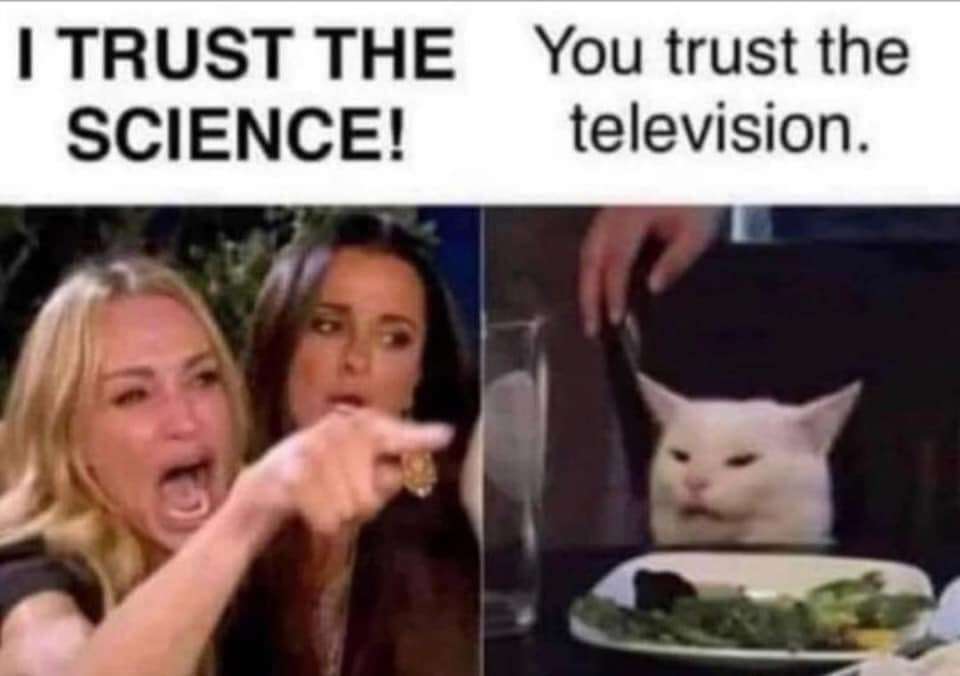
Out of the Diversity Market?

Tuesday, April 1st, 2008

Well, this is interesting on a number of levels.

Elite colleges have been undermining their own efforts to diversify by giving much more weight to high SAT scores than they did before, according to an analysis of College Board data presented this morning at the annual conference of the American Educational Research Association.

Over the past two or three decades, the share of freshman-class seats that elite colleges award to students with high SAT scores has risen significantly—and risen more quickly than the number of high scores, according to an analysis by Catherine L. Horn, an assistant professor of educational leadership and cultural studies at the University of Houston, and John T. Yun, an assistant professor of education at the University of California at Santa Barbara.

What’s interesting is, to me, the way the whole college-admission thing was explained when I was a kid, I was told this is how it’s supposed to work. You’re smart as a whip but your scores are low on this-test or that-test, nobody’s going to care how smart you are.

And in life I’ve found as you get further away from the actual work that needs to get done, this becomes more and more true. Officials who are in charge of promotions, hiring and admission, being insulated from the actual work that needs to get done, but needing some kind of data on which to base their decisions, will start to rely on one or several arbitrary testing mechanisms.

The researchers say that, by focusing so heavily on high scorers, the elite colleges they examined are ignoring promising minority students with lesser scores, increasing the competition for high-scoring minority students, and potentially “simply ‘pricing’ themselves out of the ‘market’ for a more diverse learning environment.” Especially among the most prestigious of the 30 institutions, it is hard to believe that putting less emphasis on high SAT scores would cause the institutions’ quality to suffer. [emphasis mine]

Well, well, well. Talk about a darker skin color, and suddenly the most entrenched eggheads start to sound exactly like me. All of a sudden…we need to explore ways in which a single score from a single test, even a prestigious and well-known test like the SAT, might not be telling the whole story.

Whatsamatta? Why can’t we just go off the test score and very little, or nothing, else? Isn’t “promising students with lesser scores” an oxymoron? After all, if a student is promising, the onus is on him or her to bring up that test score right?

Once again it looks like I’m in trouble with the prevailing viewpoint. Back when it said skills/promise/aptitude were all synonymous with the value of a test score, that did seem overly simplistic but I could see the logic in it. Then it said no, there might be more to the story than that. There was logic in that too. Nowadays, the answer is all-of-one or all-of-another, but before we figure out which one it is we need to know the skin color under discussion.

And I’m sorry, but I can’t see any logic to that whatsoever.

And isn’t it interesting…if there was an explanation behind the phrase “hard to believe that putting less emphasis on high SAT scores would cause the institutions’ quality to suffer,” the entire article would have been justified. Since there isn’t one, all we have here is a bunch of colleges making decisions based on test scores, which is what they are conventionally supposed to be doing — and an egghead researcher who doesn’t think that’s the way it should be done. And can’t, or won’t, say why.

He and I could be kindred spirits, if the soft bigotry was dropped. Tests, even the Scholastic Aptitude Test, are exercises in following instructions. When you’re talking natural aptitudes, the aptitude of following instructions is oppositional to the aptitude of figuring out what needs doing & doing it. So even without the skin-color bean-counting, we already have a big problem there — leaders of tomorrow are filtered in to the higher educational system based on their abilities to follow instructions, not to actually lead.

Now we’re getting all hip to the idea that the process may be broken and in need of a fix or two…but only within the context of “minority” concerns. And on that subject we’re going to talk about nothing but minority concerns. Aptitudes that may be useful in roles of responsibility, that are beyond the scope of the testing mechanism, are things that I’m injecting into the subject myself in my own comments. The article itself doesn’t make any mention of them.

So the problem here is that we may be going through the motions of embracing excellence when we’re actually embracing mediocrity. We may be…it seems the researchers don’t want to commit on that one way or the other. For example, I can’t possibly be the only one who thinks the statement “‘pricing’ themselves out of the ‘market’ for a more diverse learning environment” is bizarre in the extreme. There, again, the article approaches an explanation of what is meant by this, but doesn’t actually pursue such an explanation. What exactly is a “more diverse learning environment”? Is it an exercise in excellence, or mediocrity?

Three decades after Bakke, with that phrase being tossed around with such a frequency and to such an extent that it has become tired and worn, I’ve never heard anyone in any position of authority say which one it is. Is “diversity” the pursuit of a zenith, or of an average?

And as a general rule, when persons in positions of authority refuse to explain things, bad things are about to happen.

Faking the Grade

Thursday, March 27th, 2008

This kind of overlaps to the thing we were writing about earlier with Information Technology, where the word “skill” is being re-defined — away from the ability to do things, toward a big fistful of paper statements from third parties that someone was able to do something.

It’s led to the creation of a whole new industry.

Throw a few hundred dollars to the right P.O. Box and you too could have a medical license, engineering degree or credential of choice all without cracking a single book. And many unscrupulous students do.

“[The diploma mill industry] is so large that it’s hard to believe the numbers,” comments Dr. George Gollin, a physics professor at the University of Illinois Urbana-Champaign…”We think that U.S.-based diploma mills are selling as many as 200,000 [phony] degrees per year.”

What’s even more alarming than the size of the industry — estimated at more than $1 billion per year — is who’s funding it. Anecdotal data gathered from now-defunct institutions suggests that up to 5 percent of all diploma mill buyers are federal employees, 1 percent are purported medical doctors, and a frightening number are parading as Ph.D.s.

“The number of fake doctorates sold each year is in the range of 50,000 to 60,000,” states John Bear, author of “Bear’s Guide to Earning Degrees by Distance Learning.” “The number of real Ph.D.s is around 40,000. In America right now, more than half of all the Ph.D.s are fake.”

Funny thing about these articles is — they never draw a distinction between the diplomas that are “fake” because they involve out-and-out undeniable fraud, and other diplomas that are “fake” because they come from “diploma mills” that are not quite as prestigious as they might appear to be. The phrase “all without cracking a single book” seems to indicate that everything under discussion under here, falls into the first of those two categories.

But to receive an application that boasts of a diploma or degree taken at XYZ, and to do the necessary research on it, learning only after digging that XYZ was one thing and you expected it to be something else — to call that a “fake degree” is kind of like referring to a sexual encounter as rape the morning after simply because you didn’t like it.

Not that I think any of this is defensible. In my mind it isn’t…not on the supply side…or on the demand side. But it’s simple economics. You say “we are not going to allow you to advance beyond this arbitrary point until you bring to us this arbitrary piece of paper, and as far as what you are supposed to have learned when you produce that paper not even we have a clear understanding of what that is” — to say that, is to produce a black market in manufacturing those pieces of paper. It is a practical guarantee.

You are saying, we don’t care what you really know, we don’t care what you are supposed to have learned. Or if we do care, we aren’t saying what it is, in fact we’re taking great pains to avoid saying what it is. Just bring in the piece of paper. Cover our butts. And so, disqualifying the instances in which an intent to defraud can be proven…what we really have here are examples of efficiency, not deceit. The diploma-mill customers arrived at a dirty game, and they played dirty hands.

And I’m just as inclined to question the qualifications of those who demand those pieces of paper, and are chagrined about the nature of those pieces of paper once they are delivered, as I am to question the qualifications of those who deliver them. Those who so demanded, are saying “when I asked to see such-and-such piece of paper, I had it in mind that he’d be going to classes…very much like the ones I took…even though that isn’t exactly what I said.” In most cases, I’m sure, those-who-supplied are unscrupulous. But also, in most cases, their “crime” is spending $500 instead of $50,000…and fulfilling the letter of the requirement, a requirement on which they were soured & cynical because they thought it a silly requirement from the get-go.

And if I’m to condemn them for that, well, I’m in no position to. I’m really not. I’ve met far too many people who have those pieces of paper, “proper” ones at that, who wouldn’t know their asses from a hole in the ground.