
Archive for the ‘Ayn Rand Spins’ Category

Americans vs. Citizens

Tuesday, March 18th, 2008

Rick thinks commenter XtnYoda’s words are worthy of emphasis, and so do I. Looking long and hard at the Obama/Wright mess, he says…

I’ve been thinking about this today some more. Words mean something.

I think we use the word “American” in much to generic a manner. I think we need to deal with this in an honest manner. We need to do away with the hyphenated American moniker and form just two classes in this country. “Americans” and “US Citizens”.

“Americans” are those who are here to take responsibility for their lives. Red, Yellow, Black, or White. “Americans” are here to strive to better their lives and those around them. “Americans” live to not just better themselves, but they also live with a sense of gratitude for the price paid for their opportunity. “Americans” are proud to be “Americans”. “Americans” don’t live with their heads in the sand. They know that there have been mistakes made, yet they have a dogged determination to not repeat those mistakes and are willing to embrace all who have like aspirations. They know that by advancing and achieving they can give back, be a contributor.

“US Citizens” seem to have a tendency to castigate blame and seek ways to look to the faults of others to deflect their own shortcomings. “US Citizens” attempt to gain their strength by focusing on what they feel they are owed rather than what they can achieve.

Seems it would be much simpler to identify just two classes rather than five or ten or however many.

Conclusion:

All Americans are US Citizens, but not all US Citizens are yet Americans

There is a dangerous irony I see going on here, one in which it’s now likely for an American to lose his or her American-ness without even realizing this transformation is taking place. But there’s a bit higher level of difficulty involved in a non-American citizen gaining it.

For starters, there are — for a number of reasons — those who work to make this happen. At this point, I think that would be difficult to deny. All these phrases being tossed around breezily, without thought, mostly for the purpose of indicting America for this or that transgression and expunging national pride from any soul who may still have some.

And then there are all the subtly different notions of community. It seems to me when we fail to realize how many different ways you can regard yourself as being part of a community, we set ourselves up for this easy downward slide to take place. Some of the phrases that can be targeted by the anti-Americans are “here to strive to better their lives and those around them,” and “by advancing and achieving they can give back.”

It brings to mind what I thought of as a very awkwardly written passage in Atlas Shrugged, the one right before Hank Rearden signs over the “gift certificate” releasing his trademark rights to the metal he has invented. The statist bureaucrats supply the necessary motivation for this by blackmailing him, using the information they’ve collected about his extramarital affair. Rearden agrees to sign, not because he cares about his own reputation or that of his wife, but because he cares about his girlfriend Dagny Taggart.

Ayn Rand was cheating on her husband as she wrote this, so that’s probably why the passage comes off as so messy and incoherent. But there’s an interesting point to be made here about statism. Hank Rearden tells the bureaucrat something about “you must know the way you threaten to portray us is a lie, because you know if we were the kind of people you are ready to show us to be, your blackmail scheme would not be effective.” Or words to that effect. Hank Rearden and Dagny Taggart, being Ayn Rand heroes, care about the individual. But they also care about others. Rearden, threatened with an injury to his own reputation and nobody else’s, wouldn’t lift a finger to prevent damage to what others thought of him. He cares about Dagny. The bureaucrats who control the state would like to expose Rearden and Dagny as people who care nothing for others, only for themselves.

Sound familiar?

And so Americans are open to attack when we regard this sense of “helping others” as an all-or-nothing thing. It’s not.

Suppose you’re a U.S. citizen and, also, you’re an American. In addition to those, you’re a farmer with eighty acres. I move in next door, with another eighty acres, and show in a number of ways that I know very little about farming. You have a lot of options at your disposal.

You could let me learn from my mistakes, that I should be working sixteen hours a day plowing my fields just like you, rather than the six-and-a-half I put in before sitting on my back porch watching you work with a Martini in hand. You could just let events unfold. That might be fatal.

So we have a predicament here. But I think most people, before they’ve been poisoned by outsiders, approach this in a very common sense way: You should mind your own business, for the most part. Maybe come over and ask if something’s wrong with my equipment, do I need any spare parts. But when my harvest falls short in the fall, let me shiver and starve my way through the winter. At the same time, though, when things are really bad and I come knockin’, you’ll offer help like any American would.

Maybe I’ll have to get an earful. I think that would be most appropriate. But the first priority would be to make sure people get the assistance they need, when they need it — confident in the expectation that the lesson has been taught, and next year you’ll see new farming habits and longer plowing sessions on my spread.

That’s a very basic sense of community. You were the ant, I was the grasshopper, and we shared a sense of community strong enough for me to learn my lesson.

But here’s the funny thing about human nature. A mile away from us, there is another couple of neighbors in exactly the same situation. And they resolve it with a stronger sense of community: The ant ended up plowing the grasshopper’s fields for him.

At the annual county fair, the four of us get together and comment on this. You and I are a community. The other pair of neighbors is a commune. They have, in a very subtle way, lost their American-ness. They are the U.S. citizens of whom XtnYoda speaks, because they no longer enshrine American values.

And here’s how it will work every single time: They will say we should have resolved our conflict the way they resolved theirs. And they’ll probably convince us. They will be more inclined to use bullying maneuvers than we will. Why would they not? When you have a stronger sense of community, you just feel like a better person.

And you want everyone, within line-of-sight or not, to do things the way you do them. That’s what a strong sense of community is all about!

But you and I might say…with our way, Morgan eventually learned to be a better farmer. With your way, he would not have learned this. It’s a good point. It will be shouted down, sneered-at, shunted aside very casually.

Every single time.

And most of the time that scenario plays out, the COMMUNE-ists will win. It’s a human flaw. Unless we pay very close attention to what is happening here, we will discard a productive and beneficial sense of community, one that embraces the value of individual responsibility, in favor of a “stronger” but decidedly inferior and harmful sense of community that derides and derogates the value of individual responsibility.

And you know what will really shove that over the top? When we all get tractors, combines, harvesters. When the farmer’s day starts to shrink from sixteen hours, to twelve, to ten. That has a deleterious effect on this more modest, but more beneficial, sense of “community.” What it does, is make you socially into a bigger butthole should you choose not to plow your lazy neighbor’s field for him — because now you can.

Individual responsibility suffers. Individuality itself suffers. And ultimately, American nationalism suffers.

And I think that’s what has been happening here. We’re about a century past the later stages of the industrial revolution, give or take. Our sense — our SENSES — of community have become welded together so we are presented with a false dilemma, all moderate compromises artificially removed. We can become collectivist communists or individualist buttholes. To plagiarize the timeless metaphor about teaching a man to fish, this middle-of-road option has now been removed. We can let him starve, or give him all our fish.

And so the Americans of whom XtnYoda speaks, are constantly under attack, with their willingness to help others used against them. Citizens bully Americans into becoming just citizens and giving up their American-ness. Americans do not do very much, nor are they able to anymore, to encourage citizens to become Americans.

There is an accelerating quality to this sad metamorphosis. As this sense of community becomes more militant, people begin to get the idea that they are “giving back” simply by becoming an additional voice in micro-revolutions that are already several voices strong. A great example of this is one of the favorite recurring platitudes from the utterly anti-individualist social-butterfly Obama fan: “I want to be part of this.” And so across the landscape there arises a feeling that each individual has contributed, by “helping” to make something happen that would have happened anyway. This poisons the idea that an individual can make a difference, while offering a toxic disguise that what is taking place is precisely the opposite — we start to make what are thought of as “differences” by adding our support to things that would’ve hummed along just fine without us.

And so we stop being Americans, by bringing a stop to any belief in ourselves.

Which ultimately means we want everyone else to stop believing in themselves, as well.

Conclusion? The strongest sense of “community” is a relatively moderate affair, a hybrid of collective and individual values, drawing hungrily from the latter and only slightly from the former. Over time we have allowed the darker side of human nature to ensure there are more citizens than Americans, and more Americans becoming merely citizens every day. Because individuals will allow other individuals decide to be individualists or collectivists — but collectivists always have to make all other individuals into collectivists.

Our Sanity in Decline

Friday, March 14th, 2008

You know it’s leaving us, because there’s a prevailing viewpoint that the labor market has become soft for those seeking work; there’s a prevailing viewpoint that this is due to the “outsourcing of jobs” by “big companies”; and there’s a prevailing viewpoint that, to fix this, we need to elect someone who will raise taxes on those companies.

There’s a geranium in our societal cranium. We’re rotting from the head down. It’s terminal, or curable, and I don’t know if it’s curable.

Will Win This Yet

Thursday, March 6th, 2008

An optimistic tone over at the Rottie’s place thanks to Crunchie.

As well as a crystal-clear distillation of what exactly we’re supposed to be doing over in Mesopotamia…and which, it seems, we are indeed doing. So no, we’re not there to steal oil and kill brown people. In fact, if those are indeed the stated purposes then we need some hearings pronto, because we’re doing a pretty lousy job of it.

If you’re a screeching Lunar Chiroptera the only reason we went to war in Iraq was for the oil, or to kill brown people, or yada yada. But anyone who paid attention and had an IQ above explosive diarrhea, knew that Iraq was the first step in the long marathon of actually winning the strategic war against Islamofascism. You see, we had two choices. We could play whack a mole from now until doomsday, killing terrorists wherever we could find them, taking out one cell at a time, at a huge long term cost in lives, or we could go after their “hearts and minds” and eventually kill the ideology that spawns them.

The occasion for this commentary is, of all things, the Gray Lady, linked by Blackfive.

After almost five years of war, many young people in Iraq, exhausted by constant firsthand exposure to the violence of religious extremism, say they have grown disillusioned with religious leaders and skeptical of the faith that they preach.

Abe Greenwald has a prize-winning commentary about this

It is impossible not to infer that the Bush Doctrine and the commitment of the men and women in uniform has facilitated this shift. Far from “creating more terrorists” as the failed cliché goes, the war has helped to nurture an appreciation for liberty among Iraqi youth. A 24-year-old Iraqi college student is quoted as saying she loved Osama bin Laden at the time of 9/11. Now, after seeing the efforts of religious leaders to curtail her daily freedoms, she rejects extremism entirely. While George Bush’s critics can make no useful connection between 9/11 and the war in Iraq, this young woman has no problem doing so.

People who oppose the Iraq war, by & large, also oppose conservatism. When they are left to describe in detail the conservatism they want to resist, invariably they give a perfectly functional line-by-line description of the Islamofascism we would go back to tolerating endlessly were these anti-conservatives calling the shots. Something out of the seventh century…bad for freedom…oppressive to women…steamrolling over the will of the people…a theocracy…a moldering patriarchal layer of insulated & isolated martinets imposing draconian punishments, out of touch with the common people.

It’s like something in one half of the world is perfectly alright and ought not be messed with — when you have the same thing, as they see it, closer to home, suddenly it’s time to bear any burden, pay any price, fling any rabid spittle, to overthrow it and bury it. But if something that really does fulfill all their nasty nouns and adjectives, flourishes east of Greenwich…well, that’s all good. Let it be.

Best Sentence XXVI

Sunday, February 24th, 2008

There is a round-about way we stumbled across the winner of the latest BSIHORL (Best Sentence I’ve Heard Or Read Lately) award. Follow along…

Michelle Malkin linked to a curious item in the Santa Cruz Sentinel, which was crying crocodile tears for the illegal aliens who couldn’t find any work leaving any parallel dilemma faced by the people who actually belong here, mostly uncommented-upon.

And the story contained this curious undertone. Like trout in a plentiful pond, it would break the surface when you least expected it, and elude capture by vanishing almost instantly. And then do it again. And again.

The bad times are trickling down to the lowest rung of the work force: the illegal labor pool, which has long been tapped by both contractors and homeowners for convenience and low cost.
:
“Everybody is going to suffer in a recession — from the top on down,” says Patti Decker, a branch manager with Labor Ready in Soquel, whose number of Spanish-speaking customers, she added, has been on the rise in the last few months, in part due to the poor economy.

This recurring reference to verticality. I think it’s relevant, because if you accept that the illegal aliens are the lowest among us — rather than the children who are brutalized by some of them, more often than we’d be led to believe — this would mean every time a politician makes reference to our goodness being defined by how we treat the least among us, that politician is saying our goodness is defined by how we treat our illegal aliens.

Which would be groundbreaking, because I’m hearing it from them every goddamned day. Society is to be regarded according to how it treats the weakest…the least…the lowest…the poorest. Many saying this is so. Few saying why.

Not sure if this comes from The Gospels or any other part of the Bible. This seems to be a misattribution based on Luke 9:48, “…the one who is least among all of you, this is the one who is great.”

But thankfully, I don’t see this attributed to the Bible too much. Most of the time people are claiming to come up with it themselves, which is funny because there are so many original authors of this one bromide.

Including one Helen, cited by Don Quixote while guest-blogging at fellow Webloggin contributor Bookworm Room.

A nation is only as powerful as its weakest citizen, as prosperous as its poorest, and as decent and moral as its empty jails.

Whereupon commenter Lissa wins the BSIHORL award with this apropos rejoinder:

Why should we judge a society by its poorest and weakest? Why not judge it by its best, and the opportunity for the poorest and weakest to become neither poor nor weak?

A question for the era, Lissa. WELL done.

Update: In another example of wonderful/wretched irony, I see the overall liberal mantra is a short dialog of sorts, in which an interested outsider applies for assimilation into the liberal collective union, inseparable from adoration and adulation from those already therein — and is granted it.

It can be distilled into the following brief exchange:

APPLICANT: I believe we are all equally worthwhile in every conceivable way, without regard to gender, race, creed, credo, sexual preference, income, net worth, or place of birth.

COLLECTIVE: That clearly makes you far superior to those who don’t believe the same. Enter when ready, New Member.

The theoretical egalitarianism is an indispensible component. So is the practical non-equal stratification of “We’re Better Than You.” Neither one of these are tangential or optional. They are BOTH core, even though they are opposites.

Self-mockery, thy name is liberalism.

All animals are equal, but some animals are more equal than others.

Why Here?

Thursday, February 14th, 2008

It cannot be denied, by anyone who’s paid the slightest bit of attention, that all these crazy left-wing agendas are part of something much, much larger. I demonstrate this through the eight-or-nine-in-ten rule. Show me ten war protesters, I can show you eight-or-nine abortion advocates. Eight-or-nine people who don’t believe in God. Eight-or-nine people who think “global warming deniers” are on par with holocaust deniers, eight-or-nine people who think we should interrogate our terror suspects by simply feeding them, letting them sleep, and waiting endlessly for them to decide to tell us something good — no interrogations.

This nonsense is all connected.

And nearly all of it is much more popular in other countries, than it is here in the USA. The planet, minus America, does things more-or-less the way they want it done. But that isn’t good enough.

Rick was observing the way they run away from an argument, out in cyberspace where nearly every fight is make-believe. The subject of the argument? The whole “turn away the Marines, people are frightened of military stuff” thing. Okay so these people are afraid of defense, but not offense. It could be summed up as: People don’t kill people, armies and guns kill people. Are military units made up of people? Sometimes, but other times not. The answer to that one switches back and forth based on political convenience.

Ann Coulter notices the incredible success these lunatics have had in taking over the one place where their policies prevail only partially, which is our country, now running three liberal media constructs as the only three viable candidates for President. Mmmm…for idealogues who like to talk about “diversity,” they don’t seem to be very much into it. I’m not sure what taking over an entire planet has to do with diversity. Maybe they want to make sure everybody can just see how they do things, and decide for themselves how incredibly smart the liberal-secular-anti-gun way of living is? That doesn’t seem to be the case. Just run one of ’em up against some opposition, like Rick did, and see how they react to it.

No, they’re control freaks. They just want everything done their way — period. They aren’t all about presenting us with alternatives, they’re about taking them away.

In the last year, the USD has lost value against the Canadian dollar. Canadians who are pre-disposed toward the anti-carbon anti-God anti-death-penalty anti-self-defense anti-common-sense way of life — but I (mostly) repeat myself — recognize this as an extremely powerful argument: To build a society enshrining the ideals you favor, right alongside another society enshrining ideals you do not. And then show how incredibly prosperous you are. They know how persuasive this is. Believe me, I can vouch for this personally, you’ve never seen anybody quite so full of themselves.

So with nine tenths of the globe doing things the way they want, how come they don’t practice that a little bit more? Maybe build some artificial islands. One off the coast of Oregon, one off of North Carolina, one off of Maine…make countries out of each and every one of them. No guns, no death penalty, no religion allowed. And then they can all surround the United States and watch us go down the tubes, with our foolhardy practices of faith, inalienable rights, respect for the individual, private charities over public social programs, and law, and justice. Just grab a bag of cheese curls, watch us flouder around with our prehistoric ways. And point. And laugh.

(Just don’t forget to pay that tax on your television set.)

What’s this drive to stamp out every last tincture of any idea contrary to your own, in the name of “diversity”?

Memo For File LIV

Saturday, February 9th, 2008

John McCainThe flap-that-isn’t-a-flap over the Republican party’s nominee-apparent, continues.

Tom the Impaler wants to know where’d the quote come from? The quote in question is a rather arbitrary length of subselection in the dialog between Henry Rearden and the three-judge panel at his trial in Ayn Rand’s 1957 magnum opus Atlas Shrugged. The story takes place in an alternate-universe near-future at an unspecified date, and describes a downward spiral of America, the last non-collectivist nation on the face of the earth, into the individuality-murdering muck of socialism. Rearden, a brilliant metallurgist and entrepreneur, has invented a wonderful and fictitious metal alloy called “Rearden Metal” that lasts much longer than steel.

There are no planes in this alternate reality; freight is delivered by trains. Rearden Metal has the potential to save vast regions of the country from famine. But the politicians and labor bosses are afraid of the market being disrupted, so Rearden has been forbidden from selling his new metal. He’s on trial for violating the regulation. By showing the trial for what it is, he comes out of it with a $5,000 fine.

I’m doing this from memory. I may have to revise some little tidbits of that up there, but what you have is the essence of it. Which demonstrates two things, in my mind, which I’d been noticing years and years before I ever picked up the novel. They never, or very seldom, are pointed out. But they’re all-important.

Point One is what Rand called “the sanction of the victim.” If you study the history of western civilization since the industrial revolution, you’ll find one pattern that consistently emerges is that the most dreadful tyrants are stealthy. They have some kind of propaganda machination in place to pretend their government has power by consent of The People. Sometimes, they do not pretend this, but nevertheless persist in sending out word that their government is doing The Work Of The People. Nobody ever wants to self-annoint and then have the balls to say “I want this done because it’s me and I’m the guy who wants it done.”

And so when they oppress the classes under them, they demand sanction from the victim. There’s always some process for this, because it makes them and their lieutenants feel so much better about it when the victim participates in the process. It’s kind of like trying to get confessions out of John Proctor and Giles Corey in The Crucible.

Point Two is closely related. It is that when you are confronted by a silly idea, the most devastating thing you can do to it is to take it seriously. I can pinpoint exactly when it was I figured this out — I had it pointed out to me in this Time Magazine article, about a skirmish between Carlin Romano and feminist Katharine MacKinnon, after Romano’s negative review of MacKinnon’s book, Only Words.

At the heart of her thinking is the notion that pornography is literally a form of assault by expression, something like saying “Kill!” to a trained attack dog. “Protecting pornography means protecting sexual abuse as speech,” MacKinnon writes in her latest book, Only Words (Harvard University Press; $14.95). “Sooner or later, in one way or another, the consumers want to live out the pornography further in three dimensions.”

For more proof that words have consequences, there is Carlin Romano, book critic of the Philadelphia Inquirer. His Nov. 15 review of MacKinnon’s work in the left-leaning weekly the Nation set off a war of words that is reaching new heights of animosity. Romano, a former philosophy instructor, opened his review with a hypothetical proposition. “Suppose I decide to rape Catharine MacKinnon before reviewing her book. Because I’m uncertain whether she understands the difference between being raped and being exposed to pornography, I consider it required research for my critique of her manifesto…”

MacKinnon felt more than insulted. She felt…well, raped. “He had me where he wanted me,” she told TIME last week. “He wants me as a violated woman with her legs spread. He needed me there before he could address my work.” And the reviewer? “She’s claiming a book review equals rape,” says Romano. “That’s quite a stretch.”

MacKinnon’s assertion was just as patently absurd, in my view, as the McCain nomination that dangles over our heads like the Sword of Damocles today. And I further hold that the McCain nomination suffers from the same weaknesses as MacKinnon’s babblings did back then…that hobbled Henry Rearden’s “trial.” In all three of these situations, the protagonist has an expectation — a desperate one — that the selected audience will take the proposal somewhat seriously…just seriously enough to do what is expected…and then move on. Don’t take it so seriously as to inspect it.

Romano did exactly the opposite. Like Henry Rearden at his trial, Romano dealt a devastating broadside to the silly idea, simply by taking it seriously.

“People claim I dehumanized her,” Romano complains. “In fact, I did worse — I took her seriously. The worst thing that can happen to a flamboyant claim is to be tested.” To put it another way, MacKinnon’s contention that depictions of sex can be equivalent to sexual assaults may come as news to women who have suffered the atrocity of an actual rape.

How many messages surround us nowadays, carrying the expectation that we are to take said messages only seriously enough to do what is requested of us, but not so seriously as to test them?

I would offer that there are so many they threaten to drown us. And the impending McCain nomination is one of these.

So I intend to take the McCain nomination seriously. After the Republicans nominate him, I will accept him as a serious candidate, and support him to the extent that I think I can trust him. To the extent that his deeds — not his words — are compatible with my own interpretations of the country’s interest. Which means, not at all.

Now that I’ve dealt with how this boondoggle is connected to the Rearden trial, there is something else I think should be pointed out, and I think it’s been injurious to everybody who could be affected by a new administration that it’s gone this long without anyone talking about it. I hope what follows finds its way in front of the eyeballs of one or several prospective McCain supporters, before they pull that lever.

The labels. The directional labels. “Right…Left…Center.”

John McCain, I’m afraid, is the agent by which those labels are about to inflict upon us a very severe injury. No one can deny at this point what a wonderful medicinal balm those three words have been to his campaign. The narrative doesn’t change much at all, so let me see if I can recite it from memory here…

Senator McCain is a “maverick,” now “working hard” to heal the rift with the “Republican base,” over a number of issues on which that base “demands” a “drift” to the “hard right” but by “working with the democrats” Senator McCain has been offering a more “centrist” approach.

Something like that.

And this way of looking at things has been embedded in our political arena, in which massively important and impactful decisions are made, for generations now. There is right, there is left, there is center. Just like driving a car.

The problem is with this unstated moral to the story. I say unstated…it’s Not Articulated Outright…it’s an idea people take only seriously enough to do what is requested/demanded of them. And the idea is this: That if you want to get anywhere, most of the time you should stick to the center.

How conveeeeeeeenient. Now you’re on the hook to do whatever is compatible with the interests of whoever is defining what “center” is.

I’d like to propose something different. The left-right-center thing doesn’t survive the test of being taken seriously. You wouldn’t live by bad ideas half the time, would you? If one third-grader says people breathe air and another third-grader says people can breathe water, you wouldn’t stick your face in a pond half the time would you?

True, we can survive bad ideas. That doesn’t mean we’re obliged to do so 50% of the time.

So my proposal for replacing the left-right-center dictum, is this: Inside-outside. Convention-irony.

Deep down, I think all of us, regardless of ideological persuasion, understand what convention is in running a government, making our laws, and enforcing our rules. Convention is called out in the Declaration of Independence and in the Constitution. We are endowed by our Creator with inalienable rights, that among these are life, liberty and the pursuit of happiness. Congress shall make no law abridging freedom of expression, establishing a religion or prohibiting the free exercise thereof…we are, and of right ought to be, free…we’re entitled to equal protection under the law…etc.

If most of us want something to be illegal, and a law prohibiting it is compatible with the Constitution, we can make it illegal. And if it is illegal, you only get to break that law until you get caught, and then you get punished. If you aren’t breaking any laws, then you’re a free man, and you get to stay free, enjoy all your rights, and keep all your stuff.

That’s convention.

Irony is all the stupid crap we do when we find convention boring. Or when times get tough and we form the narcissistic worldview that someone has screwed us over…through convention.

Irony is a 70% income tax on the wealthiest during the administration of FDR. Irony is slaughtering pigs to rot in the fields, and pouring cream in the ditches, in some parts of the country — while, in other parts, people are starving to death.

Irony is eventful freedom. Deep down, everybody already knows Thing I Know #196: When classes of people take turns, over time, enjoying special privileges, not one man among them enjoys genuine freedom. Irony is the Year Of The Woman. Irony is the Black Civil Rights Movement. Irony is The Year Of The Queer, and hate crime legislation. Convention is what most of us understand is in the Fourteenth Amendment, and all of us know makes us a better people with a better government — equal protection. Not just in the boring durations between the fashionable debuts of oppositional things, when some special class has its turn in the limelight…but all the time. White guys aren’t special, persons of color aren’t special, women and gays aren’t special. We are all just “We The People,” like it says in those letters, larger than all the rest, in that Konstyitooshyun that so many say should be getting more attention.

Irony is the idea that violence stops when the tools used to inflict it become unavailable. That gun control can stop violent crime. That something called “disarmament” can stop war.

Irony is the Endangered Species Act. Deep down, everybody understands when our government is restricted from taking things away from us, and instead starts enforcing rules on how we are & aren’t supposed to use our stuff, including our land — this is nothing more than a mocking and denigrating end-run around the rules that were intended to make us more free than that.

Irony is saying illegal aliens “work hard and follow the law.” We all understand that some of them may do the first of those, but none of them do the second.

Irony is letting a murderer live, when he can look you right in the eye and promise you that if he does live, he will kill again. Irony is giving pregnant women the right to murder their babies. What can be more ironic than killing the innocent, while sparing the guilty, while accusing those who oppose you on both counts of contradicting themselves?

Irony is a bunch of soccer moms in New Jersey voting to decide what the speed limit will be in Montana, and what the legal drinking age will be in Kansas.

Irony is insisting that homosexuals can serve in the military until they tell someone they’re homosexual, and then out they go.

Irony is saying when our nation defends itsef, it should do so in a way that makes other nations happy, even if that means not defending itself…and without stopping to notice, nothing we ever do seems to make those other nations happy.

Irony is positioning yourself as a defender of womens’ choice, by bullying and intimidating women who are complete strangers to you, into making the career choices you think they should be making.

Irony is having absurd and silly arguments over the provision of good food, access to legal counsel, and prayer facilities to our own detainees, while when our folks get captured, the other side saws their heads off while they’re still alive.

Irony is the idea that when your employer gives you a stupid rule to follow you’re being oppressed and need organized representation, but when your union gives you a stupid rule to follow, then that’s all good.

Irony is the Earl Warren Supreme Court, 1954-1969. Irony is a fifteen year stretch of cooking up ingenious, creative, spellbinding and surreal new ways to let criminals out of jail that you know damn good and well are guilty, to the point where prosecutors don’t want to prosecute anything anymore, and women and children are afraid to walk the streets at night.

Irony is affirmative action, with quotas. For what can be more ironic than counting beans by the bean color, while insisting that you’re “color-blind” in everything you do?

Irony is running for President as a strong, independent woman, after creating a political career for yourself by riding your husband’s coattails while he cheats on you constantly and, on the record, you were too much of a dimwit to ever suspect anything was going on.

Irony is the fantasy that when someone is willing to hire you for four dollars an hour, if some law is passed that makes that arrangement illegal until the wage is doubled, the guy offering the four dollars will just…find the extra money…somewhere…and the job will still be yours.

Hooters WaitressIrony is complaining about carbon emissions and high gas prices, while driving something big that sits way up high…to work…every day…using 50 gallons of fuel a week to do something that requires 10…or less.

Irony is saying beautiful young women are being oppressed by Hooter’s waitress uniforms, while beautiful young women who don’t work at Hooter’s dress exactly the same way.

Irony is the notion that peace is possible if one side of a conflict, rather than both, thinks it’s a good idea. Or, when both sides hunger for peace, it can be achieved with the details of the peace relegated to minor-footnote status. Deep down, we all understand if both sides want peace and it doesn’t matter who runs anything, there wouldn’t be any fighting in the first place.

Irony is the absurd doctrine that you can’t do anything to defend yourself, unless the threat has already done something to actually hurt you. Who among us would impose such a requirement on their daughters, living away from home for the first time, confronted by a menacing neighbor or co-worker?

Irony is an automated voice asking you to press 1 for English. Irony is wondering wistfully what we can do to help our immigrants assimilate, while wandering the streets all day every day, hearing immigrants speak spanish to their children — their CHILDREN, who will one day have to get jobs here — and thinking nothing’s wrong with it. Or “celebrating the diversity.”

Irony is getting your news out of the Daily Show, your outlook from Rosie O’Donnell, your science out of Al Gore, and your medical advice out of Michael Moore.

Irony is nonsense we practice when we get tired of…sense.

It isn’t right and left. It’s things that we all know make sense…and other things that we all know don’t.

McCain looks like a reasonable candidate when you see him as someone alternating between right & left. When you see him the way I see him, through the lense of convention vs. irony, he looks very different. He looks unprincipled…more repugnant and loathsome on the occasions when he agrees with me, than another would be, in disagreeing with me. He looks like a career politican. More dangerous than all the rest. He looks like all the liabilities of George W. Bush, with none of the benefits.

Because that’s exactly what he is.

On Tiny Cars

Sunday, January 20th, 2008

My feelings about large cars versus tiny cars aren’t as divided as some folks might think they ought to be. My car is a “rice rocket” from another era, a 1989 Toyota Corolla GTS, built low to the ground. I drives it because I likes it. So I should be on the “tiny” side of the car debate, but frankly, a lot of the “tiny car” people are acting like complete dicks.

I think, in the parlance of my overly-simple-minded social studies teachers from middle school, it’s time to stop bickering and remember we all want the same thing.

Unfortunately, that same-thing we all want is: To drive around in a vehicle that sits way up high and has enough horsepower to rock the asphalt, while everybody else scoots around something…relatively bug-sized.

Which is quite doable, except for that bit about all of us having to live under the same laws. But it’s tough to let go of a dream, isn’t it? So the “tiny car” thing has turned into a huge squabble-fest in which much is said, but nobody really says what they mean.

And, being oh so concerned about our household budgets, we turn to our lawmakers to force us into a more economical way of life. Yeah, that’s the ticket. I think everybody understands, deep down, that if you want to have a little bit more money left over at the end of the week for your lottery tickets, you simply…decide things for yourself. But that’s it. We don’t want to decide things for ourselves. We want to keep driving things that sit way up high and have stepladders built in for the driver to climb in…and to be able to afford all that gas, we want the gas to fall back down to 58 cents a gallon, which it will surely do when the other guy drives something that looks like a fishbowl floating down the highway.

Well…GM is saying don’t forget about the extra costs involved in complying with this regulation.

GM says new fuel requirements to add $6,000 per car

New fuel efficiency requirements imposed by Congress will add, on average, $6,000 to the price of GM vehicles sold in the United States, the automaker’s vice chairman and product chief said on Tuesday.

Congress passed a new energy law in December 2007 that requires automakers to increase fuel economy across the industry to 35 miles per gallon by 2020 — up 40 percent from current levels.

“We’ve done the research and it’s going to cost us $4,000 on some vehicles and $10,000 on others, with an average of about $6,000,” Bob Lutz told reporters at the North American International Auto Show.

“That cost will have to be passed on to consumers,” Lutz, a long-time vocal critic of federal fuel regulations, said.

My car gets 35 miles a gallon quite regularly, with a fresh air filter and the tires properly inflated and rotated. When she was brand new, this was a minimum. Even with city driving.

But Lutz is right about the principle of the thing. Living in the nanny state has a cost to it.

Lutz said the law — the first mandated increase for passenger car fuel economy in more than two decades — will force GM to make vehicles lighter.

“We can make the 35 miles per gallon with vehicle size structures more or less like they are today but we will have to restrict our choices when we decide what we want to make next,” Lutz said.

Lutz said one example of the restriction in choices is that GM is now reversing its decision to make rear-wheel-drive versions of some vehicles because those models use more fuel.

“We probably have to take a lot of weight out of the vehicles. We will have to use some premium materials like more aluminum, more magnesium,” Lutz said. “Which gets you the weight savings but drives the cost up.”

But we are going to try as much as possible to preserve the size of the vehicle the American public wants to buy.” [emphasis mine]

See, you have to read critically here. Lutz is speaking in behalf of an engineering mindset that is determined to appeal to the consumer impulses I described above. Sitting way up high. It’s tough to let go of that, and any carmaker who is careless in appealing to that vision is going to be rewarded with disappointing sales.

What’s undiscussed in this article, is that the model that results from this is bound to be compromised in other areas. It is all-but-certain to have safety issues. Meeting new requirements by shedding weight…and embracing classic dreams by sitting way up high. Zipping along at 85, no doubt. Yikes.

Hey, I got a name for these new cars that people still “want to buy” but get 35 miles a gallon and cost $6,000 more. How about the “Fustercluck”? Because that’s what it’s going to be, I think. One can only hope Congress builds in a requirement that the center of gravity can’t be any farther off the ground that it is in most cars today. Maybe it has to hug the road like my “semi-compact” wonder from the Land of the Rising Sun. And then…the Fustercluck will cost twenty thousand dollars more than you’re used to paying.

Otherwise — well, the highway death and injury statistics will be fusterclucks. I’m afraid our “first global warming deaths” are going to be happening along real soon now. Just not in the way the West Wing writers envisioned.

You know what could solve all this nonsense real quick? A “scientific study” that says excess government regulation leads to increased emissions of greenhouse gases…and causes learning disabilities in children, too.

The Ego

Thursday, January 17th, 2008

Jonathan Brink has a post up about ego that really makes you think…and think hard.

When I was six I got my first trophy for playing soccer. It was the strangest feeling at the time. The shiny little trophy had this interesting effect on my soul. It felt good in a way that was validating. As I grew, I was naturally gifted in quickness and learned to gain the applause of my fellow classmates. Before school, everyone would gather up on the black top and challenge each other to see who was the fastest kid in school that day. 9 times out of 10 I won the race. The applause became like a drug, reminding me that I had done something worthwhile. I must be good right? The problem was that by lunch time, people had somehow forgotten their applause. The parade of validations had gone home, thus the need to prove myself again the next day.

And then life had a strange way of doing the same thing. Everything I participated in, school, sports, church, quickly constantly reminded me that applause came from accomplishment. If I got good grades my parents were pleased with me. If I scored goals, my friends were pleased with me. If I memorized verses and showed up on Sunday, my youth pastor was pleased with me. Even work was a matter of accomplishment. The better I did, the more applause and money I gained.

But over time the search for applause grew exhausting. The fickle crowd was never pleased enough. The bar somehow kept increasing the older I got. And to be honest it took a heavy toll on my soul. I felt like a horse with a carrot hanging in front of my face just beyond my grasp. No matter how hard I tried it could never reach it.

Great job, Mr. Brink, and well done. It takes a lot of insight to notice, even if you’ve been working it since childhood, the temporary nature of ego-polishing. If I saw everything exactly the same way you do, this wouldn’t be nearly as interesting.

The Amazing Dennis Kucinich

Wednesday, January 9th, 2008

I’ll post it, most of it, in total because sometimes even one mouse-click is too much to ask of people.

Read it today on Neal’s Nuze page, if you don’t read another thing. Because some of the “class envy” politicians, unlike Kucee, actually have a shot…and I don’t think they know any more than he does…

Kucinich has a long history in congress of trying to shift the tax burden away from low and middle income Americans onto the backs of the high-achievers. In 2003 he sponsored a law that would give a “refundable” tax credit to protect low and middle income people from having to pay Social Security or Payroll taxes. Kucinich, who is chairman of the “Progressive” (that means liberal) Caucus also proposed something he called a “tax dividend” for every man, woman and child. Well, almost every man, woman and child. He wanted to limit the dividends paid to the top 1% of income earners to only 1% of the total tax cut.

Well, there’s our clue. Kucinich doesn’t have any idea in the world how much of the total taxes are paid by the top one percent of income earners … so I asked him two questions:

1. What percentage of total income is earned by the top 1% of income earners?
2. What percentage of total federal income taxes are paid by the top 1% of income earners.

The answers were astounding. Congressman Dennis Kucinich thinks that the top 1% of income earners earns about 60% of all income, and he thinks that they pay about 15% of all income taxes. The fact is that the top 1% of all income earners pull in about 18% of all income and pay 38.8% of all income taxes.

This is an astounding level of ignorance on such an important statistic. You can excuse a mother of three loading up on Happy Meals for her porky little kids at a McDonalds for not knowing this .. .but a member of the Congress?

Poor Person With Big TV Sighting

Saturday, December 22nd, 2007

The lovely Michelle called out what we’ve been noticing for awhile now. No, not that we’re bragging about being oh so much smarter, since we doubt like hell this is the first time Ms. Malkin has noticed what’s going on.

This Sharon Jasper is the same Sharon Jasper profiled in the New Orleans Times-Picayune sulking in her government-subsidized apartment with hardwood floors and HUGEtastic flat-screen television and complaining that it’s a “slum:”

Well, yeah. There’s kind of an inversely-proportional relationship going on between the diagonal measurement of television sets, and the net worth and annual income of the people who own them. It breaks down when you rise above the level of self-sufficiency, since I see that wealthy people can have television sets of any size, or none at all. But at the sub-dependent levels, where public assistance is needed…

Thing I Know #87. In the past few years I notice the people with the largest television sets are the ones we are supposed to call “poor”.

Worship of the Zero

Saturday, December 22nd, 2007

Mike over at Mike’s Eyes came across that silly book about what the world would be like without humans. Mike is a decent Ayn Rand fan, so he was appropriately horrified.

It’s all about the fear of responsibility. I reach that conclusion by the method of durable thinking that is a method of last resort, the process of elimination. Something makes this appealing to a large selection of people. Not just acceptable. Appealing. How can you have some genuine passion for this, when the point isn’t that your existence is genuinely toxic, it’s simply that you aren’t getting anything worthwhile done and lack even the distant potential to make the world a better place. How do you nurture passion for pointlessness? Fear of responsibility is the only thing that makes sense.

Well, it’s more than process of elimination that points to that. Some diligent thinking about what kind of folks we’re dealing with here, will also point in the same direction. These can’t exactly be shakers-and-movers can they? The go-get-em type? If that were the case, they wouldn’t be here. We don’t need to ponder suicide directly in order to think on that awhile. You sit around on your ass and say “the world would be much nicer if…” and no matter what comes after the word “if,” when all you do about it is just talk about it a lot more and buy or sell books that talk about it some more, it can be safely concluded that you’re something of a slug. A carping whining little nancy-bitch. So with that kind of character defined, fear-of-responsibility, you see, just kind of naturally falls into place.

In 2007, it’s safe to say, it is much tougher to die off from lack of ambition than it ever has been in the history of the human race. And with Christmas right around the corner, your bookstores are brimming over with treatises about atheism, which is essentially the randomness of life on earth, especially mankind; global warming, which is the next step, a study about how earth’s ecosystem is glorious, sacred and pristine — except for us. And, thinly disguised dysgenics movements, such as Les U. Knight’s crackpot group and this strange “world without us” item.

Yes, we’re up to our eyeballs in it lately. But it’s not a conspiracy, it’s a sequence of natural consequences.

Western civilization lacks predators. Visible ones, anyway. There are no day-to-day threats. You just avoid traffic accidents until you get to your little cube farm, stay there for eight hours, and avoid traffic accidents until you get home — that’s about it. Just as houseflies are a lot easier to swat in climates that are lacking in frogs and spiders, through our lack of everyday survival challenge we have become fat and lazy and dumb. So it just stands to reason we have fat, lazy dumb books to read. The dumb books tell us everything is pointless, there is no good and there are no evil acts, save one, and that one evil act is standing up for yourself and defending your property, and those who are depending on you.

After thousands of years of natural culling of the apathetic from the herd, suddenly nihilism is affordable. The gene pool suffers.

Memo For File XLIX

Wednesday, November 21st, 2007

Thanksgiving TurkeyEvery year Rush Limbaugh reads over the air, a portion of the sixth chapter of his second book in which he recounts the first Thanksgiving (membership required). The book in question was published in 1993. Wouldn’t it be a devastating broadside to Mr. Limbaugh if someone could take one of his many assertions, and prove it false — or, at the very least, demonstrate his fact-checking to have performed beneath par.

After fourteen years, I know of no such rebuttal having been advanced, let alone having been successful. I’ve been trying to attack this myself here & there, and the only problem I see is that the circumstances surrounding the death of William Bradford’s wife, Dorothy, seem to have been lost to history. The date of the demise is in December, which is compatible with what I assume is Limbaugh’s conjecture. There are alleged to be some bits of semi-contemporary documentation suggesting she died from drowning and not starvation.

My tentative conclusion is that the telling by Limbaugh, and the more conventional Thanksgiving chronicling he attacks, are BOTH guilty of dredging up whatever hard facts may be found and using personal leanings to fill in the blanks. But his overall point is that the conventional chronicling is ripe for revisiting, and that does seem to be the case…and that the revisiting will yield a hearty argument for capitalism and free markets, which also seems to be the case.

The Ludwig von Mises institute has a less entertaining, but perhaps more clinical, essay as of three years ago that inspects the episode and this ends up supporting Limbaugh’s telling of the story, if not of the specific events involved:

The fruits of each person’s efforts went to the community, and each received a share from the common wealth. This caused severe strains among the members, as Colony Governor William Bradford recorded:

” . . . the young men . . . did repine that they should spend their time and strength to work for other men’s wives and children without any recompense. The strong . . . had not more in division . . . than he that was weak and not able to do a quarter the other could; this was thought injustice. The aged and graver men to be ranked and equalized in labors and victuals, clothes, etc . . . thought it some indignity and disrespect unto them. And the men’s wives to be commanded to do service for other men, as dressing their meat, washing their clothes, etc., they deemed it a kind of slavery, neither could many husbands well brook it.”

Bradford summarized the effects of their common property system:

“For this community of property (so far as it went) was found to breed much confusion and discontentment and retard much employment that would have been to their benefit and comfort . . . all being to have alike, and all to do alike . . . if it did not cut off those relations that God hath set amongst men, yet it did at least much diminish and take off the mutual respects that should be preserved amongst them.”

How did the Pilgrims move from this dysfunctional system to the situation we try to emulate in our family gatherings? In the spring of 1623, they decided to let people produce for their own benefit:

“All their victuals were spent . . . no supply was heard of, neither knew they when they might expect any. So they began to think how they might raise as much corn as they could, and obtain a better crop than they had done, that they might not still thus languish in misery. At length . . . the Governor (with the advice of the chiefest among them) gave way that they should set corn every man for his own particular, and in that regard trust to themselves. . . . And so assigned to every family a parcel of land . . . “

The results were dramatic:

“This had very good success, for it made all hands very industrious, so as much more corn was planted than otherwise would have been by any means the Governor or any other could use, and saved him a great deal of trouble, and gave far better content. The women now went willingly into the field, and took their little ones with them to set corn, which before would allege weakness and inability, whom to have compelled would have been thought great tyranny and oppression.”

Now, if you are within ten years of my age you probably went to school to learn all about how the Pilgrims sat and gave thanks to Squanto for teaching them how to plant corn and catch fish. There may be some truth in this, and to be fair about it it’s not realistic to expect capitalism to be championed over collectivism in a union environment, which after all is what a public school is. Even if the facts would support it. But since Limbaugh’s book came out all those years ago, I’ve been surprised at how little we actually know about the first Thanksgiving, and how much mythology has been inserted where hard facts have been lost.

But from what little we do know, it seems Limbaugh’s right — the original settlers tried a collective economy, it failed, they replaced it with an individualist-based economy, that was a stunning success and then they had their first Thanksgiving. To envision this holiday as a celebration of the wonderful things free markets can accomplish, INCLUDING the feeding of the hungry, would be quite appropriate.

I’ve been wrestling for years now about the whole idea of leaving my son in a public school, and whether I should start going into hock to get him into a private one. I expect many parents are in a similar situation. Whatever is to be decided from one year to the next, this is definitely something that should be evaluated as part of the decision. Intentionally or otherwise, the events from the first Thanksgiving have been distorted by the public school system somethin’ fierce.

Energy Thermometer

Friday, November 2nd, 2007

Had this cool idea when I first rolled out of bed this morning. It makes more and more sense to me every time I think on it.

You know that “Doomsday Clock” the anti-nuclear egghead scientists rolled out during the cold war era to show how close to midnight we were getting, the “moment” when we’d supposedly use our amazing nuclear arsenal to blow up the planet? My son has been asking me here & there about the difference between Fahrenheit and Celsius, and I was describing for him how both scales are based on 0 to 100 but use different definitions to define those two calibration points.

Well, Rick has been thinking some more about that Cristy article, as have I…

I’ve had a lot of fun recently with my tiny (and unofficial) slice of the 2007 Nobel Peace Prize awarded to the Intergovernmental Panel on Climate Change (IPCC). But, though I was one of thousands of IPCC participants, I don’t think I will add “0.0001 Nobel Laureate” to my resume.
:
I’m sure the majority (but not all) of my IPCC colleagues cringe when I say this, but I see neither the developing catastrophe nor the smoking gun proving that human activity is to blame for most of the warming we see. Rather, I see a reliance on climate models (useful but never “proof”) and the coincidence that changes in carbon dioxide and global temperatures have loose similarity over time.
:
Suppose you are very serious about making a dent in carbon emissions and could replace about 10% of the world’s energy sources with non-CO2-emitting nuclear power by 2020 — roughly equivalent to halving U.S. emissions. Based on IPCC-like projections, the required 1,000 new nuclear power plants would slow the warming by about 0.2 ?176 degrees Fahrenheit per century. It’s a dent.

But what is the economic and human price, and what is it worth given the scientific uncertainty?

My experience as a missionary teacher in Africa opened my eyes to this simple fact: Without access to energy, life is brutal and short. The uncertain impacts of global warming far in the future must be weighed against disasters at our doorsteps today. Bjorn Lomborg’s Copenhagen Consensus 2004, a cost-benefit analysis of health issues by leading economists (including three Nobelists), calculated that spending on health issues such as micronutrients for children, HIV/AIDS and water purification has benefits 50 to 200 times those of attempting to marginally limit “global warming.”

So what’s the whole global warming movement about? If it was about keeping poor kids from starving, it wouldn’t be posing this threat to them…if it was about curtailing the carbon emissions into the atmosphere, people wouldn’t be flying around in private jets to promote it.

It’s not about stopping us from supplying people with energy. I think it would be far more accurate to say it’s about stopping us from providing that energy independently.

Which, already, we don’t do. You build a power plant, nuclear or otherwise, you have to get permits, file environmental impact statements, zone, design, approve, get blessings from Department of Labor, OSHA…

Just like any business. But someone has figured out, you can hamstring us by regulating businesses in general — or, you can hamstring us so much more effectively by regulating businesses that produce energy all other businesses use.

That’s what it’s all about. Greenhouse gases are just a distraction. A cow farts and burps greenhouse gases that are far more potent than anything you’ll produce by driving down the road. But cow doesn’t do anything to drive commerce. It just makes beef steaks and milk products, that’s all. So nobody even bats an eyelash at the cows. It’s our technology-related greenhouse gas output that has to be attacked.

As I said, we already don’t produce energy in the private sector with free-enterprise independence. We have the standard regulations. We have the Endangered Species Act. Our elected officials prohibit the production of energy, which is needed by poor people more than anybody else…or, they control the production of that energy. Their decisions determine, in whole or in part, who lives and who dies. Global warming is just a way to get some more of that going on.

I propose a thermometer. A thermometer, just like the Doomsday Clock. An “Energy Thermometer.”

Zero degrees means private industry produces the energy we need, with complete independence. A hundred degrees means the public sector determines all, and if private industry has any role to play whatsoever, it is simply to do what government says.

This would be a valuable thermometer. It would define the real purpose to all this fear-mongering and weird, other-worldly legislating. The above mentioned Endangered Species Act, for example — which has few defenders anymore, but pointedly nobody’s rushing to take off the books even at the dawn of our most long and drawn-out campaign season ever — probably boosted the “temperature” on such a scale by a good fifteen to twenty degrees.

Let’s build a thermometer like that. Then we could see the real point to these anti-technological, anti-capitalist movements we get from time to time…and we could measure their achieved effects, as well.

Twenty-First Century Split

Saturday, October 13th, 2007

The post previous to this one undertakes a daunting task, which is to find a definition for the slang term “neocon.”

The incentive is personal. My surname is “Freeberg,” which sounds Jewish. I’m not Jewish. But I delight in picking up newspapers and occasionally reading about terrorists getting fried by bombs. Such stories make my day, and I wish I could read about such things more often. In that sense, I’m a warmonger and I’m a sadist. But I’m not Jewish…so…am I a neocon?

The post linked above is quite lengthy. It gets into the grit of my informal research project, explores every nook & cranny of what I’ve been able to find, and the thoughts that trickle through my neocon brain once I find these things out. I’ll summarize it here for the benefit of those whose time is at a premium.

Unlike most things we call “words,” the term “neocon” doesn’t really define much of anything.

Like tapping your toes in a toilet stall a la Larry Craig, by using the term, you’re saying something about yourself. And that is the whole point of using the term. Or most of it.

When you use the word “neocon” what you’re saying about yourself is…

1. You are a socialist. You want a one-world government. You want everyone on the planet to have the same amount of stuff.

2. Because of #1, you are engaged in an eternal war against capitalism.

3. You hate Jews.

4. You would like people who vote for Republicans, to be lined up against a wall and executed.

5. You’re opposed to the death penalty.

6. You are opposed to the U.S.-led coalition invading Iraq in 2003.

7. You think socialism is wonderful, and the only reason it has not yet worked is because the right people weren’t in charge.

8. If any country has what is called a “military,” and that military has any reason for existence at all whatsoever, it is to provide higher-level education at a reduced cost. War is purely a thing of the past…which means, necessarily, the “boss” of any international dispute should be whoever can command the most formidable “consensus” among diplomats.

9. What we call “money” should be the property of whatever national government dishes it out. Individual achievement should have nothing to do with it at all.

10. There is no God.

11. You people doing a lot of thinking for yourselves, represent a great big problem and you ought to be ashamed of yourselves.

12. It is vastly more important that the next generation be taught how to follow instructions, than that they be taught how to read with optimal comprehension, to write with optimal literacy, to reason with coherence and adaptability, and to perform arithmetic computations with competence, reliability and efficiency.

There’s a butt-load of other things I could tack on to that list if I really tried. What’s on the list isn’t the point. The point is, the list stays consistent…decade after decade…across international borders.

A “socialist” is someone who accepts all those things.

A “neocon” is a derogatory term flung around by a socialist. It really doesn’t have any intrinsic meaning, or very little. To the extent it does have an actual definition, it is used to refer to someone who isn’t a socialist. A “neocon” is someone who is a “hold-out,” as the entire planet continues to be lowered into the roaring bonfire of socialism.

So here’s my proposal: How about we get rid of democrats and Republicans entirely? When I was a little boy, the split was very, very clean: democrats wanted to expand government spending, Republicans wanted to reduce it. All tangential issues were spin-offs from that central definition.

It doesn’t apply anymore. President George W. Bush has the letter “R” after his name and he’s spending money like it’s water.

As a result of that, the Republicans have a deep split. So do the democrats. They trudged off to the polls to vote for democrat politicans so that we’d yank our troops out of Iraq and impeach President Bush…and then the democrat politicians said, thanks, now screw you. So the democrats really don’t stand for much now. You tell me you’re a Republican…or a democrat…and I really don’t know anything, or nothing at all, about you.

Let’s just scrap them both.

We’re socialists and neocons. The symbol of the neocon could be — the pig. A pig with a yarmulke on it’s head. This has a problem or two because yarmulkes are worn by Jews, and Jews don’t eat pork. But I notice that people who criticize “neocons” are, with very few exceptions, socialists. Socialists or radical Islamic muslim terrorists. Or both. They want capitalism to be abolished. Or they want the nation of Israel to be swept into the sea. Or both.

Socialists could be represented by the watermelon. Everyone’s heard this joke by now…the watermelon is green on the outside, red to the core. That’s the twenty-first century socialist for you. He pretends to be all about trees, and snail darters, and spotted owls and what-not…but he really wants to destroy capitalism because he doesn’t like it. The environment is simply an excuse.

My point is — if you spend a day reading lots of blogs, on the “right” and on the “left,” you’ll see that this is our modern split. On October 13, 2007, this is how we are split now. The “right” and the “left” don’t have much to do with anything.

It’s all about watermelons and pigs.

Socialists…and “neocons.” Which are people who aren’t adapting to socialism, as quickly as the socialists would like.

I think, now, today, that’s how our political parties really need to be split. If I’m right, then yes, I’m a “neocon” (even though “Freeberg” isn’t nearly as Jewish as it might sound, to some). I think that’s what’s happening. It’s all about the new-world-order, and how some of us are socialists — too timid to admit that’s what they are, but nevertheless, it’s true — and some of us are simply not ready to adapt to the new-world-order. And so we’re just like those hated Jews.

Update 10/14/07: Okay, I got it. The animal representing the “neocon” should be…the Eagle. An independent, majestic creature. Yes, it is the symbol of the country. That is the point. There are reasons this animal was selected as our country’s symbol. It forages for food in a harsh territory, but does so without complaint because that is it’s destiny. And that environment is a beautiful place. The bird’s eyes are open all the time. It sees far. It takes care of it’s young.

The socialists can be represented by the carpenter ant.

I think this accurately reflects how these two “virtual parties” work. It reflects how their members think. The eagle glides above the domain, it’s keen eyes looking for movement, it’s tiny but powerful bird-brain engaged in a continuous cycle neatly lapping the First Triad…FACT…OPINION…THING TO DO…FACT…OPINION…THING TO DO. The carpenter ant doesn’t do this and cannot do this. Ants can’t draw inferences from facts, outside of their primitive design. They follow trails of spit left by other ants. I’M SUPPOSED TO GO HERE…I’M SUPPOSED TO GO THERE.

I say, let’s split it that way. Just continue Kristol’s idea of taking the epithet that is used to describe you, and making it your own. On both sides. Neocon, socialist.

And then, issue by issue, both sides would go at it. Just like now, but now they’d define themselves the way they want to; the way they really intend to. The democrat/Republican thing dates back to the Civil War, and just a little bit before that. It’s out of date.

Memo For File XLVIII

Sunday, October 7th, 2007

Smart money is saying that someday soon, thanks to Hillary or thanks to someone else entirely, we are definitely going to have some sort of nationalized health care system in the United States. This would be a messy hodge-podge between blazing a completely new trail, and traipsing over old ground. For the better part of a century, America has been the sole hold-out in some socialist exercises, and partaken grudgingly in others. The best comparison for purposes of precedent, would no doubt be Social Security. Health care is simply the next step; like retirement, it enjoys a certain urgency in availability, purely psychological in nature. All who doubt that may ponder the list of goods and services people “need,” which nobody’s talking about nationalizing just yet. Gasoline. Childcare. Food and baby formula. Delivery services for the sick and infirm.

No, nationalizing health care is not about giving people things they need. It’s about controlling people. Once we are so controlled, what would life be like? Well, like everyone else, I didn’t start pondering this just yesterday. Nor are we the first country to start nationalizing things that people supposedly need. I grew up within just a handful of miles from Canada, which is very proud of it’s own nationalized health care system, and whose subjects brag about it frequently. That is probably the least draconian of all the socialist utopian enclaves we can study, with the failed USSR experiment being on the other end of the scale. I’ve been making an informal study of these for decades, and I’ve noticed there is a list of surprises they offer for their subjects once the socialized delivery system is turned over and throttled up. These surprises, for the most part, are unpleasant. They always seem to arrive in the same sequence, more or less, and they apply to any enclave, nationalist or otherwise, that becomes collectivist in nature when providing something. The first handful of them are very subtle; the others, not so much. And so I’ve identified these unpleasant surprises and given them numbers and names. When the American universal health care system is in full force, it seems to me, we can count on each and every single one of these surprises. We should prepare for them now.

Surprise Number One is the Surprise of the Mommy. There is someone getting concerned when you run out of stuff, whose job it is to make sure you don’t. This is not really a surprise, because it was the objective under which the package was originally sold in the first place, and of course it isn’t unpleasant at all except to those who never wanted such a thing. Collectivist administrations almost always arrive by way of democracy, so usually those people are far-and-away in the minority.

Surprise Number Two is the Surprise of Perversion of Thought. People become unmotivated, uninspired, and depressed; much of the necessity involved in jumping out of bed in the morning, tackling life, was a knowledge that there was a pressing material need to get life tackled. With that gone, life is diminished to a ritual of motions whose executions are supposed to be performed in sequence, at certain times. Like a dance that never changes. Not only that, but critical thinking becomes labored and difficult; subjectivity and objectivity to change places. It’s a subjective thing to say a person or household’s standard of existence has descended to the point that “something must be done.” In order to build machinery dedicated to doing that something, you have to define a way of measuring the necessity of doing it, so the subjective is now objective. On the other hand, when people have opportunities taken from them, and choices made on their behalf that used to be theirs to decide, that is an objective thing. It is measurable. The bureaucrats and administrators and spokespeople will re-define this as subjective, so they can place it into doubt. “We’re doing it for the children” or “It’s for the common good.” The Surprise of the Mommy made the thought process less urgent; now it is pointless. This is the first of the unpleasant surprises, and by far the most subtle. It has meaning only to those who think for themselves.

Surprise Number Three is the Surprise of Micromanagement: People realize the Surprise of the Mommy isn’t always helpful to them. The people who worry about you running out of stuff, don’t work for you. They write you up for failing to put your kid in the kind of car seat they think you should be putting him in, for having a gun, for eating saturated fats, for owning a Bible and for smoking at home. Also, if the bureaucracy has figured out some of your habits do, or simply might, increase the costs of providing for you, you will be required to discontinue those habits whatever they are. In short, everyone has to live life the same way. This is almost as subtle as Surprise Number Two, but not quite so much. It has meaning to those who wanted to nurture dreams, and couldn’t nurture them because they were too worried about starving. Some of those dreams — most of them — depended on the liberty to live life differently. So the dream that was on a deathbed, on life-support, terminally ill, that was supposed to be medicated and healed, is in fact being euthanized.

Surprise Number Four is the Penny-Ante Surprise, and like the Surprise of Micromanagement, it consists of another unpleasant revelation of the Surprise of the Mommy. This is where the people who supported the utopia out of pure jealousy, get their come-uppins. You work harder than I do, but make twenty thousand dollars fewer per year. Equalizing this seems like the most desirable thing, and it seems at first that the equalization wouldn’t affect you in any way. But it turns out this equalizing is never done in terms of tens of thousands of dollars; it’s done in fractions of pennies, which means nobody escapes scrutiny. Also, nobody escapes the chasing-of-pennies, which for many of the supporters was the point of the whole exercise. As free but impoverished people, they added and subtracted from sunup to sundown and got sick and tired of doing it. Now, they’re still adding and subtracting, and someone is forcing them to.

Surprise Number Five is the Surprise of the Union, which is produced from the Surprises of Micromanagement and the Penny-Ante Surprise. We are a union shop now, and as such we are all expected to follow rules. These aren’t like ordinary rules. Nobody debates these rules. People who have been known, all their lives, for flouting rules for the sake of flouting rules, or priding themselves on their diligence in questioning the rules, tremble in fear at these. Hardened men known for thumbing their noses at the law, for fearing no authority figure, police included, accustomed to swimming through life like sharks grabbing what they want, once told what’s expected of them comply without a peep of protest. This is the final irony. A people liberated from concern over empty stewpots and empty plates and empty wallets and empty bellies, will now never be liberated from anything else; and not from those concerns either. You are expected not only to follow the right rules; you are further expected to have the correct opinions about things. Talk about health care with a Canadian citizen sometime. Notice the predictability with which he props up the glorious Canadian health administration. But also take note of the lack of genuine passion in his remarks. He has to pretend to be describing how he feels about it, but he’s just running through talking points. This is true of all socialized countries; people have the opinions they’re supposed to have, and they will have those opinions without feeling too strongly about them. Opposing opinions are things strange and foreign to them, because they haven’t heard too much of those opposing viewpoints. They haven’t been allowed to hear them.

Surprise Number Six is the Surprise of the Killjoy. The people whose job it is to make sure you don’t run out of stuff, also have to make sure you don’t get too much. This is the really big shocker, because this is where the dreams-on-deathbeds that were supposed to be medicated and to blossom once starvation was rendered impossible, but were then euthanized, flatline for the last time. People realize there’s a limit to what they can have this year, and the next year, and the year after that. This is the least subtle of all the surprises. Whoever doesn’t get depressed about the whole utopian experiment at this point, never will.

Surprise Number Seven is the Surprise of the Idiot Administrator. Political leaders become unimpressive, mediocre people engaged in unimpressive, mediocre things. That’s ignoring, for the moment, graft and corruption which are also inevitable. The unimpressive, mediocre idiot leaders are taking responsibility for very little when all’s said and done. They see their job as one of distributing assets once the assets have been accumulated, not one of making sure adequate assets are there. And in distributing the assets, all they do is follow rules that they themselves write. One has to struggle to think of any occupation, in any type of enclave, that demands less out of the person engaged in it, or invests more authority or material reward.

Surprise Number Eight is the most painful one, it is the Surprise of the Empty Pot. With the passage of time, the Surprise of the Killjoy becomes a crushing, constricting death grip as the standard of living diminishes. Fortunately, life is “fair” so everybody’s standard of living diminishes equally, in tandem and in perfect rhythm. This is because the disbursement allocated for one is based on the wealth to be distributed amongst all, and there is less and less wealth gathered because the people with energy and talent are disappearing. Their fortunes have been welded and riveted to the fortunes of those who like to goof off, and when the talented and energetic find an opportunity to sever this relationship they will take it. The human spirit will compel them to leave if they can. Which brings us to…

Surprise Number Nine, the Surprise of the Bars in the Window. Simply put, you can’t leave. Whether the Utopian enclave is physical or simply administrative, there are rules in place to keep you from stepping out of it. If this is a country, you cannot exit, and if it’s just a system, you must enroll. Freedom is a muse that stays as long as she is appreciated, and leaves in the dead of night without ever looking back once she is rejected. So off she toodles.

Surprise Number Ten is the Surprise of Sprawl. Your collectivist Utopian enclave having reached maturity, it demands respect for it’s razor-wire and iron-bar borders, has wonderful things to say about itself, but can’t leave well enough alone outside the razor-wire borders. Those who speak for it, whose job it is to say what’s wonderful about it, are occasionally heard to mutter things about expansion. They do not scold the neighboring individualist enclave with “if you don’t like it, don’t practice it but let us do what we want,” or anything of the sort. That is never good enough. The neighboring individualist enclave is scolded, rather, that it is about to be swallowed up like a guppy. And there is more than a kernel of truth to this. With this surprise realized, socialism is now complete; it is what must constantly engulf others. It must force itself onto people who don’t want it.

I do not know of any example in which a nation has nationalized something, in which some of these unpleasant surprises were, or even just one was, somehow skipped. So far as I know, all ten of them are inevitable, unavoidable, and will arrive in the order listed here. To say America is going to be the first to disrupt the pattern, based on whatever faux-logical cosmetic justification, is patently absurd.

Life is a struggle. To remove the struggle, you must remove life.

Not Buying It

Thursday, October 4th, 2007

I’ve got a mild buzzing migraine that I can tell is going to get worse throughout the day, and I’m in the mood to be pithy. Let’s see if I can veer off my more usual schtick of the zillion-word essay.

John McCain, President Bush, and I are in agreement. This is rare. The Senator went on record to say he agrees with the President’s veto decision against expanding the children’s healthcare program.

Sen. John McCain, R-Arizona, told CNN Wednesday he agrees with President Bush’s veto of legislation expanding a children’s health insurance program, saying the bill provided a “phony smoke and mirrors way of paying for it.”

“Right call by the president,” the Republican White House hopeful told CNN’s John King. “We’ve laid a debt on these same children … that we’re saying we’re going to give health insurance to.”

The bill, which would cost $35 billion over five years, is meant to expand the State Children’s Health Insurance Program to provide coverage to an additional 10 million children.

But House Speaker Nancy Pelosi had a different view. Because, once again, it’s all about the chiiiiiiiiilllddddddrrrreeeeeeeennnnn….

Today the President had an opportunity to sign a bipartisan bill that will bring health care to 10 million children in families struggling to make ends meet. Instead, President Bush used his cruel veto pen to say ‘I forbid 10 million children from getting the health benefits they deserve.’

And my beef, here, is about the radio airwaves. The boob tube bluster. The water cooler chit-chat. Surely, the “average” American sees things Speaker Nan’s way, right? Not a single thought about the expansion of the welfare state, it’s all about the poor precious babums vs. the “cruel veto pen.” Hells bells, if democracy worked we’d have fully-funded door-to-door baby formula delivery and diaper-washing service, with not a single thought as to who’s paying for it.

I am NOT buying it.

I have been scolded, as a “blogger,” for jousting with liberal straw men that don’t really exist. And this time, I’m inclined to believe the scolders are right. I think, if you can find me some people who see this Speaker Nan’s way, you will be sampling from a truly elite whacko-fringe group. I think at this point, most people understand that the Government doesn’t “bring” a damned thing — it confiscates. What it does bring, it confiscated from somewhere else. At this point, if you still have need for it to be pointed out to you, you’re never going to get it and I don’t think there are too many people in that club.

That goes for those who are in favor of the bill President Bush vetoed, by the way. I’m calling ’em out. I don’t think they give a damn about the chiiiiiiiiilllddddddrrrreeeeeeeennnnn. That’s just an excuse. Oh, here and there you’ll find some weepy chuckleheads who are going to honestly wonder how the poor whelps are going to make it now, but by-and-large this is something different. It is a debate about what is to become of America, and her ideals, and people on both sides of the fence see it that way.

Next subject: Why did this vet cut down the Mexican flag? Was he really upholding the law, and his country, or is he bigoted against Mexicans?

I predict some folks are going to swarm out of the woodwork and advance the notion that Jim (insert last name here after verifying correct spelling) is just a racist bigot, or at least that is what they honestly think about him. Not buying it. Flying the Mexican flag over the U.S. flag is against the law in Reno, and furthermore, Veteran Jim’s comments on Mike Gallagher’s program are a hundred percent correct. We have become culturally spineless on the matter of standing up for our nation — it’s customs, legacy, principles, language, and border. We aren’t cowards, and we’re not trying to save our hind ends; rather, we’re afraid of being accused of racism. The thing is, though, I’m not buying that any of the folks who stand ready to accuse others of racial hatred, really mean it. Sure they do the accusing. But it’s nothing more than an activist tactic.

Why in the world should they not resort to such a tactic — it works like a charm. What would have happened if Veteran Jimbo had not popped on to the scene with his Iraqi Freedom Knife.

A fun mental exercise in which I’ve invited people to partake, those who are worried about the “racist” angle, involves albinos. Suppose our nation bordered another, that was populated by albinos. Leave all other aspects in the illegal-immigration debate…every single minute, insignificant, arcane detail…unchanged. Just pretend it is albinos climbing the fence — people with lighter skin, instead of darker skin. In fact, while we’re at it, apply this exercise to the “Is Islam a violent religion or not?” issue and to the “Should we profile by race at the airport?” issue.

Leave everything else unchanged, just think about the skin color. Make it lighter instead of darker.

You’ve changed everything. What we “can’t” think and “can’t” say, suddenly, now, in our thought exercise with the albinos, we can. And what we can say now, in this otherworldly thought-exercise, suddenly, we can’t. People who are in reality opposed passionately to racial profiling, suddenly, are going to be in favor of it. People who are opposed to Veteran Jim taking down the flags with his big knife in our universe, in that thought exercise, suddenly would have no problem with it at all.

And all you’ve really changed, is that instead of these issues involving people with darker skin, you’ve tweaked the issues so they involve people with copy-paper-white skin and pink eyes.

We’re supposed to be all a-twitter about racism. What is racism, but an unreasonable weight placed on the factor of skin color in the making of decisions?

So I’m not buying the racism angle, not even a tiny little bit. I do not think we’re doing any worrying about racism at all; not even as much as we should be. What I think we have been doing, is practicing it. People take patently absurd positions on these issues, allowing foreign flags to be flown above their own country’s flag when it’s clearly against the law to do so, demanding that Scottish grandmothers with red hair be frisked at the airport in the name of “randomness” — because of dark skin. It’s the hue that results in these decisions that, otherwise, logically make no sense whatsoever.

What really amazes me is that while both Mexicans who cross the border illegally, and Muslims who support terrorist organizations in some way, can lay claim (with some tiny kernel of truth) to the “I’m doing it because I’m so poor and put-upon” defense — there is very little in history to connect the two societies with each other. In fact, you could make the argument that the most meaningful and tangible connection between the two, by far, is the fact that we in America happen to be arguing with each other about both those demographies at the same time. They haven’t got anything to do with each other. Or very little.

But they both have darker skin. Darker than — that hated Archie Bunker guy.

And so the issues that affect them, we treat exactly the same way. The situation has deteriorated to the point where the United States has a border less meaningful than the border of…just about any other country on the face of the earth. It makes no sense. It’s supposed to make sense to the people who disagree with me about it, people with a different point of view, perhaps buying into the “doing what is necessary to feed their families” angle. I don’t think that’s it. I’m not buying it. I think the open-borders types don’t give a damn about the anchor-babies. They just want cheap labor, they’re acting out of white guilt, or both.

It’s racism pure and simple. They’re insisting on utterly irrational decisions about people with darker skin, just because of that darker skin, and for no other reason. Take the skin color out of it through the “albino exercise” and their position becomes indefensible, even to them.

We’re supposed to be a color-blind society. We’re supposed to stand up to, and confront, racism wherever we find it. We haven’t been worthy of conferring that kind of compliment onto ourselves; the big “We” seems to like racism just fine, so long as it’s the right flavor.

Well…thus ends my attempt to say something pithy. Gonna go take some Aspirin and get my day started.

A Paragraph

Friday, September 28th, 2007

The date of publication of Atlas Shrugged is the twelfth of October. October 12, 1957…fifty years ago. Here’s where I found out about that…

Even though many reviewers weren’t impressed with “Atlas Shrugged,” it still left a major mark. Ayn Rand inspired many, many people; most of them highschool or college students when they first read it. Although it’s not a literary masterwork, it still sells some 150,000 copies each year. People’s lives continue to be changed by it. And for that, Rand should be respected.

Damn straight. And it’s a sad, tragic thing that it is become more and more relevant to our lives with every passing day.

You know about the world of Atlas Shrugged? It takes place in a dystopian future in an unspecified year, in a sort of alternate universe wherein the world is caught up in an industrial revolution, but one in which air freight was never possible and never implemented. In this world, the entire world has gone drunk on socialism, and America remains the sole hold-out…descending threateningly into the molten scrap heap that has already engulfed all the other countries.

I’ll quote one paragraph. Just one. If this doesn’t raise some eerie similarities with the reality plane you get to hear about each evening when you click on the news, each morning when you read the paper…well, you should probably move on to the next subject. But give it a read first:

We’re all one big family, they told us, we’re all in this together. But you don’t all stand working an acetylene torch ten hours a day – together, and you don’t all get a bellyache – together. What’s whose ability and which of whose needs come first? When it’s all in one pot, you can’t let any man decide what his own needs are, can you? If you did, he might claim that he needs a yacht – and if his feelings is all you have to go by, he might prove it, too. Why not? If it’s not right for me to own a car until I’ve worked myself into a hospital ward, earning a car for every loafer and every naked savage on earth – why can’t he demand a yacht from me, too, if I still have the ability and have not collapsed? No? He can’t? Then why can he demand that I go without cream for my coffee until he’s replastered his living room?…Oh well…Well, anyway, it was decided that nobody had the right to judge his own need or ability. We *voted* on it. Yes ma’am, we voted on it in a public meeting twice a year. How else could it be done? Do you care to think what would happen at such a meeting? It took us just one meeting to discover that we had become beggars – rotten, whining, sniveling beggars, all of us, because no man could claim his pay as his rightful earning, he had no rights and no earnings, his work didn’t belong to him, it belonged to ‘the family,’ and they owed him nothing in return, and the only claim he had on them was his ‘need’ – so he had to beg in public for relief from his needs, like any lousy moocher, listing all his troubles and miseries, down to his patched drawers and his wife’s head colds, hoping that ‘the family’ would throw him the alms. He had to claim miseries, because its miseries, not work, that had become the coin of the realm – so it turned into a contest among six thousand panhandlers, each claiming that *his* need was worse than his brother’s. How else could it be done? Do you care to guess what happened, what sort of men kept quiet, feeling shame, and what sort got away with the jackpot?

See anything familiar?

If you think you do, or if you think you might…it’s six bucks.

Timeless. I wish it were not.

Update: Here, the date of publication is listed as October 10.

Should try to pin this down. Whatever the exact date is, over the next two weeks there will likely be a mild uptick in the hubbub among the group-minded about what a dreadfully tedious book it is, and everyone should be advised to pronounce it juvenile and boring without actually reading much of it, or any at all.

With it’s tangled hodgepodge of interrelated sociopolitical themes, this “magnum opus” is actually pretty simple. It’s a manifesto that says some people are horrified at the idea of accomplishing something useful, or allowing anyone else to do so. And that in any organization or society in a decline, those people end up running things. Excellence and mediocrity switch places. This makes the decline more certain and inescapable.

I’m repeatedly instructed to believe, especially after having read the book, that I should find it to be a silly, meandering and pointless treatise, invariably by people who have not read it. Basically…that I should dismiss it. What keeps getting in my way, is that the core theme dovetails so nicely with what I’ve observed about people myself: When they do little to distinguish themselves, they get peevish and cranky about the very idea of someone else doing it.

Nothing Good

Monday, September 24th, 2007

I agree with Neal Boortz on just about everything, since he’s a capital-L Libertarian who is pro-war. But I must respectfully disagree on this, Barack Obama’s Social Security plan.

“If we kept the payroll tax rate exactly the same but applied it to all earnings and not just the first $97,000,” Obama wrote this week in an Iowa newspaper, “we could eliminate the entire Social Security shortfall.”

Neal’s position, and I get the impression he’s half-joking about this, is that it “would expose Social Security once and for all as nothing less than a grandiose income redistribution scheme.” Well yes, to some among us it is exactly that and not intended to be anything different — and it would expose it as that, to some others among us.

Not the folks who need to learn about that, though.

I’ve written probably tens of thousands of words, in this blog alone, about the Yin and Yang theory which says mature humans have exactly two fundamentally different ways of accumulating the aptitudes necessary to come to what passes for maturity, and end up spending their entire lives in two different villages, trying to communicate across a monstrous chasm with the other half. You know what inspired the Yin and Yang theory to begin with? Yeah, it had something to do with a string of Yang-y ex-girlfriends and ex-wives…that was the personal side of it. But the public-issue side of it was Social Security.

We can’t fix it, you see. Not to the satisfaction of everybody. It is viewed in two fundamentally different ways. When we talk about whether or not it was an experiment that we should have attempted in the first place, we discuss it in the terms under which it was marketed to the Yin: As a retirement vehicle. You get out of it what you pay into it, not one penny more. And supposedly, nobody’s scamming anybody else out of anything through this noble system, since they only recoup their “investments.”

And then when it comes time for us to make good on that promise we made to ourselves, we tend to get all Yang-y. Yes, people can get out of it what they put into it, plus a whole lot more…assuming they put anything in to begin with, which maybe they didn’t. And that’s perfectly alright. It’s all about the “social justice”…Comrade.

It is far too chameleon-like to ever adhere to a singular set of protocols, let alone a set that can allow it to run smoothly. Monday Wednesday and Friday it’s supposed to provide “dividends” to those who “paid into the system”; Tuesdays Thursdays and Weekends it’s supposed to “provide” for those who “deserve it.” See, that’s the problem. We don’t know what this program is supposed to do — we have never achieved agreement on it.

Now, for the half of us who think it’s supposed to take money away from some of us, and give it to others — Obama’s plan is a dream come true. But to them, those who need to learn the lesson, the Obama plan would provide no education. They’ve got a raging case of CBTA, they Can’t Be Told Anything. Some people have money, other folks are supposed to get the money, that’s just how it’s supposed to work.

So no, Mr. Boortz, this wouldn’t provide the benefit you anticipate — although I suspect you realize that already. Those who need to learn what Social Security really is, or has become, wouldn’t learn anything. There’s nothing good about this plan.

Bloomberg: Give Poor Cash for Good Behavior

Thursday, August 30th, 2007

Yeah, why didn’t we think of this before?

[New York City Mayor Mike] Bloomberg says that after years of fighting poverty, the government has little to show for its efforts. Now it’s time to try something new. Why not offer incentives to poor people to do things that can benefit them, such as attend school, get a library card or go to the doctor?
:
Bloomberg points to the incentives the government already offers to the rich. For instance, there are subsidies to farmers to stop planting corn or energy companies to drill — or not drill — in certain places.

“You can argue that a lot of the things Congress subsidizes, people should do anyway,” he says in an interview with NPR’s Steve Inskeep. “But the truth … is, when you have a bonus, you tend to work harder and do more.”

Bloomberg, a billionaire, says New York City will try the incentives as an experiment using private money, including some of his own.

It’s a funny thing about the nanny-state. Whenever a “bold” new idea is proposed, like this, both sides of the argument cite precedent. The protagonists point backward, the antagonists, forward.

Those who are supportive say things like, heck, we already do (such-and-such). Notice the nod back to Roosevelt’s Agricultural Adjustment Administration and the paying of farmers not to grow corn, to slaughter cattle, to pour cream into ditches, etc.

And the antagonists pose the rhetorical question: What’s next? I could ask this. Hey, I make some pretty smart decisions. Where’s my handout from Bloomberg’s personal treasure chest?

Aren’t all nanny-state initiatives, the conventional as well as the more adventurous — just like this? To make them look like great ideas you have to say 1) we’re simply following through on earlier precedent, and 2) it STOPS here. Which is essentially arguing against the scientific principle of inertia.

One thing I do find encouraging here is that the program is being sold on the strength of some of the money…just some…coming from Bloomberg’s personal checkbook, at least in the experimental phases. If he could guarantee that the program would stay this way, I could support that. Not that I would predict success, but I would at least hope for it, and I’d support the rights of persons wishing to join him, throwing their own money into the hat. Mistake? Probably. But I’d support the right to make it.

Of course that would be a “foundation,” and government wouldn’t have a single thing to do with it. So for the city government to get involved, something is going to have to go beyond volunteerism. Government is not about selection, it is about force. Opting-in to and opting-out of things, that’s what the private sector is for.

Methusaleh Fad

Wednesday, August 15th, 2007

Via Rick, we find out that Rachel saw a thug.

Even though nobody reads this blog, the nobodies who do, are well-acquainted with my attitude about droopy trousers. In a way, I’m grateful that they’re here because they help to clarify what goes on when people think in groups. The question that would remain unsettled, if not for them, goes something like this: When you make a decision as part of a large group, are you simply less likely to reach a rational conclusion? Or could it be that you are predisposed to arrive at conclusions that are irrational?

Baggy pantsThe baggy pants fad, and fashion in general, help to answer this. If group-think simply had a disorienting effect on us, depriving us of the attraction that we have toward logical ideas when doing our thinking in solitude, the “bad fads” would have about the same lifespan as the good ones. Baggy pants is an objectively bad fashion; its irrationality is measurable, and not a matter of personal opinion. Boys who insist on wearing their baggy pantaloons every day, interrogated by outraged parents, defend the practice because “the girls like it.” That is probably the most durable test we can construct for bad ideas — someone’s offered an opportunity to defend them, and their defense is going to be to punt to someone else.

Plus, you can’t run in the damn things. If there are activities to be associated with fashion items, the activities associated with this one all seem to be illegal. Well, I just think when you break the law, you ought to be wearing something suitable for running.

The lifespan of a healthy dog or cat has been surpassed by the baggy pants fad: about twelve years, give or take a couple years. Quick — name another fashion item that has endured for six. Beehive hairdo? No. Goatee? Not yet. White go go boots? Mutton chop sideburns? The preppy look? Not even close.

If there is to be a Methusaleh fad, a fad lasting longer than any other in modern times, does the the droopy-drawer look even begin to offer qualities that would distinguish it as a reasonable candidate? Well let’s see…it accentuates the male crack. You know, I don’t swing that way, but it seems doubtful to me that even people who are attracted to men, want to see that. It’s impractical. Twenty years ago it was fashionable for girls with huge breasts to be wearing tight sweaters. Good times…well, you can do a lot of things in a tight sweater. You can’t run with baggy pants on. I think you can run better wearing a bag of cement than you can wearing some baggy pants.

As for the message sent with the fashion fad, this has got to be the most disastrous attribute of the “can smuggle a watermelon in my crotch” craze. It is worn by spoiled urban parasitic youth who want to look more masculine than they are. It got started, it would appear, as a calling card among gay men. So let’s say the potential for ambiguity seems to run a little high here.

Good fadIt’s the longest-running fad in modern times. Those teeny bikini bottoms the ladies used to wear on their swimsuits, riding low on the hips…that’s an example of a “good fad” if ever there was one…they looked great. After two or three years some nameless faceless unaccountable invisible fashion emperor in New York, declared enough was enough. “Boy shorts” are now the “in” thing for feminine swimwear. No such moratorium has been declared on these hoodlum-pants that hoodlums wear doing their hoodlum things, right before leading the police on a hoodlum foot chase that they can’t maintain because their hoodlum pants keep falling off their hoodlum butts.

Maybe it’s all a secret plan to foil crime. I dunno. But the evidence is in: When you go along to get along in a large group, you aren’t simply dissuaded from making logical decisions, it seems you’re actually motivated to make illogical ones. There’s one — just one — twelve-year-long fad in modern history, and it has to do with failing to accomplish the sole objective of wearing clothes, presuming there can be only one: getting your damn ass crack concealed and keeping it that way.

On Burping Cows

Tuesday, July 10th, 2007

Some propeller-beanie egghead Brit has figured out burping cows may be partially responsible for global warming.

Nobody ever reads this blog, but among the nobodies who do, this is old news. We’d talked about it here when Al Gore’s movie first came out. A lot of the same stuff you see in my rants nowadays…I think global warming is a bunch of nonsense, and when I’m out riding my bike, I get run off the road by tree-hugging hippies in SUV’s who think Bush should’ve signed the Kyoto treaty. The irony of it all.

The point was all the things we would be doing if we were really concerned about climate change — that we aren’t doing. The cows were an afterthought, but my little screed was chock full of numbers, properly sourced to a CNN article. From 2000. So you see, this is nothing new.

Cows — and other agricultural components as well, I should add — have more of a polluting effect than cars, machinery, and other techno-industrial hobgoblins. More of a greenhouse-gas effect.

I never would have imagined, back when I wrote that up, that we would have a world-wide rock concert phenomenon to alert people to how guilty they should be feeling about carbon emissions. I wonder how many people attended those concerts while ordering cheeseburgers for the whole family.

Memo For File XLIII

Sunday, June 24th, 2007

Evidence arrives to indicate Tom Leykis, some four years and change ago, really pushed the envelope. I haven’t listened to Tom in about a decade, so I didn’t hear the show in question. It seems to be over the line, I’m convinced, even after reading MOJO Radio’s response to an official complaint.

The issue is drunk driving. Actually, that deserves elaboration. The issue is our society’s response to the problem. I can personally testify to the fact that Leykis has been harping on this for years; his politics are way different from mine, but I found him to be entertaining and enlightening, and made a point of catching his show whenever I could while it was playing here.

I can’t think of a more controversial position I’ve heard him take, on anything.

And I can’t think of another issue on which I agree with him more strongly.

Reckless and offensive as this stunt seems to have been, his point is right on the money. As a society, for all the bluster you hear we don’t do anything that seems calculated to mount an effective countermeasure against the drunk driving problem…and we do quite a few things that seem calculated to keep it going strong.

I have a favorite example in mind: Ordering beer with your pizza delivery. Can’t do it. Not in my county; wherever you sit as you read this, you probably can’t either. Now at first glance, this seems like a reasonable and effective rule. Hey it’s Sunday and the game is on, come on over to my place and we’ll get three pies with some brew. After everyone’s smashed and needs to get home, we’ll worry about transportation at that time. So yeah I can see the logic. Such a status quo can lead to nothing but trouble.

My objection is to the absolutism — the notion that if a little of something is good, a lot of it must be a whole lot better, and thus our nascent movement is betrayed by anyone stopping for a moment, for whatever reason. The notion that putting one foot in front of the other a few more times, is always an adequate substitute for thinking. As is so often the case with laws, it is non-productive and even demonstrably counter-productive. Who orders pizzas? A gaggle of guys watching a football game on Sunday…or slobby lazy bachelors without a date on a Friday night who don’t feel like cooking? Really — am I to believe the pizza parlors sit around six nights a week, twiddling their thumbs, waiting for Sunday when the real business starts? That’s just too much for my fragile little mind to absorb. Call me a dreamer, but I think most pizza is ordered by lazy people. No occasion involved. Just don’t feel like firing up the stove. Guys like me.

People who are in for the night.

Want a pizza? No problem, I’ll pick up the phone. Pizza with beer? Sorry. There’s beer in the fridge, or if there isn’t…you go without. Tap water. Milk.

Or…we can go on down to Round Table or Mountain Mike’s, and get a pitcher. C’mon. We’ll drink responsibly, like the commercials say…and with two glasses, maybe three, I’m sure we can limp home. We’ll be there for awhile, right? Four beers over an hour or more, isn’t that okay?

You can probably see my point now. The “no beer with delivery” rule might prevent some instances of drunk driving. Clearly, it might very well be responsible for causing some. A society that is really serious about stopping it from happening, with zero tolerance, ought to at least look into the issue. We don’t.

I don’t remember if Leykis discussed that, but I do remember him talking about this: Insurance premiums. And driving school. Now, if you have a real problem with alcohol and you just can’t be persuaded to stop driving when you’re tanked, these are two big expenses that you’ll have to make room for in your budget. Why? Your lifestyle choice is an ongoing threat to entirely innocent people, and you have to be “stopped” before someone gets hurt…but these things don’t stop you. They get money out of you, they don’t stop you. Stopping you, would be: Your license is gone. If you continue to drive, we’ll take the car. If you’re caught borrowing someone else’s car, you go to prison until someone’s convinced you’re going to change your ways. Which means a life sentence, because there aren’t too many ways to demonstrate that in prison. And if you do happen to get someone killed, you’re put up against a wall and shot.

And then there are bars. Bars with parking lots. Why? If at any given time there are going to be five employees there, there should be five or six parking spots, plus maybe a space for a limo. Of course, if we were to start yanking liquor licenses from establishments that don’t want to tear up their parking lots, we’d hear a lot of protestations about “designated drivers.” This is an entirely legitimate complaint; I’d invoke it myself, and I’d have cause to do so.

But that’s the only way you justify it. And apart from the fact that the designated-driver convention has been open to, and fallen prey to, abuse — now it’s the sole justification for bars to have parking lots. I mean bars — not places where you can pick up television equipment and digital cameras and ice cream and oh by the way, we have Budweiser on tap too. Not those. Bars. Retail establishments that are there for the purpose of serving alcohol.

They have parking lots for the vendors? For the Coors company representative who wants to talk to the owner about a new contract? For the plumber to stop by when the toilets won’t flush? For people who want to drink Dr. Pepper? Give me a freakin’ break.

Those are three things just off the top of my head, that we do or don’t do — somewhat oppositional to the goal of stopping people from getting hurt or killed. If I really worked at it, I could probably keep adding to a growing list all day long.

I was born within a year of Candy Lightner’s daughter. Therefore, I’ve been able to watch the anti-drunk-driving movement blossom from it’s humble beginnings during my early adolescence, after the daughter’s tragic demise, and of course it had a direct bearing on the process to which I was subject when I was first learning to drive. I’ve been fully conscious of this for most of my mortal life, and I think I’m in a position to authoritatively state: Leykis is right. Like so many things we do that are supposed to save lives, it’s a money grab.

That’s not to say the two missions don’t overlap here & there. In the early stages of what’s called “increasing public awareness,” I think those who seek to make a profit pursue a common mission with those who seek to mitigate the danger to innocents. But once we shifted out of that phase, based on what I’ve managed to see, the public-safety objective became secondary, and tragically, random. Maybe, now that we’ve got bushels of public and private bureaucratic machinery in place that’s all expected to do one thing, but is probably engineered to do something else — the time has come to run a complete audit on all of it, every nut, bolt, screw and rivet.

Imitation is the Sincerest Form XVIII

Monday, June 4th, 2007

Quoth Thing I Know #110: which, according to my notes, popped into my head about a year ago give-or-take…

Everyone’s willing to bet an unlimited measure of resources from a company, corporation, committee, council, organization or club, that the “smartest guy in the room” really is the smartest guy in the room. Because of that, the smartest guy’s ideas usually go unopposed. I have noticed it’s extremely rare that anyone, anywhere, would bet one dime of their personal fortune that he’s really that smart. This may explain why some of the best decisions I’ve seen, were made outside of conference rooms.

I would rate this wording as medium-to-bad. But I would think the spirit of the phenomenon, is something we’ve all seen in one form or another. There’s one guy in the meeting who, when he starts a sentence, you know he’ll be allowed to finish no matter how much he rambles. It’s not his position in the organizational hierarchy, it’s — the inflection of his voice. Or not. Maybe his voice is quite squeaky and irritating. But he’s just oh so smart. He knows so much. You say it’s raining outside, “Jim” says it’s sunny, and you’re going to be the big dope even if everyone can hear the raindrops going pitter-patter on the tin roof. And as a result of this, when “Jim” talks nobody dares say anything substantial. Empty platitudes, maybe. Nothing beefy. Nothing meaty. It might conflict with something “Jim” said.

Real decisions are made. Real money is spent…but it isn’t “real” real money. It’s the company’s money, or the money placed in trust of the group. Simply put, the group is upholding a group duty to safeguard the funds — and it’s doing it badly. Individuals don’t do things this way. Individuals don’t take money, their own hard-earned money, and place it on the word of an unchecked “smart guy.” Not without someone else somewhere making sure the smart guy is right about things. But that’s how individuals work…groups work in packs, they assign a Head Dog, and they bet all the resources on what that Head Dog says whether it’s right or wrong.

SorosNow, I don’t know if Steve B. Young, TV writer and author of “Great Failures of the Extremely Successful,” reads my blog. I would think hardly anybody does. But how then do you explain this gem, which appeared this morning in the Philadelphia Inquirer.

Disease of always being right
Even if you aren’t, your self-esteem demands that you think you are. And that stops learning.

It once resided largely in neighborhood bars, infecting anyone who had moved past a third beer. But today, the disorder appears to afflict every facet of our society: politicians in the aisle and on either side of it; talk-show hosts (the more famous, the worse afflicted), TV folks (Rosie O’Donnell’s View-undo was more a result of SPIRD – Smartest Person in the Room Disorder – than a contract disagreement).

It’s a baffling psychosomatic disorder because being the smartest person in the room doesn’t mean that you’re actually the smartest person in the room. Only that you believe you are. It’s not so much about being smart as feeling you’re always right.

SPIRD symptoms include, but are not limited to: thinking you have all the answers; thinking you should know all the answers; bulging forehead blood vessels; a compulsion not only to shout down your adversaries, but finally to demonize or ruin them.
:
Fact is, having SPIRD is not about being smart at all. It’s about the need to win at all costs. Winning becomes more important than being right. Alas, the tragedy is that even when you beat the guys who are right, you’re still wrong. And that isn’t winning at all.

SPIRDs are not hard to spot, mostly because they tend to carry a spotlight to shine on themselves. Truly smart people are more difficult to notice. They neither shout down nor try to defuse an adversary’s argument by turning off their mike. To do otherwise might keep them from actually learning something – which someone with SPIRD can’t do.

That’s the most deadly consequence of SPIRD: that it denies the carrier the chance to ever get any smarter. We learn, let’s face it, from our errors, and if we can’t accept that we ever make any, we’ll never, ever, ever learn.

I’ve been robbed, but I’m not calling the police. I’m quite flattered.

Of course, there’s a subtle difference in our commentaries here. Young is writing, here, about aspiring SPIRs and the antisocial excesses in which they indulge in order to reach that position. My own beef is with entrenched SPIRs. People, I’ve come to realize over the years, are going to be what they are. Being a SPIR is something someone picks up…well, I’d guess by the age of five, a child has figured out whether he or she will be a SPIR. The die has been cast.

My beef is with the group. What I’m complaining about is accountability.

You make a decision by yourself, as an executive. Some information is brought to you, and a decision must be made. There are two options — both carry risk. You select one. There is no need for a meeting. There is no SPIR. What happens if the decision turns out to be the wrong one? It’s on you. And you know this. And so, taking into account the magnitude of potential loss, and the likelihood of failure of each option, you select the one that sucks less.

Groups work differently. “Jim” talks, the group gets the impression of which option “Jim” likes better, and then that’s the one that is done. Is this not then a decision “Jim” has made individually? No. Because if it turns out to be the wrong one, nobody’s going to say “Jim” screwed up. Nobody’s going to say that — because it was a group decision. It’s not on Jim, it’s on the group.

Is the group then acting as a lightning-rod of blame for Jim’s benefit? No. What if you’re in the group, going-along to get-along, signing off on this thing “Jim” likes? Oops, it turned out to be the wrong decision. Are you going to catch hell? No. The guy who sat at the table to your left won’t catch hell. Nobody will catch hell.

So why is anybody going to put any thought into the possibility that the wrong choice is being made? They won’t. There are exceptions…someone is usually “chairing” the meeting, and that person can catch some hell. But that doesn’t really work well. This is usually a non-technical person, or a person who admittedly knows less than what needs to be known to make the decision. In situations like those, this is a big part of the justification for having the meeting. And let’s face it, the chairman didn’t make the decision…that’s not the way it will be remembered…group decisions, overall, are just things that “happened.” If they’re wrong, they aren’t the fault of anyone. They’re events.

Anyway. I’m glad to see a year later the rest of the world is finally catching up with me. Now if you don’t mind, I’m going to go have a well-earned SPIR moment of my own.

Credit for the image goes to Moonbattery.

On Atheism

Friday, May 25th, 2007

I’m not exactly brimming with skill when it comes to figuring out what a bunch of people are thinking. I’m usually among the last to do that within any given setting, and when I arrive at a conclusion about this I’m very often wrong. But there is a great deal of hard evidence around us, it seems to me, that atheism is popular lately. Hugely popular. Either that, or our atheists are getting much louder about their atheism. One way or t’other, the atheistic noise is hitting a crescendo.

Well, that’s quite alright with me. I’ve got a blog, which has my opinions about things written in it, and I’m certainly not about to upbraid someone else for coming to a conclusion about something and then voicing that conclusion. It’s exactly what I do. Should there somehow be an urgent need to condemn this by itself, I’ll take one step backward with everybody else, and let someone else volunteer to do the condemning. I’m unfit.

Having said that, though, I can’t help noticing something. The atheists I have seen lately, don’t behave the way I do. I may believe in God, but there are other things in which I don’t believe. Some of which I don’t discuss often at all.

Let’s come up with an example…the lottery. The lottery, to me, is the very embodiment of issues that are 1) decided by individuals according to their personal values, and 2) relatively insignificant, insofar as the necessity they present for winning converts. In other words, if I were to recognize a compelling need to get as many people as possible to look at the lottery the way I look at the lottery — why, I would have to get cracking. Goodness gracious. What a lot of work I’d have ahead of me. Everyone I know, I daresay, plays that damned lottery.

And I do have my little monologues to deliver on such a thing. There’s not much point to them, though, because the judgment to be made from their content, is limited to things I shall or shall not do by myself. So…I have a blog with a zillion posts in it about this-or-that, and my beliefs about the lottery don’t end up anywhere in it. Not very often, anyway.

Other people want to do something different from what I would do, because they get fun out of it. I respect that. Others really and truly think this might be the one…and I don’t see much point in trying to talk sense into them. When the office collects for the pool on Fridays, I decline politely, and quietly. Pressed for a reason, occasionally I will make up something silly about a made-up religious denomination frowning on lotteries. Anything to be left-alone on the matter. The monologues stay under wraps, until such time as someone indicates they want to hear them. And then after I recite them, the usual outcome is I’m heckled in some good-natured roasting horseshoe arrangement.

Think of Reservoir Dogs: Mister Pink doesn’t believe in tipping. It’s like that. Except I don’t talk as loud about lotteries as Steve Buscemi does about tipping.

This is not how our atheists talk about God, I notice.

Simply put, they don’t treat it as a personal decision. They treat it as a community policy decision. I mean, the loudest ones treat it that way. Consider the case of Intelligent Design from two summers ago, when President Bush went on record to say both sides should be taught in school. Both sides, meaning…evolution, and the hated Intelligent Design.

This touched off a firestorm.

Why? I dunno.

I don’t believe in the lottery, but if someone else does, fine. If they wanna teach their little sweetums’ that no weekend is complete without the purchase of one or several lottery tickets, that’s just great. Teach them in the public schools…I’m down with that, too. It wouldn’t be in the curriculum I’d put together. But hey. Takes all kinds.

See, I just don’t like to play it. I don’t think it works out in the long term. I think it’s entertainment…people should be willing to admit that’s what it is. That is all it is.

Now if I’m right about that…and the little crumb-crunchers have been taught how to think — not what to think, but how to think — eventually, they’ll come ’round to my way of thinking. If I’m wrong, well, I’m still just on the heavy side of forty. There’s still time, maybe I’ll come ’round to theirs.

But I don’t care if, in their elementary-school years, the little curtain-climbers are given a good intellectual shove off in my direction. It doesn’t matter to me one little bit.

Our atheists, laying their naturally-selected eyeballs upon an instance they might, by some stretch, be able to call “Creationism,” see a threat. Oh horrors, the next generation might not believe as we do. They act like this is some form of genocide. Simply to allow both sides.

And then they uphold themselves as the guardians of logic, while inflicting incendiary broadside attacks upon that logic. Case in point is Jerry Coyne’s essay from that tumultuous time, The Faith That Dare Not Speak Its Name. The point to this is that Intelligent Design is simply Creationism masquerading under a different label. And as Intelligent Design went on trial subsequently, there was ironclad evidence that this is indeed the case. Someone tried to get Creationism into the classrooms, they were struck down, and they tried again by turning Creationism into Intelligent Design.

Mmmkay. So the material was rejected because it was too Judeo-Christian, so someone made it less denominationally-flavorful and gave ‘er another go. Seems sensible to me. But Coyne’s argument is essentially that these insidious forces should be silenced forever because their intent remains the same.

Okay. But with a little bit of innocent scope creep, Coyne meanders from his mainstream argument of pure paranoia, down a bunny-trail of reason and logic and relatively solid common sense. And in crafting the argument about why we should all be so enlightened as to not hear any of this, he presents a few tidbits I personally find fascinating:

Consider the eye. Creationists have long maintained that it could not have resulted from natural selection, citing a sentence from On the Origin of Species: “To suppose that the eye with all its inimitable contrivances for adjusting the focus to different distances, for admitting different amounts of light, and for the correction of spherical and chromatic aberration, could have been formed by natural selection, seems, I freely confess, absurd in the highest degree.” But in the next passage, invariably omitted by creationists, Darwin ingeniously answers his own objection:

Reason tells me, that if numerous gradations from a simple and imperfect eye to one complex and perfect can be shown to exist, each grade being useful to its possessor, as is certainly the case; if further, the eye ever varies and the variations be inherited, as is likewise certainly the case and if such variations should be useful to any animal under changing conditions of life, then the difficulty of believing that a perfect and complex eye could be formed by natural selection, though insuperable by our imagination, should not be considered as subversive of the theory.

Thus our eyes did not suddenly appear as full-fledged camera eyes, but evolved from simpler eyes, having fewer components, in ancestral species. Darwin brilliantly addressed this argument by surveying existing species to see if one could find functional but less complex eyes that not only were useful, but also could be strung together into a hypothetical sequence showing how a camera eye might evolve. If this could be done – and it can – then the argument for irreducible complexity vanishes, for the eyes of existing species are obviously useful, and each step in the hypothetical sequence could thus evolve by natural selection.

See, we’ve lost track of what the argument is about, and both sides are much better off for it. It turns out — questions about how we got here, and what the evidence has to say about how we got here and how we didn’t, are all fascinating, and endlessly complicated and involved. I think Coyne has done everybody a wonderful service by inspecting, at least at a cursory level, something about which so many other authorities would just as soon keep their silence.

Well, I’d rather know about it. And if the argument is about whether the childrunz ought to be taught all this stuff or not, I’m sold. They’ll learn not only about eyeballs and nerves, they’ll learn about people. I don’t see the downside. I know Coyne wants me to see one. But he’s made a compelling, bulletproof case that President Bush was right. If the proposal were not on the table for both sides to be taught, I wouldn’t have learned this fascinating stuff.

One thing though. “If this could be done – and it can – then the argument for irreducible complexity vanishes…” This is a mishandling of logic, and it’s kind of disturbing that a University of Chicago professor would indulge in it. Although I suppose we all are human and we all have our prejudices.

Prof. Coyne, here, is transgressing against Blogger friend Phil’s Thing I Know #6: “The mere fact that plausible argument can be made does not mean that its conclusion is valid.” Perhaps it would have been more accurate to say, if Intelligent Design were an ineluctable conclusion prior to the investigation of these variations-of-eyeballs, then after such investigations, it no longer is.

That would be a clumsy wording. But it would be accurate. Prof. Coyne will have none of it, though. In his world, the argument has vanished. Should an argument be friendly to his side of things, once such an argument is shown to be plausible, this is as good as proof.

It’s simply not a healthy way to noodle things out. And in Ann Coulter’s book from a year ago, Godless, this is the chink in the Darwin armor that she exploits mercilessly throughout the final third of it.

But if a lot of people want to run around, coloring outside the lines of Phil’s Thing I Know #6, I think we can survive that. To rigidly pursue the finer rules of logic to the extent you can learn about why we’re here and how the world works, that is a completely different thing from figuring out how to put your pants on one leg at a time. Scientists should follow science. Non-scientists can do what they want.

But the other trend is mighty disturbing. People who do not believe in God…lately…have begun to apply intelligence tests to strangers. Pass-fail intelligence tests. You are a blithering idiot if you believe in the “Sky Fairies.” And if you’re a good, righteous, straight and true atheists — one must restrain onesself from tossing in “God-fearing” — then maybe you have something working between your ears.

It is a breathtakingly simple illustration of circular reasoning, with a little bit of third-grade playground name-calling thrown in. There can be no God, because everyone who believes in Him is a stupid chucklehead. And I know they are stupid chuckleheads, because they believe in God.

Based on what I’ve seen, even that summation goes beyond the “logic” atheists have been using to arrive at their atheism. I have to confess, I nurse strong doubts about logic having anything to do with it.

If I were pressed to comment on a cause for this widespread atheism, I blame video games.

I think the atheists were once children, and their childhoods were filled with Sundays. It was time to go to church, they had to put down the controller and go to church, and they just didn’t wanna. Conflict arose. And they became atheists.

That’s as complicated as it gets. I can’t prove it. But I’m convinced.

If, when video games were starting to hit their stride in the early nineties…back then, you were about thirteen years old — you are twenty-seven or twenty-eight now. This is the face of the twenty-first century atheist. He’s a grown-up child who didn’t want to hit “save” and stop playing Super Mario 64 long enough to go to church for an hour or two. And this has molded and shaped his perception of whether there is a God or not. Eyeballs and finch beaks have nothing to do with it. Coyne, preaching to his choir, might have saved himself the trouble and avoided all that hard science; they don’t care.

They want what they want when they want it. They like beer, Cheese-Whiz straight outta the can, Gears Of War, and as much sex as they can get.

Simply put, God hasn’t seen fit to show what He can bring to the table in bringing them all that stuff.

Which is perfectly okay by me. I just wish our video-game atheists would abstain from believing in God — quietly — just as I abstain from buying lottery tickets. Because if I understand the overall argument correctly…it has something to do with everyone living their lives as they see fit, without interference from others. Right?

Seven Lies I Was Told

Sunday, May 20th, 2007

In explaining to Buck, and anyone else wondering the same thing, how it is that I do my blogging…I made reference to the first triad of the nine pillars of persuasion. This traid consists of facts, opinions/inferences and things to do. Navigating through these is a skill. It is an individual skill, not a collectivist skill. In the latter part of the twentieth century, it assumed the veneer of becoming a collectivist skill, because when people navigated through these three pillars as part of a group, they became very loud. People like Walter Cronkite and Peter Jennings and Dan Rather and Tom Brokaw would broadcast the results of these deliberations, and other people who were not Cronkite or Jennings et al, would tune in to find out what to think. And before you knew it, everyone who had a television set, would stop doing this work on their own.

That is a crude summary. But it’s pretty accurate.

This is the malaise from which blogs are rescuing us. People aren’t perfect, after all. Look at it this way. You watch the news, all the way through the 1990’s. And every other year, something is going on with Saddam Hussein. Saddam is violating his no-fly zone. Saddam is oppressing people. Saddam Hussein is supposed to be showing weapons inspectors this room or that room, and he’s refusing to do it…and getting away with it. Not good. Congress is going to back off of impeaching President Clinton because there’s trouble going on with Saddam Hussein. Great, so now we have a liar governing the country, and we can’t do anything about it because of you-know-who.

And being a well-informed consumer of news, you think to yourself, what a colossal asshole. Someone needs to take care of that Saddam Hussein.

But here’s where the human frailty comes in. By the close of 2003, someone has come along to take care of Saddam Hussein, and you are instructed to believe it was all about stealing oil and getting revenge for a death threat on someone’s daddy. As human beings, we have brains that are wired…whether we like it or not…to think as part of a large group. The “group” says “eh, this was based on lies and Saddam Hussein was never a threat to us” — the natural inclination of your brain, is to hop on board. Uh yeah, whatever that other guy said.

This is where blogs can save the human race. I mean that literally. Save the human race, from our own failings. You’re reading a blog, like this one…and I say something like “You know what? I don’t think this asshole was harmless. I think Saddam Hussein was a punk-bitch and a menace and a loose cannon — and not only that, but I distinctly recall our democrat President saying exactly that.” And you think to yourself…hey, how that he mentions it, I remember that too.

Before blogs, the bandwagon-viewpoint receives an amplifier, the challenge does not. After blogs, both sides must be amplified. And therefore, they must both receive a fair hearing. It’s simply a superior forum in which to weigh competing ideas.

Ah, but who is to say that a blog is not the disease, rather than the cure? Well, the blog is written in hypertext. Which supports, and encourages, links to things. So the blog can link to things to support the viewpoint under discussion. Like in this case, the Iraq Liberation Act (ILA) of 1998. As approved by the House of Representatives, and as signed by President Clinton.

Haven’t seen Katie Couric do anything like that, have you?

We have to have this. We HAVE TO. You know why? Because when people who are paid good money to swagger, and use other primitive body-language techniques to drum up a phony sense of authority, they can sound like they really know what they’re talking about…while they’re peddling bullshit. This is true of the blogs as well. If I know how to write really well, I can make a stupid idea look sensible. But the thing is — if I do that, and someone disagrees with me, he can put up a blog showing how full of crap I am.

That is simply not true of six o’clock evening news broadcasts.

And it isn’t true of editorials in your local paper. It’s supposed to be. But it isn’t. You catch your local paper in a lie, or other kind of falsehood…you write a letter to the editor. Maybe they’ll publish it, maybe they won’t.

If you caught them in a lie they really, really want to sell…they won’t publish your letter.

In this area, blogs win. Hands down. You’re a blogger, I’m a blogger, I peddle some crap and you catch me at it, you can write me up. Your comments will be found by any blog-reader who wants to find them. Including some critically-thinking individuals who read my comments, and thought to themselves “I wonder if there’s another side to this?” Let’s face it — if Tom Brokaw or Katie Couric tell you some kind of nonsense, and you’re skeptical about it, you can’t scrape through the crap unless you do some work. Nowadays that means Google. In times past, when Brokaw was actually on the air, it was a trip to your local library. That’s just to verify/refute what Mr. Brokaw said. Not terribly realistic.

The reason this is such an important improvement, is that it’s not such a terribly unique experience to be told lies about things. Even highly-successful lies. I would venture to say, it’s far more of a rarity to be on the receiving end of a homeless guy’s shakedown sales pitch, than it is to be on the receiving end of one of these lies. In fact I’ll go even further.

There are seven lies to which we’ve all been subjected. All of us. At least, those of us who attended public school in the last forty years. Those seven lies are listed below. Since becoming a grown-up I’ve found all seven things to be ABSOLUTELY WRONG.

1. Republicans and Democrats want to get the same things done but have different ideas of how to go about doing it.

If you were writing fiction about the times in which we live, and had taken it upon yourself to include a passage about a teacher telling her class this crock o’crap, you’d probably excise the passage as soon as you had sobered up again. How could you possibly elborate on this, after all? What, for example, are these common goals toward which Republicans and donks are supposed to be laboring? What? There’s no substantial answer to such a question…and it is the single most rudimentary question to be posed.

Oh, I suppose a generation ago you could have defined the common ground as “increase the standard of living of most Americans.” How ’bout now? Quick– how does our left-wing want to increase the standard of living of most Americans? Name a strategy…something that doesn’t benefit the management of a labor union. Clock is ticking!

No, there isn’t anything left. How many things do you want that you can’t have yet? Get a nicer car? Take your family on more vacations? Just install a nicer refrigerator in your kitchen? Think of ten, and I’ll bet eight of them would result in increased carbon emissions. You know what Al Gore has to say about that. Shame on you.

So no. We have people…we have labor unions. One party is for one, the other party is for the other. PERIOD. Republicans and Democrats are not about the same goals. They aren’t even about the same ways of thinking, as I pointed out last summer in What Is A Liberal? You stand up for your own interests, think for yourself in doing so, and you’re contradicting the liberal agenda in a way liberals will not soon forgive. You can’t even fight to defend your country, municipality or family anymore. Not without their opposition you can’t. They have become the Not Worth Defending ideology.

2. Women can do everything men can do.

This one is so silly it is NAO, or Not Articulated Outright. But the arguments that depend upon it, you are no longer allowed to challenge. The arguments that would inflict assault upon it in some way, you are not allowed to support. Not without paying a social price. Not in public.

But…haven’t women achieved an amazing amount of stuff lately? Haven’t they set all kinds of records? Of course they have. Women have done all kinds of things for the very first time. Over and over again, from Danica Patrick to Nancy Pelosi, we’ve had a glut of women being the very first woman to do…something lots and lots of men have already done. To name a certain feat, and witness the first humanoid to achieving it, boasting a pair of tits and a verginer — that seems to be an event for which nobody holds out any hope any longer. That used to be the feminist dream, but no more. Women, now, settle for declaring victory after they’ve trudged along in a trail already blazed by men. Blazing the trail in spiked heels, is an abandoned dream. Whose idea was it to give up on that? I must be a radical feminist, because I wouldn’t have supported that.

But now, when you hear about the “first woman” to do X, rest assured. A bazillion guys have already done X. Lately, there’s no exception to this.

I hasten to add, however, that X need not be anything I personally have done. That is not my point. My point is simply this: When people say, or imply, or attempt to convince others, that women are just as effective doing certain things as the equivalent man — they are full of crap. Sometimes, thankfully, aware of how much crap of which they are full. Not always.

Men can write their names in the snow. Men can refill a car battery after all the electrolytes have leaked out. Men can inseminate, and have fun doing it, without complicated medical procedures. Men can invent things; yes, I know all about windshield wipers. Fact is, you find something a woman invented, I can show you a couple hundred things men invented, maybe more. No, it isn’t because the patent office discriminates. The simple fact of the matter is, the inventor’s brain is invested in the male skull. You do something out of the ordinary, against convention, and if your wife is around she’ll say — that’s not the right way to do it. Emphasis on the words the and right…not on way and do. It seems if the gals have us beat in something, it’s in figuring out convention, and following it. Reading the instruction manual, as it were.

Well, the wife is right of course. But the fact of the matter is, this is antithetical to inventing things. You simply can’t come up with new and improved ways of doing things, while busting your ass trying to do things the way they’ve always been done. Those are two different endeavors.

Here’s the irony though: If you are open to respecting what’s special about men, you can respect what is special about women. If you’ve got your mind made up there’s no point to having men around, you can’t appreciate the advantages to having women around either. And then the human species, men & women alike, becomes pointless. So I would characterize this one as being not only false, but unhelpful. In the extreme.

3. War is a consequence of people not putting enough time and effort into talking out their problems.

In my lifetime, all the wars I’ve been able to “witness” starting, involved two or more sides who seemed to understand each other just fine. Prior to my lifetime, the wars I’ve read about seem to have started under similar circumstances. I really can’t think of too many wars that started from a genuine misunderstanding, perceived or otherwise. Actually, not even one. I doubt anyone else can, either.

4. The Indians were kind to their own elders, and to the land, before we stole America from them.

This varies from tribe to tribe on the native-American side, as well as country-to-country on the European side. But the evidence seems to indicate no significant disparity in the level of concern and care extended to the environment, between Europeans and natives. With regard to “stealing the land” — there are challenges involved in defining this when the “invading” culture is the only one that understands the concept of a man or group of men owning a patch of land. Both sides were not sold on this concept. Therefore — and this is where logic has to be applied to the situation, and it’s not a comfortable process — were the process to be repeated a thousand times in a thousand different parallel universes, the problems and the bloodshed and the SNAFUs would have been repeated a thousand times. All these things were inevitable.

This is not to say the white guys did everything right. Before and after America came to exist, the things that were done to the Indians were quite reprehensible. But the simplicity involved in retelling these tales to the current generations, runs into a problem best articulated in Thing I Know #207: Dismiss all anecdotes and parables containing these three things: A hero who can do nothing wrong, a villain who can do nothing right, and a setting in which all events are hearsay and can never be validated first- or second-hand. You’re being snookered. Count on it. Doesn’t have to do with denigrating red people are defending white people. It has to do with plain ol’ critical thinking. Good Indians…bad white guys…real life just isn’t that simple. It simply isn’t.

5. Sen. Joseph McCarthy ruined hundreds of lives rooting out “communists” that never existed.

Google the Venona Project. Then read about it.

Over and over again, we hear about these lives being ruined without anyone taking the effort to list names. Occasionally an authority is pressed to provide such a list, and the results are invariably disappointing.

We simply should never have been putting up with this.

6. Democracy isn’t a perfect form of government, but it’s the best there has ever been because decisions are made to the satisfaction of majority rule.

Not only is a pure democracy an abuse of the basic rights of the minority, but it turns out those who founded America desired no such thing. Read Federalist Paper #10, among others.

7. In our hearts, we are all the same.

I just don’t know what to say about this one. I think I understand that people want other people to be more tolerant of yet-other people, who happen to have different colors of skin. I think that’s the intent. But the statement is flat-ass false. I would have to say it was rather soundly disproved on September 11, 2001. Many among us persist in believing it. I don’t know why, you’ll have to ask them.

The Blog That Nobody Reads

Wednesday, May 16th, 2007

LogoWelcome to my humble blog. The FAQ will answer any questions that you…well actually, on this point I can’t make any sort of promise. The FAQ answers what it wants to answer and then it comes to an abrupt stop, without apology. What an impudent little FAQ. But nonetheless, if you’re wondering where you are and would rather spend a minute or two trying to find out, than navigating away with a simple mouse-click — the FAQ is the place to go.

This is The Blog That Nobody Reads. When it started, that was really true; now, it has something of a following, which is divided right down the middle. A large bulk of the audience thinks that’s a stupid catchphrase and urges me to drop it post haste, and the remainder finds it titillating. The consensus among them is they wish they had thought of it first. As if they were collaborating behind the scenes somewhere, they have all chosen to honor some strange virtual trademark thought to be registered to myself. Well…okay. The blogosphere, or some tiny portion of it, chooses to think of it as my brainchild. My intellectual property. Well, I think of myself as undeserving. I’m honored.

It’s not a tidbit of self-depcrecating humor; “The Blog That Nobody Reads” reflects intent, or to be more precise, lack of intent. We aren’t attention whores here. There is good reason why we are not. It hasn’t escaped our notice over the past several years, that some of the doctrines of belief most assured to draw attention to those who hold them, like moths to flame, are the ones that are wombat-rabies bollywonkers crazy. Silly, paranoid things. Saddam Hussein had no weapons of mass destruction and was completely harmless. President Bush knew that planes were about to be crashed into the World Trade Center and did nothing about it. There is no terrorist threat. Fire never melted steel before September 11, 2001. Violence is a direct and predictable result of poverty and hunger. Maybe you’ve heard this one lately: The rich get richer, the poor get poorer, the middle class gets “squeezed out.”

You know. Stupid, self-delusional crap, upon which no sane man would gamble anything important to him, under any circumstances. Forget his own testicles. Forget his limbs. Forget his children. Think of…the steam off his own excrement. Think of pocket lint. Ideas that aren’t even worth that. This is the nonsense under which people place their virtual signatures, when they whore for attention on the World Wide Web.

This is not just humorous and harmless. It ias actually terribly dangerous. You say crap to get attention — much sooner than you think it could possibly happen, the crap gets much, much crappier. And you start to believe it yourself.

We prefer to win that game by refusing to play. We say stuff, here, that makes sense. Stuff we believe. Stuff on which we would place bets.

And to ensure we remain firmly entrenched in that mode, we loudly announce — and celebrate — our complete apathy as to whether anybody is paying attention.

That is why we are The Blog That Nobody Reads.

It should be obvious by now, we do not mean this as a slight toward the people who do bother to read. We are grateful to all of them, and most especially, to our regulars whom we consider to be close friends. If there is a purpose to blogging, we consider this to be it: Making friends. Phil. Duffy. Good Lieutenant. The Bartender. Karol. Misha. Alan. Jeff. Rick. David. Daniel. John D. Infidel. “aup”. Most of these folks have me “blogrolled” or “sidebar’d” as something like “must-read” or “daily-read” or “better than the average blog” or some such. I wonder if they understand what a jaw-dropping and heartstopping compliment this is; words, as the saying goes, fail to express. And then there are the folks getting some kind of group-collaboration project off the ground, making me some unofficial “staff” type person. James. Mike. John Rambo. And, although he is much more a hero to me than any kind of real peer — Gerard, who in my eyes is some sort of living legend. If you were to thaw out a literary giant from the eighteenth century, and somehow coerce him into teaching you how to write, you’d have to adjust the advice to fit the twenty-first century. Gerard is here, now, for free, for the benefit of anyone who chooses to pay attention. He talks, I stop what I’m doing and I listen. To me, Gerard Van der Leun didn’t just hang the moon, he built it out of his own two hands and then he took up a great big machete and hacked out a place to put it. He doesn’t need to acknowledge me, I consider it an honor for which I’d pay richly, just to read his stuff.

And then…then, there is Buck.

Buck Pennington is an interesting case. His personality seems to have a lot in common with mine, except he’s an older retired fellow, with a military background, and interests in things that have not yet captured my attention, like photography. I see him as a true “peer,” sharing both my strengths and my weaknesses. I’ll leave that unexplored, since to graphically explore Mr. Pennington’s weaknesses seems to be an example of rudeness he does not deserve, nevermind that I share them; and to inventory our strengths, strikes me as a failure of modesty on my part. Suffice to say he matches me item for item in both columns. He’s always impressed me as an older “carbon copy,” like if I were to travel forward in time and visit myself, I should not be surprised to find something eerily close to him. But more to the point, his blog has become an interesting place to visit for anyone, whether you’re trading links with him or not. He’s nurtured a very pleasing balance between personal anecdotes, and unique viewpoints on the very latest news. I’ve watched his site slowly evolve into a place where I genuinely look forward to giving him a hit, without a thought about his Sitemeter traffic, just to find out what’s going on over there. If I don’t get around to it, the day is missing something. This is a real accomplishment in Bloggerland — the very highest. And I get the impression he’s doing all this without trying.

Buck has asked a question I think is interesting, and I hope a large number of bloggers take the trouble to try to answer it. The question is: How do you blog?

What if one percent of the blogosphere sat down and provided a thorough, honest answer? What if we had blogs a hundred years ago, and such an event took place? What an amazing book that would be. Think about it. HOw many episodes of “American Idol” would you sacrifice just to thumb through such a book, for thirty seconds or so?

What a fascinating book that would be.

Let me repeat. What a fascinating book. Here we are, and we have the chance to write such a thing. To write it. How lucky we are. What have you got going on, that truly deserves postponing such a thing, for even a minute. Really. Is it some sense of modesty? Surely you must understand, this doesn’t count. If you are a blogger, right now, in 2007, you are toiling away in the eye of a tempest that is sure to change the world. You think future generations care nothing about the thoughts between your left ear and your right one. Why do you think such a thing? What would you give to read what a person such as you, thought about things like this, a century ago?

You are — we all are — worth a great deal more than you think. It won’t hurt anything to take the time to jot things down.

So here’s my take.

To me, it starts with a vision. I write for a blog read by, in theory, nobody. So I’m not going to whore out my ideas, saying outlandish things just to get someone to write me up so I can appear in People Magazine. No, I’m just going to jot down my ideas. My reactions. Something happened, or someone said something about something that happened. I have a reaction, and I’m going to jot it down.

At this point, I should scribble down an example. I’ve got a great one in mind.

Barbra Streisand says we should all do our part to fight global warming by hanging up our laundry to dry in the breeze. I think she’s nuts. If I jot down that and nothing more, what I’m jotting down is simply…a vote. Some of us think Barbra Streisand is a real American icon, others of us think she’s a wonderful entertainer but her opinions aren’t worth squat. Still others of us can’t understand how she ever got to be famous in the first place. And others think she’s a craven hypocrite. I don’t think it does anyone any good to simply pick something out of that list, jot some words down around it, and move on. That would be silly. Other folks would agree, others would disagree…what’s the point? Someone coming along to tabulate everything? No, nobody’s doing any such thing.

So if there’s a purpose involved in reacting to Barbra’s statement, the purpose would have to do with exchanging ideas. First thought in my head is, is Barbra hanging up her own clothes. And if she isn’t, she’s a hypocrite. Okay, if I put that on the Internet, folks come by and read it. If they disagree, they have my e-mail address. That’s useful — perhaps there’s another angle to this, and I’ve neglected to consider it. Clearly, it’s far more productive, and a better discipline, to put my ideas out there where they can be seen by others, than to stew in my juices and just nurse vindictive feelings against some spoiled Hollywood starlet.

But a lot of the disagreement about Ms. Streisand has to do with values. If you think she’s a hypocrite, it’s unlikely a new piece of information can change your mind…and the same goes for the folks who think Streisand is some kind of modern-day Messiah. To them, she can say whatever she wants, get busted doing whatever she will…and her star will never lose any luster. It all has to do with personal values.

Which means if someone comes along, reads my stuff, and says “Right on!” — maybe they share some of my values. Maybe not. But they probably do. And if they take the time to write, then this is the beginning of what’s called a friendship. At least, most of the time.

Values are big with me. There are some folks who don’t share mine, there are others who do. I don’t think I’m in the minority quite yet. I don’t think my side is even headed there. Or maybe my side really is an underdog and I don’t know. Either way, I will say this — I do think people who have my values, need to stick together. Anybody who shares ’em, I’d like to know about them.

But I don’t have just moral values; I have intellectual values too. I think information should be handled a certain way. I think people who think and talk about what they think, have obligations to keep track of what they know and what they don’t. “Barbra Streisand is the worst sort of hypocrite” — of course I’m perfectly entitled to think that. I’m perfectly entitled to have that viewpoint without basing it on any facts. But at the same time, that would be wrong. If I think the lady is a hypocrite, I should say why. Or, at the very least, I ought to know. A real man thinks things, and he knows why he thinks the things he thinks. It’s as simple as that.

And so — pretty much just for the heck of it, you might say — I jot down what I think, and why I think the things I think. Most of the time I can’t prove the things that help me decide the things I think…most of the time, they are things I’ve been forced to conclude, based on what’s likely and what’s not likely. Proof is a luxury I don’t have. Life, you will find, is almost always like that. I would venture to say that over the last five years, we have seen this bite our own current President square in the ass. Sometimes, you don’t know a thing is so, but at the same time you don’t know it is not so. Sometimes — a lot of the time — a thing may very well be true and at the same time, it might not be true. And you are required to act on faith…and the best judgment you can muster. You are required to, in effect, gamble, whether you’ve a fancy for gambling or not.

I submit that this is what being a grown-up is all about. Doing what you want…or doing something in response to what you want to have going on, as opposed to what the evidence says is really going on…this is the domain of children. Grown-ups take in evidence, figure out what it means, and find a way to make the most of it, or to minimize the damage.

And so when I blog, all I’m really doing is opening up the hood on my grown-up engine, showing the workings as it spins away. What do I know? What do I not know? Based on what I know and what I do not know, what do I think about what is going on? And…based on what I think is going on, what do I want to do?

And this is why the blog is called House of Eratosthenes. This is why the logo of the site resembles a crude pictogram resembling a water well, with the midday sun shining through it all the way to the bottom. You see evidence of something — based on this, you devise an experiment, and you gather data from that experiment. Based on that data, you figure out what is going on. Eratosthenes himself did this, and figured out not only that the world was round, but exactly how round it was. With pinpoint accuracy, relatively speaking. That is what we try to do here. That is why we call ourselves House of Eratosthenes.

So when we blog here, we look through something…usually, although not always, the headlines in the news. Based on what is going on in the news, we form an argument. Not just the rustic definition of the word “argument,” but a composite thing that includes all of the vital elements. There are three such elements and here in The Blog That Nobody Reads, we call them the Vitals. We call them the First Triad of the nine Pillars of Persuasion, and you can follow the links to the glossary if you care to figure out what exactly they are.

Now, a lot of the time the navigation through the three pillars in the vitals, should be self-explanatory. That happens pretty frequently. In that case my own ramblings are decidedly second-rate on a scale of importance. In which case I say something like “Meh,” with a link to the story that I think is important. Posts like those are pretty short. I think of these kinds of posts as the very latest in bookmarking technology, and believe me since the Internet has come to be what it is, I’ve tried everything. I have recorded Internet addresses in text files. In Microsoft Word files. In Internet Explorer bookmarks. In Palm Pilot databases. They are all…each and every one of them…just like pieces of precious driftwood that I spot, as I float on down the river that is cyberspace, in some virtual canoe. If the driftwood is worth something, I must haul it aboard, or at the very least capture the place where I spotted it.

I think it’s fair to say at this point — no device, save for the humble blog, has worked out for me.

I create a post that says “Look at what this asshole said,” or “Pffft,” or “Geez!” or — something that has an amazing essay written around it. And from that day forward, I have it. Years later, I may look for it…and, one way or another, I’m going to find it. I can’t honestly say that about the text files or the Word files or the Palm Pilot database records.

Mmmmkay, there we have another reasons why we are The Blog That Nobody Reads. If nobody reads us, we still have a purpose. Through blogging, we manage to remember things…things we’ve not managed to remember any other way. Not long-term.

But that is how we record bookmarks. Sometimes…the post you’re reading now, case-in-point…we opine at great length. Tediously. I have been instructed to believe this has no value to anyone, anywhere, at any time. And yet I can’t help noticing — when people “grab” my stuff, give me credit for it, post it someplace where it receives significant attention — some might say an amazing, spellbinding level of attention — they don’t grab the nibbles. They don’t grab the tidbits. They grab the monster essays.

Buck wants to know how I, or rather we, blog. I am going to have to assume he’s asking about the monster essays. Nobody has anything good to say about my monster essays, but that is what people capture. That is what they link.

How does the House of Eratosthenes…The Blog That Nobody Reads…put together a Godzilla-sized essay. Actually, it takes no effort at all. I wish it did.

Good manners dictate that I skip over the first third of it. I have my baggage from the past; my inner demons. Little bits of myself, that aren’t completely at peace with other bits of myself…we should leave it at that. Lying in a peaceful slumber in the middle of the night, intertwined with the body of a woman who is far too good for me but who nonetheless spends her time in my company, now and then I become conscious of the demons churning away. Ghosts of persons no longer with us, some of whom I knew intimately, some of whom were mere strangers, all of whom I should have treated better than I did, and are now gone forever. Like Scrooge, I rise in the middle of the night and I’m unable to lie still. And eventually I stumble out of bed, my body weary but my mind on fire.

Perhaps the dead are visiting me in my dreams, and I can’t remember. But it is two in the morning, and a gorgeous naked woman is slumbering in the next room, richly deserving of my embrace until the eastern horizon turns orange. She deserves this, and I long to give it to her, but on occasion I cannot. Simply put, it is a case of insomnia. A bad one. I don’t like it. I’m trying to make a life with someone, who is ready to make a sacrifice I cannot match. I think she understands this, and I think she is hoping one day I will be able to do what I currently cannot. Tomorrow is another day. For now, I am wide awake, and it is two in the morning…

This is how I write. There is the matter of tools I use. There’s an awful lot of stuff going on in the world, and not a day passes by where something important hasn’t clicked, somewhere, or at least someone really important has said something revealing. We have people who track that stuff, and it’s a full-time job. Granted, the fact that collectively they end up doing it very badly, is what gives the humble blog a purpose. But the fact remains. It is a full-time job. I don’t have time for it all.

So I have to find a way to filter through it, making sure I don’t pluck out a few little dirt clods out of the pile and leaving the gold nuggets untouched. So I have a “big queue” and a “little queue,” the latter being a filtration of the former. You get to read the more elite, pristine one. The larger queue is the rough, unfinished stuff, the things I have time to scribble down just a one- or two-liner about, and consider at a later time for “publication.” This one is for my eyes only.

It must follow me wherever I go, so I use Google Documents for that. This has turned out to be a very helpful tool. The docs are web-based, they follow me around wherever I am, and they auto-save. So I have a large text document that is my scroll. Something interesting happens, I jot down a line about what it is, and save the link. Then I move on. This has been a life-saver, literally; it allows me to have a life.

How do I type in the stuff? There is a fellow at work named James whom I could most accurately describe as a grown-up hippie. Like me, he is a programmer. One day in the break room, he caught me and happened to make mention of this program called ConText. I’m using it to write this now; it is not a word processor, it is a programmer’s editor. You can get it here.

I start with the word wrap turned off. That way, every odd-numbered line is a paragraph, nevermind how long the paragraphs are. I write, and I write, and I write some more. YOu know the funny part of it? After I’m done writing, it’s like the blood rushes into a wholly different part of my brain lobes, from what was throbbing away while I was doing the writing. It’s as if I drifted off into a deep sleep, and Rumplestiltskin himself broken in and typed a bunch of crap, leaping out the window just as I woke up again. I swear, sometimes I’ll be reading my own stuff half-an-hour after I wrote it, and I’ll bust out laughing at a joke as if someone else wrote it. I honestly don’t understand it. It’s like some rejuvenated spirit of a long-dead ancient warrior took over my body and actually did the writing, while I did some more dozing.

And then, I hit Shift+Control+W to turn word wrap back on, and see the article the way my readers will see it. I add the links in. And then I add the pictures in. The pictures are no big deal, they’re hosted through ImageShack — and then they’re imposed over the text through simple HTML 3.0 commands. That’s it.

You see, there really isn’t much more to it than that. I’m just some guy who writes stuff, who knows what he knows and knows why it is that he knows it. Zoning out, as if he were strung out on acid or something. But not. Just rattling away on his girlfriend’s wireless keyboard, buck-ass naked, while she slumbers away buck-ass naked in a warm bed where my buck-ass naked body should be. And will be, at about three-o’clock. But for now, it’s only one-thirty. It’ll be light outside in a few hours, and the mad dash will be on to drag my ass into work in a frantic dog-eat-dog data center environment.

For now, though, things are relaxed. Things are clear. Tortured, yes…I am haunted by ghosts. Things I wish I had done differently. I am indebted to persons living and dead, but at least I have some sense of perspective. As the sun swings freely of the horizon in a few hours, I will lose that perspective and I will no longer be tortured. Life will, once again, redefine itself as an endless, pointless, wait in line at the local Starbuck’s. For the time being, although I am awake and I know I should not be, and sin hangs around my neck like a dead albatross, and in my own way I am tortured like Prometheus upon the rock, at least I understand the debt I owe to persons no longer with us. I see things as they really are. In twelve hours, I will be filing out of cubicle-land, with nine hours of flourescent lights absorbed in my body. Life, then, will achieve maximum distortion — it will look like a journey to a grocery store with a shopping list, and events leading up to that. That’s half a day from now. For now, I understand perspective. I understand people laid down their lives, so that I could live, and have things, and I owe them a debt I can never repay. And I can only hope to begin to repay such a debt, by doing my bit to make sure the next generation, also, sees things as they really are. Twelve hours from now, that will be blurry and unclear. For the time being, things are very, very clear. Painfully so.

I might as well write about it.

That’s all.

I am e-mailing this to some of you. I’m thinking if you were to forward it on to someone else who blogs, nothing bad could come from it, and perhaps something wonderful, will. How about give it a try?

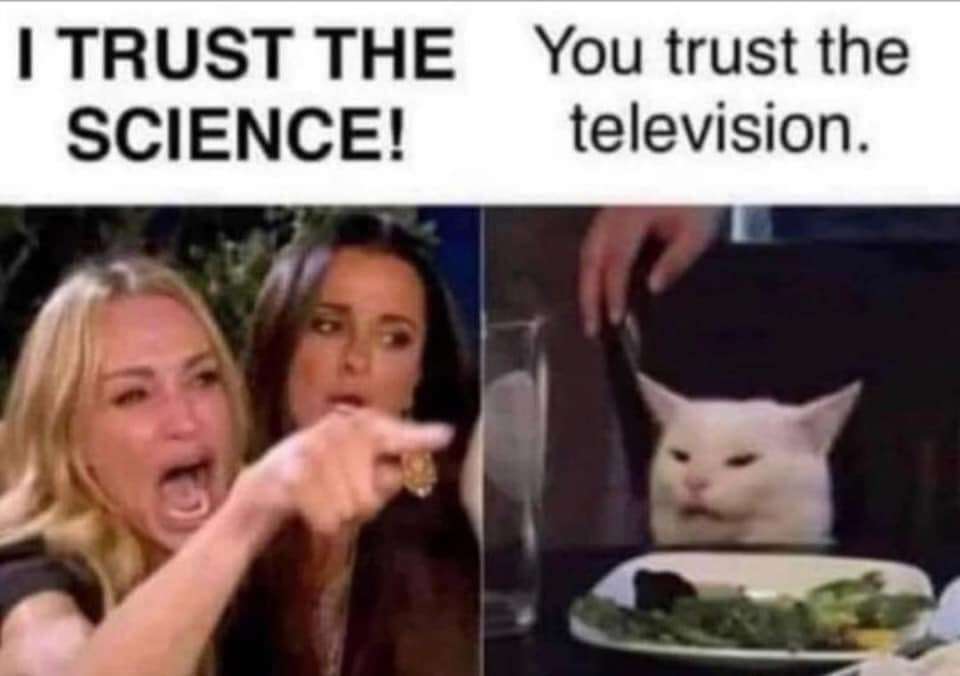
As The Seals Are Broken

Thursday, May 10th, 2007

And I beheld when he had opened the sixth seal, and, lo, there was a great earthquake; and the sun became black as sackcloth of hair, and the moon became as blood;

And the stars of heaven fell unto the earth, even as a fig tree casteth her untimely figs, when she is shaken of a mighty wind.

And the heaven departed as a scroll when it is rolled together; and every mountain and island were moved out of their places.

And the kings of the earth, and the great men, and the rich men, and the chief captains, and the mighty men, and every bondman, and every free man, hid themselves in the dens and in the rocks of the mountains;

And said to the mountains and rocks, Fall on us, and hide us from the face of him that sitteth on the throne, and from the wrath of the Lamb:

For the great day of his wrath is come; and who shall be able to stand?

— Revelation of Christ to John, 6:12-17 (KJV)

If I were The Devil and it was my mission to bring about the end of the world, I would do it one baby step at a time. I would see to it that every generation of mankind is capable of doing less than the generation that came before, and has less a sense of perspective about what’s important.

I would bring about Armageddon, as the fulfillment of a desire people held in their own hearts, being unaware themselves that the desire was there. I would do what I can to make the human race look in the mirror, and see a loathsome, entirely expendable thing, unworthy of attention, maintenance or most of all, defense. Drop by drop, ounce by ounce, inch by inch.

It occurs to me that this is exactly what has been taking place. We all like to talk a good game about wanting to help each other, but lately there’s been a huge push for everyday folks to aspire toward being noticed and being watched. This has supplanted or subordinated all other desires. Making life easier for others, or building things that would make someone’s life easer, is decidedly passe. Maybe if someone takes the time to figure out what’s coming down the pike that we haven’t quite seen yet, sort of get ahead of this downslide if you will, we’ll be able to see how steady and predictable this is. So here’s my shot at it.

How long do we have to wait until…

1. Everybody is in entertainment, or nothing at all. Nothing is produced. Nothing is fixed. We sing and dance, we clean the toilets of those who sing and dance, we deliver bottled water to them, we advertise for them, or we do nothing. In short, the point to our existence, for those of us who still have one, is to get attention for ourselves or for somebody else.
2. It is tolerated, and commonplace, for new mothers to be talking on their cell phones during the delivery. Better than even odds the doctor is on a cell phone too. “Me? Aw, nuthin’. Delivering a baby. What’re you doin’?”
3. Objects seem important when they possess attributes, and gender is an attribute. Gender must therefore disappear. Men wear cowboy hats, and goatees…and sundresses. So do the ladies.
4. There is a sequel to the Dukes of Hazzard. It is a “reboot.” Daisy Duke is now Duke Duke, a guy who runs around in a thong all day every day, works as a waiter in a gay bar, and drives a little white jeep named “Dixie.” Beau and Luke are now Bee and Lara, a couple of hard-driving ass-kicking ozark women. Uncle Jesse is a pre-op transgender. The General Lee has been renamed the Secretary-General Annan.
5. Sacrifice becomes ceremonial and loses all substance and meaning. Already you can buy a carbon credit, sponsoring someone else to conserve, so you don’t have to. Tomorrow you can buy a virtual carbon credit. You would essentially be paying someone to think about buying a carbon credit, so you don’t have to think about doing that.
6. As we trivialize boundaries that ought to be given more respect, we are divided across differences that ought not matter. A new U.S. Mint is opened that prints special money for gay people. Every time someone finds a vending machine that still takes only “straight” money, there are protests and candlelight vigils.
7. 60 Minutes does a piece on people who live in East Pennsylvania who are so poor they put signs in their cars that say “Car Radio Already Stolen.” Congress passes a law that all motorists with working sound equipment must put up signs that say “Audio Equipment Not Stolen Yet.” The inventory of said audio equipment is to be printed alongside, and is required to be kept accurate and complete. This is enforced through random inspections.
8. People decide for themselves whether their ways of living are helpful to the poor, facts be damned. Barbra Streisand shakes down the homeless population to buy her next mansion because she can’t afford it herself.
9. The media becomes more and more emboldened in giving us instructions on how to vote. Already, it has become routine to blindside Republican candidates with some silly question about how much milk costs, and take a pass on doing the same to the democrats. I see a future where infrared technology is used to measure greenhouse gas emission and power consumption at the Republican convention of ’08. An expose — government-funded, of course — broadcasts the results of this. No corresponding hit piece against the democrats, or any other party holding a convention. Nobody questions any of this.
10. The Fairness Doctrine is restored. Rush Limbaugh is forced to let Al Franken guest-host his show 50% of the time. His ratings start to look like Air America’s. He retires. Franken takes over the entire show, demands huge salary, EIB Network files for bankruptcy, capitalism is pronounced a failure.
11. Technology continues to expand, ostensibly for the purpose of bringing us information more quickly, but in reality, to service our growing demand for more attention. Cell phones can “message” live, high-quality moving pictures. You don’t have to go on American Idol anymore. You can phone in performances along with votes. This becomes so popular that new houses have universal cell phone “tripods” built in to the childrens’ bedrooms.
12. Disability becomes strength. There are pills available to give you a disability if you’re tired of being too normal and therefore failing to qualify for special treatment other people routinely receive in contracting, admissions and hiring. The pills are color-coded according to what disability you want. There is an ADD pill, a race pill, a stupid pill, a cocaine withdrawal pill, a homosexual pill, a Tourettes pill. The ACLU sues the pill company on behalf of the color-blind.
13. Parenthood continues it’s decline, and evolution into a needlessly-painful institution. Producers of kids’ television cartoons decide to come clean and make a show called, “Just Tune In And Give Your Parents A Migraine.” It has no plot, no story, no characters, no voices, not even any pictures. It just emits an annoying buzz. Oh, and when you tune to this channel your volume setting automatically goes all the way up, your power locked on, your channel frozen in place.
14. Mankind continues to envision “peace” as a commodity, with no price attached, free for the asking, unconditionally. All branches of the Department of Defense are closed, except a brand-new “Peace Division.” Boot camp in this branch: Learning to cry, fingerpainting, nap time, puppet shows, sensitivity training. The mission: Invading underdeveloped countries filled with poverty-stricken people, and teaching them how to…form labor unions, tax capital gains, and oppose the death penalty.
15. Work continues to be attacked, and denigrated into pointlessness. More things, staples and luxuries alike, are available with or without work. You have a right to gas. You have a right to toothpaste and deoderant. You have a right to food. Naturally, if you’re stubborn enough to try to buy your own, even a mayonnaise sandwich will be devastatingly expensive.
16. News networks stop pretending to bring us news. Tune in to the evening news and you will see NO FACTS, just instructions about who you are supposed to trust and what you are supposed to think. Tune in to the morning news, and you’ll see three perky people seated around a coffee table telling you what your favorite color is for that day.
17. “Civil liberties” are cherished, but real freedom is abused and ignored. In the privacy of your own home, it’s a misdemeanor to look at a pictorial representation of someone smoking a cigarette. It’s for the children after all.
18. The evisceration of the Second Amendment is complete. Nobody under the age of 30 has ever seen a gun, and few can remember what one looks like. Only mugging victims. The guns must be coming from somewhere, of course, so homeowners are “encouraged” to open up their houses for inspection.
19. New World Order. One-World Government. Global income tax. Sovereign nations still have their own governments, but it’s a little tough for anyone to explain or comprehend why.
20. Language, as a tool for person-to-person communication, disappears entirely. As people approach a service counter, they fully expect to waste their time instead of acquiring useful information, and the service people have lost the expectation that they’ll dispense any good answers or be able to help anyone. Words do not convey ideas, now that it is rare for any two strangers to be speaking the same language; shrugs and grunts and pointed fingers are the currency of exchange now. The newer versions of Microsoft Word have no spell-checking, a new “phonetic” alphabet is invented that consists entirely of gutteral sounds.
21. There is a virtual “moratorium on brains.” Creativity is history. Nothing is invented, nothing original is ever written, every song is a remix, every movie is a remake or sequel of something else, even public speeches consist entirely of quotes copied or plagiarized from elsewhere. Trivial Pursuit ends in a stalemate everywhere it’s played because nobody knows the answer to anything, and is eventually relegated to the dustbin of old fads. The brightest schoolchild knows nothing, but can sing rap tunes non-stop. He mumbles. Nobody really knows what he’s singing. Nothing is ever built, very few things work, and when they break nobody knows how to fix them. The very last human skill to disappear: Dialing a phone number. Everyone spends all day talking on a cell phone — about nothing important — to someone they wouldn’t know how to reach, without their own one-button speed dial directory, which someone else transfers for them from one phone to the next. Invariably, this involves shipping the phone to another country and bitching about how long it takes to get it back. Unintelligibly.

Prudish?

Friday, April 27th, 2007

ShettyJust as the weathermen are forecasting our first spike of temperature of the year, I came across an interesting piece of news concerning Richard Gere. Now as most Americans are aware, every year when the weather starts to get warm, sometime between that first spike and Memorial Day, you can count on hearing someone, somewhere, indulge in a litte bit of — what else should I call it — putting the hate on good ol’ U.S. of A. They don’t admit to hating America…and of course they’ll snarl (yawn) peevishly at anyone having the big brass ones to say that’s what they’re doing. And they are not — repeat, not — saying anything bad about the country.

They are saying something bad about American culture. And mean to. Entirely.

The snark comes out as something like this…

“Of course, we here in America aren’t as mature about sex as some other countries.”

Or this…

“Of course, we’re a little bit prudish in America compared to the way they do things in other countries.”

Or…

“Of course, there are other countries that are a little more mature about sex and the naked body than we are here in America.”

And these comments are, in my opinion, very poorly thought-out. They are derived, first of all, from factual evidence that must remain undiscussed in order to leave the veneer of legitimacy in place on this idea being tossed around. This is necessary. To formulate an argument, and state for the record why it is you think the things you think — would, in the course of construction, fracture the argument under the force of its own weight.

It would look something like…My litmus test of a sexually mature society is whether that society allows women to talk around topless, and America doesn’t do this so it fails the test. To reconcile this with the available evidence would, at some point, necessitate some kind of study of our indecency laws state-to-state, which would pose all kinds of problems.

And then there’s the matter of the sensibility of the litmus test. Purely a matter of personal taste, of course. But I have difficulty seeing anyone standing behind it, and taking pride in doing so.

But anyway. These “other countries” are, like…although few ever say so out loud…countries in Europe. A few little mud-puddles sprinkled with nudist colonies. And France, which I’m told still considers it tasteful for a cabinet minister to — well, yeah, those who know him understand he has a mistress, but in polite society we don’t discuss it, and you’d better damn sure believe l’press is not allowed to mention it because the country is so damn “mature” about sex. Sexual maturity showing up as double-talk, in other words.

Here in the U.S., we’re juvenile because we figured out somewhere between Camelot and Watergate that this was silly. The President is dorking Marilyn Monroe, or else he isn’t. Not that Lewinskygate was the pinnacle of civilization and good judgment. But at LEAST we evolved to the point where, fer Chrissakes, something either happened or else it didn’t happen. At least people agreed that when something happened, and the Big Guy said it didn’t happen, he was lying. Our silly juvenile argument was over whether it was anybody’s business to begin with and whether the liar deserved a timeout. But our conservatives and liberals all deserve credit over l’Europeans, for treating a fact as a fact.

Meanwhile — recognizing that India is not in Europe — lookee what we have here.

A court issued arrest warrants for Hollywood actor Richard Gere and Bollywood star Shilpa Shetty on Thursday, saying their kiss at a public function “transgressed all limits of vulgarity,” media reports said.

Judge Dinesh Gupta issued the warrants in the northwestern city of Jaipur after a local citizen filed a complaint charging that the public display of affection offended local sensibilities, the Press Trust of India news agency reported.
:
Such cases against celebrities – often filed by publicity seekers – are common in conservative India. They add to a backlog of legal cases that has nearly crippled the country’s judicial system.

How would you define the characteristics of a prudish, overly-conservative and sexually-immature society? Wouldn’t they have something to do with filing case after case against people embracing in public the wrong way, to the point that the country’s judicial system is “crippled”?

I haven’t heard such a complaint against the U.S.A. or any state within it. Sure there are some brain-dead laws. But from what I’ve seen, before we get to the part about crippling the justice system, we first bump into the problem with laws everyone knows to be stupid and unenforceable — not being enforced. Which is a serious problem I think, but still a different one.

Gere, meanwhile, has apologized.

I just wanted all this bookmarked. Our “America is kind of prudish and immature” people, I can’t help noticing, like to brag about being “worldly.” It’s been my experience that if anyone dares disagree with them, they challenge the opposition with the “how many countries have you been to?” line.

And it just seems to me, if that’s what the discussion is all about, India ought to be worth a mention. They’re part of the world too. And this Gere thing, for reasons on which I’m not clear, and I wouldn’t mind being educated someday, continues to be big news. Because it seems they have “publicity seekers” over there who can’t stand watching a smooch.

Also, I’m gathering the sense that Shetty is in as big a peck of trouble as Gere over the deal, if not more. Even though when you watch the clip, it doesn’t look like she’s entirely into it. This injects at least the flavor of a human-rights issue into things. Among the Americans who view cultural sensibilities along the singular dimension, travelling from primitive-to-sophisticated along a spectrum, one step at a time from, the The Flintstones to the U.S.S. Enterprise, I think we would all have to agree: If a woman can be minding her own business — get groped — and end up facing legal consequences for not fighting the guy off hard enough, that place probably has a ways to go.

The Governor’s Press Release

Tuesday, April 24th, 2007

Regarding the Governor of Oregon living on $3 per person per day for food for a week, to show us how incredibly in touch he is with those lowly poor people, here is his press release:

“I challenge all Oregonians to experience first-hand what thousands of Oregon families go through everyday,” said Governor Kulongoski. “Budgeting just $1 a meal each day for food, and trying to make that food nutritious, is a difficult task that sadly is a reality for too many Oregonians and their families.”

Thing I Know #82. You need to be careful when helping desperate people, because there’s a fine line between finding out what it is they need, and borrowing some of the habits they had just before they got desperate.

All About Food Stamps

Tuesday, April 24th, 2007

Did you know half of all food stamp recipients have been receiving the aid continuously for 8½ years or more?

There is a common misperception that the Food Stamp program provides mainly temporary, short term assistance. This is untrue. The majority of Food Stamp recipients at any given point in time are or will be long term dependents. The overwhelming majority of Food Stamp spending is received by individuals who have been or will be participants in the program for multiple years or even decades.