Gerard’s post made me do some thinking. This is why he’s happier than I am; things that bring him glee, furrow my brow and get me thinking hard. And yet at the end of it, between the two of us he’s the one who’s gained more insight and figured out more stuff. Somewhere in there lies a lesson.
Anyway, I was trying to recall what the timeline was between Election Day and this Gruber video, the one where the architect of ObamaCare brags about having sold it to a bunch of stupid American voters…
And I looked here, and here, and here. Finally I landed here, where I discovered (mostly) the answer to my question…
4) Who keeps finding all these clips?
Rich Weinstein, a forty-something investment advisor whose insurance policy was canceled under Obamacare, has surfaced the last three videos. Dave Weigel has written a great profile of him, including this part where Weinstein describes how he got started:
“When Obama said ‘If you like your plan, you can keep your plan, period’-frankly, I believed him,” says Weinstein. “He very often speaks with qualifiers. When he said ‘period,’ there were no qualifiers. You can understand that when I lost my own plan, and the replacement cost twice as much, I wasn’t happy.”
So Weinstein, new plan in hand, started watching the news. “These people were showing up on the shows, calling themselves architects of the law,” he recalls. “I saw David Cutler, Zeke Emanuel, Jonathan Gruber, people like that. I wondered if these guys had some type of paper trail. So I looked into what Dr. Cutler had said and written, and it was generally all about cost control. After I finished with Cutler, I went to Dr. Gruber. I assume I went through every video, every radio interview, every podcast. Every everything.”
Half a question answered, a whole new one created. Because in the meantime, I also went here where I came to be aware of something Congressman Trey Gowdy said, that sounded like something I might have said: “Comprehensive” is Latin for — based on our recent past experiences — “full of bad stuff.”
Yeah, don’t take that too seriously, it’s a joke. As well as an observation. On the way to that, though, he mentioned something else that got me thinking, because this is a point that has not too often been explored: Prof. Jonathan Gruber, and friends, really didn’t fool anybody. Unless you count democrat voters, which must have been the stupid people to whom the professor was referring in the infamous video clip. Republicans didn’t vote for this boondoggle.
And yet — this is the point I’d like to stress, it’s eluded our notice for far too long — Gruber & crew feel pretty doggone good about themselves. It’s as if they decided ahead of time they’re going to fool everybody because they’re really smart and stuff, awarded themselves the “really smart and stuff” trophy, and neglected to hang around long enough to see if they really fooled anyone. It’s not just him, and it’s not just them. You see it all around. Why, as recently as yesterday some liberals commented at this blog right here (which nobody reads, anyway),
You seem to be responding to our previous comment, and seem to be largely in agreement. The “Greatest Generation” accomplished great things, including defeating fascism in Europe and Asia.
My own opinion is that yes, Rich Fader does seem to be responding to their previous comment. But, not wanting to speak for him, but I’d characterize it as premature to conclude he’s in agreement. With…
The Greatest Generation was largely liberal. They stuck together after the debacle of the 1929 market crash, persevered and rebuilt the U.S. economy during the Great Depression, defeated fascism in Europe and Asia, constructed the superhighway system, reformed civil rights, and landed a man on the moon. But each of these accomplishments had the seed of its own destruction. Each generation has to remake the world afresh.
What is liberalism, anyway? The question has been debated and debated around here, and other places too. No, you can’t just go look it up in a dictionary and believe the “experts.” It’s an impossible question to answer until such time as one establishes the level at which one is attempting to define the word. Are we talking about achievement, or effort? Are we talking about political ideology, value systems, or just base human impulses?
If we do consult the experts, are we going to be careful to purge their ranks of any liberals before we put our faith in them? We should. Liberals have a habit of defining liberalism according to what their opponents believe, and if there is any brand of ignorance on the planet more pervasive and eminent than any other, it is the ignorance liberals have about what motivates their opposition. They don’t have a clue as to what motivates conservatives. And they’re proud of not having a clue. So we shouldn’t believe what liberals have to say about what liberalism is. They don’t know a great deal about that either.
Liberalism, as we know it today, is the culmination of many evolutionary phases. The most recent significant one is the Bush v. Gore election, in which they feel their guy got unfairly trounced, and this made them bitter and determined to get their revenge. They’ve been getting it ever since. The next most recent one before that was the aftermath of the Red Scare, in which they successfully rewrote history to make it look like the whole thing was all-about-nothing, the United States didn’t have any genuine enemies, and the only thing that happened of note was that Sen. Joseph McCarthy “ruined lives.” In fact, what happened was that the liberal left got back a result on its test — liberals think a lot like conservatives when they’re trying to recruit, and to win elections, it seems those are the only times they require tests — and verified that it was within their power to write mythology about recent events, and sell the mythology as if it were true. You see up above with this business about liberals landing a man on the moon, a good example of that.
That concluded a very long and tortured chapter in American history, in which the “Progressives” tried to sell the country on the Eugenics Movement. With the history scrub that’s gone on since then, you may not have heard about it. After the whole business with World War II was over, it became clear to everyone that this wasn’t going to sell well because the public was too aware of Hitler’s Final Solution; the public knew too much. They understood the connection between the noble intentions, and the ultimate ugly consequences they’d just seen.
The Eugenics movement, itself, was a natural consequence of the industrial age. It inspired all this wishful thinking in people who like to think wishfully, more than they like to work: Levers, on a control panel, controlling big, mighty things, things too large for a man to move without such a lever. What if we could make all men, and women and children too for that matter, into the big mighty thing, and control it with a lever? George F. Will touched on this a few years ago with that piece I linked, “Why Liberals Love Trains”:
Forever seeking Archimedean levers for prying the world in directions they prefer, progressives say they embrace high-speed rail for many reasons—to improve the climate, increase competitiveness, enhance national security, reduce congestion, and rationalize land use. The length of the list of reasons, and the flimsiness of each, points to this conclusion: the real reason for progressives’ passion for trains is their goal of diminishing Americans’ individualism in order to make them more amenable to collectivism.
Here we see what liberalism truly is: It is a desire to control the work, as opposed to doing the work. Jonathan Gruber, the wreckage he has heaped upon our health care system and our economy aside, is only an emblem of it. But he’s a very good emblem of it. He fancies himself to be so smart that it’s his place to say how we should do our work, and to buy the health care services and products that we need. But he has no way of proving, even to himself, that he really is that smart. This doesn’t seem to bother him in the slightest, so one must conclude that he has no wish to do the proving. He just skips right past the proof stage, and is ready to pop the cork on the champagne and celebrate how smart he is. Again, he’s not alone; it isn’t just him.
And we know how endearing this is to everybody else, by the shellacking the democrats just took two weeks ago before the “stupidity of the American voter” video came out. One has to wonder how bad it would have been if the video came to light, let’s say, a month or two weeks earlier.
Before the Eugenics movement, I’d say, the next most recent evolutionary phase — and I could be missing something here, there’s more than a century — would be the storming of the Bastille in France, and the Red Scare that followed. That, from my reading of history, was the final reaction to a gradual acceleration of communication. There had been “revolutions” before that, but not of the same form or possessing the same characteristics. The French Revolution was the birth of a new age, just as the American Revolution was.
Before that, liberalism was nothing but a base human impulse: Envy. With the primitive communication of a purely agricultural society, lacking effect means of mass communication, the envy was localized and not centralized. A father might be envious of his son for being able to do something he couldn’t do; mothers might have envied their daughters-in-law, brothers might have been envious of brothers. Once people could communicate with each other on a large scale, and fuse the envy together with sloth, that was the birth of liberalism as we know it today. That was the first evolutionary stage, when people who like to monologue instead of doing things to help other people, realized the monologuing might actually win.
Who falls for this stuff? Not everybody; but, people have, and people still do. I have no time to find the relevant post right now, but one of my friends on the Hello Kitty of Blogging suggested a name for the suckers: “Grubes.”




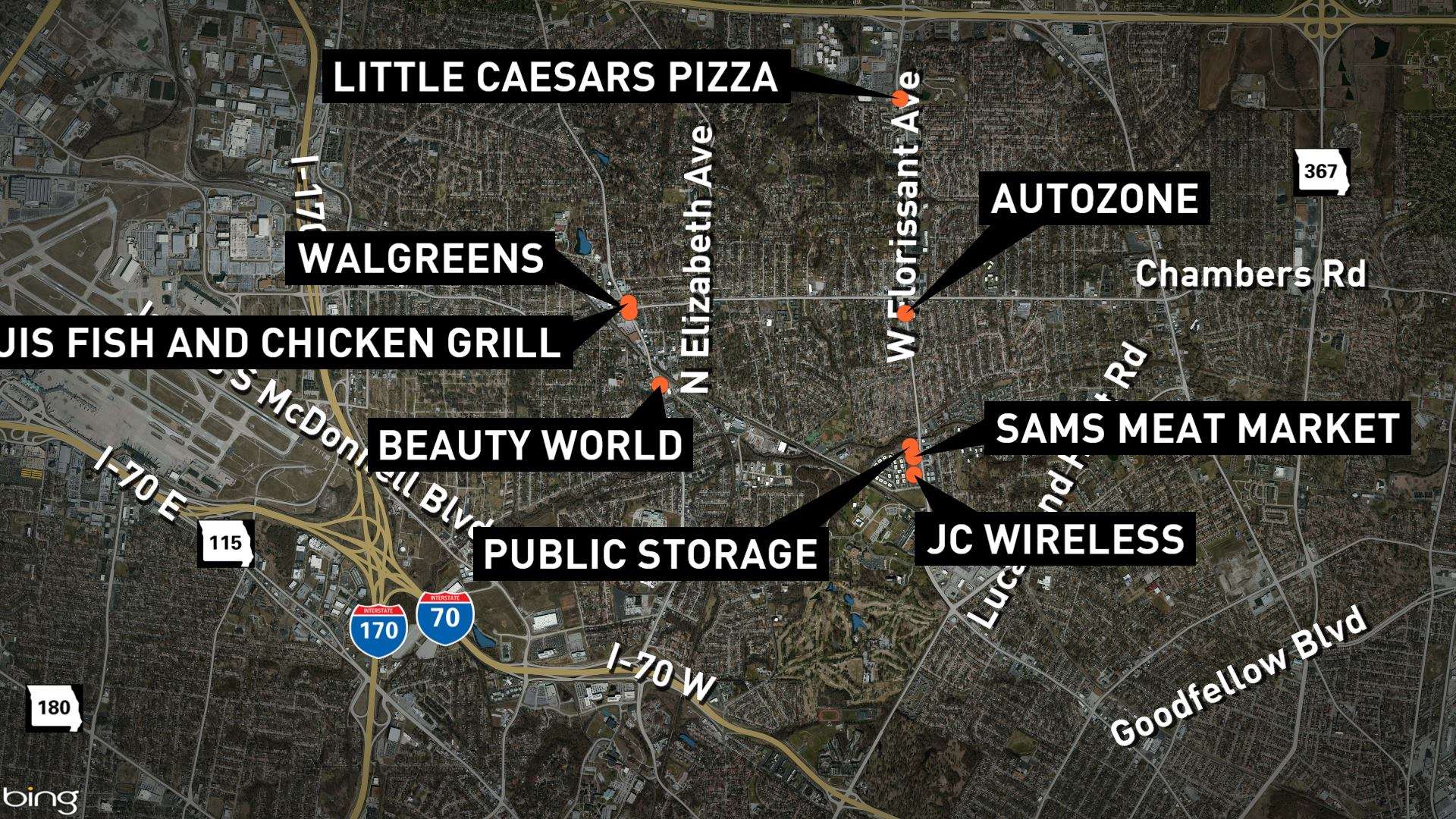
 I see over on the Hello Kitty of Blogging, some of my friends have sympathy for the thug that got himself shot. They say their sympathies are not with the looters, but I’m not sure you can cut it that way.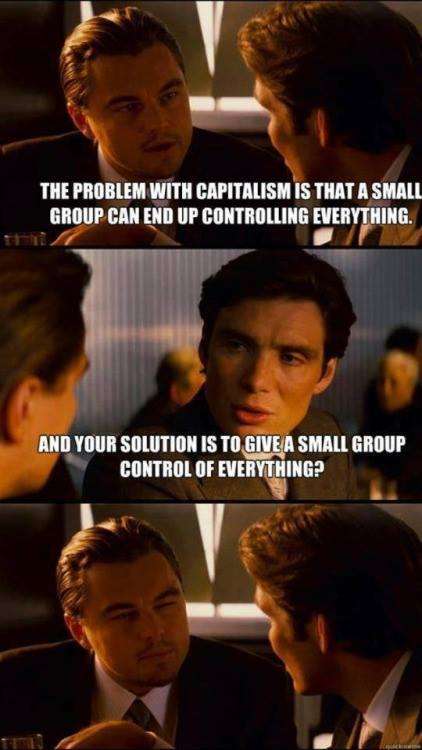
 And for those who want to chase after silly side-issues — those who can, do, those who can’t, preen — there is a #shirtstorm about
  But you know — maybe it’s because when you’re a man, seeking to distinguish yourself in a positive way and prove your worth, you don’t have the option open to you to throw a big hissy fit over someone’s else’s messaging or iconography. Oh sure there are chestless males who call themselves “feminists” and are joining the chorus to try and make something out of this. But, that doesn’t disturb the pattern, it rather reinforces it. They’re seeking to


 And the first two of those three are: The person is good and the system is messed up; and, the system is working fine, it is the person who has all the problems. Those are extremist views, located at opposite endpoints of a spectrum. Which is not to say they are necessarily wrong. Both are possible. Liberals, being extremist by nature, favor one of these two depending on what the situation is. If the person is a minority or an illegal alien and the system is our economy, then the entire problem is due to the system being prejudiced against the person’s class. Of course if the person is Sarah Palin and the system is American politics, with its left-leaning journalists flying up to Alaska to
  Republicans ran this year on very little of substance. Their brand ID is still very underwater with the American public. There is no program right now that the American public is clamoring for the Republicans to undertake with one exception: they hate what President Obama is doing and they want Republicans to stop it. Exit poll after exit poll last night showed that the single most important thing in the minds of the voters this year was the looming shadow of death Obama cast on all his Democrat allies.