Essay Completed Nov. 4, 2004:
I heard on the radio, just before President Bush announced that he would reach out to his opposition, that Gallup reports 13% of respondents think the election was fixed. That’s more than 25% of Kerry voters. I know I’m violating a fundamental rule of statistical analysis here, but it seems safe to say there weren’t many Bush supporters in the 13%.
Remember this before “reaching across the aisle.” For every forty noses in the opposition, only thirty of them support democracy regardless of the outcome. The other ten are �fair weather friends� who just want what they want, voting being just a first opportunity to get it. I�d say the ten are sufficiently repugnant to somewhat besmirch the thirty. Why reach out to these guys? Our landscape is peppered with more worthy groups & schools of thought that have been ignored for generations.
The President�s detractors have shown incredible solidarity throughout the campaign. That really must take some doing when their leadership has taken every position imaginable on each issue that surfaced. You could explain this because to a collectivist mindset, solidarity is easy to come by – not so easy to explain the duality of issues on which they have shown the MOST unity:
1. Iraq is the wrong war, at the wrong time, in the wrong place; and
2. We have to tax productive people punitively so we can spend money on lazy people.
I�m on thin ice, since a consensus has been formed that there is something terrible about questioning the patriotism of democrats. That seems settled, while left unresolved is whether I even have the right to do this in the sacred theater between my ears. This right is not only in jeopardy, but its continuance is apparently of diminishing concern. Compared, I suppose, to the sacred right of democrats to be thought of as patriotic.
I’m initially reluctant to cogitate on a party that was just defeated so soundly, but that�s logic talking. History, not logic, will dictate that democrats will be just as powerful after their defeat as they ever have been. History, not logic, tells me the principles they follow that led them to this resounding defeat, whatever they are, will continue unmolested. I wish to understand those.
Here’s the itch I can’t scratch: It occurs to me that on a philosophical level, the “Robin Hood” pitch doesn’t have a lot to do with opposing the war.
I�m thinking I could understand the appeal of one or the other of these positions, if I could find an apostate of either, or a devotee of one but not the other. Someone somewhere should say, “I want all rich people to lose their jobs and that includes Saddam Hussein.” Or, “rich people should keep everything they have even if they’re dangerous, like Saddam Hussein.” Problem: I haven’t found one yet. Collectivist loyalty is uncompromising, even regarding agendas opposed from one other.
If you embrace the “help lazy people” mission because you don�t want people starving, I would expect that you would approve of invading the old Iraq, in which there were a lot of poor people who were pretty far from being lazy but suffering terribly nonetheless. Perhaps the “money to lazy people” people are exactly that, and don’t give a damn about truly “poor” people.
Some people support “help lazy people” only because they despise others who are well off. That’s supposed to be fiction, promoted by evil Republican strategists, but it turns out many of the people so motivated are willing to outwardly admit it. In their minds, wealthy people never get wealthy through hard work; wealthy people are simply lucky. These thinkers see themselves as proletariats who are driven into hard, dangerous labor that pays poorly, while the wealthy elite �work� by surfing the Internet, receiving sexual favors in the fax machine closet, and enjoying long, liquid lunches. Of course once rich people get more money they use it to hurt people, whereas the suffering poor people use their meager earnings to selflessly provide for their families. Simplistic thinking is a matter of pride to the folks who subscribe to this.
Well guess what. Hussein didn’t get his cash by swinging a pick-ax. I don’t have much concern to share with these folks about Saddam’s long lunches or whether he was gratified in a closet, but as far as using money to hurt people, that’s been proven beyond dispute. Now, I could understand if a few people here and there support the Government Robin Hood agenda while at the same time passionately opposing the removal of the predominant Sheriff of Nottingham. A few may labor to sustain this contradiction. But an entire voting bloc that encompasses the continent and beyond? No exceptions? None?
There�s got to be a unifying principle somewhere, somehow uniting these opposing objectives. Whatever it is, I�m oblivious to it, while millions of others believe in it passionately. What could it be?
The only link I can think of, try as I may, goes back to questioning patriotism. Sorry about that, I guess. But I notice that these two missions would both generate difficulty for our society, such as it exists today, to thrive. Saddam’s regime, and the uncertainty generated by it, had a confounding effect on our continued existence if not a threatening one. He caused us to delay impeaching a president who richly deserved it, just for starters. And capitalism takes on a burdensome pointlessness in a society of hybrid communism: If the government will take your property on behalf of resentful, envious, under-performing voters, what point is there to earning property in the first place?
I’d like to find a different common motive to these contradictory items, one that can exist in harmony with our nation � at least not harm it. I can’t think of one. Any democrats wishing to “educate” me, you’re welcome to do so.
Meanwhile, Mister President, I respectfully ask you to retract your hand from that direction, or else change the gesture.






 Sen. Durbin would like the KOS kids to
  I’ve never particularly cared for Ben Shapiro. The man is a good writer, but so are many others, and I always got the impression he was getting a lot of attention because of his pedigree, his educational history, and his age. The habit he has that gets under my skin, is to write about what he thinks is going on, and comment about it as if it’s an established fact. Now, in all fairness, everybody who writes about current events ultimately has to do this, over and over again. I try to sprinkle mine with “I can’t prove it, but” or words to that effect. To me, when I write about something, there’s a situation involved. The situation has become worthy of comment, because something has been left unexplained — so you start with what has been left unexplained. And within that, you start with what you know for a fact. Only then do you opine about what could be going on, to explain what has been left unexplained.
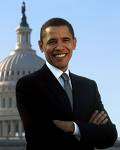 But early his morning I was looking for an article on this weird phenomenon I don’t understand, called Barack Obama. Obama is a freshman senator from Illinois, a possible candidate for the presidency in ’08. He is a candidate the way Julia Roberts is a movie star: A good one, the evidence says only a good one and not a great one. But the hype says he’s more than great, he “walks on water” and he’s the “real deal.” NOBODY knows why this is, as far as I can see. To reason and common sense, he’s simply more articulate than our current President. And many others are that much.