Archive for the ‘Uncategorized’ Category

In it Together

Sunday, August 25th, 2013

All of us, we’re in it together. The President said so five years ago…does it still work that way?

You might remember this from the 2008 campaign:

At first it seems like an unusual sight: Barack Obama, a black United States senator from the South Side of Chicago, trying to market himself to white, rural farming communities like this one nestled ObamaInIowaTranscendingRacebetween Des Moines and Omaha.

And yet there he was Thursday, perched on a wooden platform in an open-air pavilion that smelled like livestock, seeking a common denominator with voters as they ate bratwurst, grilled corn, and watermelon.

“The basic idea is that we’re all in it together — we rise and fall together,” Obama told them. “People here understand that. That’s part of the values that have been so important in Iowa and part of the values that are so important in Illinois. Those are the values we grew up on, especially in rural communities — you couldn’t survive if people weren’t looking out for one another.”

Drawing on his white mother’s Kansan heritage and his success in rural Illinois during his Senate race, Obama casts himself as a unifying force capable of seeing the country’s woes from the vantage points of cornfields and ghettos alike.

By now you’ve heard of yet another white person being killed by black men. That on top of the white Australian baseball player killed in Oklahoma a week ago today. And let’s not forget the black Department of Homeland Security employee advocating for the mass murder of “whites” and the “ethnic cleansing” of “Uncle Tom race traitors.” And the myriad of other black on white crimes that have taken place in the last year or so.

This President has been quick to comment on events where blacks were alleged to have been victimized by whites. Think Trayvon Martin and Henry Louis Gates Jr.
:
Unity isn’t this President’s goal. You’d have to be a fool to believe anything else.

There are two problems here, actually. One is that the office of an authoritarian arbitrator in a dispute between two sides, is being filled by a person who is an advocate for one side. The other problem, of course, is the dispute itself, the notion that there are “sides.” It’s funny how everyone running for any high office, it seems, at one time or another presents this image of the Great Healer: Put me in, and I’ll fulfill the reality that we are one, bring these two halves together. Henry of Tudor will marry Elizabeth of York, and the terrible tumult will end.

But not all of them fulfill the intent, let alone the ultimate objective. With the pattern left unchanged, history will recall Obama as a President of Anger, just like most other presidents from the democrat party. Just another liberal-lefty president of Gettin’-Even-With-Em-Ism.

I think history will also recall Obama’s efforts to get involved, with only one half of the local issues, to be unwise. And I’m selecting that final word most charitably, I could think of many other adjectives less kind but perhaps more accurate. “Idiotic” comes to mind as one, although there are others. History will counsel that perhaps the most prudent thing for Him to have done, would have been to continue the tradition of presidents and comment only in useless, ambiguous tones or else not at all.

History already recalls the “Beer Summit” and the events leading up to it, that way; does it not?

Obama’s just a walking insult for the nation over which He presides. Even His “at-least” flattery falls short of the promise, as in, “at least He’s passionate about His beliefs” and “at least He is very talented at giving speeches” and “at least He is very talented and polished in the public image He presents.” He’s more like an embarrassing, babbling moron. The more I experience His leadership, the more He impresses me as a champion whose strengths and assets are most definable and palpable in the moment. In that sense, if in none other, He represents us abroad poorly; we must end up looking like a somewhat empty-headed and ditzy people, divided amongst ourselves while we babble away with meaningless bromides about “coming together” when we don’t really want to, and cursed with all the liabilities of a snapshot-memory, missing all long-term recall faculties.

Hope not. But I’m afraid so.

…and the Learning Disabilities Skyrocket…and Nobody Knows Why…

Sunday, August 25th, 2013

…derp derp derp derp derp derp.

From here. Thanks to a Facebook post from blogger friend Rick.

Cross-posted at Rotten Chestnuts and Right Wing News.

Enjoying the Culture of Poverty

Saturday, August 24th, 2013

Via Gerard. Christopher Orlet writes in the American Spectator:

If you move to a new rental every six months, yanking your kids out of school after school, and if you do drugs in front of your children, and sell your food stamps for cash, then chances are you are part of that culture. If you are 20 years old, living with your grandmother, with no interest in ever getting a job, or getting married, or doing much of anything, chances are you are part of that culture. If you do not have a kitchen table, but you do have a big flat screen TV, and when the social worker comes to visit someone yells, “The social worker is here, go get the light bulb,” then chances are you are part of that culture.

When I moved into the inner-city, I hoped to gain some insight and understanding of the poor and their situation. Two years later I left feeling the situation is intractable. Everything the professional uplifters do for the poor is but pruning the branches, instead of hacking at the roots of the problem. For the underclass to escape the culture of poverty they would have to cease doing most if not all of the above, and I don’t see that happening.

Besides, as I have written before, too many of the underclass enjoy the culture of poverty. They would feel horribly out of place in a tony subdivision where they would have to work to make a house and car payment, instead of drinking beer all day on the stoop ― they don’t even have stoops in the suburbs. They would have to cut their lawns and keep the trash and noise to a minimum. What fun is that? In the inner-city you can do whatever the hell you want. You can even shoot somebody, and chances are no one will rat you out, because that is the code of the inner-city streets, and people there hate the cops more than they hate the drug dealers.

My broken-record recurring chorus about Architects and Medicators grew out of an understanding that when the miscreant appears in front of the magistrate to determine guilt vs. innocence, and to receive his sentence, what we are seeing is not an instance of the errant appearing before the validating mechanism and then getting properly straightened out. What we are seeing is a collision between two different and contrary value systems — neither of which runs into any real trouble prior to impact. Just like planets, you might say. And this is why the meeting will likely be repeated not too far off into the future. The meeting is the real cause of the trouble. And the value systems have to do with feeling versus thinking — therefore, with instant gratification versus delayed.

In the land from which the convict comes, it is “right” not to pay your child support. Not, I hasten to add, a right — that is not the point. The point is, it is the desire that makes behavior proper. Wants before needs. You get a job if you want to. Make your car payment if you want to. Or act drunken and disorderly in public if you want to. Such a community ultimately becomes blighted, because mankind’s achievements are mostly connected to delayed gratification. But people adapt. They become entrenched further and further into the Architect-thinker-delayed-gratification way of living life, once they’ve made that initial choice, or they become entrenched further and further to the Medicator-feeler do-what-everyone-else-is-doing want-it-now-now-now way of living life if they’ve made the other.

Each community works according to an economic system. One of those economic systems has to do with helping other people do, or get, things before you can do, or get, what you want. The other economic system has to do with just demanding stuff; therefore, not very often building or fixing anything. Can you guess which is which.

“Drinking beer all day long on the stoop,” by the way, is literally medicating. Such people are, ironically, fastidious and perfectionist custodians of their own emotional state, if of nothing else in life. In the moment.

I would add many more bullet points to Mr. Orlet’s list. Softer ones, since I think those are the important ones; people who haven’t given it much thought, just starting to be seduced into the Medicator lifestyle. I would invade suburbia with my own list. If you voted Obama/Biden in 2012, or if you have a bumper sticker on your car saying so. If you had your school-age son “diagnosed” and strung him out on medication so he can “succeed in school.” If your kids send text messages at the dinner table, or if you don’t have any kind of dinner table, and don’t see anything wrong with not having one. If your spouse, and your kids, are essentially just bored and boring roommates.

Or if you are one of the kids — if you can score straight A’s on the latest test by “studying,” but know you possess little to nothing of the actual conceptual command, and wouldn’t be able to earn a passing grade 48 hours afterward…and don’t care. You’re part of it. If your first impulse, finding out something exists that you want, is to go clamoring to momma or someone else to get it for you. Pondering, not what you can do to earn it, but the who & where & when & how to do your begging, how sweetly to bat your eyelashes. Those are the signs. That’s enjoying the culture of poverty.

Not building things, not fixing things. Harassing your fellow citizens about their “carbon emissions” or what not, as opposed to helping them, servicing them, soothing them, becoming a part of their efforts.

Neither “planet” runs into real trouble before the collision. But there is a difference: Only one, in perfect isolation from the other, exists in a self-sustaining cycle. Ultimately, it’s a choice between the symbiotic and the parasitic.

Cross-posted at Rotten Chestnuts and Right Wing News.

Men Aren’t Pigs

Saturday, August 24th, 2013

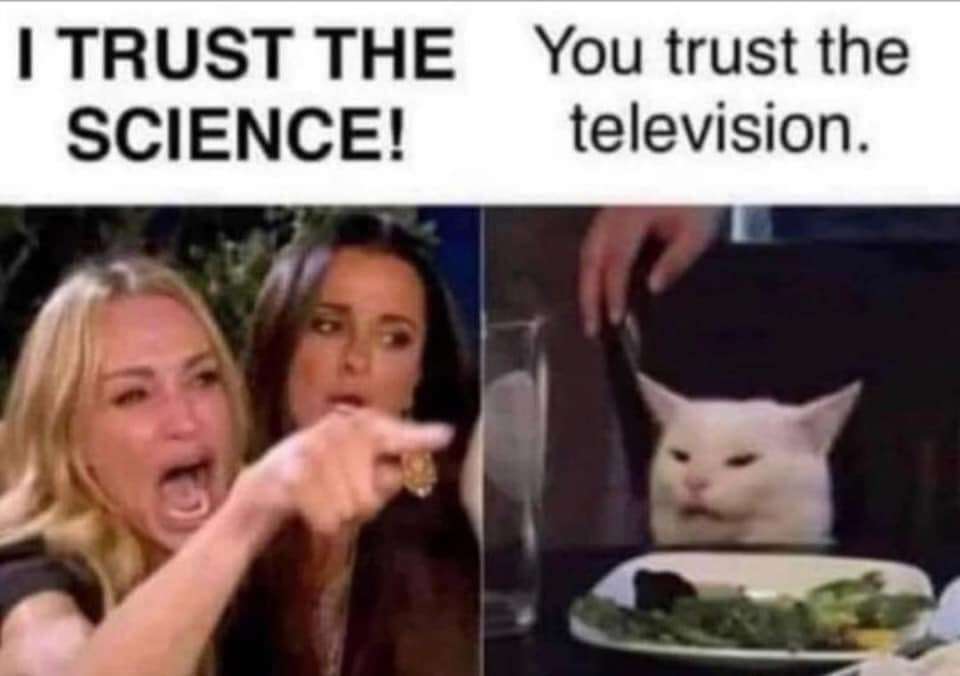
The science is settled.

From William Teach at Pirate’s Cove:

A lovely pair of peepers is the first thing about a woman to draw a man’s attention, research claims – contrary to popular belief that his attention is likely to be fixed somewhat further down.
:
A spokesman for Murine eye drops, which carried out the poll, said: “This study almost crushes the common stereotype that the first thing men look at is a woman’s chest.

“However, it came third on the list – so it’s not quite a changed habit.”

Hat tip to Bird Dog at Maggie’s Farm.

I’m reminded of the joke about the very rustic-looking but very plain-speaking hayseed kid in the park, who perhaps leered a bit too long at the “cheek” of the young lady walking by in her “denim diapers,” or something…The story goes that she spun around indignantly and demanded to know what he was looking at, and the reply came back “what yer showin’ me.”

To the most important thing, about noticing-eyes-first, Teach adds the caveat “at least when meeting a woman close up.” I think that’s important. Seeing her from a distance, it’s often not physically possible to notice the eyes first. But I’m wondering if the next scientific research can be on, the nice young ladies who dress up to be noticed, and then get all peeved when it happens?

Might want to start here.

The Affleck-as-Batman Meme

Saturday, August 24th, 2013

Some of these are hilarious.

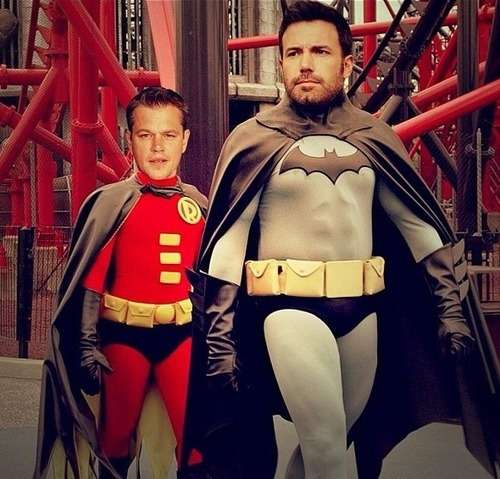
Sorry Rush, I’m on their side. What t’heck are the chestless millennal kids doing to the Caped Crusader? This is just yet another one of those bad, bad, ultra-bad “Who’s for this, anyway?” ideas.

Oh. Mr. Whedon is for it (video auto-plays). I knew there was something about that guy I didn’t like.

Not Familiar With

Thursday, August 22nd, 2013

Nothing to add.

From Kate at Small Dead Animals.

“The Vital Faculty of Faith”

Thursday, August 22nd, 2013

Oh, my. Someone decided they’d just leave this out there

Let’s dispense with the crude metric of IQ and look at the actual lives led by atheists, and believers, and see how they measure up. In other words: let’s see who is living more intelligently.

And guess what: it’s the believers. A vast body of research, amassed over recent decades, shows that religious belief is physically and psychologically beneficial – to a remarkable degree.

In 2004, scholars at UCLA revealed that college students involved in religious activities are likely to have better mental health. In 2006, population researchers at the University of Texas discovered that the more often you go to church, the longer you live. In the same year researchers at Duke University in America discovered that religious people have stronger immune systems than the irreligious. They also established that churchgoers have lower blood pressure.

Meanwhile in 2009 a team of Harvard psychologists discovered that believers who checked into hospital with broken hips reported less depression, had shorter hospital stays, and could hobble further when they left hospital – as compared to their similarly crippled but heathen fellow-sufferers.
:
Obviously, it’s the believers who are smarter. Anyone who thinks otherwise is mentally ill.

And I mean that literally: the evidence today implies that atheism is a form of mental illness…
:
Therefore, being an atheist – lacking the vital faculty of faith – should be seen as an affliction, and a tragic deficiency: something akin to blindness. Which makes Richard Dawkins the intellectual equivalent of an amputee, furiously waving his stumps in the air, boasting that he has no hands.

Dunno if it’s fair to lump everyone in the same group like that. There may be many reasons for not having faith. Someone might have lost theirs, for example, like Mel Gibson’s character in Signs.

But of course on the Internet, in the is-not-is-too debates, the atheist is — for the most part — one of those kids who “still knows everything.” They have yet to learn how much they still have to learn, and they’ve “figured out” that the God stuff is a bunch of nonsense. Based on what? That’s the point where the conversations get really awkward.

I believe in the spurious relationship, myself. The lack of belief is, in some ways, a cause; but in most ways, it is an effect of a lurker variable, the many other effects of which show up in the form of what the article rattles off. The decreased health, the higher blood pressure, the weaker immune system, the shorter lifespan. The lurker variable is passive narcissism, the kind called out in one of those Things I Know:

174. Being an atheist; maintaining a distinction between right and wrong; respecting the viewpoints of others. You may have two of those. Max.

The problem is, of course, for you to maintain a distinction between right and wrong, you have to get one from somewhere. That much is just obvious. How can you “maintain” what is not there? And you have to maintain it, in order to stand up for it. What do you do when you see slavery? What do you do when you see someone mugging someone else? It’s all “nature,” so are you to intervene? And if so, then on what grounds? Protesting “it’s wrong” is easy; but why? What makes it different from a cheetah going after a gazelle, or a spider going after a fly? You may find some who will protest that those are wrong too, somehow, but I’m pretty sure nobody outside the looney bin is going to counsel toward intervening in all of them.

Well with atheism, if you want to produce this right-wrong contrast so you can act on it, you pretty much have to make it up. How else could it be done? And there, we come to the thorny part: What happens if another atheist disagrees? Can you simply agree-to-disagree? No, you can’t. It’s right/wrong stuff. Action is obligatory. So if the line is to be drawn, then how do we get our straightedge?

We must necessarily…and the irony is, atheists relish using the phrase that immediately follows, to put down their believer brethren…shove our morals down someone else’s throat. That is the only option left available. You can change your mind and believe in a Higher Power, you can refuse to intervene and thus become an accessory to crime through lack of action, or you can let the law be your guide and just follow instructions. None of those is as popular among atheists as the personal invention of right-and-wrong, followed by the thundering away about “that’s wrong”…usually along the lines of the abortion issue, sometimes with capital punishment and euthanasia. And, the intervening. It makes me sad, and embarrassed by proxy, to see it happen. They work themselves into such a righteously indignant, frothy rage about the faithful shoving morals down throats — and, in the very next syllable, they do that very thing.

The Scandal Game

Wednesday, August 21st, 2013

By way of Instapundit.

Related: We saw earlier that the slime that is Harry Reid, was sliming Republicans in Congress, stating without stating that the reason they were opposing Our Nation’s First Holy President had to do with “the fact that he’s African-American.” Well…not sure the color of Obama’s skin is the reason for Republican opposition, but I’m pretty sure it’s the reason for…stuff like this

Well, the skin color and being an adorable, charismatic democrat. The skin color is just a means to an end. As we saw with the Nixon/Obama scandal game, He Who Argues With The Dictionaries possesses an almost mystical power to escape deserved blame.

In fact it seems, to me, like when democrats pick out their champions over the last twenty to forty years or so, and you start to wonder things like “Well wait, this Mondale or Dukakis guy seems so unremarkable in every way possible, why exactly is it that they’re trying to sell him?” — that is the exceptional characteristic they’re really seeking, and they do much better in the general elections when they keep that in mind. The ability to escape blame. By whatever means: Bill Clinton’s affable nature, his mean nasty wife’s legitimate feelings of hurt and betrayal, Obama’s skin color and knack for making speeches about nothing, Jimmy Carter’s…uh, not being connected to Watergate.

Hillary and Obama had a real knock-down drag-out in the summer of ’08 about who would lead the party ticket. To those who don’t understand the democrats’ obsession with “Who is most likely to get away with shit?” this was inexplicable and surreal, since Hillary and Obama’s positions on the issues were practically indistinguishable. The argument inside the democrat party machinery was: Who holds the trump card? The “my turn” betrayed wife? Or, in Joe Biden’s words, the “clean and articulate” guy?

They chose Obama, and they were correct to do so. With Obama’s tactics unleashed, the population remains ignorant, which is the whole point after all. Outreach to the low-information voter, who knows nothing, is proud to know nothing, and just wants to feel good all the time.

Memo For File CLXXXIII

Tuesday, August 20th, 2013

I’ve talked of the evils of group-think many times in the blog, for which my friend in New Mexico insists I need the services of an editor; and he’s right. But the following was written for an off-line document. It needs an editor too, but not as badly I think, as the stuff I write for the blog.

Just wanted to add it to the database.

Aristotle once said something that defined a state of being “educated,” as having the ability to “entertain a thought without accepting it.” There would be no point to calling this out if everyone could do this. I suppose it’s never been too common of a human talent, in any setting. And so for those participants who wish to display themselves as cosmetically smart, but lack this particular skill Aristotle was describing, there is another desire that takes shape right after the fidelity is pledged to this emerging consensus — to shed from the discourse any contrary thought that might rival for the position as an emerging consensus. They start to eliminate ideas, under the guise of entertaining them. They mock, they interrupt, they distract by way of loaded phrases like “let’s move on,” they engage in all sorts of logical fallacies, they “debunk” myths that aren’t really mythical. They ostracize, or threaten to ostracize. What all these things have in common is: They seek to shape the emerging consensus by eliminating information rather than by gathering it, which is a tip-off that this consensus is being shaped by way of ignorance, rather than by learning.

Update: This is entirely OT, other than as a reminder that I need to hit Buck’s site a bit more often:

How to Treat Children

Monday, August 19th, 2013

The first thing to keep in mind is that human life expectancy is always growing. When you see someone between the ages of 1 and 10, you’re looking at someone who is very likely to still be around a century from now, along with the hopes and dreams and fond memories that person will have. You, on the other hand, almost certainly won’t be. And whether you were annoyed on this particular morning, afternoon or evening, won’t matter one bit.

Here is the wrong way to deal with kids. I’ve gone ahead & transcribed the “letter”:

To the lady living at this address:

I also live in this neighborhood and have a problem!!!! You have a kid that is mentally handicapped and you consciously decided that it would be a good idea to live in a close proximity neighborhood like this???? You selfishly put your kid outside everyday and let him be a nothing but a nuisance and a problem to everyone else with that noise polluting whaling he constantly makes!!! That noise he makes when he is outside is DREADFUL!!!!!!!!! It scares the hell out of my normal children!!!!!! When you feel your idiot kid needs fresh air, take him to our park you dope!!! We have a nature trail!! Let him run around those places and make noise!!!!!! Crying babies, music and even barking dogs are normal sounds in a residential neighborhood!!!!! He is NOT!!! [Okay, I’m fed up with counting exclamation marks, not going to try anymore…] !!!!!

He is a hindrance to everyone and will always be that way!!!!! Who the hell is going to care for him????? No employer will hire him, no normal girl is going to marry/love him and you are not going to live forever!! Personally, they should take whatever non retarded body parts he possesses and donate it to science. What the hell else good is he to anyone!!! You had a retarded kid, deal with it…properly!!!!! What right do you have to do this to hard working people!!!!!!! I HATE people like you who believe, just because you have a special needs kid, you are entitled to special treatment!!! GOD!!!!!!

Do everyone in our community huge a favor and MOVE!!!! VAMOSE!!! SCRAM!!!! Move away and get out of this type of neighborhood setting!!! go live in a trailer in the woods or something with your wild animal kid!!! nobody wants you living here and they don’t have the guts to tell you!!!!!

Do the right thing and move or euthanize him!!! Either way, we are ALL better off!!!

Sincerely,

One pissed off mother!!!!

Other than the foregoing, she hasn’t much of an opinion about it.

Now then, that’s one way to deal with “noise polluting whaling” kids who get in your way.

Here — different context — is another.

Dear Section 113, Row 17, Seat 22:

Forgive me for not getting your name yesterday. I really should have because I wanted to pray for you by name. My husband’s company gets several sets of tickets to Milwaukee Brewers games every year that come available for the employee’s use via a lottery system and we just happen to get four free tickets to see the Brew Crew play the Washington Nationals on Sunday, August 4th.

The weather was absolutely perfect for a day at Miller Park, but my anxiety level was still high because – let’s face it – I was bringing THE CHILDREN. Not just the big kids, not just one of them, but all three boys. Together. At the same time.

Isaiah was jacked up for his trip to the ballpark and his behavior reflected that. Every thirty seconds came pleas for cotton candy, sunflower seeds, popcorn, ice cream, balloon animals, face paint, and other such nonsense. Micah behaved like, well…..Micah and Thomas didn’t have a seat so he was basically crawling all over the place for the entirety of the game.

To put it bluntly, I was grateful for my cold beer. All three of them.

But you were not annoyed by the number of times you were jabbed in the back as Thomas crawled like a monkey from seat to seat. Instead, you turned around and frequently engaged in conversation with my children, proclaiming that Thomas would be stealing his big brothers’ girlfriends in about 15 years so I had better be ready.

You couldn’t have been older than 24 or 25 and you were clearly at the ballpark yesterday to spend some time with the lovely young woman you had your arm around. Still, you made it a point to chat with Isaiah and encourage him to try to catch a foul ball and even took it upon yourself to race him down to the Brewers dugout three times in the middle of innings in the hope of getting a game ball tossed his way. You promised my son, “We will get you a ball, kiddo.” (For the record, Daddy also brought Isaiah down there and struck out as well.)

In the ninth inning, the Brewers were actually up by a couple runs (miracle of miracles!) and were three outs away from a victory. You told Isaiah to be ready, that as soon as that third out was achieved, you would bring him down to that dugout and wait for a ball. This was the time. This time, for sure, a game ball would be his.

But luck was not on his side, it would seem. In the crowd of fans all competing for attention, you two came up short. You walked Isaiah back up to our seats, giving him a reassuring pat on the back, but the disappointment on his face was evident.

Mystery Man at Miller ParkThat’s when you knelt down and gave him a Milwaukee Brewers baseball. His eyes lit up, he took it from you slowly and you told him, “Hey, I promised you a ball.”

I’m not sure when you got that ball. Maybe it was a side thought on a run up to the concession stands for a beer or soft pretzel. Perhaps you left your seat and went to the stores specifically to get Isaiah a ball. All I know is that you still tried like crazy to get him a game ball, knowing that you had a secret backup plan in place to make my son, a complete stranger to you, feel like a million bucks.

Thank you for what you did for my son at Miller Park on a beautiful Sunday afternoon. As we were preparing to leave the stadium, I reached out my hand to offer my sincere thanks for your act of kindness. To my surprise, you pulled me in for a hug.

As we shuffled out of the stadium, Isaiah wouldn’t stop talking about his very own Brewers baseball and how it was one of his “special treasures.” It can be so easy to forget sometimes how small acts of kindness can have such a huge impact on our fellow humans. Holding open a door, offering a seat on a bus or subway, paying for a stranger’s coffee. All teeny little choices that can become a bright spot in an otherwise difficult day.

But you did more than that, sir. You made my boy feel like a rockstar. You didn’t have to. You chose to. And I am sincerely grateful to you for it. When my wiped-out children were tucked into bed last night, I took a few minutes to thank God for you. I asked that He bless you and draw near to you wherever you were. I prayed that the Lord would encourage you and honor your kindness by bringing joy to your heart.

But I would still love to find out your name so I can send you a proper thank you note. 🙂

Sincerely,

The Grateful Mother in Row 18

My idea: Print out the second letter, track down the author of the first letter, leave the print-out on her doorstep, turn around and walk away.

Let her feel like the shit that she is. Perhaps, from such an exercise, we can all learn a little something.

Autistic or not, little kids are greatly impressed by things that seem small to the rest of us. And those impressions last a lifetime. It’s important, and it matters.

North Carolina Registers Over 583 Democrat Votes Over the Age of 112

Monday, August 19th, 2013

I’m sure this is all above-board and there’s nothing out-of-place here.

“Slime” is Both a Noun and a Verb

Monday, August 19th, 2013

Your current Senate Majority Leader, at “work,” and giving Nevada a reputation:

Senate Majority Leader Harry Reid (D-Nev.) on Friday said he hoped GOP opposition to President Obama was not based on his race.

Reid made the comments in response to a question during a radio interview.

He said Republicans spent all of Obama’s first term opposing his legislative agenda, and they seem to be doing the same in the president’s second term.

“It’s been obvious that they’re doing everything they can to make him fail,” Reid said in response to a caller’s question during a radio interview on Nevada radio station KNPR. “And I hope, I hope, and I say this seriously — I hope that’s based on substance and not the fact that he’s African-American.”

The slime is sliming, because sliming is what slime does.

What a cool poem the slime inspired (hat tip to Gerard again):

The reset button didn’t work.
The Arab Street’s aflame.
ObamaCare is off its rails.
The jobless rate’s the same.

The Peeping Toms of government
Are snooping through our mail.
Michelle is pushing little kids
To feed on sprouts and kale.

The IRS and FEC
Are playing off the sheet.
Our consulates and embassies
Are forced into retreat.

But if you deign to criticize,
The mammoth mess we’re in,
Your motive must be based upon
The color of his skin.

For only willful prejudice
And bigotry of mind,
Prevents embrace of presidents
Who lead us from behind.

Remember having a president who was held to standards?

To be able to respond in the affirmative, is becoming a characteristic of age, now. You must be over 45 if the word “diskette” ever meant anything to you, and you must be over 25 if you can remember people arguing, in the mainstream and out in the limelight, about whether the current president’s policies were having good effect.

I remember when the air was thick with it. “My Dad says if Ford is re-elected, he’s going to fly a jet fighter over Russia and bomb it.” Then later, “My Dad says if Carter is re-elected, gas will cost a buck and a half a gallon.” I detect the greatest damage done by this recent change, by way of recollection that the two dads in the Ford/Carter era were, and behaved like, friends. They came to the same house parties, shook hands and smiled at each other. When they “got into it,” their wives quickly got bored, and made some effort to change the subject…which was futile, and the wives abandoned the effort in a good-natured way. Meanwhile, each of the husbands, who could not agree on anything, would gladly lend money to the other if the necessity arose. Friendship came first.

This slime is corrosive slime. It isn’t just disgusting, gelatinous goo. It eats away at what it covers. It is toxic. It hurts us.

Someday, we should make a point of treating it that way.

Gerard’s UFO

Saturday, August 17th, 2013

Yup, I remember that.

American Digest.

No One Knows How Airplanes Work

Saturday, August 17th, 2013

Some language not safe for the workplace.

Rules are rules.

The Med Link

Friday, August 16th, 2013

As Rush Limbaugh says, it’s not often a caller comes up with a point he entirely missed. “Open Line Friday” worked out well that way for him, when “Robin” called in about an hour ago and brought up something about the millennial kids. They’re being sold a bill of goods, and sold down the river; what they’re being sold, is a sense of futility and despair. The medication of this entire generation is a part of that.

I recall when I was in public school, we had these kids who were very bright and consistently brought home the grades to prove it, along with very high scores on the exams, but I was completely baffled when I asked one of them something about the subject matter and what he knew was next to nothing. These kids know how to “study” but their studying only works for 24 to 48 hours. More troubling than that, they possess all sorts of intellect and gifts for noodling out ambiguities in the exams, even though their command of the concepts is lacking. I recall one example, in my own son’s homework, that he had to bring to me because it required a correct interpretation of “one hundred and one over fifty-eight”; does that mean 100+1/58, or 101/58? The ambiguity was not the point of the exercise — it seems the test-maker simply hadn’t considered it. Nor was there any guidance for resolving this against the notations, in the material covered so far in the class, to the best I could determine. Unfortunately, I’m no sharper in this area than my kid. In fact, I’m very sure his class was filled, as mine would’ve been back in the day, with these “bright” kids who would have reliably sorted out the equation in the correct way without even comprehending how there could have been a question or misunderstanding. There’s a process of soft empathy here, between test maker and test taker, and I’m not tuning in on the right frequency.

Anyway, my observation over the last several years, is that if you’re a millennial and you’re male — it seems you are in this class of empathizing, super-bright super-charismatic but not-forming-command-of-the-concepts kids…the high score on the exam, but only within 24 hours kids…either that, or you’re medicated.

What this “Robin” caller managed to link together, was this epidemic of medication of manly boys who think in a manly way, and liberalism. The thread that connects these two bodies of thought together, meanders through what I was noticing half a year ago during my bike ride through Silicon Valley: Everywhere you look, systems. Systems with kiosks in them. Systems, with kiosks, that do the things individuals are usually expected to do. The individual, therefore, is this empty shell who approaches the system, self-assimilates, and then relies on the system and all of the systemic resources, as an alternative to “packing” supplies, tools and knowledge. The “user” then tumbles on through, waiting for the next kiosk to dispense drinking water, sunscreen, doggy poop bags, lip balm, hand sanitizer or whatever. And of course if trouble comes along, he dials 911 and hopes for the best.

Liberalism is despair. It is a message that you can’t do anything for yourself. You need to take the medication you’re told to take, so you can do your homework.

I’m glad to see my “reference manual” about the difference between liberals and conservatives, inspiring additional comments. Like Nightfly’s:

It would probably be more precise to say that conservatives love individuals and liberals love groups. This is a problem, because only one of those loves works in both directions: a conservative can love a group made up of individuals, but a liberal can’t love an individual in the same fashion. To be individual is to be distinct in some way, and inasmuch as you are distinct, you differ from the beloved group. That’s why all such movements keep growing more and more monomaniacal, purging members to keep themselves ever pure.

It also explains the phenomenon noted before at Morgan’s place, that movements of the left inevitably flow only one way, more leftward into extremism. You start by losing diversity of opinion about the topic at hand, continue by losing diversity of topic, and by the time you start to shed diversity of personality, hobbies, and outside interests, the brakes have snapped and you’re barreling down the mountainside in a runaway rail cart.

Right. Helpless people want everyone else to be helpless. And it could be said that conservatives aspire to be what people tend to think an iPhone is — a cool, smart gadget loaded up with software applications and all kinds of wonderful capabilities — whereas liberals aspire to be what the gadget really is, which is merely a token engaging the network, which is the real product being sold. The network has the capabilities, and all that money paid for the fancy phone is actually a subscription to the services that maintain the network. The smartphone actually does very little. In fact maybe, for that analogy to work, I should say the conservatives aspire to be the Leatherman. Liberals are more like a GPS receiver.

The trouble with minimizing the expectations made against the individual is, by its very nature, it minimizes the individual’s responsibilities; and when you minimize the individual’s responsibilities, you minimize the individual’s sense of responsibility. This encourages the “Occupy” mindset. It works like this: The system is supposed to sell me a light rail ticket, or the system is supposed to give me lip balm, or the system is supposed to give me a doggy poop bag. What if, one day, it doesn’t? When that happens, you have the situation most guaranteed in all of the human condition, to create discord and strife: A need, unmet, with no immediately-recognizable vision for getting it fulfilled, along with a consciousness that lacks the experience required for forming and realizing challenging visions.

That consciousness, then, is boxed into a corner. There is no next-step for it to take, other than throwing some sort of temper-tantrum. It must strike, it must protest, it must vandalize, it must obstruct someone else, because the resources for achieving the goal are all externalized. It has to seek out someone more capable who might be able to solve the problem, and torment that other person, who will then be frustrated into making the delivery. Whether that works or whether it does not — chaos ensues. Individual capability is conducive to order, individual weakness is conducive to chaos. So when you climb in your car and turn the ignition key and nothing happens, you do something constructive to solve the problem. But a ticket dispensing machine at the light rail station that doesn’t dispense tickets, is soon vandalized. Because boy oh boy, that’ll really show “them.”

This medication fad…like liberalism itself, the link to which Robin managed to point out…is a fucking time bomb. They should both be treated as such. It is unconscionable what we are doing to the next generation. And inexcusable.

“Both of Them Are Working on Master’s Degrees”

Friday, August 16th, 2013

Groan. Let me get this straight: The object of the exercise is to add fifteen?

Hat tip to Captain Capitalism.

How Goes That Settled Science?

Friday, August 16th, 2013

Forbes, via Watts Up With That:

It is becoming clear that not only do many scientists dispute the asserted global warming crisis, but these skeptical scientists may indeed form a scientific consensus.

Don’t look now, but maybe a scientific consensus exists concerning global warming after all. Only 36 percent of geoscientists and engineers believe that humans are creating a global warming crisis, according to a survey reported in the peer-reviewed Organization Studies. By contrast, a strong majority of the 1,077 respondents believe that nature is the primary cause of recent global warming and/or that future global warming will not be a very serious problem.

The survey results show geoscientists and engineers hold similar views as meteorologists. Two recent surveys of meteorologists (summarized here and here) revealed similar skepticism of alarmist global warming claims.

According to the newly published survey of geoscientists and engineers, merely 36 percent of respondents fit the “Comply with Kyoto” model. The scientists in this group “express the strong belief that climate change is happening, that it is not a normal cycle of nature, and humans are the main or central cause.”
:
One interesting aspect of this new survey is the unmistakably alarmist bent of the survey takers. They frequently use terms such as “denier” to describe scientists who are skeptical of an asserted global warming crisis, and they refer to skeptical scientists as “speaking against climate science” rather than “speaking against asserted climate projections.” Accordingly, alarmists will have a hard time arguing the survey is biased or somehow connected to the ‘vast right-wing climate denial machine.’

Another interesting aspect of this new survey is that it reports on the beliefs of scientists themselves rather than bureaucrats who often publish alarmist statements without polling their member scientists. We now have meteorologists, geoscientists and engineers all reporting that they are skeptics of an asserted global warming crisis, yet the bureaucrats of these organizations frequently suck up to the media and suck up to government grant providers by trying to tell us the opposite of what their scientist members actually believe.

Wonder if there will be a rebuttal to this, soon, with the ritual “Hooray, we’re still doomed!” overtone permeating throughout.

Oldest Living Person Ever Documented

Friday, August 16th, 2013

Carmelo Flores Laura. If the records are correct, he’s 123.

The native Aymara lives in a straw-roofed dirt-floor hut in an isolated hamlet near Lake Titicaca at 13,100 feet (4,000 meters), is illiterate, speaks no Spanish and has no teeth.

He walks without a cane and doesn’t wear glasses. And though he speaks Aymara with a firm voice, one must talk into his ear to be heard.

“I see a bit dimly. I had good vision before. But I saw you coming,” he tells Associated Press journalists who visit after a local TV report touts him as the world’s oldest person.

Hobbling down a dirt path, Flores greets them with a raised arm, smiles and sits down on a rock. His gums bulge with coca leaf, a mild stimulant that staves off hunger. Like most Bolivian highlands peasants, he has been chewing it all his life.
:
To what does Flores owe his longevity?

“I walk a lot, that’s all. I go out with the animals,” says Flores, who long herded cattle and sheep. “I don’t eat noodles or rice, only barley. I used to grow potatoes, beans, oca (an Andean tuber).”

The water Flores drinks originates on the snow-capped peak of Illampu, one of Bolivia’s highest.

He says he doesn’t drink alcohol, but imbibed some in his youth. He’s eaten a lot of mutton, and though he likes pork it is hardly available. He fondly remembers hunting and eating fox as a younger man.

Maybe it’s the leaf. Maybe it’s the Barley. Or the lack of access to pork.

I’m impressed by the consistency with which some stringent diet ritual appears in these oldest-person-alive stories. Although the alcohol-abstinence does not appear so consistently. Red wine seems to turn up often. Antonio Todde is one example, and I seem to recall there were some others.

The Rodeo Clown

Friday, August 16th, 2013

Imagery becomes powerful when a single still becomes affixed to a simple idea, in the minds of an emerging majority. And this one has become affixed to a simple idea, within my own mind, that idea being: Liberals have fucking thin skins. Liberals are the little kid brother punk who can dish it out but just can’t take it, and is constantly yelling “MOOOOMMMMM!!! HE’S TOUCHING ME…”

But I watch liberals more often than the average bear does, perhaps a great deal more than I should. I don’t know if “an emerging majority” sees this graphic the same way I do, or even if they would recognize what it’s about…

It’s a creepy story that might get much more interesting in the days ahead. Whoever thought it was a good and common-sense idea to ban the rodeo clown for life, probably wasn’t aware of all the visual lampooning that was done against Obama’s predecessor…and now there is going to be some embarrassment. The way the authorities will deal with that embarrassment is to ignore it, at first, and if that succeeds in making the problem go away then they won’t have to do anything else. Or, maybe they knew exactly what they were doing, they’re gulping from the Obama Kool-Aid by the quart and by the gallon, and they just don’t want to see any graven images in the likeness of their deity.

Hat tip to Kate at Small Dead Animals.

Brawley

Thursday, August 15th, 2013

Tawana Brawley is not doing so well right now.

A week after The Post reported exclusively that rape hoaxer Tawana Brawley’s first $3,764 in garnisheed wages was sent to the man she defamed 25 years ago, she has lost her job — and her bed.

A Rent-A-Center truck pulled up at noon yesterday at the reclusive Brawley’s apartment in the central Virginia town of Hopewell, and two workers removed her mattress, box spring and bed frame.

Brawley — who opened her door for the workers and moved her car for their truck — would not comment on the furniture repo or the loss of her job as a licensed practical nurse at The Laurels of Bon Air nursing home in Richmond.

The News Junkie at Maggie’s Farm wants Al Sharpton to pay her fine.

Seriously, she was an idiot kid at the time, in a family dispute. Her mess began when the grievance crews showed up and exploited a foolish kid. I feel sorry for her. I think she was just trying to avoid a whuppin’ from her father or stepfather or whoever, and quickly got in over her head with her teenage fibs.

In a way, I see both her and Pagones as victims of the race industry.

There are two aspects to that: Brawley’s innocence and Sharpton’s guilt. On the first of those two, I can see both sides. After all…

Brawley, at age 15, crawled covered in feces out of a trash bag in Wappingers Falls, NY, to accuse prosecutor Steven Pagones and five white men of raping her.
:
The 41-year-old single mother of a young girl is required to pay Pagones more than $400,000 under a 1998 court decision in Pagones’ defamation suit against Brawley. A percentage of her weekly paychecks will be garnished — likely for the rest of her life — to pay that judgment. [emphasis mine]

Spending the rest of your life to pay for a mistake you made at age fifteen. Yes, it does seem a bit harsh.

But then…

This past May, Brawley — who remains defiantly unapologetic — collected an undisclosed sum at a New Jersey fund-raiser, Pagones pointed out. [emphasis mine]

Aw. Well, screw her. This world is filled with people who live and work under a sense of fair play, and due to some unfortunate circumstance cannot enjoy the benefits of fair play. Why take all the trouble to bestow those benefits on someone who is lacking in the sense?

Definitely agree about the Sharpton thing, though. How come his share in this thing came to $65,000, and who are these “supporters” who paid it? Suckers.

Liberals and Conservatives, Left and Right

Wednesday, August 14th, 2013

There are two understandings of this; The Zachriels’, and everybody else’s. Such terms are used to convey ideas among people who come together from different backgrounds and with different values and biases, so before anybody can communicate about such things, there’s going to have to be an effort brought to a successful completion getting the entire world to use these terms the way The Zachriel do.

Thought I’d help them out.

My understanding of it is, there is this cartilaginous binding between conservative/liberal, and left/right; the two disagreements correlate somewhat, but are not synonymous. Their words:

“Conservatives” tend to believe that traditional values and institutions are the bulwark of society, that too fast of change can result in unintended consequences or even anarchy. Rational conservatives believe in change and reform, of course, but believe the change must be gradual and moderated. Conservatives tend to look to the past for inspiration, cultural stratifications being a consequence of natural order.

“Liberals” tend to believe that traditional values and institutions can impede progress, that too slow of change can result in cultural stagnation or even disintegration. Rational liberals believe in the preservation of traditional values and institutions, of course, but believe they must be pushed to adapt to modern times. Liberals tend to look to the future for inspiration, the progress of history being seen as a march towards a more egalitarian society.

Right-wing “reactionaries”, such as fascists, believe in absolute inequality, and want to overthrow corrupt modern institutions and return to a mythological and heroic past.

Left-wing “radicals”, such as communists, believe in absolute equality, and want to overthrow corrupt ancient institutions and bring forth a mythological and glorious future.

Among the reasons this doesn’t work:

Newt Gingrich’s “revolution” of 1994, according to this, would be “left wing radical,” and so would the American Revolution.

The definitions seem to have been internationalized, which really doesn’t work well in America. I would even venture to say this “cartilaginous” binding between those two disagreements is entirely unnecessary, and it’s safe to go ahead and fuse the bones together: Conservatives are right and liberals are left. I realize this creates problems when we look at other cultures in other countries. That is alright.

I have raised the point about the feminist movement, and the women who support it only insofar as the push for equal pay. Like my Mother, they jump off the bandwagon when it veers into man-bashing “men are the problem” territory. These definitions would make such women moderate lefties. I’ve never met one who self-identifies that way; they consider themselves to be, and seem to be, staunchly right-wing. So here, as well, the definitions don’t work.

The left-wing in America, for a very long time now, has actually championed disparate levels of privilege for different classes. The preservation of President Obama’s entrenched perks retains deep symbolic value for passionate and pie-eyed lefties. The definitions above would define that preservation to be “conservative.”
ProgressivesAdolf Hitler, according to the definitions above, would be a “left-wing” (on the “glorious future” part) “conservative.”

Liberals, in this day & age in America, hate. That is what they do. There’s always some bad guy, either a bad individual or a bad class, that has to be pruned down to size. The desire to make everyone equal, is incompatible with this mandatory hate.

Concerns about solvency, which would be necessary for a “glorious future,” are entirely ignored by the “left.” They only pretend to pay attention to it when a tax cut comes along that they don’t happen to like, and then they pretend it’s going to “cost” the treasury something. That’s the only time they show any concern. If any one of them shows some concern about something that really does cost something, that person ceases on the spot to be a proper leftist. Unless he’s talking about a military budget item.

In order for an egalitarian society to thrive, rights and responsibilities would have to be fastened together. Lefties in America are opposed to this; they want one set of people to have rights, and a different set of people to have responsibilities. In order to do that, you have to create classes that are different from one another. In this sense, and in others, I get the impression that I disagree with The Zachriel because they’re evaluating “the left” according to the left’s promises, and I’m evaluating that same thing according to deliveries made. I like my way better.

What might work better:
• In liberalism, nature has made something unfair and it is the job of people to make it fair
• In liberalism, there is always an oppressor and there is always a victim
• In liberalism, there is a “Dear Leader” who never makes mistakes because if he does, it stops being a mistake
• In liberalism, the people furthest away from the work make rules followed by people closest to the work
• In conservatism, a new rule has to be tried out in a “sandbox” and possibly revised
• In conservatism, it is desirable to provide for the possibility that a rule might turn out to be stupid
• Conservatives fear the eventuality that a dumb rule might lead to dumb decisions; liberals seem to count on this
• In conservatism, the elected should truly be servants, who serve for a limited time
• Liberalism is strongly associated, throughout history, with over-privileged dictators-for-life
• Conservatives tend to be motivated by profits, which they envision as the result of fulfilling someone’s demand
• Liberals tend to be motivated by the next revolution; therefore, by some kind of resentment or offense
• Conservatives favor a “legacy economy” in which people acquire by providing products or services to other people
• Liberals favor an “Occupy economy” in which people acquire by frustrating, annoying, or impeding the work of, others
• Liberalism favors change when it is not yet in power; once it is in power, it favors stasis
• Conservatism tries to preserve a linkage between rights and responsibilities
• Liberalism tries to push a new order in which some have rights, and others have responsibilities
• Conservatism advocates rewards, usually natural, for delayed gratification
• Liberalism advocates rewards, usually artifiical, for immediate gratification
• Liberalism pushes for more freedom in things that have something to do with sex, less freedom in everything else
• Conservatism pushes for more freedom in everything else
• Liberals are fatalists about net worth, standard of living, debt, and many other things within human control
• Conservatives are fatalists where fatalism makes the most sense, like salvation vs. damnation, and global climate
• Conservatism favors a strong national defense and limited government
• Liberalism favors internationalism, anemic defense, and a sprawling, out-of-control government
• Conservatism sees terrorism as an act of war
• Liberalism sees terrorism as a legal issue and, in John Kerry’s words, a “nuisance”
• Conservatism thinks charity should be a voluntary act
• Liberalism thinks charity should be a requirement, therefore stop being charity
• Conservatism favors thinking as an individual; an idea doesn’t make sense if it wouldn’t make sense to an individual
• Liberalism favors group-think; if a group can’t see a flaw that an individual could see, the flaw isn’t really there
• To a conservative, individual effort counts; the group merely coordinates, which can be useful for funding
• To a liberal, the group effort is everything and the individual effort is nothing (unless it’s Dear Leader’s effort)
• Conservatism sees a “right” as something that belongs to the individual
• Liberalism confers “rights” on classes of people
• Conservatism recognizes a “right” as something people have by virtue of their existence
• Conservatives, therefore, see the list of rights as something that changes very slowly or not at all
• Liberalism sees a “right” as something granted by the government
• Liberals, therefore, see the list of rights as something that changes all the time, shrinking and growing
• Conservatives believe in the right to private property
• Liberals believe everybody’s rights end wherever their feelings begin, and they feel someone has too much
• Conservatives learn from history
• Liberals are often caught trying out failed policies, behaving as if history only began this morning
• Conservatives understand people get tired of seeing the same things, and absence makes the heart grow fonder
• Liberals think people learn to like things they see often, and to loathe things that are restricted in supply
• Conservatives see commerce as a succession of transactions that tend to benefit both sides, so everyone wins
• Liberals see commerce as nothing more than a flurry of activity
• Conservatives predict the effect of new policies around realistic expectations of human incentive
• Liberals are consistently surprised when human incentive doesn’t go the way they wanted it to go
• Conservatives are concerned with outcome
• Liberals are concerned with process
• Conservatives value opportunity over security
• Liberals value security over opportunity
• Conservatives have more respect for occupations that create assets, and defend the realm
• Liberals somehow reserve their respect for occupations that do not do this
• To a conservative, a true contradiction is impossible; so an apparent contradiction is an opportunity for learning
• To a liberal, an apparent contradiction is just a problem, solved by discarding the least-desirable evidence that’s part of it

Evil Deserves a Fair Chance• If a conservative hears something on the radio he doesn’t like, he changes the station
• If a liberal hears something on the radio he doesn’t like, he wants it banned
• If a conservative’s most cherished theory is challenged by reality, he discards or reforms the theory
• If a liberal’s most cherished theory is challenged by reality, reality must yield and the theory must prevail
• Conservatives tend to be Architects, concerned primarily about matters of cause-and-effect
• Liberals tend to be Medicators, concerned primarily about their own momentary emotional state

If any authoritative reference material contradicts my bullet points above, I hold that such reference material is creating more confusion than it is curing; since, when people use the words, whether they be aware of it or not, the bullets above capture what they’re really trying to say. If The Zachriel want to reform or reverse that in some way, I wish them well.

What probably kicks the whole thing off:
• Conservatives seek to create and preserve things that create or preserve, and destroy things that destroy
• Liberals seek to create or preserve things that destroy, and destroy things that create or preserve

Another thing that might kick the whole thing off, as I believe I mentioned before, is the Conflict of Visions defined by Prof. Thomas Sowell in his book.

Cross-posted at Rotten Chestnuts.

Cutter vs. Cupp

Wednesday, August 14th, 2013

How come it is that libs never seem to directly respond to the concerns raised by their opposition?

Stephanie Cutter, representing the establishment left, calls voter fraud “a problem that doesn’t exist”. S. E. Cupp, representing the citizens who are concerned about the supposed non-problem, acknowledges there may be a legitimate concern about what Cutter is pointing out, the attempts to suppress votes. Only one side is willing to discuss the other side’s concerns.

Leftists are punch-drunk on this ultimate non-argument non-rejoinder non-response non-rebuttal for non-problems, this business of “You’re outside of my intended audience if you maintain an interest in that thing over there.” It’s stripped their threads; I think a lot of ’em simply don’t know any other way to do it. They don’t live in the land of ideas, they live in the land of Oz. Pay no attention to that man behind the curtain!

It’s cute how Wolfie tries to moderate every now & then.

Bo Rode

Wednesday, August 14th, 2013

The claim is: “The Obamas had their dog, Bo, flown on his own airplane to join them on vacation.” Snopes checks it out and determines the claim is FALSE.

But then when you read what they put together:

Although it is true (depending upon logistics and the type of air transport available) that Bo sometimes travels to family vacations on flights carrying other personnel and supplies rather than in the same aircraft with his owners (as he did in July 2010 and again in August 2013), he does not travel on flights arranged specifically to carry him and nothing else – he flies on aircraft that have already been scheduled to transport other people and baggage to the presidential vacation site.

Here we have to slice the definition of “his own airplane,” razor thin, to understand what Team Mikkelson is trying to tell us.

I guess it’s TRUE that Bo rides separately. But it could be subjected to some fair question, whether a separate plane had been scheduled specifically for Bo.

Meanwhile, I’m afraid I don’t see this as debunking. The most likely context in which the resource would be used, is some troublesome rodeo-clown Obama-hater guy makes the claim “While my family is skipping our vacation this year, the Obama’s get to go on theirs and not only that, but they put that stupid dog Bo on his own plane…” and then the vigilant Obama-defender, all read up on his Snopes propaganda, can self-righteously intone THAT IS NOT TRUE!! There would follow this idle speculation that the plane was flying to the Obama vacation spot anyway, carrying baggage, extra sunscreen, a couple iPods and so forth….someone said, oh dear, we forgot all about Bo, so how should we get him there? Aw heck, just stick him on this other plane.

Hurry up and get him there, before it takes off.

There is a fine line between “debunking” an urban myth, and manufacturing a brand new one.

Why does the Snopes web site put “FALSE” with a big red tell-tale dot next to the word, at the top of claims that are true in every single practical interpretation?

Quis Custodiet Ipsos Custodes?

Monday, August 12th, 2013

Prof. Sowell, being excellent again.

The fundamental problem of the political Left seems to be that the real world does not fit their preconceptions. Therefore they see the real world as what is wrong, and what needs to be changed, since apparently their preconceptions cannot be wrong.

A never-ending source of grievances for the Left is the fact that some groups are “over-represented” in desirable occupations, institutions, and income brackets, while other groups are “under-represented.”

From all the indignation and outrage about this expressed on the left, you might think that it was impossible that different groups are simply better at different things.
:
Some of the most sweeping and spectacular rhetoric of the Left occurred in 18th-century France, where the very concept of the Left originated in the fact that people with certain views sat on the left side of the National Assembly.

The French Revolution was their chance to show what they could do when they got the power they sought. In contrast to what they promised — “liberty, equality, fraternity” — what they actually produced were food shortages, mob violence, and dictatorial powers that included arbitrary executions, extending even to their own leaders, such as Robespierre, who died under the guillotine.
:
If the preconceptions of the Left were correct, central planning by educated elites who had vast amounts of statistical data at their fingertips and expertise readily available, and were backed by the power of government, should have been more successful than market economies where millions of individuals pursued their own individual interests willy-nilly.

It’s just one centuries-long soap opera, in which mortal men grasp for Archimedes’ lever that can move the world, attempting to fill out the occupation of little gods.

When reality shows this isn’t a hot idea, the theory must win and reality must lose: That last attempt didn’t quite succeed because the right people weren’t in charge. And the loyal lefties are immune from the most obvious thought that might follow, “perhaps there is no such thing as ‘the right people’.”

The Doctrine of Liberal Privilege

Sunday, August 11th, 2013

An important part of liberalism, as we know it today, is the continuing support of failed plans & predictions. If a liberal heads out early in the morning to catch fish for dinner — oh, just go with it, okay? — and has to quickly vanish into a grocery store that night for a take-and-bake pizza because there wasn’t any catch, there will be no lessons learned. Not a single one. A real fisherman will come up with some ideas about the bait, the time of year, time of day, the fishing hole, all those jackasses who discovered the hole and cleaned it out…something to be changed so the results will be better next time.

Only a true-believing liberal can see his precious theories bump up against and enter into a conflict with reality, and declare reality to be the loser.

The Washington Post died for Liberal Privilege.

The Doctrine of Liberal Privilege.

Let’s define that Liberal Privilege.

In four words?

“We make the rules.”
:
How ingrained was Liberal Privilege at the Post? Listen to famed Post reporter Bob Woodward on the sale to [Jeff] Bezos:

This isn’t Rupert Murdoch buying the Wall Street Journal, this is somebody who believes in the values that the Post has been prominent in practicing, and so I don’t see any downside.

This is amazing.

Why?

Rupert Murdoch, like the Graham family that is selling the Post, comes from a newspaper family and has been running newspapers all his life. Unlike the Grahams he wasn’t handed a major league journalistic inheritance in the Post, one of the most famous newspapers in America when the latest batch of Grahams took over the paper. No, Murdoch inherited the tiny Adelaide News out off the beaten path in Australia in a day when Australia itself was off the beaten path for most Westerners. Today, the Grahams are losing the Post. And the Murdoch News Corporation, named after that lowly Adelaide paper literally bestrides the globe with newspapers, a movie studio, Fox News, and more. And what is the condition of the Wall Street Journal, purchased a while back from another American journalist family that was struggling to keep their inheritance going? Here’s this release from a couple month’s back that captures the point in a headline:

WALL STREET JOURNAL REMAINS #1 NEWSPAPER IN U.S.

WITH RISE IN TOTAL AVERAGE CIRCULATION

And the Post? Said a saddened Donald Graham, the Post’s publisher:

Our revenues had declined seven years in a row.

So somehow, the despicable — read: conservative — Rupert Murdoch is running the Number One newspaper in America and the Journal’s circulation is on the rise. But the Post has had revenues decline for seven years in a row. And Bob Woodward thinks Rupert Murdoch is the problem with journalism? Why — shocking! How could that possibly be?

It can be because, as Woodward says correctly, the Post has been “prominently practicing” certain “values.” Or, as the Post’s Erik Wemple headlined his blog:

Don Graham sells, but doesn’t sell out

What Woodward and Wemple are talking about is the language of Liberal Privilege. What are those mysterious “values” at the Post that Woodward mentions? What is Wemple so pleased at that has him writing that Don Graham didn’t sell out?

That would be…Liberal Privilege.
:
Once Liberal Privilege is understood, decades of news stories make sense.

The treatment of Clarence Thomas, Dan Quayle, Sarah Palin, Michele Bachmann, Herman Cain, Newt Gingrich, Mitt Romney, Richard Nixon, Ronald Reagan, George W. Bush, Dick Cheney among others are all examples of Liberal Privilege at work. Each and every person on that list was presented by the Washington Post to the American public — specifically to their readers — through the eyes of Liberal Privilege. Everybody who counted at the paper had the code on how to write about these people.

In short hand? In the Code of Liberal Privilege?

Thomas was a black sexual harasser, Quayle, Palin, Bachmann, Reagan and Bush were stupid, Cain a black sex maniac, and Nixon, Gingrich, and Cheney varying incarnations of evil.

I don’t think bias gets to the heart of the issue. I think it’s a question of what exactly is being sold. “Rush Limbaugh sells conservative propaganda and the Washington Post sold liberal propaganda” doesn’t quite flesh out all the meaningful detail.

One may wish to pay attention to how the conclusions are reached. I’ve noticed before that one of the things that make liberal articles — blogs too, not just newspapers — hard to read is that it takes so long to get to the nuts & bolts of the story. It seems you always have to drill through twenty paragraphs about how disgusting something is and what all you’re supposed to think about it, before you get to the facts.

I guess if you’re a true zealot, that’s all forgivable. Most Americans aren’t, though. I think when people pay good money to get information, so that they can become informed, they really want it to happen. Say what you want about Rush Limbaugh, but when he says “Obama said such-and-such yesterday” he’ll lead with the sound bite. After that…whatever your own reaction to it…you’ll get Rush Limbaugh’s take on why he finds it ridiculous. Which, most of the time, might include more sound bites. This stands in stark contrast to lefty media reportage about Sarah Palin or Dan Quayle being a big dummy. When it’s written up by someone who’s never personally met Palin or Quayle, even if you agree with what’s concluded, it’s hard to mull that over and, at the end of it, consider yourself to have been truly informed.

So generally, when liberal “news” resources like this fail, it might be getting closer to the truth to suppose they fail because they just aren’t delivering the product on which the customer relies.

In Real Life, That’s Probably What They’d Do…

Friday, August 9th, 2013

Ireland Baldwin

Friday, August 9th, 2013

Yup, that would be the one Alec called a “rude, thoughtless pig.”

From the New York Post, which has more.

“Wrong”

Friday, August 9th, 2013

Looks like a book with many sensible points to make, so I put it in my Amazon cart. “Wrong: Why experts keep failing us–and how to know when not to trust them.” The title actually has a footnote by the word “experts,” which is expanded out to “Scientists, finance wizards, doctors, relationship gurus, celebrity CEOs…consultants, health officials and more.”

From all I’ve managed to read about it, no, the book doesn’t say to ignore experts.

There were quite a few points made by the author in the interview, back in 2010 when he wrote the book, that I thought hit the nail on the head.

…it’s not that we want to discard expertise — that would be reckless and dangerous. The key becomes, how do we learn to distinguish between expertise that’s more likely to be right and expertise that’s less likely to be right?
:
Bad advice tends to be simplistic. It tends to be definite, universal and certain. But, of course, that’s the advice we love to hear. The best advice tends to be less certain — those researchers who say, ‘I think maybe this is true in certain situations for some people.’ We should avoid the kind of advice that tends to resonate the most — it’s exciting, it’s a breakthrough, it’s going to solve your problems — and instead look at the advice that embraces complexity and uncertainty.
:
Some experts project tremendous confidence. They have marvelous credentials. They can be very charismatic — sometimes their voice just projects it. Some experts get very, very good at this stuff. And what do you know? It really sort of lulls us into accepting what they say. It can take a while to actually think about it and realize their advice makes no sense at all.

Interviewer points out that picking the good advice out from the bad, can seem “like finding a needle in a haystack.” In responding, Author Freedman sensibly blames not the advisors, but the advised:

It is a needle in a haystack. Part of the problem is, we’re kind of lazy about it. We would like to believe that experts have the answer for us. And what we pay the most attention to are the most recent, most exciting findings. Newspapers, magazines, TV and the Internet oblige us by constantly reporting the stuff. We face this sea of advice all the time. So where is that needle in the haystack? I think the best thing to do is to discount as much as possible the more recent findings and pay more attention to the findings that have been floating around for some years. With a little bit of work, I think most of us can figure out how to answer some of these basic questions about whether advice seems to be pointing in the right direction or whether it seems to be falling apart.

On the troubling subject of experts who discard data that doesn’t fit the conclusion they wanted, Freedman’s words are alarming:

That is a huge understatement [“some cases”] — it is almost routine. Now, let me point out that it’s not always nefarious. Scientists and experts have to do a certain amount of data sorting. Some data turns out to be garbage, some just isn’t useful, or it just doesn’t help you answer the question, so scientists always have to edit their data, and that’s O.K. The problem is, how can we make sure that when they’re editing the data, they’re not simply manipulating the data in the way that helps them end up with the data they want? Unfortunately, there really aren’t any safeguards in place against that. Scientists and other experts are human beings, they want to advance their careers, they have families to support, and what do you know, they tend to get the answers they chase. [emphasis mine]

Suppose we had a way to sound an alarm as the data were being chiseled down, from what was collected, to what would ultimately be used in the survey, experiment or test. How would that work? Obviously, “I’m throwing this out because it doesn’t support the finding I want” would close the circuit on the buzzer, but “We decided at the outset we’re going to begin by discarding the extremes and proceed with the balance” would probably not. What other, finer points of the definition of invalid data selection could we program? There’s really no way to formulate it in advance — the human judgment calls would have to win out.

We could set up some kind of peer review on the selection process, so that no one individual practitioner has the final say on what’s thrown out, and why. But that would merely replace individual biases with institutional ones, and I’m not convinced the bulk of the problem with bias exists at the individual level.

So with all the problems remaining after the installation of a system like that — or, with such a system not installed — we are left to evaluate it by outcome. The experts can evaluate it by outcome prior to publication, or the public can evaluate it by outcome afterward, examining the content of what’s said, the controversies associated and the overall history.

And there, tragedy strikes: The “lazy” tend to win out, rather consistently I notice, in superficial debates (and it is the superficial ones that really count) against the not-so-lazy. “I win, because I’m listening to the experts,” they say; and they say this because it works. But it would be more accurate for them to say “I win because I’m lazy. I do what I’m told, I don’t look for contradictions and ponder what they mean, I don’t ask questions.”

Related: An essay from Freedman. Also, a year later, another author’s take on Why Experts Get It Wrong.

Update: From following the links, I see a point being made that is important. Having it to do over again, I would have worked it in to the above…better late than never…

According to the investigative journalist Dan Gardner in his 2010 book Future Babble (McClelland and Stewart) and the University of Pennsylvania psychologist Philip E. Tetlock in his 2005 scholarly masterpiece Expert Political Judgment (Princeton University Press, 2005), such cognitive biases are pervasive for both liberals and conservatives, optimists and pessimists, well educated or not, and well informed or not. After testing 284 experts in political science, economics, history, and journalism in a staggering 27,450 predictions about the future, Tetlock concluded that they did little better than “a dart-throwing chimpanzee.” There was one significant difference, however, and that was cognitive style: “fox” versus “hedgehog.”

Foxes know many things while hedgehogs know one big thing. Being deeply knowledgeable on one subject narrows one’s focus and increases confidence, but it also blurs dissenting views until they are no longer visible, thereby transforming data collection into bias confirmation and morphing self-deception into self-assurance. The world is a messy, complex, and contingent place with countless intervening variables and confounding factors, which foxes are comfortable with but hedgehogs are not. Low scorers in Tetlock’s study were “thinkers who ‘know one big thing,’ aggressively extend the explanatory reach of that one big thing into new domains, display bristly impatience with those who ‘do not get it,’ and express considerable confidence that they are already pretty proficient forecasters.” By contrast, says Tetlock, high scorers were “thinkers who know many small things (tricks of their trade), are skeptical of grand schemes, see explanation and prediction not as deductive exercises but rather as exercises in flexible ‘ad hocery’ that require sticking together diverse sources of information, and are rather diffident about their own forecasting prowess.”

This touches on something I’ve been writing, lately. The blog archives touch on this contrast here & there, and for the moment my time demands do not permit me to go a-searchin’. But I do have an off-line treatise of sorts that already represents some time investment putting these points all together…

In the same way it is much easier to destroy than to create, it is also much easier to control a maturing shape and definition by eliminating whatever doesn’t comport with it, than by adding in whatever does. It’s much like sharpening a pencil by removing the wood, or carving a block of marble into a statue of a horse by removing whatever doesn’t look like a horse. That is the efficient way for humans to achieve definitions in things, by way of removal rather than by augmentation. And so when very bright people make mistakes that non-bright people would not have made, you will very often see this: Information starts to be viewed, and treated, as a contaminant. People start to behave as if they know more, by avoiding learning things. One conclusion is to be preferred, and if any evidence arrives that creates a problem for it, the advocates for that conclusion will start to attack the evidence. This is the exact opposite of the way science is supposed to work, of course.

Trajectories

Wednesday, August 7th, 2013

Fascinating research by Andrew Thomas and crew over at American Thinker.

Hat tip to Kate at Small Dead Animals.

The Children Are Missing

Tuesday, August 6th, 2013

Paging Baron Bomburst of Vulgaria…the kids are nowhere to be seen

You can drive through residential neighborhoods and never see a single child out playing. We should worry about what this means for the future.

There are still kids in those neighborhoods to be sure; you can see them at the schools getting dropped off by their moms. Few kids seem to walk to school anymore. My old elementary school got rid of the bike racks and turned the enclosure into a garden.

Maybe it’s the phenomena of helicopter parenting. It’s not the cool helicoptering of Wagner and “Ride of the Valkyries” but the lame kind of Barney and songs about feelings.

These kids do nothing without their parents hovering over them – in fact, you hear of college kids referring to their parents as “their best friends.” Gag me.

I went back to my hometown on the San Francisco Peninsula over the Fourth of July. When I grew up there in the Seventies, before Silicon Valley, it was solidly middle class. We weren’t poor, but we weren’t rich. It was a big deal when my parents got a second car; everyone had a station wagon, invariably American made.

Kids were everywhere. We played games on the street – baseball, tag, army. We left in the morning and came home for dinner. There was a big woods behind our house and we’d disappear into it all day, returning with cuts, scrapes and the occasional gopher snake.

But today, nothing. The neighborhood has changed – the Fords and Dodges are now BMWs and Mercedes-Benzes, and minivans replaced the wagons. I know there are kids there, but you never see them. Where are they? Lurking inside the million dollar houses? Doing what?

I went walking in those woods again. There was no sign anyone else does. A wonderland is just outside these kids’ backdoors and they never visit.

My own kids come to me and talk about “playdates,” as if childhood is supposed to be a set of pre-planned enrichment experiences instead of improvised entertainment. Can’t they just go over to their friend’s house and see if Kayden or Ashleigh or whoever can come out and play?

No, I’m told, it’s too dangerous in our affluent neighborhood. And if you look at the Meghan’s Law site for any neighborhood you’ll believe it. All these little flags pop up, each some form of registered sex offender. So, instead of driving these degenerates away, we conform and constrict our lives to accommodate their presence.

I asked a cop friend I served with in the Army if this was just paranoia. He said he wouldn’t let his kids play on the front yard unless he was out there with his Remington 870. That answered that.

My son and I were talking about this kind of thing, indirectly, last week while he was still here for the summer. The context was the tragedy of the girl who died from her peanut allergies. It would be nice to hear from some brilliant scientific minds about the long-term effects of bringing up generations of kids this way…perhaps it’s a bit, er, nutty of me to envision a connection between the whup-whup-whup of the helicopter parenting, and the skyrocketing statistics of the 4A: Autism, ADD/ADHD, Asthma and Allergies. Seems to me the last two among those are verifiable as physiological ailments — it’s highly doubtful a thirteen-year-old girl could actually perish from hypochondria. Could “evolution” possibly work this quickly, in reverse? I entirely fail to see how. And yet the body has lots of ways of adapting to challenges, as well as to lack of challenges. So I can certainly envision that keeping the environment too clean, at the age where kids are supposed to be figuring out how to physically cope with natural pollutants, might cause atrophy at all sorts of levels.

To me, the surest link between our recent spate of cleaner-cleaner-cleaner safer-safer-safer helicopter parenting, and this explosion of 4A stuff, would be the ADHD — whose “father” ‘fessed up, just before shucking his mortal coil, is merely an invention. “Every child who’s not doing well in school is sent to see a pediatrician, and the pediatrician says: ‘It’s ADHD; here’s Ritalin.’ In fact, 90 percent of these 5.4 million kids don’t have an abnormal dopamine metabolism. The problem is, if a drug is available to doctors, they’ll make the corresponding diagnosis.” His words, not mine.

Well, whether my theory is likely or not, it’s certainly a possibility. And I’m much more concerned about how parents neglect the possibility that is there — not only that, but I think it’s on everybody’s minds, in some form or another — than I am about its plausibility, its content, its probability. It’s a possibility that we are harming our kids even in the moments in which we’re “sure” we’re doing what’s best for them. And, it seems to me, whenever we ignore the possibility, as a direct consequence we are confronted with yet more evidence that there’s something to be taken seriously about it. More quiet neighborhoods, more kids vegging out in front of the teevee and the smartphone and other electronic things…fewer sunburns and scraped knees, sure, but much, much more Ritalin. And peanut allergies widespread, today, whereas in generations past they were only an occasional occurrence.

Yeah, I do see a connection. I don’t pretend to be able to explain it fully. But I’ll bet in a parallel universe where the balls are bouncing on the sidewalks again, and the jump ropes are twirling, there are lot of problems encumbering us here that aren’t happening there. Less Wellbutrin during the school year, more Campho-Phenique during the summer.