Archive for the ‘Uncategorized’ Category

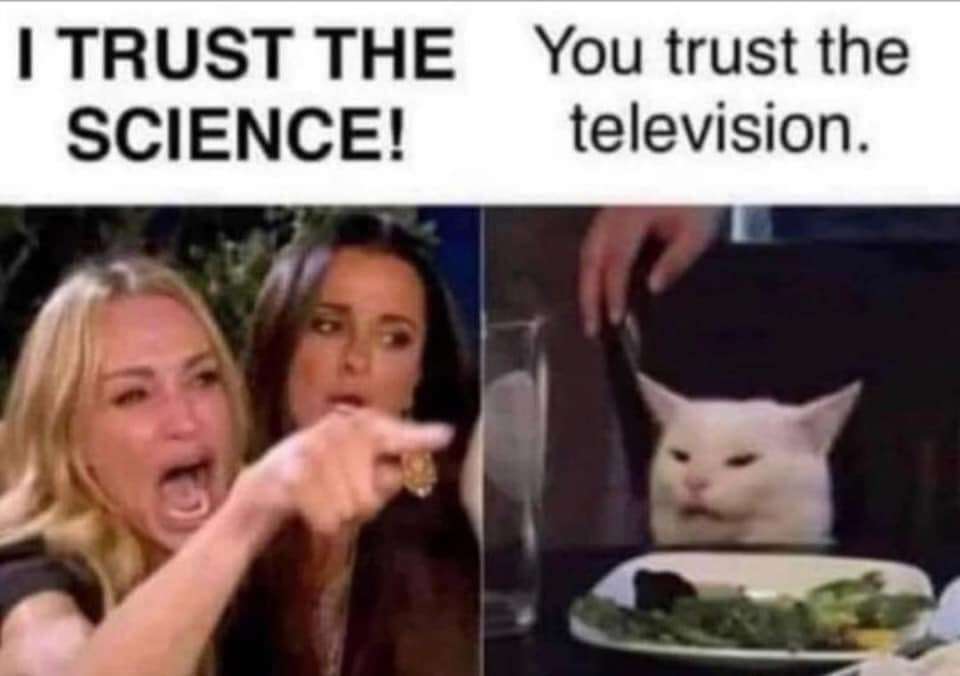
What Liberals Call “Science”

Monday, December 9th, 2013

Prelutsky nails it:

Liberals are always given to landing on the side of what they insist is science, whether the topic is Darwin’s Theory of Evolution versus Intelligent Design or man’s ability to control the weather. That’s because they believe that scientists are, like themselves, much smarter than other people.

But the fact is that science, to put it as kindly as possible, is an imperfect science. Scientists are, after all, people. They are therefore as prone to being affected by greed, blind ambition and even ignorance, as any of us.
:
Some would say that at least scientists eventually get around to correcting their mistakes. But until they do, they defend their beliefs by belittling doubters, generally labeling them as flat-earthers. These days, you see many climatologists defending “climate change” as settled science, while the rest of us are supposed to ignore the fact that consensus is not the same thing as proof, especially when those with the courage and integrity to raise doubts are punished by being denied federal grants and tenure.

Matthew 7:20, By Their Fruits Ye Shall Know Them. What’s the thought process? You use the scientific method on that which purports to call itself “science.” Look at the structure of the argument. If it’s just a bunch of citation-mongering followed by condescending and dismissive chortling at any opposition, well then, the thing to ask is whether or not that is how science works.

How does the method select information to be evaluated? When it filters out information, is it a true filtering process, separating the relevant from the other? Or is it merely deflecting? The difference is the mode of pursuit. If you’re filtering out chaff in order to look for wheat, there must be some wheat, or at the very least a desire to reach it. Is there curiosity. If what you’re seeing works purely by discarding whatever doesn’t fit, by covering its ears and yelling “I can’t hear you la la la,” then whatever it concludes is not the result of accumulation of information; rather, the elimination of it. That is not science.

Prosecutorial Discretion

Sunday, December 8th, 2013

Somewhere I put together a list of Articles of Impeachment I might consider drawing up, if I were a Congressman and appointed as a case manager and tasked to put them into a draft for the committee to consider.

If I can find it, I should make sure this is on it…

By six minutes in, you see there’s a pretty sound case here. The legislative authority is being usurped from Congress, and they are duty-bound to get it back again. Prudence dictates they should try other means short of impeachment to get that done, but it looks like those alternatives have been exhausted.

Hat tip to Chicks on the Right.

The Darker Side of Mandela

Sunday, December 8th, 2013

Three things you didn’t (want to) know:

Nelson Mandela was the head of UmKhonto we Sizwe, (MK), the terrorist wing of the ANC and South African Communist Party. At his trial, he had pleaded guilty to 156 acts of public violence including mobilising terrorist bombing campaigns, which planted bombs in public places, including the Johannesburg railway station. Many innocent people, including women and children, were killed by Nelson Mandela’s MK terrorists. Here are some highlights

-Church Street West, Pretoria, on the 20 May 1983
-Amanzimtoti Shopping complex KZN, 23 December 1985
-Krugersdorp Magistrate’s Court, 17 March 1988
-Durban Pick ‘n Pay shopping complex, 1 September 1986
-Pretoria Sterland movie complex 16 April 1988 – limpet mine killed ANC terrorist M O Maponya instead
-Johannesburg Magistrate’s Court, 20 May 1987
-Roodepoort Standard Bank 3 June, 1988

Strong finish to this one.

The apartheid regime was a crime against humanity; as illogical as it was cruel. It is tempting, therefore, to simplify the subject by declaring that all who opposed it were wholly and unswervingly good. It’s important to remember, however, that Mandela has been the first to hold his hands up to his shortcomings and mistakes. In books and speeches, he goes to great length to admit his errors. The real tragedy is that too many in the West can’t bring themselves to see what the great man himself has said all along; that he’s just as flawed as the rest of us, and should not be put on a pedestal.

Given all that and more, it was a disappointment to me to see Stacy Keibler waxing lyrically of her Mandelamania. Her along with many others. She’s usually such a wholesome, gracious and sensible girl, and I often pick up the impression that as statuesque blondes go, she’s no dummy. But this is a mistake. The dangerous thinking here goes something like, “If I hate X and that other fellow hates X, he must be a great guy and I can trust him.” That’s not how it works. The enemy of your enemy is not necessarily your friend.

Great Dancing with the Stars contender though.

You Shall Not Pass, Dog

Sunday, December 8th, 2013

Gal

Saturday, December 7th, 2013

Gal Gadot has been cast as Wonder Woman. She’s an actress born in 1985 who is 5’8″ or 5’9″, around 110 pounds according to reports, who looks like this as of 2010:

Oooh…um, I really don’t know about this guys, there’s not much graceful-feminine curvy swoop to her hips, and in her upper arms the skin seems to be actually touching bone.

I suppose if they don’t want to re-design that notorious bustier, maybe there won’t be too much controversy over it since there’s not much “popping out” she could be doing. So there’s that. But if she comes off looking like an eleven-year-old girl wearing a Wonder Woman costume, it will do a lot of damage to Man of Steel 2 and also to Wonder Woman’s brand. This movie already has Ben Affleck playing Batman.

It’s my understanding that in the “New 52” comic books coming out now, they’ve turned her boots blue made her Superman’s girlfriend. Not sure about the boot thing either, although I suppose that is the kind of minor costume-tweaking that could come out as a win. The girlfriend thing, on the other hand, is something I can’t see as anything other than a huge mistake. The feminists are bitching about it, predictably enough, but they probably should because it diminishes the character. Now she is to be played on the big screen by a little waif-girl with the all too familiar and urban-looking skeletal supermodel body type…you know the feminists will yell about that too. The family in the station wagon teetering on the brink of a cliff just as Wonder Woman comes to rescue them, isn’t going to feel too good about it either. Not quite the “here I come to save the day” look.

I like seeing militant feminists get a good tweaking just as much as the next guy. But they should be tweaked about the right stuff, shouldn’t they? Mrs. Freeberg taking me out to Hooters for my birthday, stuff like that. So it’ll be interesting to see how WW figures into the story. He’ll be stopping some disaster on one side of the globe, and she’ll fill in for him on the other side, Super Friends style, and after the crisis is averted say something like “Hi, I’m Diana, an emissary from Themyscira and here’s my story…”? Because that would be lame.

We’ll find out soon enough, I suppose…

Update: Oh, bruth-er…and so, it begins

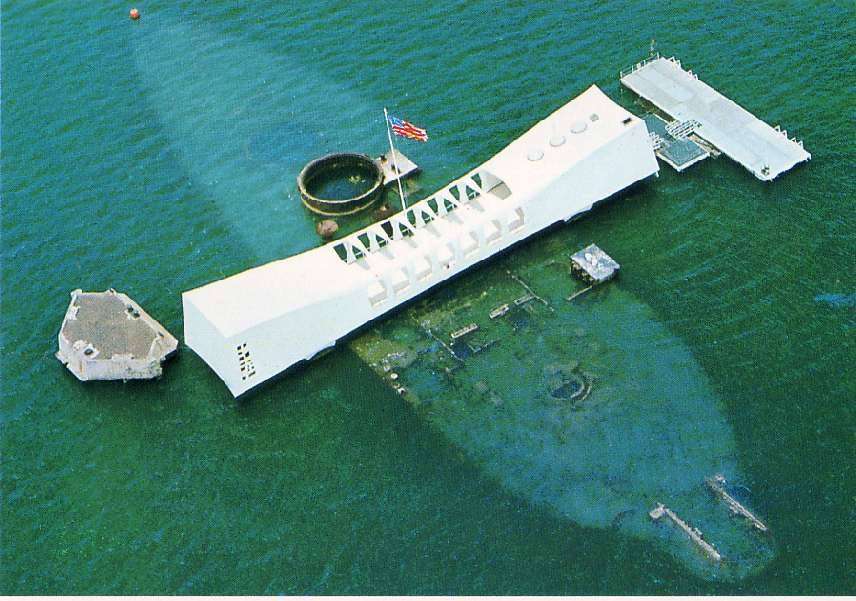
Pearl Harbor Plus Seventy-Two

Saturday, December 7th, 2013

A date which will live in infamy…

What kind of infamy, I wonder. I’ve often complained of the “bubba” syndrome in which something bad happens to one person, and within the friends & family it is broadly and forcefully felt that the disaster is nothing more or less than bad luck. When the spot of bad luck turns into a streak, it gets a little awkward, especially when evidence emerges that mistakes are being made that cause (or allow) these bad things to happen. But of course, the guy pointing this out looks kind of like a dick, and might very well be one…and people would much rather concentrate on the tragedy that fell on poor ol’ bubba. So they turn a blind eye to the plain and obvious fact that bubba is causing his own problems.

And a little bit of casual research will expose the fact that he has always been treated this way right back to the cutting of the umbilical. Poor, poor bubba, bad things just keep happening to him.

Once World War II started, it didn’t keep going like that for the United States. Our country lost more battles but won the war. Couldn’t afford not to. See, that’s the real Pear Harbor lesson; that’s how it works. It’s all about being able to afford bad decision-making. People get the feeling they can’t afford it anymore, and they start making winning decisions.

Maybe enough time has passed now, that we can honor the lives lost in the tragedy, and still achieve some more specific understanding about the infamy. Twelve-seven is an observance, whether people realize it or not, of human folly; of pretending the future is as clear as the past, when we know it isn’t so. Of failing to prepare for the worst while hoping for the best.

And, of choosing scapegoats in the aftermath. When all’s said & done, of allowing bureaucracies to hurt us as much as possible, both before the big event and afterward.

On a cold Thursday evening in Washington, DC, in 1941, leaders in the nation’s capital met for dinner and discussion of the problems facing them.

One attendee was Frank Knox, Secretary of the Navy. Knox told his dinner companions,” I feel that I can speak very frankly, within these four walls…We are very close to war. War may begin in the Pacific at any moment…But I want you to know that no matter what happens, the United States Navy is ready!”

Knox added, “We’ve had our plans worked out for twenty years. Once it starts, our submarines will go in to blockade them, and sooner or later our battle fleet will be able to force an action. It won’t take too long. Say about a six months’ war.”

What was the date? December 4, 1941. Three days before the attack on Pearl Harbor. Needless to say, the United States was not ready for the coming war, one which would last for three years and eight months and take the lives of more than 400,000 Americans.

Fast forward to today. When our leaders tell us that a national healthcare program is going to work well and benefit all Americans, we should remember the track record of the government on past projects. If the nation’s defense can be as vulnerable and unprepared as was the case in 1941, what does this say about a government-run healthcare system?

Lesson from December 7, 1941: Bureaucrats tend to think like bureaucrats. Bureaucracy doesn’t bring out the best in human behavior, it brings out the worst. It causes lack of foresight. It causes lashing out, rushed exuberance and eagerness to assign blame, it elevates process over outcome, and it tends to elevate persons of low character over their colleagues with better character. The crisis that follows tends to do the opposite of all these things. But it’s a mistake to place faith in bureaucracy just by default, and then hope it’ll all work out.

Real people get hurt.

Whiskey…Tango…Foxtrot… XXIII

Friday, December 6th, 2013

People are paying other people money, to become activists against other people who are trying to make money for trying to make money.

Useful idiots with some very limited usefulness about them.

Hat tip to Kate at Small Dead Animals.

The Star Wars Fans

Thursday, December 5th, 2013

Just a thought I’ve been having, since all this Star Wars VII talk started up…

Star Wars fans are so often thought-of as one big crowd, and the producers of the franchise encourage this. Once we start to recognize the fractures, I’ve seen there’s a tendency to stop at dividing the mob up into two halves, generational in nature, with my generation being the senior set. I still remember the enthusiasm with which I attacked that little old lady’s lawn, in my torn up jeans, that summer Saturday afternoon in 1980 so I could pull in a few more bucks to go down to Mount Baker Theater and find out what happened after the Death Star blew up. Those who follow such things see the old farts like me, and then there are the kids who learned about Star Wars through the “prequel trilogy,” maybe saw that trilogy first. Which I imagine would affect your perspective a lot.

There are actually several layers to this. They can be defined according to a singular, crisp, clear, concise question: “When did George Lucas lose his marbles?”

Tier Zero, occupied by Lucas himself and a few others I think, would be: Never. He knows exactly what he’s doing. These people are insane.

Tier One would be: When Darth Vader took his first steps in the robotic suit and yelled “NOOOOOOOOOOOOO!!!” By the definition of their class, they must think everything was going awesomely great and wonderful up until that moment…so, not too many people here.

Tier Two would involve people who don’t like Hayden Christensen. We should allow a Tier Three, I think, for people who don’t like Hayden Christensen as a whiny little bitch in Attack of the Clones. The difference is that the latter group lost their faith when they realized whining like a little bitch had become, according to canon, an enduring trait among men in the Skywalker family. And I guess maybe I’m partially in that crowd.

Tier Four, of course, has to do with Jar Jar Binks. By extension, it is anyone who was disappointed by all the silliness and hijinks in The Phantom Menace, and by extension the entire prequel trilogy, along with anyone who was turned off by the performance of little Anakin. And the Gungans. And the boring plot about trade disputes. And the conference room scene. And the other conference room scene. And did I say Jar Jar? And, and, and. To such a great extent that the disappointments that came before, didn’t count, and the disappointments that came later aren’t really worth mentioning. They hate the prequels. This is probably the largest one.

Tier Five: Greedo shooting first. The prequel-trilogy thing doesn’t really count for these people because they’ve never gotten over this.

Tier Six: Maybe this is where I am. In 1983, the closing shot was a rum-soaked, woman-chasing, dirty, grizzled, mercenary space-pirate, played by the actor who brought Indiana Jones to life, snuggling little teddy bear muppets. My childhood was already pretty much over by this time, but what little was left of it was ruined at that point. Mercenary pirates shouldn’t be snuggling muppets. That ought to be some sort of a rule.

Gold BikiniI suppose there is a Tier Seven for whoever didn’t like the gold bikini.

And then there is Tier Eight: Darth Vader is Luke’s father. That one, I could get over because it opened up some very cool possibilities. But I’ve always had these pangs of regret over it, or loss anyway, since what was being closed off was classic myth: The super-duper dark unredeemable bad guy, who killed the good guy’s father, is now going to kill the good guy with the very same sword that was belonged to — or was used to take down — that father. Good guy manages to duck out of the way with one last-second twist, and in a reversal of fortune nobody could see coming, the bad guy gets it. Take that, bad guy! Daddy is avenged. It’s got a lot to do with surprise, but it isn’t really surprise, we expect it. I expected it in 1980 after cutting that little old lady’s grass. Life’s full of surprises…we adapt…but a part of me has always thought, ya know, maybe things wouldn’t have gotten so messed up if Lucas had stuck to Plan A. Is the “Tale of Redemption” really central to Star Wars’ success? It was already kind of a big deal. Dunno. We’ll just have to wonder about that.

Tier Nine: Lost all, or most, of the fanboy passion when Luke said “But I wanna go to Toshi station to pick up some pooooooower converters!!” Couldn’t take the whining.

Those of us who are in Tiers One through Nine, still like the movies. At least, most of us do. But after the Big Disappointment, wherever it was, we identify with them a lot less and just see them as the creative works of some…well, weird guy who’s into some strange stuff. There was some moment. For me, I suppose it came when Lucas was interviewed about the reaction to Phantom Menace, and said something about how Star Wars is for kids and has always been for kids. He actually made a good point that the change in audience focus was perhaps illusory, a mirage thought up by people roughly my age who had forgotten they were kids when the older movies came out. There is some truth in this. But there is falsehood as well. The big draw for me was the Arthurian myth, interwoven with the ground-breaking special effects. Lucas wants to tell me I cut grass so I could go to his movies and watch Ewoks? Uh, I don’t think so. I’d truthfully have to say, Phantom Menace itself didn’t disappoint me much, it was the stonewalling and the denial and the Obama-like “there’s nothing wrong here, the problem is you” excuse-manufacturing. The failure to own up.

That, and the Greedo thing. Overall, I’m in the crowd that was alienated when Star Wars shifted into this weirdness of “violence never solves anything, and good guys win by not fighting” frame of thought. Yes George, it did shift. It wasn’t due to Phase I budget constraints that Han originally shot Greedo first. And it wasn’t originally called “Revenge of the Jedi” because Lucas hadn’t had enough time to mull it all over. Star Wars went peacenik, and in so doing, left me. Kinda sorta. Not completely. It’s still fun, but a diminished from what it once was.

Point is, I think a lot of people are in that boat, but there are many different stories about how we got there. But what the heck, it’s his story and he can do as he likes. Ya wanna watch it or not?

The Stick and the Ball

Wednesday, December 4th, 2013

Me, a few days ago:

Throughout all of human civilization sufficiently advanced to allow for arguing-about-politics, there have been three forces at work. Depending on the culture, one or two of these may be in recession, and may appear to have vanished altogether, but the three “primary colors” are in fact always there. Just like — and I’ve used this metaphor before — the three colors in a pixel on your monitor. Some may not register anything, but all three are always available, the red the green and the blue.

In politics, until we have better ways to describe them, let us envision these three primaries as: those who seek to preserve order; those who seek to incite chaos; those who cherish liberty.

The order-people are motivated by many things, anything that relies on order. So this primary is found in many composites, even some composites that are opposed to other composites similarly related to this. Capitalists and collectivists alike champion some kind of order. Anyone who wants to build anything has to rely on order. The big-government types and the “Tea Party” types believe in order.

The chaos-people are motivated by a resentment against the existing order. This is an impulse of pure anarchy, but it is hard to trace because the first step toward enacting a new order, is to raze the old one. Anyone who was ever a revolutionary, was a chaos-person, at least in the moment. So many will act on this for a short time, but few will act on it permanently. Yet the few are there. They are pure-anarchists. They do not recognize themselves. I’ve said it before many times and I’ll say it again here: We’ve got a lot of people walking around laboring under the delusion that they’re working to build something great and grand, but cannot define what exactly that thing is that they’re building, because the reality is they’re not building anything. They are destroyers. No one wants to admit he’s a destroyer, but see, there is another thing going on that makes this more common: It’s fun. It’s easy, too. Takes a year to build the barn, and a day to knock it down.

The liberty-people are motivated by a desire to be left alone. Quite understandable, especially when order-people and chaos-people are having a fight, and others around them who are just minding their own business get swept up in the fight, against their will. A lot of people, I see, are motivated by the opposite: They seem to despise liberty. Their own, as well as any liberty enjoyed by anyone else.

We could think of the discourse about which ideological direction to take, as a sort of circular periphery, with all the frenzied debate being about what point on that periphery is the best to pursue. It is a direction and not a distance, so the periphery is virtual, possessing no clearly defined radius. Like the “celestial sphere” in astronomy, it is at least large enough that all of its points are beyond any earthly point approachable by anyone mortal. In simpler terms: It is less a geometric shape, than merely a set of definable directions.

Around this periphery we have these three primaries, the order, the chaos and the liberty. Where they are, relative to one another, is something that changes from one issue to the next. Libertarians and “Paul-bots” hate having this pointed out, but it’s true, and it’s proven easily. Let’s ponder an issue. Gay marriage. The order-people say no, the chaos-people and the liberty-people say hell yes. So chaos is aligned with what seems to be liberty, both of them are in favor of gay marriage. The liberty-people don’t want to see anyone stopped from doing something they want to do, and the chaos-people want to destroy definitions so they can destroy structure. Their motives may be different, but their interests are in alignment.

We shift issues, now. Gun control. The chaos people say yes, the liberty people say no of course, and the order people also say no. They recognize that burglary & home invasion lose a lot of appeal as chosen vocations, when every homeowner can be reasonably expected to possess and know how to use a gun. There are many other examples to offer. Order, chaos and liberty act like three boxcars on a purely-circular railroad track. They slip and slide around relative to one another. Change the issue, and the boxcars change position.

However, there is one constant here: Order and chaos. They are opposites, by definition. However, they are political ambitions: Order seeks to build something, chaos seeks to destroy. See, liberty is more primitive even than that: It has to do with “If I start doing this thing over here, are you going to walk up like some strutting martinet, say ‘excuse me, sir’ and tell me to stop doing it?” So the wild stallion in this corral is: liberty. It exists on a different, lower, more primitive level than the chaos and the order.

The three points are like the two ends of a baton, or a stick, and then one detached ball, all spinning around in a circle together. The two stick-ends must be opposite from one another at all times because they refer to opposite things. I can’t find the issue that puts chaos and order on the same side; neither can you. But liberty is the wild-card here.

It is very often seduced into siding with chaos. That pain-in-the-ass order thing, after all…it just means a bunch of rules.

But the liberty relies on the order. Without any order, the law remains, but it becomes a law of brute force. Whoever is stronger, makes the rules. Where’s the liberty in that?

With all that in mind: Why are things so complicated in the here-and-now? I blame the Baby Boomer Generation. No seriously, I really do. It’s their fault.

They are at the age right now where people are expected to be running everything. White, straight, male, tall, and sixty-something. Or, man-hating shrew…but still sixty-something, like Hillary Clinton. We still live in a time in which sixty-something means you have power. But the sixty-somethings, now, grew up rebelling against authority — and they’ve never stopped. Even now, when they are the authority, they’re still rebelling.

And as a result, our laws are a complete mess. We have these written laws that are in direct conflict with the “laws that really count” in that these are cultural laws, unwritten laws, that find sympathy in the people who are at the top of the command structure. “Marijuana is illegal” is one such law. The written law says that’s a real law, the people who enforce the laws don’t like that law. And so we have this no-mans-land of infractions, prosecutions, indictments, convictions, and penalties that don’t really count.

“Tobacco, on the other hand, is quite alright” is yet another. It’s legal, but not really. Here in California we’re targeting the last places where you can smoke it, banning it without banning it. That which is really banned, you can smoke, and that which is not banned, you’re not really allowed to.

The stick and the ball are spinning wildly. Like balls in a roulette wheel. Where is order? Where is chaos? Where is liberty? Here & there, they’re aligned this way, and then that other way.

“Don’t come into our country and vote in our elections if you aren’t legally authorized to be here.” That’s another one. The letter of the law says that’s a crime. But our bosses want that law to be broken, the more frequently it happens, the better as far as they’re concerned. And they’re the bosses.

This is dangerous territory. To have a law that means anything at all, you have to have definitions and those definitions have to mean something.

Chaos is winning.

Update: Thought in progress…maybe it’s worth a second post, but such a post would show very little by way of a self-supporting thesis, or any kind of structural independence away from this one.

Issues on which the liberty-ball slides around on the periphery, to align more closely with the “chaos and destruction” end of the stick, against creation/preservation/order:
1. Abortion;
2. Flag burning;
3. Gay marriage;
4. Letting Saddam Hussein get away with more shenanigans;
5. Illegal immigration;
6. Pot;
7. Sex and violence on the teevee, and in music discs marketed to eight-year-olds;

Issues on which liberty is more harmoniously aligned with order, and against chaos.
1. Abortion, from the perspective of the baby;
2. Gay marriage, from the perspective of the church getting sued;
3. Minimum wage;
4. CAFE standards;
5. Religious expression around or near a school;
6. Gun control versus freedom to self-defend;
7. School vouchers;
8. Progressive income tax policy;
9. Punishing the Boy Scouts for not admitting gay scouts;
10. Sexual harassment and hostile work environment litigation;
11. ADA abuse;
12. Strange bizarre union rules;
13. Interpretation of the U.S. Constitution;
14. Environmental issues;
15. All the “little laws.”

Two things I notice about this. One, my list of “liberty sides with order and against chaos” issues is roughly twice as long as the companion; as I spent more time and energy adding to both, I expect that trend to continue. This is part of a sea change that is slowly taking place, which I also expect to continue. Here’s a great example of that: The Scopes Monkey Trial. That was a case in the 1920’s that had to do with a schoolteacher not being allowed to teach the theory of evolution. Some eighty years later, the issue was about teachers not being allowed to teach intelligent design theory, whose critics asserted was simply creationism masquerading under a new label. In both cases, the more secular viewpoint is the chaotic one — it “preaches” that we are, quite literally, products of a chaotic universe in which there are no events save for random ones. When Clarence Darrow and William Jennings Bryan went at it, that side was aligned with liberty. In the more recent trial, that side embraced a restriction, and was thus aligned against liberty.

Second thing: When chaos aligns with liberty, there is some sort of deception taking place. I put “abortion” on both lists because two people are involved, the preservation of the one relies on a restriction against the other. If your very life is extinguished, you don’t have liberty. The same goes for gay marriage: To grant freedom to the one party, we must encroach on the freedoms of another. Those who champion the freedom of the aborting mother or of the gay couple that wants to get married, you’ll notice, address these dichotomies by restricting the information flow. They do not reply to the arguments from the opposition, they work to simply eliminate the opposition from any allowable or influential discussion taking place. They effectively cover their ears and go “can’t hear you la la la.”

What is going on here is a bad sale. There is something rather out-of-place and unnatural about liberty siding with chaos, since in political contexts chaos is, when you get right down to it, an ideology that says we as human beings are not good and we don’t belong wherever we are. That’s really at the heart of it, that we as a species are a pollutant. That goes beyond saying, we pollute and should stop polluting; the theory is that we are the litter in the otherwise-pristine universe. Since we don’t belong wherever we are, how can it possibly be fitting that we should be allowed to do anything? I mean, think about it seriously: You’re a pregnant woman who wants to abort her child. The people who support your “right” to do this are pullin’ for ya…but…your mother was thinking about aborting you, too, and your so-called supporters would have chosen that, if it were up to them. So what they’re really supporting is a “Now that you’re here, darn it all, you might as well have this sacred ‘right’ or whatever…” kind of a right. And what sort of right is that?

There’s something phony about it. There’s something phony about everything on that shorter list.

Lucy

Monday, December 2nd, 2013

The takeaway: She is confronting an argument about moral reasoning, with what she obviously thinks is an adequate rebuttal, and is one in her world: She gets stuff. To her, the formula is no more complex than that, morality == getting stuff. Around four minutes in we find this does not translate into her vision for her children, which is interesting. And a clue.

Not that it surprises me much. I’ve been noticing for awhile this “Other America” seems to have a problem with time. They live in the moment. That’s either an effect, or a cause, of this moral-flattening in which morality is one-and-the-same with getting free stuff. Perhaps it’s both an effect and a cause? There’s a temptation to invest unlimited hours and calories into mulling this over, and perhaps it is not a bad thing to succumb to it, since we need to be putting more thought into this…

Zero Hedge, hat tip to Bird Dog at Maggie’s Farm.

Outbreak of Lawlessness

Saturday, November 30th, 2013

Krauthammer writes about the Senate’s demolition of the filibuster during confirmations for judicial offices:

If a bare majority can change the fundamental rules that govern an institution, then there are no rules. Senate rules today are whatever the majority decides they are that morning.

What distinguishes an institution from a flash mob is that its rules endure. They can be changed, of course. But only by significant supermajorities. That’s why constitutional changes require two-thirds of both houses plus three-quarters of the states. If we could make constitutional changes by majority vote, there would be no Constitution.

As of today, the Senate effectively has no rules. Congratulations, Harry Reid. Finally, something you will be remembered for.

And, about the President effectively governing outside of, and therefore above, the written law:

We’ve now reached a point where a flailing president, desperate to deflect the opprobrium heaped upon him for the false promise that you could keep your health plan if you wanted to, calls a hasty news conference urging both insurers and the states to reinstate millions of such plans.
:
The law remains unchanged. The regulations governing that law remain unchanged. Nothing is changed except for a president proposing to unilaterally change his own law from the White House press room.

That’s banana republic stuff, except that there the dictator proclaims from the presidential balcony.

No rules! (Lyrics extremely NSFW.)

“Blind to His Own Ideology”

Saturday, November 30th, 2013

Ed Rogers writes in a column at the Washington Post:

The president said something recently that I believe was interesting and underreported.‎ At a Democratic campaign fundraiser, the president said he was “not a particularly ideological person.” Assuming he meant it, that was a remarkable thing to say…[H]e sees himself doing what needs to be done without any ideological motivation. Interesting. ‎
:
In the 2008 campaign, candidate Obama famously told Joe the plumber that he was going to raise taxes because “when you spread the wealth, it’s good for everybody.” What could be more ideological than wealth redistribution?
:
The president’s belief that little of what he does is ideologically driven suggests he is living with a pampered, unchallenged mind. He has been told he is so smart for so long that he sees only clarity in his actions and unchallengeable reason in his conclusions.
:
It appears that President Obama believes that dissenting views are irrational or the result of clouded, lesser thinking. Being blind to his own ideology makes him unable to respectfully deal with others who might readily embrace an ideological point of view. The president’s inability to effectively work with Congress, orchestrate Washington, or build strong alliances or even friendships overseas probably stems from his belief that others should defer to his clear thinking without many questions or objections. He doesn’t see politics as a great debate with multiple possibilities among equal voices.

Brilliant analysis. If I were Obama, I would look for opportunities to demonstrate such comments are off-the-mark. Much of it cannot be proven, of course, but it is certainly worthy of note that President Obama is not seeking out, or making much of, such opportunities.

Another thing I don’t often see is evidence of, or even pride taken in, collaboration. As far back as I can remember, lefties champion group-think. Everything’s a meetin’. I must confess I’m a bit confused as to whether we’re still living in that era, now that we have become accustomed to Obama deciding things in a vacuum (as far as we can tell), sometimes taking all year long to do so. Obama cannot, and would not, name names in a circle of close confidantes, those persons of good repute in their character or in their sense of judgment, people He consults when the time comes to make the hard decisions. To the best we can tell out here, taking longer to decide is about the only method He has at His disposal for these tougher-than-average decisions.

Wonder what it’s like working for this type? Anyone subordinate would have to wonder what his or her place is in the organization, with the guy at the top possessing a complete monopoly on that coveted skill of quality decision-making. I wonder what goes on in your head if you’re about to bring game-changing information to the boss. What if the boss isn’t expecting it? What if He’s wallowing around in the end-zone of His divine decision-making process, just taking His leisurely weeks & months to close in on the answer because it’s, like, really hard and stuff, and this new nugget of information you’re offering might change the result? You’d be obliged to bring it, toot-sweet, of course. But what if it doesn’t change the game after all? Why, then you’d come off looking like an advocate for the “wrong” outcome. Oh well, I’m sure Barack Obama is plenty mature enough to recognize the difference between an advocate for the wrong outcome, and an earnest underling merely doing due diligence, bringing the boss the information needed. Sure He is! Better keep that resume brushed up…

In truth, I have met people with the same bargain-basement level of respect for dissenting viewpoints as Barack Obama. Not many, but some. Could it be that the ones who do manage to make good decisions, fail to register in my long-term memory? I suppose that’s possible. I don’t consider it likely. Snobbery is easy to recall, after all, one way or another…and, as I think back on all these experiences, it makes an impression on me that I don’t recall improved situations or good results. Not one. What I recall, surrounding the snobs all the time, like clouds overhead, are messes. The direct results of rotten decision-making. And, when the snobs had power, I recall a permeating sense of futility, within myself and within others, a resignation to the truth that things would never get better, that everything broken would stay broken, and whatever isn’t broken would probably break soon. That’s what closed-mindedness does.

Tyranny of Nice

Friday, November 29th, 2013

Broce Frohnen, in Crisis Magazine, hat tip to blogger friend Rick:

“Niceness” is a rather shallow set of habits and attitudes more concerned with comfort than engagement, ease than excellence, contentment than striving to do one’s best. It was and is the perfect complement to our contemporary liberal insistence on “tolerance” as the chief virtue. Tolerance, after all, means simply allowing others to do and/or say what we may not like. When one takes things like religious faith and doctrine seriously, toleration can lead to spirited debate and vigorous pursuit of the truth, to everyone’s betterment. We accept that others may hold views we believe are wrong, even dangerous, because the only way to truly change hearts and minds is through civil discourse and example.

Unfortunately, when truth comes to be seen as subjective, toleration becomes the chief virtue, and it comes to mean simply ignoring one’s fellows, in essence not caring what others do. If you leave me alone to do what I want, I’ll leave you alone to do what you want—whatever it is, because truth and virtue don’t really matter, and probably don’t exist in any event. All we have are our own preferences, so that our chief duty is to ignore one another’s actions. The result is a culture in which religious faith is viewed in the same manner as any other “hobby,” whether it is stamp collecting or group sex. In the same way, “niceness,” as opposed to the discipline of civility, can mean simply not caring whether anyone is right or wrong, reasonable, unreasonable, or simply lazy, so long as no one bothers to challenge anyone else.

So we have this attitude and value system — tolerance — making us better in the one situation, and bringing us injury in the other.

What’s the difference? Frohnen writes that it is “tak[ing] things like religious faith and doctrine seriously” that makes the difference, versus “truth com[ing] to be seen as subjective.” Yes, we do have experience to back this up, and I think he’s right there. But at the same time, there is more. I’ve seen examples of people imposing this tyranny-of-nice and, in so doing, destroying excellence. Certainly these people are crusaders against human achievement, in every sense, but I have a tough time seeing them as purveyors of any sort of moral relativism. They do, in fact, have a moral compass. A very definite one. That’s the whole problem. Theirs is a world in which everything is upside-down. Men should be forced, somehow, to find fat ugly women sexy; when we find ourselves awash in puzzles and devoid of any answers, we should look for sagely wisdom in our children; to make our economy stronger, we should stop our most affluent and productive fellow citizens from having anything to say about our public policy, and give the poor greater influence in saying how it should work; men should never have opinions about abortion, but men having opinions about men having opinions about abortion, that’s something to be encouraged. They “know” all these things as absolute certainties and are not about to change their minds. No relativism here.

And yet, these and more are wonderful examples of man taking charge of God’s dominion, and botching it up.

We are fortunate to be living in times like these, in which we can learn so much about how humans make mistakes. The ObamaCare disaster is just the frosting on the cake. Most of us have been availed of the opportunity to debate with our liberal relatives about it all, over turkey and mashed potatoes, and come away with some sense of why the residual support might remain. We’re down to the hard bedrock, now, since the recent damage has been unusually severe. Again, these are not people who see truth as subjective. “Health care is a human right,” I’m sure you’ve heard that one.

Allow me to advance a theory just a bit more complex.

Throughout all of human civilization sufficiently advanced to allow for arguing-about-politics, there have been three forces at work. Depending on the culture, one or two of these may be in recession, and may appear to have vanished altogether, but the three “primary colors” are in fact always there. Just like — and I’ve used this metaphor before — the three colors in a pixel on your monitor. Some may not register anything, but all three are always available, the red the green and the blue.

In politics, until we have better ways to describe them, let us envision these three primaries as: those who seek to preserve order; those who seek to incite chaos; those who cherish liberty.

The order-people are motivated by many things, anything that relies on order. So this primary is found in many composites, even some composites that are opposed to other composites similarly related to this. Capitalists and collectivists alike champion some kind of order. Anyone who wants to build anything has to rely on order. The big-government types and the “Tea Party” types believe in order.

The chaos-people are motivated by a resentment against the existing order. This is an impulse of pure anarchy, but it is hard to trace because the first step toward enacting a new order, is to raze the old one. Anyone who was ever a revolutionary, was a chaos-person, at least in the moment. So many will act on this for a short time, but few will act on it permanently. Yet the few are there. They are pure-anarchists. They do not recognize themselves. I’ve said it before many times and I’ll say it again here: We’ve got a lot of people walking around laboring under the delusion that they’re working to build something great and grand, but cannot define what exactly that thing is that they’re building, because the reality is they’re not building anything. They are destroyers. No one wants to admit he’s a destroyer, but see, there is another thing going on that makes this more common: It’s fun. It’s easy, too. Takes a year to build the barn, and a day to knock it down.

The liberty-people are motivated by a desire to be left alone. Quite understandable, especially when order-people and chaos-people are having a fight, and others around them who are just minding their own business get swept up in the fight, against their will. A lot of people, I see, are motivated by the opposite: They seem to despise liberty. Their own, as well as any liberty enjoyed by anyone else.

Most of the bad decisions made in politics result from one of these energies successfully pretending to be one of the other two. Barack Obama is like this. His movement is a movement of pure wreckage. He’s been in office almost five years, and apart from wrecking things what has He done? If He had what it takes to actually build anything, or bring order, we’d know it by now. We’re still waiting.

And that’s where this whole thing connects back to the Tyranny of Nice, and these deleterious effects it has against excellence and human achievement. We’ve heard a great deal over the last couple generations about “equality.” This is an act of seduction. The charlatan approaches and says, right now we do not have equality, but my plan will make some. It sounds like the construction, or restoration, of order. Sounds like opportunity. This appeals to the order-people and also to the liberty-people, since liberty must give way when the finances are in peril. But the truth is, there is no order to this — you’re not advancing “order” when your idea of order is, “I will decide what’s right, unilaterally, from one moment to the next.” Such wanna-be-dictators become agents of chaos, for they cannot abide any order save for their own idea of order, and they have no idea of order that’s evolved since toddler-hood. Sure, they state it in fancy terms such as “The Secretary of Health and Human Services shall determine” and so forth, but it really just amounts to toddler-rules. I want what I want when I want it. I decide everything, no readiness, willingness or ability to compromise with anybody. That’s not order, that’s really nothing more than an outburst.

And so “equality,” which sounds like a measurement of some sort, time after time becomes some stranger thousands of miles away acting as final arbiter on local issues that, without the passage of some bizarre regulation debated and voted-upon by way of subterfuge, are none of his business. At the end of it, equality has nothing to do with it. It’s the remote-arbitration, the centralization of power, that is the point. This is a rather settled and solidified pattern, we’ve seen it play out many times. We can’t even have our own opinions anymore because the Supreme Court said…Congress said…the Justice Department said…some lawyer will sue if…we did not lose these liberties because we wanted to lose them, we lost them because we were suckered.

The United States, I would opine, is a history-making experiment leveraging the interests of the liberty-people against the interests of the order-people. The conflicts between the two are obvious, and yet the experiment has endured for centuries. Not without problems. Things are a bit scary lately because the destructive forces acting against it are in a state of escalation. They are becoming bigger, stronger, and most frightening of all, more sophisticated across the years. The chaos-tactics invading the experiment we know as America, are evolving, while the experiment they are attacking remains static. The attack may fail ultimately, and the experiment may survive, but not unless the citizens achieve greater understanding about what is happening.

By the time we advance past these many layers of complexity, away from the three primaries, to the point where we can make final definitions to this concept of “tolerance,” something fascinating occurs: All three of these primaries are pulled in to the Opposite Planet, where things are the opposite of what they really are. “Tolerance” becomes intolerance. It must, mustn’t it? If anyone anywhere is not tolerated, we’re all not tolerated, and we must uphold tolerance so that means we have to go one some sort of witch hunt and destroy someone. See the pattern? Man decides what is good and right vs. what’s bad and wrong, without submitting to the authority, wisdom or guidance of God; backward-ness ensues, things are consistently perceived as the opposite of what they truly are. We embark on a crusade of intolerance for the sake of tolerance. Listing the examples from generations past would be time-consuming, as well as pointless. “Toleration becomes the chief virtue,” writes Frohnen, “and it comes to mean simply ignoring one’s fellows, in essence not caring what others do.” Music to the ears of the liberty-people, who simply want to be left alone. But wait — “what others do,” it turns out, has an effect on the liberty-people as well as on everyone else. They forgot to ask some questions about that!

The biggest lie going on in American politics right now is that there is some spectrum involving “left,” “right-wing (and Tea Party types)” and the venerable “independents” or “centrists.” Into that delusive one-dimensional spectrum has been inserted this tragic pejorative “extreme,” which I suppose were all supposed to try to avoid becoming. But look at what we think of as “extreme”: If ObamaCare is so screwed up, and even its most avid supporters are now admitting the launch is an historical failure, the jury is no longer out on that — let’s maybe not do it. We’re living in an age in which it’s become extreme, and undesirable, to delay or avoid doing things everyone acknowledges are bad things.

You know what I call that? I call that mean. We set out trying to be nice, and ended up mean. We’re on the Opposite Planet.

So the time’s come to admit we’ve been snookered, or at the very least we have made one-to-several errors. When you’re lost, you don’t keep driving, you pull over, get out the map, and re-check your bearings. That would be a good thing for us to do right now. Sorry, was pointing that out un-nice of me?

Happy Fiftieth Birthday to my Brother

Thursday, November 28th, 2013

Currently trying to find an address for him for the proper gift-giving and well-wishing. Somewhere between Washington and Texas. Long story.

Update: No, don’t read too much into the video, the bit about the deceased. He’s still on the same side of the sod as you & me, so far as we know. Just trying to find him.

Random Thought About Wealth and Power

Tuesday, November 26th, 2013

Prof. Thomas Sowell’s random thoughts make more sense than most other people’s best-organized thoughts.

Those who want to “spread the wealth” almost invariably seek to concentrate the power. It happens too often, and in too many different countries around the world, to be a coincidence. Which is more dangerous, inequalities of wealth or concentrations of power?

There is an important divide within modern liberalism worth studying here, falling between those who want to concentrate the power into their own hands, and those who want to concentrate the power into the hands of others. There is no way these two sides of the divide can be motivated by the same things. We know, for example, that a great many among the people who want to concentrate power into government when liberals are in charge, are motivated by white guilt. For one thing, when you ask them about it or challenge them on it, they keep going there, talking up the country’s “shameful history about race” and so forth. For another thing, there aren’t too many human emotions that can cloud the obvious truism that new authority enjoyed by liberals today, will be brandished by conservatives tomorrow. I’ve yet to meet a passionate liberal who paid that obvious fact even a passing nod of acknowledgment.

They’re complete lunatics this way. It’s like they truly believe, once government is in the hands of the people they like, it will stay that way forever and ever. So yes, absolutely, let’s get rid of the filibuster in the Senate…

The people who want to concentrate power into their own hands, are different. When it comes to their own affairs, I can almost relate to them. “If you want it done right, better do it yourself.” They trust their own instincts, and who can fault them for that? But, of course, that isn’t good enough for them. They have to tell you how to move, shop, work, eat, raise your kids, when they don’t even know your name.

What these two sides have in common is that they see government as the great de-personalizer. If you have a next-door neighbor whose face you can actually see, it slows down your impulse to tell him what to do and how to do it. You might even watch him struggle for a time with a problem you’ve already solved. Most of us would step in and offer some advice when we see him getting frustrated or wasting a lot of time on something, I’d like to think. But there is a tendency to hold your tongue on it, after all maybe his circumstances are different and your advice wouldn’t do him a lot of good. Maybe he’s thought of it already. I think, if we were all honest about such situations, we’d all confess to a bit of conflict about that.

But government enables you to control people without ever meeting them. That holds an appeal for a lot of people. I still don’t entirely understand it. I guess, when people try to fix their own problems and they can’t succeed at it, they want to start deciding what other people should be doing? Is it like that?

That Thanksgiving Debate

Tuesday, November 26th, 2013

You knew they were getting instructions for this stuff, and you were right.

Here’s Every Argument You’ll Need To Win Your Obamacare Debate This Thanksgiving

We’ve all got a crazy uncle we love…We’ll call him Uncle Hank…Everyone has or knows a Hank — that is, except for Hank. Hank has a problem on turkey day: his hopelessly naive, Nation-reading, vegetarian niece who likes to quote from Howard Zinn and tell him about the genocidal roots of the holiday they’ve gathered to celebrate. She wants to spread the wealth around, but has no interest in hard work, no respect for the people who make this country run. She has never signed the front of a paycheck. Let’s call her Emily.
:
Here at HuffPost we believe in news you can use, so we’ve put together a guide we hope is just as useful to Hank as it is to Emily. Because what good is having a political opinion if you can’t prove it’s the right one in front of your extended family on Thanksgiving?

Whether you’re Hank or Emily, here are some handy Obamacare talking points that will drive home your argument.

Not sure how this is going to pan out for the “Emily” types who are following it. Hank Argument Number One is the thing about the cancellation notices, and “Emily’s Rebuttal” is “This is just another example of corporate greed.” Hmmmm…will that yield good success? Dunno. What’s the goal here? Change Hank’s mind? Obviously not. So it must be to sway the passively-participating onlookers. My experience with this is that there is a vacillating ratio, somewhere between 10% and 90%, swaying to-and-fro, one Thanksgiving to the next, that would just love to stuff a sock in the whole thing and talk about Miley Cyrus’ twerking act, Grumpy Cat, or aren’t these sweet potatoes delicious. I know for a fact that the fraction rises and falls, because sometimes I join them. There are a lot of factors. What’s-being-discussed, for one thing. I don’t give a flip about gay marriage, I’m not gay, I’d rather talk about the newest reality teevee shows…which is another way of saying I’d rather not talk about anything.

ObamaCare is not gay marriage, though. It’s ruined it for all of us, except those who’ve managed to catch a waiver. And the economy will sour for those folks too. What this all means is, this year there aren’t going to be too many Cheesecake Nazis forcing a change of subject on “Hank” and “Emily.” Maybe that’s not correct. Time will tell. But, I think most of the onlookers will be watching and wondering what ObamaCare has to say for itself. People tend to get that way when you, or your political allies rather, insist on dictatorial control over the most intimate parts of their lives…as well as the length of those lives…and then, screw the pooch on it, and when you’re called-on to see if you have anything to say for yourself, the best you can burble up is something about “just another example of corporate greed.”

I don’t think that’s going to make Emily look like she won-the-argument. Nor do I think it will make her feel like she did. And I suppose maybe that’s the only objective to be achieved, here. Permit me a brief jog down a bunny trail on this…isn’t that a bit odd? Why’s the article called “Here’s Every Argument You’ll Need To Win Your ObamaCare Debate”? Why not “Here’s Everything Obama Needs To Do To Fix This Thing” or “Here’s Everything ObamaCare Proponents Should Do To Help Those Poor People.” That the Huffington Post article is about just winning an argument, speaks volumes about motives. Hank could point that out. What’s Emily’s rebuttal then?

This is a guide for how to pummel Hank into the ground? Dunno. So far it’s making me wish I was Hank.

Emily’s doing a great job of acting out Item #7 in John Hawkins’ 12 Unspoken Rules for Being a Liberal (via Young Conservatives):

Intentions are much more important than results: Liberals decide what programs to support based on whether they make them feel good or bad about themselves, not because they work or don’t work. A DDT ban that has killed millions is judged a success by liberals because it makes them feel as if they care about the environment. A government program that wastes billions and doesn’t work is a stunning triumph to the Left if it has a compassionate sounding name. It would be easier to convince a liberal to support a program by calling it the “Saving Women And Puppies Bill” than showing that it would save 100,000 lives.

Seems to me “Uncle Hank” has got this thing locked up. Heck, my own arguments about the health care mess, before anybody ever even heard of “ObamaCare” or of “Obama” either for that matter, are standing unscratched, untarnished and unblemished. I say: Yes, the status quo is a mess and there’s no use denying it. Put a deep cut in your hand on a weekend that requires stitches, or screw up your knee, make one casual visit…as in, in-and-out…to the emergency room. You’re looking at a bill with a comma in the total, even if you’re “covered.” That shit happens, it really does. Take a tumble when you’re in your golden years and accidentally end your fragile era of living independently — you have entered, not only the final chapter of your life where you have to rely on others, but the tragic closing act where your greatest fear is outliving your savings, and it’s a fear all too real thanks to the high cost of your medication and treatment. That shit happens too. In fact, here, Hank could point out that thanks to Obama, we don’t have to wait until age 70 to be living that fear. Obama’s made it so we can start being legitimately terrified of it any time we want to be, all the way back to when the umbilical cord is cut. Hope won, fear lost?

So my argument has always been…and I notice, after all the drama and that product-launch that makes New Coke look like a raging success, it’s still the best one…we have an advantage in the situation that things have soured so badly and so quickly. If you put a drill bit through your thumb on a Saturday in, say, 1980 or 1970, while covered, you certainly weren’t looking at a three thousand dollar bill. Now, you are. That means something is broken and recently broken. So we go out the way we came in. We don’t come up with these fancy new plans that cost money and make liberals feel good so they can follow Unspoken Rule #7. Instead, we ask: What changed? And my answer to that would be…liberals. Liberals and big-government. Every time their plans failed and they ended up hurting people, they just wanted more and more control, and more and more liberalism. Emily shows us how that’s done in her “third rebuttal”: “Uncle Hank, it sounds like you wish there was a public option.” Down at the bottom of the article under “Here’s how to finish it all up” Emily pushes it again. Total state control.

What a silly rebuttal that is. Wouldn’t that just reinforce everything Hank’s been saying about liberals for years? They won’t stop until they drag us all the way to Communism. Wow, that one would make Hank sound like he’s ready for the rubber room, wouldn’t it…oh yeah, except for one little thing, it’s not Hank saying it here, it’s his liberal niece, Emily, acting it out.

And she thinks she’s winning the debate? Really?

I wish liberals cared as much about actually helping people, as they did about acting out stereotypes about dense curmudgeonly slope-foreheaded uncles and noble, egalitarian-spirited tofu-eating hippie nieces, and winning arguments and starting food fights. Those things might stir currents of glee in Emily’s heart and they might make the cranberry sauce taste a little sweeter when she just thinks about them…but they don’t make things any better for the people who lost their coverage when Barack Obama started “fixing” our system. Such an obvious thought to have, it seems impossible to imagine Hank wouldn’t say something along those lines. And I notice Emily has no rebuttal for it.

Millennials in the Workplace

Saturday, November 23rd, 2013

Hat tip to Gerard.

Free of Indoctrination

Saturday, November 23rd, 2013

What a world-class jerk.

From Chicks on the Right.

Standards

Saturday, November 23rd, 2013

Martin Bashir of MSNBC owned Sarah Palin over her “slavery” comments…………..not.

It’s a classic case of trial-balloon-ism. Bashir has since apologized for his remarks. Which will strike you as a bit odd if you’ve got a brain in your head and you managed to watch the segment from end-to-end. The whole point to Bashir’s little treatise was that Palin was guilty, once again, of thinking before she spoke. And Bashir did think about his response. Quite a bit. It wasn’t an impulsive outburst.

In his televised apology, directed to both Palin and to viewers, Bashir said his remarks were “unworthy” and “deeply offensive,” and that he is “deeply sorry.” He said he wished he had been “more thoughtful” and “more compassionate.” He said “the politics of vitriol and destruction is a miserable place to be and a miserable person to become,” and promised to learn a lesson.

Not so fast there. What lesson is that, exactly? I’d just like to know. Actually, not so much what lesson, but would Bashir be able to articulate it. That you shouldn’t say things on teevee that will make someone feel bad? That’s practically his job description, so it can’t be that. How about, you can say something offensive over here, but not over there, because there’s a line in between those two things. That’s probably it, but of course it leaves a vital detail missing: What line, where? The bodily functions? Or George Carlin’s seven words you can’t say? “Pee and poop” would have been fine?

Captain Obvious, Reporting For Duty, once again…Bashir, let us speculate rather safely, wouldn’t be able to say because he doesn’t know. Yes, I understand there’s no way to definiteively prove this, there may not be any way to definitively refute it, but I’ve grown weary of the mindless-group-exercise of pretending something different. Bashir did what Cher did, what Letterman did…I’ve lost track of the others and you probably have, too. This reflects poorly on us. Not down to the personal level, maybe, but we should stop and take note that this is what our discourse has become.

A reverberation of middle school.

Some “wrong person” says something with visibility, be it a wrong-individual or someone from the-wrong-group, someone that all the “cool kids” have decided is “on the outs.” This is, according to eighth-grade-taboo, not to be tolerated in any way because if you tolerate it you consent to it, and in so doing you may lose whatever social stature you’ve managed to accumulate for yourself. And so, sadly, the more of that social stature you have, the more likely you are to be blinded to what happens next. Lots of energy and time spent on nonsense. Witch hunt, drumhead trial, bullying, call it what you will. All these cool-kids who insist that the not-cool-kid is irrelevant and we shouldn’t “waste any time” listening to what he or she has to say, invest copious quantities of time reminding everyone else of this irrelevance. They’ll waste the uncool-kid’s time on this too, lots of it, and do far worse than that.

You know it’s nonsense — at best — because “this person is irrelevant” is the central message to it all, while the actions surrounding the message insist on the exact opposite. There’s something going on here that is relevant.

Well, Palin’s having none of it, and good for her. Not everyone thinks so, though. In yet another reverberation from that part of childhood we all should’ve abandoned by somewhere around age fifteen, there’s an aftershock-echo-murmur suggesting that Palin is out of line for disinviting Matt Lauer, something having to do with Bashir’s freedom of speech or some such thing. What they miss is that disinviting Bashir’s colleague is the perfect response. Palin has her own sphere of authority within which she can operate, and she has rights too. She can invite & disinvite whoever she pleases. See, by age fifteen you should have that stuff mostly figured out.

Now, I don’t know if it’s entirely fair to say Martin Bashir stopped maturing altogether around age fifteen. But let’s be clear about one thing here, and this is why he’s the object of my disdain, just speaking for myself: He needed to have this happen. His sense of discipline in these matters, what there is of it, amounts to little-to-nothing more than whatever it takes to come off looking cool, smart, sophisticated. Smarter than his target, that was his goal. He “crossed the line,” you might say, because outside of the discipline required to reach his goal, there wasn’t any. Which is rather ironic, and remarkable, given that he did not succeed. Therein lies a lesson for us all, I think…”no rules save for what I need to follow to do what I wanna do,” leads to not getting it done. Discipline for discipline’s sake, much of the time…most of the time, I would offer…is a prerequisite to success, in our big goals and our little ones.

Bashir, like Letterman and all the other folks who’ve crashed-and-burned with this “Look how cool I am, I’m making fun of Palin” thing, has standards. But they are not imposed from within, they have to do with what’s outside. This is one of the reasons why it’s important for parents to get to know their children, achieve a sense of what the children do in school and out-of-school, figure out where they’re getting their real learnin’s. You don’t want kids learning everything in school, because school has a way of encouraging them to toss out whatever, swivel the head left-and-right, see how the trial balloon floated, and take the applause or slink out of sight depending on the results. In other words, it’s got a way of turning them into political little monsters. In some ways it’s more desirable to let the kids read comic books now and then. I remember vividly some of my comic book heroes; back in the day, they put a lot of emphasis on moral reasoning, and it wasn’t paper-thin, cosmetic preening. The whole point to it was that when you’re a superhero, it matters a great deal more what decisions you make about things, since there’s nobody to overrule your decision. I recall Superman having to think long and hard about the ramifications of murdering those three Kryptonians, or stranding them in the Phantom Zone. Batman had to keep a promise he made to one of his enemies, some lunatic woman who was terrorizing Gotham in some way, and he said “My word is good no matter who I give it to.” Alright, take away one point for ending his sentence with a preposition…the point is, kids need to learn that morals, ethics, lines drawn, taboos and codes don’t do any good if you don’t carry them in your heart. And school doesn’t teach that. It teaches the opposite. So I get a bit of a gut-chuckle, albeit a sad one, when I hear about schools being “bully free zones.” Schools teach bullying, that’s the truth of it. Every time I hear someone trivialize one of these attacks, just because the attack was made on Palin and they think she’s spent too much time in the limelight so serves-her-right, it reminds me that our society encourages bullying too. Bullying is only bullying when it’s done against certain people? That sentiment is the very essence of bullying.

In the end, Bashir did not suffer from some momentary indiscretion. He planned this and wrote it. And it wasn’t about shitting in someone’s eyes or mouth; it was about throwing shit at the wall, seeing if it would stick. That’s what people with no internal standards do. They face the wall, grab a handful of shit, throw it, see if it sticks…and then, whatever crowd happens to surround them at the time, decides — entirely — what their standards are. Can anyone credibly opine that Bashir would be showing any contrition over this thing at all, even a tiny bit, if it didn’t meet with a protest? Captain Obvious again: He would have cocked his smug little head, jutted his chin out, and with a twinkle in his eye he’d pause to take his applause and his atta-boys, then look for new ways to push the envelope out another notch.

I don’t care if they’re making fun of Palin or anybody else. Lord, how sick I am of these people. The whole point to their three-minute-video- or five-paragraph-column-crusades, is that they know what’s right & wrong when they see it. It’s all about this internal antenna they know damn good and well they don’t really have. They’re pretending to be the exact opposite of what they really are, and most of the time they get away with it.

“Enjoy the Decline”

Friday, November 22nd, 2013

Pic of the day:

From…where else?

Order here. I got mine. Having a bit of trouble following that instruction, but I do have it.

“We [Must] Talk to People We Wouldn’t Hire”

Friday, November 22nd, 2013

National Review Online, via Gateway Pundit, via Maggie’s Farm:

Jarrett’s actual record as an “adviser,” or whatever you want to call it, is marred with blunders. In 2009 she boasted about how “delighted” she was to have recruited Van Jones for the position of White House “green czar.” Jones served only a few months before resigning amid allegations that he had dabbled in 9/11 Trutherism. She reportedly urged President Obama to personally address the International Olympic Committee in Switzerland on behalf of Chicago’s bid for the 2012 Summer Games, which was swiftly rejected. Jarrett also met with chief Solyndra investor George Kaiser at the White House, and despite warnings about the solar company’s failing financial health, signed off on a scheduled appearance by the president at Solyndra’s headquarters in California.

Many have questioned, in particular, the president’s decision to make Jarrett his official ambassador to the business community, which has had an uneasy relationship with the White House since Obama took office. In 2011, Jarrett took offense when Ivan Seidenberg, then CEO of Verizon and chair of the President’s Business Roundtable, remarked that he thought “the president has shown a willingness to learn,” intending it as a compliment. Jarrett slammed the “offensive” remarks in an e-mail to Motorola CEO Greg Brown and reportedly reached out to other members of the roundtable to make clear that Seidenberg had insulted the president.

Larry Summers, former head of the National Economic Council, thought having Jarrett represent the White House was a mistake. Business leaders “felt patronized and offended by Valerie,” Summers told Woodward, largely due to her tendency to insist that she spoke for the president, and an approach to problem-solving that involved little more than scheduling multiple lunch meetings. One CEO complained to Alter that “when we go to the White House, we talk to people we wouldn’t hire.” Alter himself has likened Jarrett’s role in the White House to “the CEO putting his sister in charge of marketing.”

I’ve long had a fascination with this, since even before reading Atlas Shrugged: The non-producers telling the producers how to do their producing. Actually it isn’t quite so much their willingness to tell others what to do that fascinates me; it is the willingness of others to put them in positions where they can. It’s one of those decisions that, once spelled out for exactly what it is, along with the best- and worst-case consequences of it, nobody in his right mind would defend. And yet it has lately become, somehow, increasingly popular. The non-producers are supposed to tell the producers to jump, and the producers ask “how high?”

And, since the laws of physics amount to nothing more than a trifling inconvenience: “Is it okay for me to come back down again now?”

Who thinks it is a good idea for non-producers to control production? Who fails to see that this is steering in the direction of no longer producing things? It seems so obvious. It’s embarrassing to have to take time to point it out. Is this one of those things where there is a division between the malevolent and the ignorant, between the active and the passive? As in: Valerie Jarrett wants to tell people who know far better than her, how to make something, so let’s put her in a position where she gets to do that…meh, okay, alright, can’t see a reason not to. I suppose that’s why Obama is where He is. His fans don’t claim to understand the particulars of cellular phone technology, or health insurance, or any other kind of business. They claim the opposite. I’ve spoken to them. Obama’s just fun to watch. Gives great speeches. Is it all like that?

Or is it more like: There is no division. Everyone gets in on the effort to elevate some mediocre numbskull, pretend s/he is qualified for a job just so demonstrably beyond what they could do on their very best day…rationalizes, rationalizes, rationalizes some more, muttering a bunch of useless bromides about “his enthusiasm” or “she’s worked really hard” and so forth — in hopes that, some day in the near future, the whole Jenga tower will topple, and rearrange, and everyone else who circled the wagons has his own shot at the top spot? Lately, my beliefs have subtly shifted more toward this. Everyone, besides the top-guy, is jockeying for the top-guy’s spot and pretending to support someone else. But, in truth, is hoping for that jumble. Not hoping for a plum job at the next higher level, or a promotion or payback or just a favor; everyone involved is looking to become the new pharaoh, the apex of the pyramid. Emperor of the Universe. The one guy who gets to say “fuck you” to everybody else. Lately, I’m thinking: In that one sense, they all disagree with one another, but for the time being they’ll pretend to be in complete agreement, each individual acting in service to his own ambitions to be the grand high mighty fuck-you guy. Just scrapping and clawing and grabbing to get to the top of the anthill, trying to look like something other than what he is, doing something other than what he’s really doing.

Either way, it’s a bad idea to put Jarrett in charge, just as it’s a bad idea to put Obama in charge — and as far as the why & how come of that, “we talk to people we wouldn’t hire” summarizes it perfectly.

I remember one of the things that made me disappointed with the Star Wars prequels was that, as far as Darth Vader’s very high position within the sprawling Galactic Empire, I thought there would be an interesting story behind that. Some daring exploit that put Anakin Skywalker above & ahead of the quadrillions of officers and slaves and life forms in the hierarchy, but just beneath Grand Moff Tarkin. I thought there’d be an event explaining all that. Something that at least suggested a qualification. Turns out, Vader’s high rank, whatever it was, was nothing more or less than: “Emperor Palpatine said so.” And, the Emperor said so because of some kind of scheming. Well…that’s unsatisfying. But, as we see with Barack Obama along with countless other dictators from throughout human history, it’s quite realistic.

Political figures achieve their high position, within politics, because of…politics. Period. We forget this out of convenience. But we forget it at an extraordinary cost to ourselves, and to the things we claim are important to us.

Fiftieth Assassinaversary

Friday, November 22nd, 2013

Should I say something? I’ve certainly been noticing things. But I wasn’t around.

Nevertheless, I have heard the words of those who said things like “the nation lost something that day” and “our innocence vanished overnight.” A bit melodramatic perhaps, but there is much evidence to support this. So much conflict came afterward. Conflict came before, certainly; but afterward, the chaos found all sorts of structural footholds, while the order lost so many footholds it previously had. Vietnam came afterward. The hippie movement came afterward. Militant feminism, with each “wave” more resentful and bursting with destructive energy than the previous, came afterward. Alinsky’s Rules for Radicals came afterward. The age of the serial killer came afterward. Weather Underground and similar terror groups came afterward. It was a tumultuous time, a time that does seem to manifest a lost innocence.

The generation that came after Kennedy’s assassination — my generation — grew up flooded, deluged, in a sea of nonsense that was new. Consider Oprah Winfrey’s “they just have to die” remark. That, to me, typifies the sixties-and-onward thinking. A bit too much fascination with improvement by attrition. Darwin’s survival-of-the-fittest, I guess that’s what they think they’re doing? The species “sharpens” through a process of destruction of parts of itself, like a pencil is sharpened by a process of disposal. Make the beautiful statue by removing every part of the block of marble that doesn’t look like a horse. Is that the thinking process? Because, looking over the results, they have not been indicators of success, or even of being on the right track. The destruction/disposal part, that’s working just dandy. The making things better by doing so…we just never quite seem to get there, do we?

The generation that comes to power after JFK’s demise, thinks big. Too big. Rather than feed a child, they want to “end famine and poverty.” Rather than find a diplomatic alternative to the latest war, they want to “end war.” Politicians on both sides fall prey to this thinking — although it seems only Republicans get nailed for it — with George W. Bush widely, and perhaps rightfully, lampooned for wanting to “end terrorism.” End, end, end. I’m guessing their perception must be, and I partly sympathize with this, that all (or most) bad things that happen are merely echoes of something that came before, and if we can just somehow bring it all to a stop, the tragic echoing will cease forever. Like making a species extinct, except it’s something bad going extinct, and that would be a good thing. End disease, end blight, end bigotry and racism, end war, end hate, end all sorts of things…that horrify us, but are part of life, and will endure as long as life endures. Even death is a part of life. But with this innocence-lost event now five decades past, the prevailing viewpoint has no time to understand that. It’s too busy ending things.

Ending life. Perhaps we all were assassinated on November 22, 1963, and were too busy to notice?

Oh, I’m sure it wasn’t that important. We did have agents of destruction infiltrating our government’s highest positions of power and trust before 1963. Venona makes that clear. Still, something has changed since then. Our sense of direction has gone all screwy. Back in Truman’s time, the soviet spies had to be kept secret, their complicity finally only confirmed some 45 years afterward. Can it be doubted that today, with the same situation, we’d merely have a drawn-out and confusing debate about whether it might be good to have soviet spies in the government? Of course that’s what would happen. We’d argue about it and blog about it and the Sunday morning talking-heads would kibitz about it, then the grumpy centrists would yammer away with some kind of nonsense about how “politicians on both sides can’t be trusted” and then the public-at-large would get bored and tune out. There wouldn’t be any need to keep secrets at all. Everyone would go back to playing Angry Birds, and whatever secrets the spies managed to steal, would somehow be the Tea Party’s fault.

We tend to think of a loss of innocence as having something to do with an acquisition of knowledge. There may be some truth to that. But, knowledge doesn’t do you any good if you can’t think straight.

Half a century is a long time to be strung out on psychotropic drugs. Maybe the best way to commemorate JFK’s fifty-year…uh…killversary?…would be to finally grow up, as a baby-boomer-infested nation. This generation has come to think highly of something called “self esteem,” and it can’t be doing self-esteem very much good for the boomer class to be so often caught thinking like infants, when they have age spots. Especially when they’ve been so busy telling the rest of us how & what to think. Creation is creation. Preservation is preservation. Destruction is destruction. Post-JFK, the biggest thing busted is that actually fixing something has gone out of style. We just hatched a new plan to get uninsured people insured; with the dust all settled, the situation is, people who were covered before, no longer are, and our miracle workers can’t answer any questions about it because they’re busy frantically fixing a busted web site.

We can have a legitimate debate about whether they’ll eventually succeed, reverse course, and accomplish what they set out to do. But we should not have a debate about whether or not this is indicative of something being broken, in our cultural sensibility about how to perceive, address, and solve problems. Something is cockeyed, jury’s not out on that folks. I cannot prove that what we lost, we must have lost on November 22, 1963. I admit this is a bit of speculation on my part and perhaps it’s a stretch. But it is a theory, and as a theory it has withstood the onslaught of all cumulative evidence. Whether or not that be the case — lost something, we have. Get it back, we can. Try to, we most certainly should.

“…somehow I just had to try! And if we don’t try, we don’t do. And if we don’t do, why are we here on this earth?”

Work + Beer = Better World

Tuesday, November 19th, 2013

Interesting piece of monkish history, by way of blogger friend Rick.

If you love beer, thank a monk. Monks have been producing beer for 1,500 years, and in that time, they have revolutionized and perfected the beer-making process.

The history of monks and beer begins early in the sixth century when Benedict of Nursia wrote a template for monastic life called The Rule. One of Benedict’s directives was that monks should earn their own keep and donate to the poor by the work of their own hands. In the centuries following, monasteries have produced goods to sell, including cheese, honey, and, of course, beer.

Beer production served other purposes too. The Rule outlines the monastery’s obligation to show hospitality to travelers and pilgrims. Beer was safer to drink in medieval times than water contaminated by sewage, and therefore was served to visitors. Beer was also helpful to monks in getting through periods of fasting in Lent and Advent. Beer’s nutrients earned it the nickname “liquid bread.”

In the Middle Ages, monks introduced regulation and sanitary practices in their breweries. They also extended the life of beer by adding hops, which acts as a preservative.

Earn…their own…keep. How very fascinating. It starts with an understanding of the simple idea that if helping people is the objective, it is far more helpful to do something to contribute, than not to…and eventually one of the benefits of the thinking is, beer as we know it today. And who could object to that?

The more years I see come and go, the simpler things become. The people who say “I can do good things for the world by stopping those other people from doing what they want to do,” bring very little, when it’s all said & done, besides taxes, trials, turmoil and trouble. The people who say “I can do good things for the world by getting up off my ass and making something,” well…everything we have that we enjoy, we owe to them and not to the others.

“Monk.” You have to look at the word a whole different way now. It’s not all about eschewing material possessions and deeds, and for this we should be grateful. Especially when we have a beer.

Because Ten Thirteen!

Monday, November 18th, 2013

Thanksgiving holiday wisdom from my Hello Kitty of Blogging account:

RULE ONE of arguments about politics: This is America. Remember that. In America, we do not solve problems about political speech by having less speech, we solve those problems with more speech.

RULE TWO: Obviously, if you’re going to use more speech to solve problems, and the problems have to do with people arguing and fighting, your speech is going to have to be more sophisticated than “I got the problem all figured out, and it’s you and your ilk.”

Rule Two should be easy. But a lot of people have a tough time with it. Just take any sampling of the loudest, most-out-outspoken types and ask: What’s their doctrine? Time after time you see it’s nothing more complicated than: [blank] has influence, and we need to take that influence away from them. For all the speeches and all the volume, they really have nothing to say outside of that…and THAT, ladies and gentlemen, boys & girls, is why Americans have lost the ability to talk about politics without getting into fights. The loud people with these “butt hurt hate” doctrines, who really don’t have opinions at all, other than who should be sent out of the room with the door slammed shut behind ’em. Yeah, democrats in Congress, President Obama, I’m looking at you.

How to be part of the solution and not part of the problem: Calling them out is one step back. And, yeah, that applies to this, too. The way forward is to emphasize the problem and not the person. Then, do what Americans do — SOLVE THE PROBLEM. You don’t want to be part of this? Write the doctrine. What’s your doctrine? Is it as simple as: Keep Mormons out of the White House? Those darn insurance/oil/banking companies need to be taken down a peg? Men shouldn’t have opinions about abortions? Religious people responsible for all of society’s problems? Something about “Neocons”? Congratulations, you’ve been part of the problem…that’s exactly what I’m talking about.

You can start fixing it any time. What’s the objective? What are the values driving this? What are the steps? Foreign policy? Domestic policy? How should we interpret and apply the Constitution? What are the behaviors we want to see out of people? How do our policies encourage and discourage these behaviors?

This requires attention, generally. The pattern that has set in is one of, the man-in-the-street attends to the fun part, the declaring of “so-and-so is the problem, and s/he/they need to shut up” — neglecting EVERYTHING else. The values are defined by cable television, since that’s what our kids watch. So Aaron Sorkin & crew decide the values of the whole country. As far as objectives, that’s decided by Congress, which has an approval rate of around 10%, and then Congress tells the cable television networks what to tell us about how we’re supposed to think.

Then, at Thanksgiving, we argue about who needs to shut up. The consensus that emerges from all this is pure nonsense: Politicians are a bunch of damn crooks, can’t trust ’em, party doesn’t matter, they’re all scum and slime and filth…so let’s raise taxes and give them more of our money to manage.

So if you’re going to talk politics around the Thanksgiving table, go ahead, but do it right. Define the doctrine, go after the entire pyramid of principles/values, objectives/goals, good/bad behavior, foreign/domestic policies. Read your history, bring your argument, prepare to learn. Learning’s most important. It should be a learning experience, right?

If someone’s monologuing to excess, time to change the subject.

If someone’s looking bored because they don’t know anything about this stuff, time to change the subject. Well, in a minute or two. The learning thing again.

If someone’s yelling, time to change the subject.

If someone’s pointing, time to change the subject.

If spittle is landing in the mashed potatoes, time to change the subject.

If someone’s stringing together those words “rich need to pay their fair share”…NOT time to change the subject.

Why do we need this, this year? Because of October 1, 2013, a date which will live in infamy. The go-live date of the monstrosity; the take-off date of the albatross.

NO Republican fingerprints on it whatsoever. The fairest test of progressives supposedly “fixing” what ails us, since FDR endlessly extended the Great Depression.

We all know what lefties do when they’re proven wrong about something: They start fights, then after the fighting is over they start up these addictive narratives that say it’s the conservatives who started the fights. They’re feeling extra sensitive right now.

The way to handle it is to be definite. If you’re going to go for the bait, do it in the way that’s described above: Stick to how to achieve the best results, and shy away from the “who needs to be muted” thing. If not, then just smile, say “that’s nice,” and ask for another helping of sweet potatoes.

But, your crazy googley-eyed McGovern-voting granduncle will be spoiling for a fight this year, oh yes he will. Bet the Christmas shopping budget on that.

Destruction Principle

Sunday, November 17th, 2013

Clarey:

Worthless people, in order to validate their egos, but avoid any real work, will take the production, success, and work of others, villainize it, protest against it, and ultimately destroy it. Not because other people’s production, success and work was evil, but because it is easier to destroy other people’s work that already exists, rather that build up something of genuine value yourself.
:
People who don’t like hard work or math are the cause of the majority of our problems today. People who major in worthless degrees are declaring to the world they don’t want to work hard, but still want to be in charge. And when you throw in ego and The Destruction Principle, you have a veritable mental-cancer that infects people, has them attack others, and slowly kill off the body known as society.

In addition to that jolt of adrenaline that comes from being the destroyer, there’s also some juvenile pleasure involved in watching someone else do the destroying. It’s fun to watch a wrecking ball.

Watching the architect design the building that will go up after the old building is removed…not so much.

Weakness Worship

Sunday, November 17th, 2013

Saw a graphic that made the case of a third-party, based on the prevailing sentiment, which is in a state of ascension and is probably correct, that Hillary Clinton is going to be the democrat candidate in 2016 and Chris Christie will represent the Republicans. That, so goes the litany, is not much of a choice.

I find this to be the most persuasive argument I’ve heard lately. Of course it has become a quad-annual ritual for the nation to heave an exasperated sigh of “are these two really the best we can do??” And to mean it. But there is something else going on here. Conquest Rule: “Any organization not explicitly right-wing sooner or later becomes left-wing.” Christie and Clinton, each, achieved their rise to the top by going left. It’s difficult to knowledgeably state what exactly are Christie’s principles, his “hill I wanna die on” positions. The second amendment certainly isn’t one of them. As for Hillary, she hasn’t been doing any compromising with the other side whatsoever, just like she hasn’t done anything else. I’m still lost on why anyone has any faith in her at all. I wouldn’t hire the woman to sweep my sidewalk. Her entire list of qualifications seems to abruptly stop right after “I’m such an unpleasant bitch that my husband wants to fuck women not much older than our daughter.” That’s vulgar, but is it inaccurate, or incomplete? Something else there that I’m missing? She’s had two decades to bring it to my attention.

There are other commonalities between Clinton and Christie, that strongly suggest neither one of the individuals is the real problem. Each has a fan base, but not a single soul within the fan base can say: “I support [name] because s/he is exceptionally successful and skilled at [blank].” That is not saying, I hasten to add, that they’re actually unskilled. I’m sure they can both do things I can’t do. But you can’t make a logical case that our faith should be placed in either one of them. Hillary Clinton won’t save the country from its downslide. Neither will Chris Christie. Nobody thinks so. No one has any reason to. So how come they’re the likely champions?

It’s not right to take the old us-versus-them dodge, and opine in conspiratorial tones about power brokers huddling in smoky cloakrooms, elevating their candidates we despise to some lofty precipice from which they can be foisted off on us against our will. The hoi polloi are participating in this. Clinton and Christie can claim to have achieved something resembling genuine popularity, and they’d both be right to do so. Therein lies the paradox. Supposedly, we despise career politicians, especially right now. So how come the champions of our age are exactly that? Someone, somewhere is not following through in deed what they’re bitching about in word. And these two are not the source of the problem.

For the longest time I have noticed that when I form opinions that get me alienated, the opinions are built around values and those values, far from being unpopular, are actually things everybody claims to want — it seems I start marching down my own little bunny-trail merely by following through and sticking to my knitting. I’ve also noticed, over the years, it isn’t just me. It seems we all appreciate certain values, roughly half of us follow through on those values in establishing our opinions about real-world issues, the other half of us play games with paradoxes. Like: Women should have choices; they should not be allowed to work at Hooters. Or: Men should not have opinions about abortions, but men having opinions about men who have opinions about abortion, that’s fine. Or: We need this economy to get stronger and better, so we’ve got to make it expensive and impractical for businesses to hire people, and for that matter, for anyone to buy anything. Or: We’ve got to think about the world our children will inherit, so let’s saddle them with trillions of dollars of debt.

The prevailing notion has shown a bad habit of siding with the self-contradictory nonsense. The reasons for this are bound to be numerous and complicated, but the single reason that draws my attention now is simple. The prevailing notion has a way of following auditory volume. And it is in the nature of people who spew paradoxical nonsense to talk louder because, well, I suppose they need to. They talk loudly, they talk often, they insist on getting the last word all of the time, and they refuse to concede any point, no matter how insignificant it may be, no matter how undeniable, even for the sake of hypothetical argument. Well, those are the ingredients, it turns out. Spew the nonsense but make it consistent nonsense, all hours of the day, from many directions, concede nothing. The ethereal “everywhere” mindless mindset will follow along, like some hungry lost duckling chasing a trail of crackers or something.

So that solves part of the mystery. But there is another. If we have simply stopped caring about positive things, like: faith; strength; power; productivity; ability; discipline; sense of commitment; good judgment; life — should our actions not be elevating those things, by accident if not by intent, roughly half the time? It takes more than apathy to bring harm more often than that fifty percent. Once we’re past sixty or seventy percent, we’re in “fight territory”; someone must be sabotaging, which means, someone must care. The very best that can be presumed is that whoever it is, has lost conscious understanding of their own motives. But the motives are there, you can take that to the bank, there’s definitely a fight going on somewhere.

Now, I’m not entirely sure what the percentage would be, if I were to do a detailed analysis and meticulously measure: How often, lately, does a national, regional or local politician’s proposed fix for some vexing problem, have to do with some kind of constraint against freedom? But it’s sure to be more than ninety percent. I damn sure haven’t heard much of our so-called leaders offer much by way of, “this good thing we want more people to do, let’s make it EASIER.” Oh, except maybe ObamaCare, I suppose there’s that. Lots of rhetoric about making it easier to get covered. But, 1) that doesn’t really count, since “get covered” has to do with fleecing money out of somebody else, who would part with the lucre only involuntarily, and 2) …I don’t really need to state it. Something to do with promises vs. deliveries.

This is not a democrat-party thing. It’s the times in which we live. For some reason, every problem that comes along, our solution always begins with the words “make a new rule requiring/banning…” We seem to have collectively forgotten that it doesn’t have to be this way.

Problem: Bob doesn’t make enough money. Common sense solution: Bob volunteers for more overtime, or ups his skills — preferably the latter. Our solution: A busy patchwork of new “social safety nets,” and laws, and regulations, and anti-discrimination restrictions, making it so sad sack Bob can gain “access” to whatever perks are enjoyed by anyone who has more money.

Problem: Alice is a fatass. Common sense solution: Alice puts the fork down, and gets more exercise. Our solution: Re-program the culture, challenging these retrograde, patriarchal “notions of a woman’s ideal body style.” In other words, fat worship. Leave the actual problem entirely unsolved, since that would require self-sacrifice and good, old-fashioned work. Let’s go ahead and shave a decade off Alice’s projected life span. Think locally, act globally. Change the opinions of millions of strangers, so Alice can stay fat.

Everything’s like this, lately. The individual with the bad habits should be able to keep his or her bad habits. It’s the rest of society that has to be re-tooled, re-aligned, re-programmed. If there’s a smudge on the wall that sticks out, solve the problem by flinging dirt and shit at the whole wall so it doesn’t stick out.

I’m not sure of the original motivation behind this. Just plain old laziness? Or the thrill of making new rules? The “When do we get to the fun part, where I tell everyone what to do and then they do it” thing.

Probably a combination of both…

But this is an indoctrination that has been in the making, for the better part of a century if not more than a century. There is now an ingrained revulsion against things we know, inwardly, make us good. Better. Stronger. Faster. Bigger. More confident. That revulsion is not natural. There is also an appeal involved in things that diminish us. Drive smaller cars. Use less fuel. Take more holidays. Do less work. Have fewer children. Stop reading this, stop reading that. Take in less information. Know fewer things. That appeal is also not natural.

Between the unnatural revulsion against growing and becoming stronger, and the unnatural appeal toward self-injury and self-weakening, I think it is the appeal toward weakness that is more dangerous. It is more sultry and seductive. We rationalize it as a reduced consumption against some finite resource: By working less I can spend more time with my family, by buying less gas I can drive more miles, I can’t read that because life is too short. But then a funny thing happens, or rather, doesn’t happen: We don’t do the “more.” The guy who wants to spend more time with the family burns it all away on Candy Crush or Angry Birds. The more-miles are never driven, productively or otherwise.

We have come to see it as a prized asset: The coveted “reduced footprint.” The living of less life.

To be sure, there are the glimmerings of a certain sensible and sound logic about it. But then, when it’s time for a presidential election we want to bitch about our uninspiring leaders & leadership candidates. We speak of their selection in passive-voice tones, carefully avoiding any acknowledgement of who did the picking. That is to be expected. Deep down, I think everybody realizes the obvious: That living less life leads to less life. It leads to death, and decidedly mediocre leaders all too ready to pull us in that direction. Non-leaders for non-people living non-life. Weakness worshipers.

Our problem is not that someone else is doing the picking. Our problem is a failure to comprehend the true ramifications of the picking, which we’re doing ourselves, until long after the picking has been done.

But you know what? We can turn around. There’s always time to reverse course. It all starts with envisioning ourselves as being worthy. Can’t progress past that beginning milestone, until we, as a society, reach it.

Using Chocolate

Sunday, November 17th, 2013

Video may be NSFW, but only just barely…

Nine Years, Nine Beers

Tuesday, November 12th, 2013

That’s 7,408 posts and 20,068 comments. And counting from around April of ’06, 881,580 hits and 1,362,003 page views according to Sitemeter.

Veteran’s Day 2013

Monday, November 11th, 2013

Ramirez.

Update: This could be worth the time & trouble of planning a trip…in a year. Wish I’d known about it sooner.

From a local source,

When Renee Palmer-Jones received the invitation from [RADM, Ret.] Ron Tucker to design the Anthem Veterans Memorial, her first instincts were to design something “entirely unique and yet, ‘classical’ in structure, while emphasizing the significance of November 11, Veterans Day, each year.”

These priorities led Renee to think about ways in which the sun could become an integral part of the design because every day of the year has unique sun angles. She began to sketch various configurations that utilize the sun’s specific position at precisely 11:11 a.m. every November 11th, until she came up with the rough outline of what ultimately became (after several modifications) the final configuration of the pillars, elliptical openings and mosaic.

Ron adds, “I wish it were some long-held vision formed while I commanded the USS New Jersey or while in a meeting at the Naval Station at Pearl Harbor, but really, it just wasn’t that glamorous. I’m simply fortunate to have the creative talents and support of my friends to make this all happen.” Thanks to the creativity, engineering and technical wizardry skills of the entire AVM committee, Ron’s idea and Renee’s artistic conceptual design became a dynamic reality.
:
At precisely 11:11 a.m. on Veterans Day, the shadows of the Memorial pillars will align perfectly to cast one, long shadow across the circle of pavers. At the exact same time, the sunlight projecting through the elliptical openings in the pillars will pour through onto the mosaic at the foot of the pillars. The sunlight cast through the elliptical openings will become a circle that will perfectly illuminate the mosaic of the Great Seal of the United States.

The significance of this Memorial design represents the unity of all five military branches, serving steadfast together for us all. Our military heroes have worked together throughout history and continue today to keep our country safe. This unity is symbolized in the Memorial as each part must work together to illuminate The Great Seal of the U.S.

Happy 238th USMC

Sunday, November 10th, 2013

From the Commandant:

For 238 years, The United States Marine Corps has proudly served our great Nation with unfailing valor – bolstered by the enduring fortitude of our fellow Marines, our families, and our friends. This is why each year on November 10th, Marines from all generations gather together, in groups large and small, to celebrate the birthday of our Corps and to reflect on the proud legacy and warrior ethos we share. This is what unites us as Marines. From our first battle at New Providence to today in Afghanistan, Marines have always shown that they were made of tougher stuff – that when the enemy’s fire poured in from all angles, and the situation was grim, Marines unequivocally knew that their fellow Marines would stay behind their guns, fight courageously, and drive the enemy from the battlefield. We have always known hardship, fatigue, and pain…but we have never known what it is to lose a battle!

Marine of generations past built our reputation as the most disciplined and honorable warriors to ever set foot on a battlefield, and we have triumphed in every battle because our Corps has always focused on iron discipline and combat excellence. This is who we are…this is what we do! It matters not whether you carried an M-1, and M-14, or an M-16. It matters not whether you fought on a lonely island in the Pacific, assaulted a citadel in the jungle, or marched up to Baghdad. It matters not whether you are a grunt, a pilot or a loggie. What matters most is that, when the chips were down and things got tough, your fellow Marines could count on you to stand and fight…and fight we did!

This year, we celebrate the anniversary of several epic battles in our celebrated history: the 70th anniversary fo the 2nd Marine Division landing on Tarawa, the 45th anniversary of the Battle of Hue City, and the 10th anniversary of the “March Up” to Baghdad. Marines who fought in these legendary battles each made their mark upon the history of our Corps. They have passed a rich and illustrious legacy on to us – a much heralded reputation. It is ours to jealously guard, and it is up to us to make our own marks and thus proudly pass it on to the generations of Marines who will follow.

Sergeant Major Michael Barrett joins me in congratulating each of you. Because of you, your selfless service, and your many sacrifices, our Corps remains strong and ready to respond to any crisis. Throughout history, Marines have faced tough times and there will be tough times ahead, but there is no challenge we cannot overcome if we remain honorable and always faithful to our Nation, our Constitution and each other. Happy Birthday, Marines!

Semper Fidelis

James F. Amos

General, U.S. Marine Corps

Commandant of the Marine Corps