
Archive for the ‘Ayn Rand Spins’ Category

On Groups II

Friday, January 5th, 2007

I finally tracked down that disgusting and reprehensible leadership training exercise I attended ten years ago, which more-or-less marks the pivotal point in time where I realized something about the world was going horribly, horribly wrong. It’s called “Wilderness Survival” and you can find it here.

This petulant hostility to the way individuals think — I do not know where it comes from. It seems to be coupled with an ignorance of history, since it can be fairly said we don’t have anything in our lives that make life more bearable, that wasn’t created or inspired in some way by an individual. To the things that came from groups, we owe very little. Why this perpetual allegiance to “brainstorming” sessions where they’re not necessary? I have some ideas. First, people thinking in groups do make things happen; more often than not, a group of people will control purse strings. And so, groups appropriate money for things. This creates an illusion that groups make things happen. But for coming up with the idea in the first place, and validating it as a truly worthy idea capable of solving an identified problem — these are the domains of the individual. Groups can’t do this. One of those things everybody understands to be true, you’re just not always allowed to say so out loud.

Also, the group setting is good for identifying attributes to a platform that are offensive to one important faction, albeit innocuous and harmless to a different faction. The group deliberation process, therefore, is roughly akin to sandpaper. It removes protrusions that would be otherwise offensive. And an individual, no matter how bright he or she is, can’t do that. But — you don’t build with sandpaper. You don’t even shape things with sandpaper, not really.

The exercise has to do with crash-landing in in the wilderness in an extremely remote location in the Arctic. Subsequently, you have to make decisions about things in order to survive. The point of the exercise…at least, this was the point a decade ago, when I went through management training…was that people make better decisions in well-managed groups, than they do by themselves.

There are many flaws involved in this argument.

Flaw #1. Who leads the group. You’re going to make a different choice about your leader, under the flourescent lights of a comfortable conference or training room, than you would in the Arctic Circle. An innocent demonstration of what a fun party-animal you are, maybe a witty joke or two, an anecdote about that time you got rip-roaring drunk and pulled over by a cop…these are going to do wonderful things for your candidacy as the group’s leader when you’re in a comfortable office environment. They show you have this thing called “personality.” It won’t mean jack-shit out on the tundra.

Flaw #2. Individuals and groups are both capable of making bad decisions, and groups are decidedly inferior when it comes to self-policing. An individual makes a bad decision, and he or she may put it to some kind of test. If so, the bad decision will be shown for what it is, and the individual will say “well, that sucks donkey balls” and try something different. After all, if there is a price to be paid for implementing something bad, the innovator will bear that burden personally. Now, groups do this too. And when it comes to making sure the test is applied, rather than overlooked, groups are actually superior. The problem comes up when there is a “consensus” that the idea is so good, that any skeptical tests that might be applied to it, must be “bad.” And when that happens, the group inherits all the weaknesses of an individual and adds another weakness. The new weakness is that awareness of a test that remains un-applied, no longer translates to assurance that it will be applied. In a group, if a test is worth leaving un-applied, it’s worth forgetting about entirely. On the other hand, if an individual knows a test is worth applying and has not yet been applied, the individual will either apply it or remain instinctively aware that something has not yet been tested, and therefore should not be used.

Flaw #3. Groups are incapable of having “excellent” ideas, since they tend toward moderation in what they do. Therefore, if you define “excellence” as something mutually exclusive from being “ordinary,” rather than being a subset of what’s ordinary…and I do define it that way…this is entirely outside the domain of a group process. Extraordinary things — all extraordinary things — are going to be left undone. Think of the Wankel rotary engine, just as an example. Once you get a piston-driven internal-combustion engine working, as far as any group environment will be concerned this is what an engine is. If the Wankel is to be invented, it will be done on a piece of paper taped to the drafting board…of an individual. And like any idiosyncratic idea, this design will survive until it reaches the group, at which time its life-expectancy will be placed in significant doubt. Groups of people simply don’t innovate well. Where there is evidence available to demonstrate that they do, it’s usually because a group stole something from an individual and claimed credit for it.

Flaw #4. Although they are often given credit for drawing on the common experiences of the individuals who comprise them, in my experience it’s more accurate to say groups draw from the common experineces of sub-groups of two or three or more. Which, generally, is a good thing (see Flaw #5). The fact remains, the “drawing from individuals” paradigm is overly simplistic. Groups, more often than not, need a critical mass. The group environment will require a co-sponsor, someone to say “yeah, I think that might be a good idea.” Until then, the idea suggested by a solitary individual, tends to be non-existent in the mind of the group unless that individual happens to be the “ringleader” or an immediate lieutenant.

Flaw #5. Having a group come up with meaningful decisions, is a little bit like a car drawing gasoline out of the bottom of the tank. Crap after crap after crap, just keeps flowin’ on down the line, as participants struggle to prove the criticality of their continuing participation. They want to be invited to the next meeting. And so a beefy filtration system is needed, and invariably, it is forthcoming. But to filter ideas effectively, you need to do a lot of thinking. A group of people filters ideas, and what they do isn’t really “thinking.” Approvals and rebukes are muttered most quickly, with the greatest volume and enthusiasm, when they’re most obvious — but the filtration system is most important to the session overall, when the decision is not so obvious. The eventual result? An individul builds a statue of a horse by carving one part at a time, and fitting them together; the group starts with a block of marble and chisels away whatever doesn’t look like a horse. Each of these methods has its place in certain things. But when you’re stuck in the wilds and freezing to death, with dwindling resources, you’re going to want to build the horse one leg at a time.

Flaw #6. Groups crave approval. That is what they are supposed to do. They anticipate what an identified audience is going to like or dislike, and they jump ahead of the parade to “lead” it. If you want to construct an exercise where the group consistently produces inferior results compared to the individual, all you have to do is find a scenario where the approval of an outside party is either meaningless, or decidedly subordinate to something more important. Rescuing a drowning swimmer, or birthing a baby; maybe deciding at what moment the cord of a parachute is to be pulled. In situations like those, nobody wants a group to decide a damn thing. Everyone who gives it a few seconds of quality thought understands this to be the case.
On What We Call “Science”

Thursday, January 4th, 2007

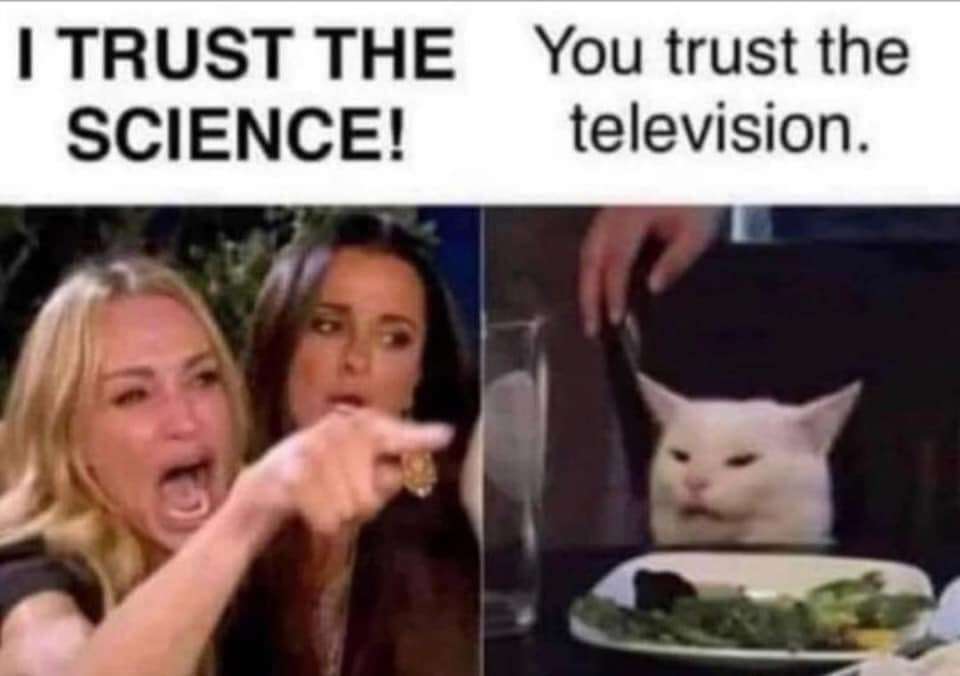
I keep on hearing that science is in danger of being destroyed by politics. I believe this has already taken place.

People we like to call “scientists,” or whom we insist on embracing the belief that they have something to do with what we call “science,” are voting in groups on what to allow and what not to allow. I have a rather eccentric, and lonely, idea of what a “scientist” is, and the group-thing doesn’t have much to do with it. I notice I don’t owe very much to groups of scientists; groups of anybody, for that matter. I’ve got all these useful things sitting around me as I type this that I got because of science. A flatscreen computer monitor, a coffeemaker that grinds my beans fresh at a pre-selected time-of-day, a hot plate that keeps the coffee cup hot and fresh as I type away. These things were not developed because groups of people voted on what worked and what did not work. These things came about because somewhere, an individual fiddled around with something until it became something else, and started doing something.

This is how we get things. Everything we use, I daresay. Groups vote here & there on what to do with these things, and maybe, to take credit for the things coming into existence; they do not actually make the things. It’s up to individuals to do that. Go on, try and find an exception. If you think you’ve found one, you probably got snookered.

And so, when a scientist — what I think of as a scientist — sits in a room full of other scientists voting on something, I expect he or she is usually going to be a wallflower, waiting for the proceedings to be over so that some research in an empty room or cubicle somewhere can be resumed. The guy that’s doing the talking, or holding court, or trying to get some kind of coup going against some hated morsel of existing policy or what-not…that isn’t a scientist. That’s a politician. Credentials or not, that’s a politician wearing a scientist’s coat. To put it simply, trying to get a group to approve or deny something, is not scientific work. Science is the study of nature, and nature is going to do what it damn well wants.

Science often goes and stops according to the presence or absence of funds; sadly, where those funds go, is a question often put before large groups. And so, you see, if I’m wrong about science being dead — I’m certainly correct about it being subordinated to other things. Other things that are anti-science. Call it “Cinderella science,” something forced to mend dresses and sweep floors for ugly stepsisters.

I was given cause to think about this about a month ago when Mary Cheney, the homosexual daughter of our current Vice President, announced her pregnancy.

No Republican in Washington is more beloved by social conservatives than Vice President Dick Cheney, who with his wife, Lynne, has backed and breathed every issue dear to them for six tumultuous years.

News that Cheney’s lesbian daughter, Mary, is pregnant has therefore touched a raw nerve, as advocates for conservative family values struggle to reconcile their loyalty to the Cheneys with their visceral opposition to same-sex relationships — and particularly to raising a child without a father.

Credit goes to blogger friend James Bostwick for sniffing out the first piece of bull poo in this mini-essay. Do you know any “social conservatives”? Quick, think of five…five, who hold Vice President Cheney in affectionate esteem above & before any other public figure. Aw hell, just think of one. Know anybody like that? While it’s fair to say some conservatives don’t despise Mr. Cheney quite as much as the average left-wing liberal, I can’t think of anyone who regards the veep as “beloved” because of his social positions. Whatever the position on social issues, the conservative viewpoint is invariably that Vice President Cheney is some kind of traitor — in one direction, or in another. The SFGate writer has erected a straw-man argument, to lend importance to her article that doesn’t really exist.

But the fireworks were just starting. I had a fascinating off-line dialog with John Rambo for the last month or so about this one. “JohnJ” is a featured writer at Bullwinkle Blog and blogs his own stuff at Right Linx, both of which are excellent resources worth your time to peruse here & there. Like a handful of other folks who are sufficiently self-disciplined to pay attention to things that don’t fit on MTV, Rambo has developed a curiosity about my still-natally-developed “Yin and Yang” theory and recalled the essentials of it after James Dobson’s guest column appeared in Time Magazine.

And this is where the phony science comes in. It’s fascinating watching what happens from this point; almost like a chemical reaction. Try to leave the emotion-charged social issues out of it, and focus on the thought process…as any decent scientist would.

In the December 13 column, Dobson starts out…

A number of social conservatives, myself included, have recently been asked to respond to the news that Mary Cheney, the Vice President’s daughter, is pregnant with a child she intends to raise with her lesbian partner. Implicit in this issue is an effort to get us to criticize the Bush Administration or the Cheney family. But the concern here has nothing to do with politics. It is about what kind of family environment is best for the health and development of children, and, by extension, the nation at large.

With all due respect to Cheney and her partner, Heather Poe, the majority of more than 30 years of social-science evidence indicates that children do best on every measure of well-being when raised by their married mother and father. That is not to say Cheney and Poe will not love their child. But love alone is not enough to guarantee healthy growth and development. The two most loving women in the world cannot provide a daddy for a little boy–any more than the two most loving men can be complete role models for a little girl.

Dobson is saying, here, that the child will be raised without a father. Is that scientific? Maybe yes, maybe no…but does it even have to be? Unless there’s something else going on that we haven’t been told, it looks like the matter is settled. There is Mary, there is Heather…no male influence in sight, and certainly no need to have such a figure present in the essentials of upbringing. Dobson seeks to examine how this will affect the child at the developmental stages, and this is the part that touches on Yin & Yang — and it also gets him in no small measure of hot water with the community of what we have come to call “scientists.”

The unique value of fathers has been explained by Dr. Kyle Pruett of Yale Medical School in his book Fatherneed: Why Father Care Is as Essential as Mother Care for Your Child. Pruett says dads are critically important simply because “fathers do not mother.” Psychology Today explained in 1996 that “fatherhood turns out to be a complex and unique phenomenon with huge consequences for the emotional and intellectual growth of children.” A father, as a male parent, makes unique contributions to the task of parenting that a mother cannot emulate, and vice versa.

According to educational psychologist Carol Gilligan, mothers tend to stress sympathy, grace and care to their children, while fathers accent justice, fairness and duty. Moms give a child a sense of hopefulness; dads provide a sense of right and wrong and its consequences.

And, almost as if you’d been hearing a dull shrieking noise overhead for a few seconds, there emerges a thunderous BOOM. Dr. Pruett would like to say something about this.

“Time Magazine should take Dobson’s article off the web and pledge that they will never again use his group as a source on family issues,” said Wayne Besen, Executive Director of Truth Wins Out. “Focus on the Family has damaged its credibility and should stop misleading Americans by misquoting respected researchers.”

TODAY, Pruett wrote the following letter:

Dr. Dobson, I was startled and disappointed to see my work referenced in the current Time Magazine piece in which you opined that social science, such as mine, supports your convictions opposing lesbian and gay parenthood. I write now to insist that you not quote from my research in your media campaigns, personal or corporate, without previously securing my permission. You cherry-picked a phrase to shore up highly (in my view) discriminatory purposes. This practice is condemned in real science, common though it may be in pseudo-science circles. There is nothing in my longitudinal research or any of my writings to support such conclusions. On page 134 of the book you cite in your piece, I wrote, “What we do know is that there is no reason for concern about the development or psychological competence of children living with gay fathers. It is love that binds relationships, not sex.” Kyle Pruett, M.D. Yale School of Medicine.

What of the other researcher? Dr. Gilligan is similarly agitated and has a similar beef:

The issue has to do with distorting the findings of science and distorting the conclusions of research. These meaningful words are used in the video, above, over and over again. Shame on Dr. Dobson.

Now, take a look at what we got going on here.

EVERYTHING is orchestrated by this “Truth Wins Out” outfit, which appears to have been acting in a way similar to Ellsworth Toohey in The Fountainhead. Hey, Dr. Pruett and Dr. Gilligan, did you know your work is being cited this way? Do you know what kind of parties you won’t be invited to because of this? If you like, we can produce a video for you…

Is that science?

How about guitar music playing in the background of the video? Is that what we call “research”? How about the heavy implications that Dr. Dobson is engaged in some kind of a pattern of falsification going back-a-ways — but, if you listen to the words, you see this all comes from the single piece in Time Magazine about the Cheney pregnancy? Science has a lot to do with identifying trends and patterns of things. Was that done accurately here, or was this implication done to appeal to people’s emotions? Is it scientific to appeal to emotions?

How about Dr. Gilligan’s use of the actual word in the video? You might want to watch it again; she uses it several times. Is she referring to a discipline where you prove and/or refute things by means of research and experimentation? It does not appear so. In fact, I’ve noticed James Dobson’s guest column simply prints two short sentences each dealing with the two disaffected docs. He does not say Dr. Pruett is opposed to homosexual marriages or non-traditional families. He does not say this about Dr. Gilligan. He does not say a single word about what the researchers have concluded from their research. If he did, why would I care about that? No, he simply reports what they have learned.

Pruett and Gilligan angrily retort that he has “cherry-picked” and “distorted” their research. Listen and read very, very carefully. They could have said Dobson’s article is wrong. They could have said NO. Dr. Pruett’s research was “distorted” as saying “fathers do not mother.” Pruett could have said “my research indicates that fathers DO mother.” Or, he could have said “my research has no indication on whether fathers are capable of mothering, or not.” Gilligan’s research was “distorted” with the summary that “mothers tend to stress sympathy, grace and care to their children, while fathers accent justice, fairness and duty.” Again, Dr. Gilligan could have said NO. She could have said this directly contradicts facts. Why not? She’s accusing Dobson of distortion…show us a concrete distortion. She could have said mothers and fathers share completely interchangeable roles. Or, that she doesn’t know — jury’s still out on that.

No, it seems — at the behest of this TruthOut outfit — Drs. Pruett and Gilligan object to the conclusions drawn from their research, which, on its own, was reported accurately.

Science is getting into the opinion biz. People throw the S-word around…and they aren’t really talking about “science” anymore. Look at Dr. Gilligan’s video one more time. What she calls science, is not a process but a simple exercise of argumentum ad authoritarian fallacy. Dr. Gilligan does not oppose gay marriage. Her research shows that fathers and mothers tend to contribute different things to a child’s upbringing, but you are not to use this in advancing an argument hostile to gay marriage. If you try to do this, she will stop you. She says so.

I don’t want to be too hard on the scientists, I’m sure they’ve got “reputations” to worry about. As I said at the beginning of this posts, scientists decide things in groups nowadays; that’s what creates the problem with calling them “scientists.” And I’m sure when Dobson comes to a conclusion out-of-favor with the scientific peerage, and he uses the work of “respected” (read: accepted into the clan) researchers, to them it feels like slander. So on an emotional level, I suppose you can’t slight them for wanting to treat it that way.

But based on what he wrote that I read, their objections are just plain silly. He’s taken what they said — and he’s reached conclusions, based on what they said, that they don’t like. And so they’re insisting on playing traffic-cop, with their scientific credentials, on the conclusions to be reached from the work they did. According to what we used to call “science,” that’s utterly invalid.

It’s like me agreeing to the terms of a credit card, charging things up on that card, and then objecting to the balance on my bill at the end of the month. Hey, it’s a conclusion drawn from your research; it’s not the research itself. You don’t have to like it, and if your reputation is being somehow tarnished because of the conclusion someone else drew from your work, it shouldn’t be. And if your invitation to a cocktail party somewhere has been withdrawn, or your grant money for some project is no longer forthcoming, well you know what? That’s just tough. It says more about the person who made the decision to withdraw or revoke than it does about James Dobson.

Update 1/5/07: Additional contribution from Rambo, George H. Taylor speaking on “consensus science”. Must-see.

You’re A Racist If You Want Lower Taxes

Saturday, December 23rd, 2006

Derrick Z. Jackson links the issue of race, to the decidedly non-race-related issue of taxes.

“Taxes” has become a code word for “we got ours, forget the rest of you all.” “Taxes” avoids real discussion of white privilege. “Taxes” avoid s how old-line white families were able to transfer wealth and property during slavery.

Why does this guy have a column?

Collectivists

Monday, November 27th, 2006

I call them collectivists because they won’t come up with a name for themselves. If they were to do such a thing, it would make it easier to define their ideas and what they want done. They don’t want to do that, they just want to talk about the things they don’t like — which is that some people have lots of loot, and other folks have none. Hard to disagree with that, huh? And since it’s hard to disagree with it, they become absolutists.

Which necessarily must mean, they don’t want anyone to have anything. Or at least, they don’t want anyone to have any more stuff than what anyone else has.

You were an ant, someone else was a grasshopper? You refined your skills, someone else sat on his ass all day watching Girls Gone Wild? They don’t care. Everyone should have the same amount of stuff.

Every once in awhile, though, a collectivist will get caught spouting his collectivist drivel, while at the same time hoarding…stuff. America provides a fertile ground for this, because we safeguard the absolute right to spout drivel…and to hoard stuff. For everyone. In other words, no offense can be detected until you analyze the content of the drivel being spouted, and then contrast them against the things being done by the drivel-spouter who has all this stuff.

And then the drivel-spouting collectivst gets nailed. An event of which I like to take note, when it happens. As it did this morning, when Neal Boortz handed a good zing to Yoko Ono.

By the way .. your husband wrote perhaps the most hideous song in the history of modern music. “Imagine,” I think he called it. Maybe you can show us how you feel about the insipid line “imagine no possessions” by giving away all of your stuff!

Hey…it’s a damn good question. Does she part company with her deceased husband on that line? Or did John Lennon never believe in it in the first place? Or does she think she’s above everyone else? World citizens demand to know.

By the way, Boortz is none to happy about President Bush’s new pick for the Department of Health and Human Services. Here at The Blog That Nobody Reads, we are disinclined to believe the religious right has much to say…about anything. We look at the evidence as it exists and noodle things out for ourselves, here, and the evidence shows that the religious right hasn’t managed to actually get too much done. I can still have sex in any position I want, I can still buy beer on a Sunday, you probably can too.

But Neal makes a very good point. Common sense would say — right after a stinging defeat for the Republican party, olive branches should be extended, if not to Democrats, at least to the freedom-inclined Republicans. States’ rights. School vouchers. Repeal national speed limits. Phase out the death tax. And the minimum wage, too; keep legal jobs legal.

But when the Republican party is in a position where it needs more political capital…to the churches they go. In the final analysis, nothing ever changes about our freedoms or lack thereof. But anyone watching, who is not on the extreme right themselves…is scared shitless every time. Why do they do it?

Perhaps they do need political “capital” after all, but it’s not so much political in nature, as much as floating around on that cotton-paper green stuff.

Pretty funny when you think about it. When all’s said and done, American politics is driven by money…just like anything else that is American. The money flows in on the right from the religious fundamentalists, and on the left from the phony collectivists like Yoko Ono and Chappaquiddick Ted, who say one thing and do something else. Seems to me a rather poor investment. Neither the extreme-right money people nor extreme-left money people end up with public decisions being made in any way to their liking; yet, next year, they’re back at it again.

Well, that’s what the art of compromise looks like. It seldom makes sense to anyone looking in from the outside.

None of this is a big mystery to me — except for the guy in the White House. It’s been said here, it’s been said elsewhere, many, many times. You want to win elections, stick with originalist principles. The Federal Government has the responsibility to protect the borders, so kick the illegal aliens out and keep ’em out. The Federal Government does not have the responsibility to interfere with the sovereignty of the states, in fact it has the responsibility to protect same. So follow through.

It would have worked.

So what’s up with this urgency to get a bible-thumper in charge of birth control advice? It’s sure to be an ineffectual move, but it gives the Bush-bashing media and snarky FARKers something to jaw about. And that stuff has a lot of momentum. So what is the point?

For The Benefit Of The Victims

Saturday, November 25th, 2006

The quote for the day over on Spiced Sass is a gem from C. S. Lewis. I wish I were laboring under a bit more difficulty to see how it is about to become relevant; but I fear, we’re about to live and breathe the truism of this bit of wisdom, day in, day out, for two long years at least.

Of all tyrannies, a tyranny sincerely exercised for the good of its victims may be the most oppressive. It would be better to live under robber barons than under omnipotent moral busybodies. The robber baron’s cruelty may sometimes sleep, his cupidity may at some point be satiated; but those who torment us for our own good will torment us without end for they do so with the approval of their own conscience.

I would add, further, that when injustice is brazenly thrust upon a minority for the sake of bringing artificial comfort to a majority, we’ve set down a treacherous road, something desirable in politics but deeply offensive to common sense. One reasonable observer, no matter what his leanings, would acknowledge that where a little bit of injustice might be acceptable, a whole lot of it would be far less so. And where a little bit of comfort might be a decent thing, a whole lot of it is something that shouldn’t be needed quite so much.

And so, to our notions of common sense, a crop that yields both injustice for some and comfort for others, should be harvested only in small doses. If at all.

It just doesn’t work that way in politics. In politics, if a little of something is good, a whole lot of it must be better. You oppress the electorate for the electorate’s own benefit, fleecing the rich to provide for the poor…it really doesn’t matter if the poor spend the public treasury money on big-screen television sets or baby formula. It doesn’t matter. We already “voted” on whether they need the money.

Thing I Know #81. There are a lot of people walking around who seem to think “politics” is the process of re-defining “justice” to be something pleasing to many and unpleasant to few. That isn’t what “justice” is.
Thing I Know #87. In the past few years I notice the people with the largest television sets are the ones we are supposed to call “poor”.

Kennedy’s Agenda

Saturday, November 18th, 2006

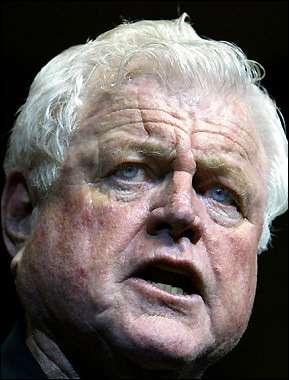
If I ever get tired of trying to make an honest living and want to start ripping people off, and make sure I never get caught at it, I’m going to start talking in a thick Boston accent heavily sprinkled with the word “Ah.” It seems to be an effective way to deflect probing questions. That’s the one thought I have, reading the AP’s puff-piece about Ted Kennedy’s “agenda” for next year, as chairman of the Senate Committee on Health, Education, Labor and Pensions.

Ted Kennedy“Americans are working harder than ever, but millions of hardworking men and women across the country aren’t getting their fair share,” Kennedy said during a speech outlining his legislative agenda for next year. “We’re not rewarding work fairly anymore, and working families are falling behind.”

President Bush signaled readiness last week to consider some Democratic priorities such as a minimum-wage increase, overhauling immigration policy and finding compromise on renewing the No Child Left Behind education law.

Critics of boosting the minimum wage say it kills job creation as employers hire fewer entry-level workers to compensate for the higher wage expenses. Kennedy said the minimum wage has remained at $5.15 an hour for nearly 10 years. Under Kennedy’s proposal, the increase would occur over about a two-year period.

Most states have their own minimum wages laws, with some states having rates the same as the federal minimum wage and some with rates higher than the federal minimum.

Kennedy noted that ballot initiatives establishing or raising the minimum wage in six states all passed in this month’s election.

“If there is one message from this election that emerged loud and clear, it’s that no one who works for a living should have to live in poverty,” Kennedy said.

Kennedy also said he would seek to expand federal support for research on stem cells coming from embryos, which Congress approved last year, but Bush vetoed. The issue won’t go away, he promised.

On education, Kennedy said he would seek to make college more affordable by increasing the size of Pell Grants from $4,050 to $5,100, and by cutting interest rates on student loans.

He said that the student loan business has become too profitable for the banking industry. “It’s time to take the moneychangers out of the temple on student loans,” he said.

I don’t have to wait too long, nowadays, for a left-winger to insist that his positions on various issues makes him smart, and my position make me dense. We live in a time in which people on both sides of the aisle, apply rustic and faulty “intelligece tests” to those around them, by gathering up peoples’ positions on the issues. Well, the minimum wage has become my way of paying this back. Lefty says I’m a big ol’ NASCAR dolt because I supported “George Bush’s illegal war in Iraq,” and golly, you know he just may have a point. Maybe the left-wing hippy does know something I don’t. So like a pig digging for truffles, hoping to engage an intellect that maybe has a different perspective to provide me, perhaps finding an angle to the big picture of which I was previously not aware, I ask about the minimum wage. If my left-wing antagonist supports the minimum wage, I can rule out this possibility. Completely. If the asshole has a brain in his head he isn’t using it. And he isn’t seeking to “educate” me, he just wants to indoctrinate me and assimilate me into the collective. There’s no thought involved. Guaranteed.

Raising the minimum wage has been a favorite agenda of Democrats my entire life, and then some. Whenever the subject comes up, my favorite way of commenting on it has come to be “Congress is currently reviewing a measure to outlaw millions of jobs.” The lefties out there, predictably, cite this as further evidence of my cluelessness and thick-headedness. But who’s clueless? Congress raises the minimum wage — is Congress considering the appropriation of general funds to reimburse employers for the difference? Not so far as I can see…ever. Is Congress going to provide punitive measures against employers who dismiss their associates, specifically because of the financial ramifications of the increase? Again, not within my memory.

So the minimum wage is all about defining a class of jobs out there, and announcing that something has got to happen with them if the employer is not to violate this new law. On what that something is, Congress, within the information that has made its way to me, throughout my lifetime — has not a tinker’s damn to say about anything. Nor has Congress sought to say anything. The employer has absolute latitude; all that is required of him, is that something be changed. We have this pipe dream that the employer is going to say “Good golly! I better find some more money to pay these people!”

But a pipe dream is all it is.

With things left unchanged, these millions of jobs, which up until the moment in question were in comportation with the law…no longer are. And at that point, Congress’ involvement abruptly comes to a stop. Seriously. In my lifetime, I have yet to see a pro-increase-minimum-wage Congressman step up and so much as denounce employers opting to get rid of these now-more-expensive associates. I have not yet see anything like that happen yet. I’m waaaaaaiiiiiiting…haven’t seen it.

So to say this kind of activity is “a bill to outlaw jobs,” is simply a more accurate statement of the facts. The pit bull that is in place to keep those jobs from being eliminated, is the union. But of course all those “hardworking men and women” who are affected by minimum wage laws, are not necessarily represented by a union. Those who are not, are off Kennedy’s radar. This is only about the unionized forces. And the purpose of the legislation, is to pay back those unions by increasing the wages from which the union dues are going to be derived.

Just a little bit of payback. One hand washing the other.

But don’t the egghead economic scientists insist that the minimum wage does nothing to eliminate jobs, in fact, may actually cut the unemployment rate? Why, yes they do! They have yet to explain how making any commodity more expensive, stimulates the consumption of it. They can’t explain that…because that simply isn’t how things work. In fact, if you listen to them carefully, you’ll see they don’t even come out and say this is what’s happening. They’ll recite some cherry-picked facts to lead the audience to this conclusion, but you won’t hear a pro-minimum-wage egghead economist guy come out and say, “when it became more expensive to hire people, employers jumped at the chance to do so, because it made good financial sense to them to spend more money on the same labor.”

As far as the unemployment rate being kept more-or-less the same throughout various increases in the minimum wage, this much is true. And it’s by design. Adjusted for inflation, throughout forty years the minimum wage hasn’t even been raised, really. It is generally agreed to have peaked, in “real” dollars, sometime in the late 1960’s. We’re coming up on ten years since the last federal increase…unemployment is at an all-time low…the conditions are right. It is “time” to raise it. What if — and this is just a hypothetical — we were to yank the minimum wage up when unemployment was high? If it really wasn’t a job-killer, wouldn’t that make a lot of sense? Or…what about the Rush Limbaugh hypothetical? Why not $20 an hour? Why not $50? The position of the left on this, as far as I can gather, is that this would be “silly.” Or yes, this would cause unemployment, but things are different when the increase is more “reasonable.”

So you see, there isn’t any disagreement about the minimum wage between the right and the left. Both sides agree that it is safe in smaller doses, dangerous in higher doses — essentially, that it does indeed cause existing jobs to disappear. They disagree only in what is to be acknowledged exuberantly, or conceded grudgingly. What it does, is put people in control of the job market — union officials, politicians, lobbyists — who have nothing whatsoever to do with creating those jobs, or for getting the objectives of those jobs fulfilled. It keeps them in charge of things.

Now, what would happen if regulation was peeled way back, and the employers and employees had more control? There are those who believe the employers would run everything; and since employers don’t really want to hire anybody, all the jobs would disappear except for a handful, and those wouldn’t pay for shit.

Well, I can only go by what I see. People having jobs and losing them…people applying for jobs and not getting them…people hired on, and the jobs suddenly going away…this happens five times, and only one time out of those five, at most, does the issue have something to do with a stingy employer cutting corners. The other four, it has something to do with regulation, or auditing. Decisions about jobs, being made by people who have nothing to do with the job being done.

Why does this ratio seem so out of balance? It makes perfect sense when you think about it. The stakeholders in the job getting done, if they are to make the decisions, the job stays. Of course it does. They want to get that job done, because if they didn’t, the job never would have come to be in the first place.

Of course…Kennedy speaks with that thick Boston accent. And he uses the word “Ah.” So none of this came out in the interview…or press conference…whatever it was. Kennedy said stuff, and if anybody asked a probing question anywhere, it didn’t make it into print. The AP just caught his glittering generalities and wrote ’em up.

Kennedy also said he wanted to support embryonic stem cell research.

What exactly is this committee and when did it get formed? I was just noticing…grinding up babies doesn’t have a whole lot to do with outlawing jobs. Kennedy’s chairmanship puts him in a position to do both. This borders on the surreal.

When I was a pre-teenager type kid, “baby in a blender” jokes were all the rage. If I could travel back to that time, and tell people in 2006 this will actually become a legislative agenda, they’d never believe it. And here we are.

I’m more concerned about the ability we have to vote in these legislative agendas. Mark Foley sent some spicy Internet messages to a former page, and we have this huge sloshing mushbucket of unrelated liberal objectives now in charge of the nation’s capital. Suppose — and this is another hypothetical — as a member of the electorate, I was desiring a little bit more surgical precision in what was to receive my support. Suppose I was in favor of grinding up the babies, but against outlawing jobs. Or vice-versa. What if some parts of Kennedy’s agenda sounded good to me, and other parts of it did not.

How do I vote for that? I just have one Congressman…some years I have a Senator running too, the one this year was a shoe-in even though I despise her…I can elect these incumbents, or vote ’em out. And based on who wins — and a lot of years, it’s just like this one, some silly scandal decides everything — we have this asshole and his juggernaut agenda, mashing up babies, outlawing jobs, making war on the cherished American values of individuality, capitalism, opportunity, keeping the money you have earned…choice. We vote for our elected representatives, and the elected representatives vote on all of Sen. Kennedy’s agenda, or none of it. Can’t have nuthin’ in-between.

I’ve been listening to liberals for six years tell me our “democracy is slipping away.” Well, it certainly is…just not in the way they’ve been saying.