I can’t read any more dirges or doom-and-gloom about where we’re going because I don’t work that way. I’d like to think that now it’s the second day of reckoning, most people have moved past that anyhow. Let’s talk fixing. And I see there’s a big busted thing going on here that hasn’t been talked about at all. Turnout.
Mitt Romney and Paul Ryan got 57,847,151 popular votes out of about 118 million cast.
John McCain and Sarah Palin received 59,934,814 popular votes out of 131,313,820 cast. If you follow the link above, you will find some comments that should dazzle you, if you were expecting this to be a high-turnout election. It was anything but.
Sarah Palin could come back now, if she has a mind to do so, which since she has more common sense than a lot of people think, she doesn’t have a mind to do so. And won’t. But we’re all done with the “McCain lost because that airhead Palin drove ’em away” thing. All done. Not to talk any smack about the decision to nominate Paul Ryan, which I still regard as a pretty good one, but a killer rep for handling arcane details and a sturdy/scholarly approach to math, didn’t turn anybody on here. Even when combined with sex appeal it didn’t work.
This is not up for discussion. The numbers don’t lie. I don’t deny that, where people are turned off against Palin their emotions are very intense. But, frankly, it doesn’t translate into numbers, their emotional baggage is not Palin’s problem, it isn’t mine either and the whole thing doesn’t matter anyhow. She’s gone for good and I don’t blame her one bit. But she never was the problem. The numbers, the numbers. Wake up.
The victors Tuesday night do their work according to human feeling, and it is dark human feeling that is the currency they trade. Resentment. Feelings of entitlement. Laziness. Despair. That is not a permanent situation, it is only a greater-than-four-years situation. We’re depressed because we thought this was the day our Uncle Sam would throw down the bottle and acknowledge that he has an addiction problem. He crawled back into the bottle again. Alright, so he’s a hardcore case. We try and try again.
So getting rid of the eskimo-ditz and replacing her with a Christian Grey math wizard doesn’t fix what’s broken. What does?
Luke:Is the dark side stronger?
Yoda: No, no, no. Quicker, easier, more seductive.
Luke: But how am I to know the good side from the bad?
That last part’s easy; it doesn’t get much darker than “fuck white people.” It doesn’t get much darker than “I don’t need to give a shit about deficits or terrorists, I’ll just tell Todd Aiken and the rest of those morons where to stick it and then I’m pretty sure everything will work out okay.”
To the first part, how to fix what’s broken, Yoda’s wisdom is key: not stronger; quicker, easier, more seductive. Barack Obama won His re-election because He got the most out of His efforts. In the battleground states, which He bothered to visit, there was barely enough of a turnout for Him to defeat the commensurate turnout for Romney. He made His campaign quick, easy and more seductive. Once again, the electorate simply wasn’t vigilant. It comes back to “freedom versus free shit” again, and the freedom side was not vigilant. They did not turn out.
Republicans stayed home. That is your three word take-away. A lot of other people stayed home too. Some nine million or so of Obama’s supporters stayed home. But the people who would’ve voted for Romney, stayed home.
As far as fixing it — I’ve said it before and I’ll say it again: The first step to destroying something, in any arena of public discussion, is to name it. And the point here is — Has anyone, besides me, taken the time or trouble to notice how incredibly agile the liberals are at coming up with names for things? They have conjured up, focus-group-tested, re-defined, or co-opted: awareness, solidarity, hate, reality-based community, assault weapons and progressive.
In the field of economics, they have shaped and molded our cultural understanding of words and phrases like: poverty, middle class, common good, Buffett rule, progressive tax rate, collective bargaining, social justice, tax cuts for the rich and working families. Also, “access to” this or that thing that is supposed to be seized from one group of people and given to another without compensation.
With race, feminism, gay rights, and issues generally dealing with the resentment felt by members of one class against another: diversity, loving (as a synonym for homosexual), wage gap, miscegenation, white flight, truth to power, equality & inequality, discrimination, social class, tolerance, and for extra gut-chuckles there’s patriarchal and heteronormative. Heteronormative? Who the hell talks that way? These are in additoin to rac[ist/ism] and sex[ist/ism], which are pretty much just gimmes.
Within the issues that have to do with the environment, there’s natural, going green, green jobs, organic, ecological, natural, sustainable, and global warming and climate change.
All these are in addition to: “true” patriot, education, intellectual, fasc[ist/ism], faith-based, warmonger/warmongering, insensitive, offensive, repressive, oppressive, jingo[ist/ism], imperial[ist/ism] and theocracy. Not a single one of these words or terms means anything close, coming out of the mouth of a liberal, as they mean anywhere else. After awhile the “anywhere else” must give way. Liberals argue with dictionaries, and they win.
I think Republicans are not going to inspire their base, or the independents and moderates who would come over to their side, until they follow suit. Getting Todd Aiken to shut up is just the first step. And no, ejecting the abortion plank is not the answer. Remember, turnout was the problem here, 2,087,663 McCain/Palin voters stayed home. Did they see the wisdom over the last four years of converting over to Obama & Biden’s side? That seems doubtful. Did they vote for Gary Johnson? That would be a selection of “I’m not in that group over there” over and above “I’m in this group”; this would mean the incentive for identifying with the group, is missing, a problem that everyone has to acknowledge now that the democrats don’t have.
Although they should! But, words. Terms. Phrases. And so, they don’t have the problem.
There are a lot of approaches to addressing that. Mine would be simply coming up with names for things. Or, at least, take note that our cultural dialect currently does not have names for certain things and if this is not the identification of a problem that can be fixed, it is at least a tell-tale sign of where the dry rot is, and how bad it is.
There is an alternative “Occupy” economic system by which you acquire the things you need & want, by making lots of noise until someone brings those things to you. It slithers around underground, as an unseen rival/opponent/complement to the above-ground economic system, in which we acquire things by providing things of like value to others. There is significant meaning attached to this. The election itself, arguably, was about the conflict between those two economic systems, within one of which we “buy” things by “working”…and, within the other of which, you “buy” the things you want by bitching. There is no word to describe that alternative economic system, in which so many of our fellow citizens believe so much. Find one. Find a word to describe the conflict between those two systems, as well. The stakes are high, and the meanings are important to the decisions we’re making.
We don’t have an actual word to describe any or all of Saul Alinsky’s rules. We have Alinsky’s name, of course, but it only means something to people who are familiar with that book of his.
We don’t have any one single word to describe: Voting for the purpose of lowering a beatdown on some person or class of person, as opposed to voting for love of country and concern for its future well-being.
Destroying something people need, and selling the destruction of it to the people who need it, by making an issue out of whether it has been distributed equally.
Confusing the destruction of this needed thing, or the removal of that thing from our ability to acquire it, with its equal or “fair” distribution.
Imagining the U.S. Constitution to be a document about the size of a paper in a fortune cookie that says something like “ROE V. WADE, WALL OF SEPARATION, END OF CONSTITUTION.”
Electing candidates according to who can bring you the greatest bounty of material things, at the expense of somebody else.
Choosing those candidates according to who can do the best job of selling things that a conscientious and informed prospect would never, ever buy.
Discussing tax policies only with regard to who-pays-what, without a genuine care in the world about the long term financial solvency of the Treasury.
Some dumbed-down version of “static scoring”; considering economics in terms of third-grade math (+/-/*), ignoring changes in consumer behavior.
Voting on matters of personal taste as public policy issues when it is not necessary to do so.
The idea that a little bit of socialism can be mixed up with a little bit of capitalism, and the result will somehow be something that isn’t a monstrosity.
Challenging peoples’ understanding of the words “communist” and “socialist” when you don’t have a good understanding yourself.
Indulging in the fantasy that Hitler and other fascists were “right wing”.
The impulse to seek a government solution for every natural exigency in life.
The extremist idea that ALL victims in the world are victims of circumstance and couldn’t have done anything to prevent it.
The extremist idea that you can’t be a sexist if you’re a woman, or a racist if you’re black.
The injection of social issues, like gay marriage, into elections so that the electorate will make decisions about financial issues that they otherwise would not make.
The kind of thinking that leads one to conclude Joe Biden won the debate. Practicing the “I laugh at it, so it becomes untrue” defense.
Voting for a black guy just because he’s black.
Voting for the candidate that’s cuter.
That “Conquest Rule” thing in which all institutions not specifically chartered to be right wing, become left wing.
Oh and most important of ALL: The desire of the democrat party for more people to become poor, and for poor people to stay poor, so that they can get more votes.
I don’t know if we can invigorate turnout in future elections simply by coming up with words to describe these things. After that, there would be a challenge in getting people to use them, to recognize them. Once that is done, it would be much easier to state the case. There would be a side benefit involved in that I’d be much less likely, in the middle of an election season, to read stories about some Republican knucklehead saying something like pregnancy from rape is a gift from God, or the like. The democrats are skilled at saying “that’s not the question, the question is this other thing I want to talk about…” A lot of them say that, when the question they’ve just been asked is the question. Republicans seem to handle it the exact opposite way; they get asked about stupid tangential bullshit and they have this way of compliantly following along. Knock it off.
Also, once something is named, there is a tendency for the use of that word to have an automatic pejorative effect. That would be very helpful. Vice President Biden’s conduct during the debate is way overdue for pejorative effect; if it doesn’t qualify, nothing does. It was a national disgrace, and even people who liked it, know it.
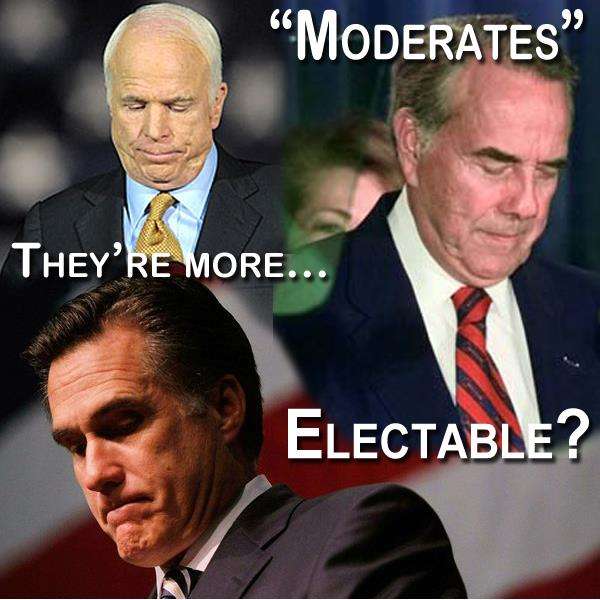
I’m seeing all this discussion about Latino vote, angry women, immigrants, gay-rights groups, along with this endless drumbeat litany of “Republicans need to be more inclusive.” I’ve become rather tired of reading about this stuff because none of it can come up with any specific examples, aside from the unwise mutterings of the above-named two knuckleheads, where things were done wrong here. The campaign was about as inclusive as it could have been.
And, as it happens, it was the less-inclusive side that emerged victorious on Tuesday. Seriously, listen to them sometime. Every approach they have, to any problem that comes along, has something to do with gutter-balling somebody…Christians, millionaires-n-billionaires, gun-people, old white men, you name it. They won. So that is not an accurate identification of the problem.



 Perhaps this dream was inspired by the endless hubbub about “Republicans lost the election because…” from which one melodious refrain has emerged, sung to the tune of “…they didn’t adequately distinguish their policies from George W. Bush.” Now, I’m not in the Bush-hating crowd, although like many others who are not, I cannot say I agreed with everything he did. Among the complaints I’ve had about him in fact, just speaking for myself, is a complaint shared by those who’d like to turn him into a pinata and whack him with a bat. Many litanies have been strung together and then repeated endlessly, with rhythm, as if six to eight words were really just one. Listening to them and pondering them, one sees they all come back to a central salient point that George W. Bush has “friends,” and some of his policies seem to be cobbled together to service the financial interests of those friends as a primary purpose, without regard to, or to the detriment of, the country as a whole. There may or may not be truth to this, but it does find some sympathy with me. It’s true of the too-big-to-fail thing, if nothing else.
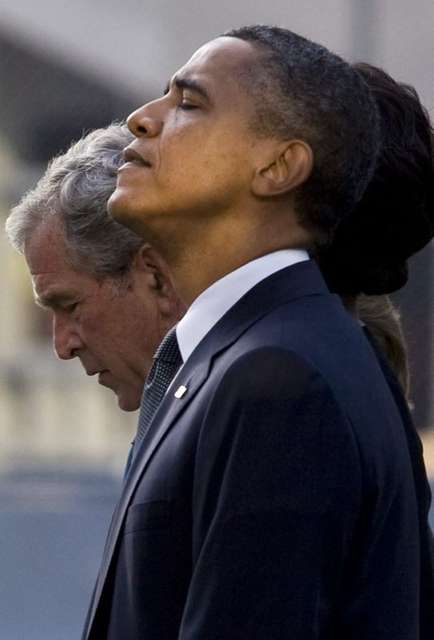 But anyway, I’m not sure Mitt Romney had a problem failing to differentiate himself from George W. Bush. Maybe that’s a race thing? Bush and Romney are Republicans, white, male, rich…beyond that, what do they have in common. I recall a popular Bush-hating theme going around that said Bush had been associated with a lot of business failure or something? Romney didn’t have that going on.

 And I see the same thing
 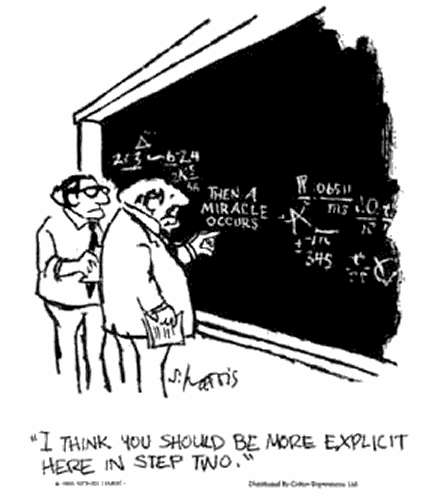 Spend a trillion dollars more out of the treasury than it can take in, just don’t worry about the budget deficit for that year or any other, and that should work well.
 Prosperity entails inequality. And I think everybody knows it. You turn on your living room lamp, and all that light is disproportionately, unfairly, gathered about the bulb. What a gross injustice that is! But that’s how it works. You want equality of lumens, turn the damn thing off and stumble around. You get your equality…and, your zero, your disconnection, your lack of light and lack of accomplishment. Those are your choices. Go or stop.